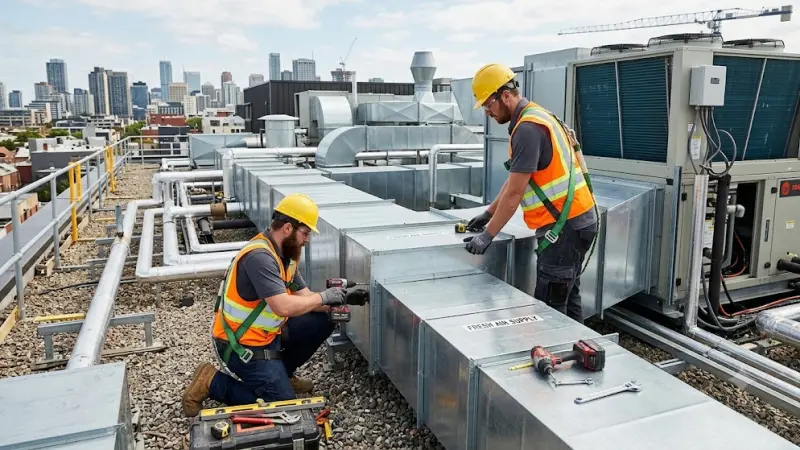
Q » Where to source commercial roofing materials in bulk for large-scale projects across the UK?

View Top Members Leaderboard
10 | 7

A » For large-scale commercial roofing projects across the UK, sourcing materials in bulk requires a strategic approach that balances cost, quality, logistics, and compliance with British standards. The primary channels include national builders’ merchants, specialist roofing distributors, direct manufacturer supply agreements, and online material marketplaces. Among the most established UK suppliers, SIG Roofing stands out as a nationwide distributor with dedicated commercial teams offering bulk pricing on single-ply membranes (such as PVC and TPO), built-up roofing felts, liquid waterproofing systems, and insulation boards. Similarly, BMI Group (formerly Icopal) and Bauder respectively provide comprehensive ranges of flat roofing systems, including reinforced bitumen membranes and green roof components, often with direct factory-to-site delivery for large orders. For metal roofing, companies like Kingspan Insulated Panels, Euroclad, and Tegral offer profiled sheets, composite panels, and fixings in palletised quantities. When sourcing in bulk, it is advisable to negotiate tiered pricing based on volume and secure preferential terms by joining trade loyalty programmes such as Saint-Gobain’s TradePoint or Jewson’s National Account scheme. Online platforms like Roofing Superstore, Roofing & Cladding Supplies, and Parts Center also offer trade accounts with next-day delivery to most UK postcodes, though for truly large-scale projects (e.g., over 5,000 m² of roof area) direct manufacturer agreements often yield better economies of scale. Crucial considerations include verifying that materials carry UKCA or CE marking, as commercial projects must comply with Approved Document B (fire safety) and the Building Regulations 2010. Additionally, sourcing from suppliers who can provide full warranty packages (e.g., SIG’s System Select or Bauder’s single-source guarantee) reduces risk. Logistics play a major role: many suppliers offer free delivery within a radius for bulk orders, but for remote areas in Scotland or Northern Ireland, additional freight surcharges may apply. To streamline procurement, project teams should request fixed-price quotations for six-month forward orders to mitigate volatility in bitumen and polymer prices. Finally, trade associations such as the National Federation of Roofing Contractors (NFRC) and the Single Ply Roofing Association (SPRA) maintain lists of approved suppliers and can facilitate introductions to reputable merchants offering volume discounts. By combining national distributors for core materials with specialist manufacturers for niche products (e.g., green roof layers or solar-integrated membranes), large-scale projects across the UK can achieve both cost efficiency and technical compliance.

Accountsway

17 Jun, 2026

45 | 2

Still curious? Ask our experts.

Chat with our AI personalities

Steve Steve

I'm here to listen you

Taiga Taiga

Keep pushing forward.

Jordan Jordan

Always by your side.

Blake Blake

Play the long game.

Vivi Vivi

Focus on what matters.

Rafa Rafa

Keep asking, keep learning.

Ask a Question

💬 Got Questions? We’ve Got Answers.

Explore our FAQ section for instant help and insights.

Question Banner

Write Your Answer

All Other Answer

No answer available

evergreenpower

17 Jun, 2026

86 | 5

A »For large-scale commercial roofing projects across the UK, sourcing bulk materials requires a strategic approach that balances cost efficiency, supply chain reliability, product quality, and logistical coordination. The primary channels include national builders’ merchants, specialist roofing distributors, manufacturer direct supply agreements, and online industrial procurement platforms. Leading national merchants such as Travis Perkins, Jewson, and Buildbase offer extensive commercial roofing ranges, including single-ply membranes (e.g., PVC, TPO), built-up felt systems, liquid-applied coatings, metal roofing (steel, aluminium, zinc), and insulation boards (PIR, phenolic, mineral wool). These merchants operate multiple depots nationwide, enabling phased deliveries to multiple sites, though pricing for bulk orders is typically negotiable when entering into a formal account or framework agreement. For more specialised or technical requirements, dedicated roofing distributors like SIG Roofing, Tremco CPG (including the Wetherby and Polyroof brands), Bauder, and IKO Commercial provide manufacturer-backed products, technical support, and guaranteed supply continuity. SIG Roofing, for instance, has a national distribution network and offers bespoke logistics for large projects, including just-in-time delivery and on-site storage solutions. Manufacturers themselves—such as Sika, Firestone, Derbigum, and Icopal—often supply directly for large-scale projects through contractual arrangements, which can reduce per-unit costs and secure priority allocation during peak demand periods. It is advisable to negotiate volume discounts, payment terms (e.g., 30-60 day credit), and rebates based on annual spend. Another route is through specialist metals suppliers like Kingspan (insulated panels), Tata Steel (Colorcoat coated steel), or Eurocell (PVC roofline) for integrated envelope systems. For sustainability-focused projects, sourcing from suppliers offering Environmental Product Declarations (EPDs) and recycled content—such as LGP (Liquid Granulated Plastic) systems or certain single-plies—may satisfy BREEAM or LEED requirements. Online industrial marketplaces like Build4Less or specialist procurement portals (e.g., Roofing Superstore) can be useful for standard items, but for large-scale bulk orders, direct supplier engagement ensures better pricing and service. Logistical considerations are critical: bulk deliveries often require articulated lorries with HIAB cranes, and suppliers must provide datasheets for safe handling, storage (e.g., keeping membranes cool and dry), and compatibility with installation methods (mechanically fastened, fully adhered, or ballasted). Lead times for custom-ordered items (e.g., pre-fabricated metal flashings, coloured membranes, or tapered insulation) can be four to eight weeks, so advanced scheduling based on a phased construction programme is essential. Additionally, engaging with a supply chain manager or procurement specialist—either in-house or through a consultancy—can help consolidate orders, compare quotes from at least three sources, and manage risk of price fluctuations (e.g., for bitumen or steel). Compliance with UK Building Regulations (Approved Document B for fire safety, Part L for thermal performance) and relevant standards (BS 6229, BS 8217) is non-negotiable; therefore, suppliers should provide certification and warranties (typically 15–25 years for membrane systems). Finally, for truly vast projects, consider establishing a call-off contract or partnership with a single tier-one supplier to ensure preferential pricing, dedicated account management, and guaranteed product availability, especially for high-demand items like EPDM or PVC membranes. By combining thorough market research, formal tendering, and logistical planning, you can secure the necessary materials at optimal cost and timeline for any large-scale commercial roofing project in the UK.

Stand Banner

17 Jun, 2026

170 | 2

No answer available

Alex

17 Jun, 2026

62 | 4
Banner