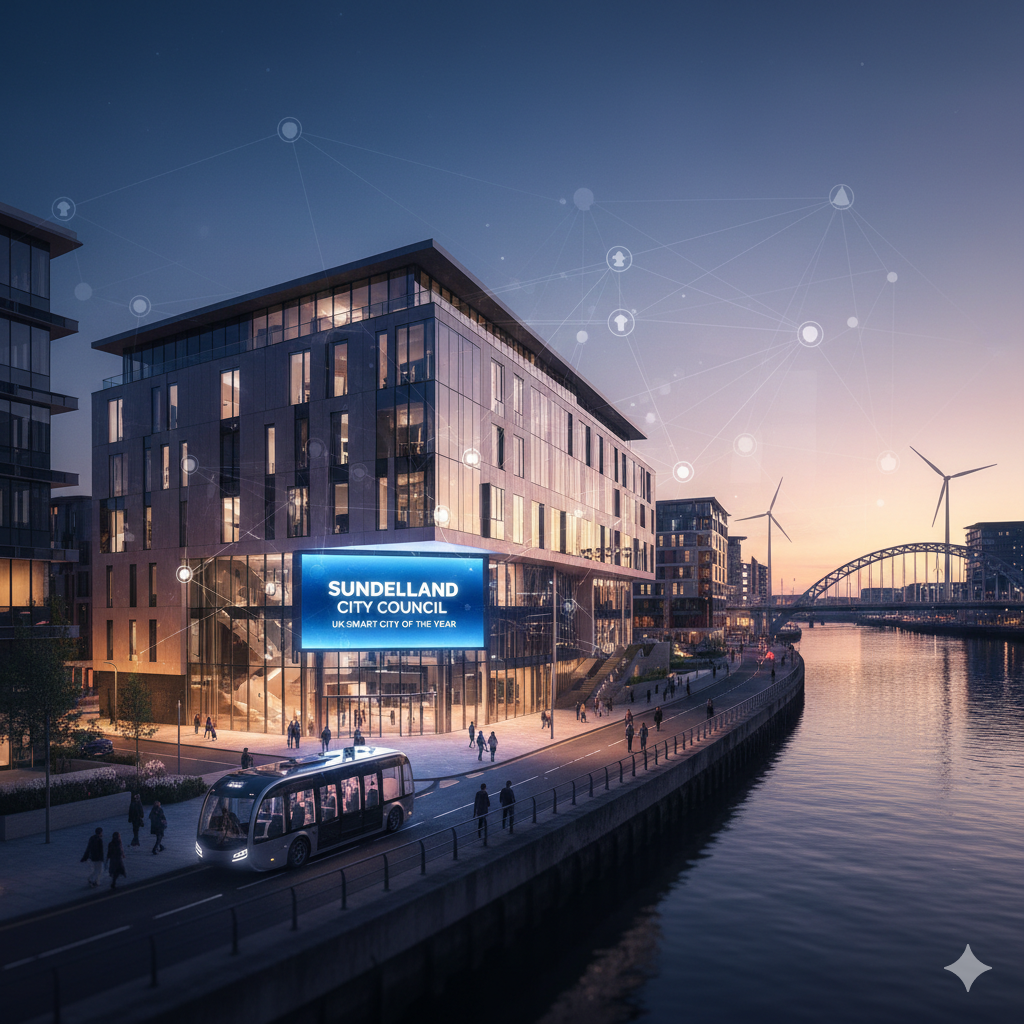
Sunderland City Council stands as the cornerstone of public administration in the North East of England, serving as a catalyst for economic growth, digital innovation, and community resilience. As a metropolitan authority established in its current form in 1974, the council has evolved from managing traditional industrial transitions to becoming a global frontrunner in smart city technology and urban regeneration.
Guided by Chief Executive Patrick Melia, the council’s mission is articulated through the ambitious "Sunderland City Plan 2024–2035." This roadmap envisions a connected, international city where "no one and nowhere is left behind." From the multi-billion pound Riverside Sunderland development to the pioneering deployment of 5G infrastructure, Sunderland is redefining what it means to be a modern British city.
A Legacy of Governance: From 1974 to the Digital Age
Sunderland City Council’s roots trace back to the Local Government Act of 1972, which saw the creation of the Metropolitan Borough of Sunderland on April 1, 1974. Over the decades, the authority has navigated the shift from a world-renowned shipbuilding and coal mining hub to a diversified economy anchored by advanced manufacturing and digital creative industries.
Today, the council operates from City Hall on Plater Way—an award-winning, sustainable building that serves as the heart of the city’s civic life. This headquarters is more than just an office; it is a symbol of the council’s commitment to transparency and accessibility, situated near the iconic Keel Square.
The UK’s Smartest City: Innovation in Action
In 2024, Sunderland was recognized as the UK Smart City of the Year, a testament to its "Digital First" approach. In partnership with Boldyn Networks, the council has deployed a city-wide private 5G network, one of the most advanced in Europe.
Key Smart Initiatives:
-
Digital Inclusion & Go Online Sunderland: The council has established 29 Community Digital Hubs, providing free high-speed Wi-Fi and digital skills training to bridge the "digital divide."
-
SAMS (Sunderland Advanced Mobility Shuttle): A pioneer in autonomous transport, the SAMS project explores self-driving shuttles to improve urban connectivity.
-
Assistive Technology: Over 6,000 homes in Sunderland now utilize assistive technologies to support independent living for elderly and vulnerable residents.
-
Smart Play Zones: The installation of interactive smart play walls at Seaburn and Thompson Park blends physical activity with digital engagement for the younger generation.
Urban Regeneration: The Riverside Sunderland Vision
The Riverside Sunderland project is one of the UK’s most ambitious urban regeneration schemes. This carbon-neutral development aims to double the city center population and create 10,000 new jobs.
-
Vaux Site: Once a brewery, this area is now a thriving business district featuring "The Beam" and "Maker & Faber" office spaces.
-
The Culture House: A multi-purpose venue currently under construction that will serve as a library, archive, and creative hub.
-
Low-Carbon Housing: The council is overseeing the construction of 1,000 eco-friendly homes along the banks of the River Wear, setting a new standard for sustainable urban living.
Essential Public Services for Residents
While driving future-tech, the council remains dedicated to the "bread and butter" services that keep the city running.
1. Council Tax and Financial Wellbeing
Sunderland consistently sets the lowest council tax levels in the North East. Through the MySunderland portal, residents can manage payments, apply for rebates, and access the Financial Wellbeing Hub for support during the cost-of-living crisis.
2. Waste, Recycling, and Environment
With a commitment to becoming carbon neutral by 2030, the council manages a robust waste and recycling program. This includes bi-weekly collections, garden waste services, and the management of household waste recycling centers (HWRCs).
3. Education and Together for Children
Through its partner organization, Together for Children, the council ensures that children and young people receive the best start in life. Sunderland’s "Best Start" program has seen high success rates in early help cases and health visitor reviews.
4. Adult and Social Care
The "Living Well, Ageing Well" strategy focuses on maintaining independence. In the 2024/25 period, the council supported thousands of residents with equipment, adaptations, and social prescribing through the Links for Life platform.
Supporting Local Business and Investment
Sunderland is a hub for Advanced Manufacturing, home to the UK's most productive car plant (Nissan). The council provides extensive Business Investment Support, helping firms tap into the region’s high-speed fiber connectivity and skilled workforce.
As a member of the North East Combined Authority, the council works regionally to secure devolution deals that bring more funding and decision-making power to the local level.
Amenities and Accessibility
Sunderland City Hall and the surrounding civic spaces are designed for everyone. Amenities include:
-
Accessibility: All entrances are wheelchair accessible, with induction loops for the hearing impaired.
-
Family Friendly: Privacy rooms for breastfeeding and accessible toilets are standard features.
-
Sustainability: Bicycle parking and high-speed EV charging points encourage green travel.
A City on the Rise
Sunderland City Council is more than just a provider of services; it is a visionary leader steering a historic city into a prosperous digital future. By balancing the need for efficient public administration with cutting-edge smart city innovation, Sunderland is proving that technology, when centered on people, can solve the greatest civic challenges of our time.
Frequently Asked Questions
1. How do I contact Sunderland City Council for general enquiries?
You can call the helpdesk at 0191 520 5555 or email [email protected]. The physical address is City Hall, Plater Way, Sunderland, SR1 3AA.
2. Where can I pay my Council Tax?
Payments can be made via the Sunderland City Council website using the Online Payment Portal, Bank Transfer, or Direct Debit.
3. What makes Sunderland a "Smart City"?
Sunderland uses a private 5G network to power services like autonomous shuttles, smart waste bins, assistive home technology, and free city-wide Wi-Fi to improve residents' lives.
4. How do I report a missed bin collection?
Missed collections can be reported through the "Waste and Recycling" section of the council’s official website or the MySunderland app.
5. What is the Riverside Sunderland project?
It is a major regeneration project transforming the city center waterfront into a sustainable community with 1,000 new homes, Grade A office spaces, and new cultural venues.
6. Who is the Chief Executive of Sunderland City Council?
Patrick Melia is the current Chief Executive, leading the administrative functions of the council since 2018.
7. Does the council offer support for local businesses?
Yes, the council provides business investment support, assistance with business rates, and networking opportunities through the North East Combined Authority.
8. What are the council’s working hours?
The main offices at City Hall are open Monday to Friday, from 8:30 AM to 5:00 PM.
9. How is the council addressing climate change?
The council has a Low Carbon Action Plan with a goal to be a carbon-neutral organization by 2030 and a carbon-neutral city by 2040.
10. What social care services are available?
The council provides Adult Social Care through "Sunderland Care and Support" and children’s services through "Together for Children," focusing on health, safety, and independence.
Top Categories
Top Viewed Articles
-
 Nottingham Trent University: Reimagining Higher Education
Apr 06 122
Nottingham Trent University: Reimagining Higher Education
Apr 06 122 -
Event Partners Ltd: Global B2B Exhibition Experts
Apr 08 114
-
Top Rated and Most Reliable Parking in London
Jul 09 114
-
Top Rated and Most Reliable Dentists in London
Jul 20 109
-
Top Rated and Most Reliable Doctors in London
Jul 20 102


Spread the Word
Know someone who would love this? Share it with them!