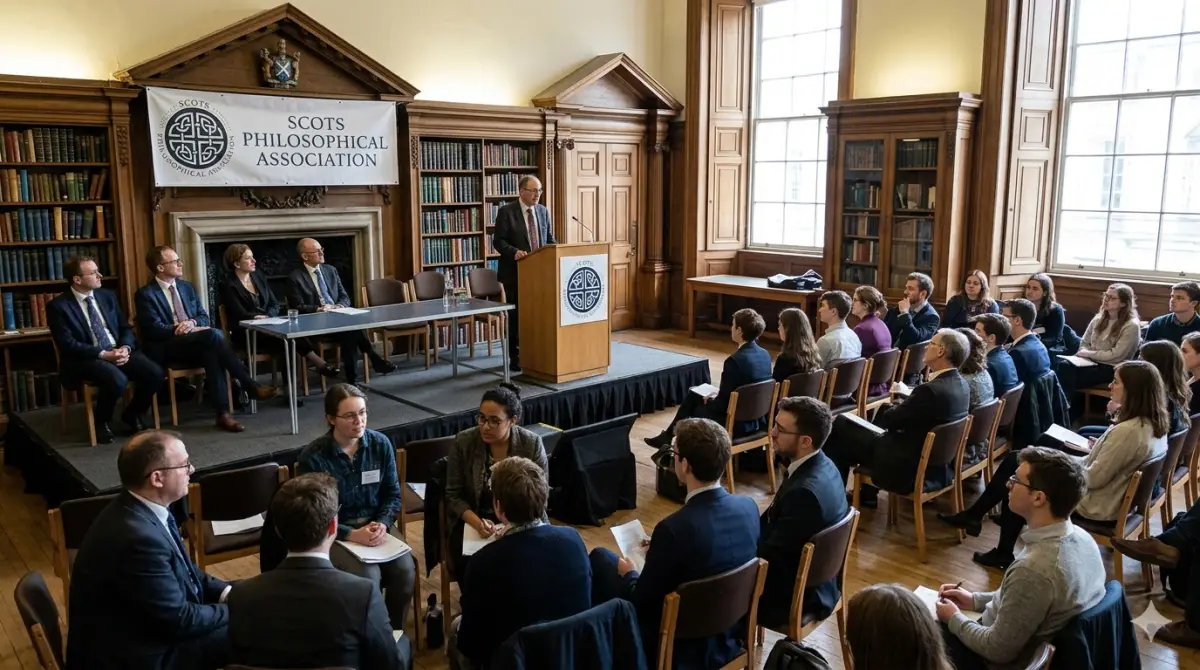
The Scots Philosophical Association (SPA) stands as the definitive professional body for philosophers in Scotland. Founded in 1929 by representatives of the ancient Scottish universities, the SPA was established with a singular, profound mission: to promote the study and teaching of philosophy across the nation. In the decades since its inception, the association has evolved from a local gathering of scholars into a globally recognized institution that bridges the gap between the historic Scottish Enlightenment and the cutting-edge analytical philosophy of the 21st century.
Headquartered in the historic town of St Andrews, specifically at Edgecliffe on The Scores—a location overlooking the North Sea and near the iconic St Andrews Castle—the SPA serves as a unifying force. It connects academics, researchers, and post-graduate students from institutions such as the University of St Andrews, the University of Glasgow, the University of Aberdeen, and the University of Edinburgh.
A Century of Intellectual Excellence
The origins of the SPA are deeply rooted in the unique educational landscape of Scotland. Unlike many other nations where philosophy became a niche specialty, Scotland has historically treated philosophy as a foundational pillar of a liberal education. The association was born out of a collective need for Scottish philosophy departments to discuss matters of common interest and to ensure that the "Science of the Mind," as it was often called during the Enlightenment, remained relevant in a rapidly changing academic world.
In 1929, when representatives from the Scottish universities came together to form the association, they were not just creating a club; they were safeguarding a tradition. Figures like David Hume, Adam Smith, and Thomas Reid had already put Scotland on the global intellectual map. The SPA was designed to ensure that this legacy did not become a relic of the past but continued to drive modern inquiry into ethics, epistemology, logic, and metaphysics.
The Philosophical Quarterly: A Global Standard
One of the SPA's most significant contributions to the world of higher education is its management and joint ownership of The Philosophical Quarterly. Established in 1950, this journal has risen to become one of the top ten most highly regarded venues for general philosophy in the world.
The Philosophical Quarterly is known for its rigorous peer-review process and its commitment to publishing high-quality research from leading international scholars. While many journals have moved toward hyper-specialization, the Quarterly remains a broad-interest publication. It prioritizes innovative contributions that offer significant value to the discipline as a whole.
For the SPA, the journal is more than just a publication; it is the financial and intellectual engine of the association. The income generated from the journal is reinvested directly into the Scottish philosophical community, funding research grants, conference sponsorships, and fellowships that support the next generation of thinkers.
Empowering the Next Generation: Research and Grants
The SPA provides a unique value proposition through its robust financial support system. The association understands that for philosophy to thrive, it requires physical spaces for dialogue—conferences, workshops, and reading parties.
Conference Sponsorship and Workshops
The SPA offers substantial grants to support philosophical events held within Scotland. These events are often the birthplace of groundbreaking ideas. By providing up to £2,500 for exceptional cases, the SPA enables Scottish departments to host international speakers and facilitate high-level academic networking events.
Early-Career Researcher Support
A primary focus of the SPA is the development of early-career researchers (ECRs). The transition from a PhD candidate to a professional academic is notoriously difficult. The SPA mitigates this by welcoming applications for funding specifically from those who have received their PhD within the last five years. Furthermore, the association provides "dependent care" grants, ensuring that researchers with family responsibilities are not excluded from participating in the academic community.
Specializations: From Metaphysics to Logic
The Scots Philosophical Association is a bastion for analytical philosophy. Its members and the research it supports span the full spectrum of the discipline:
-
Analytical Philosophy: The core methodology of the association, focusing on clarity, logic, and the analysis of language.
-
Scottish Philosophy: Preserving the specific history and methods of the Scottish Enlightenment and its subsequent developments.
-
Ethics and Epistemology: Investigating the nature of morality and the limits of human knowledge.
-
Logic and Metaphysics: Exploring the fundamental nature of reality and the rules of valid reasoning.
Through specialized workshops and the prestigious "Centenary Fellowship," the SPA ensures that these fields remain vibrant and competitive on the global stage.
Advocacy and the Scottish Educational System
Beyond the walls of the lecture hall, the SPA acts as a primary advocate for philosophy within the Scottish educational system. In an era where STEM (Science, Technology, Engineering, and Mathematics) often dominates funding discussions, the SPA makes a compelling case for the value of the humanities.
The association works closely with the British Philosophical Association (BPA) to influence policy and ensure that philosophy remains a core component of university curricula. They provide a forum for philosophy departments to address common challenges, such as changes in government funding, student recruitment, and the integration of digital research access.
Membership and Community
Membership in the SPA is often automatic for academic staff in philosophy departments at Scottish universities, creating a seamless and inclusive professional community. However, the association also offers categories for honorary and associate membership, ensuring that the dialogue remains open to those teaching philosophy in other departments or those who have retired from active service.
The SPA's "Member Newsletters" and regular "Annual General Meetings" (rotating between cities like Edinburgh, Aberdeen, Stirling, and Glasgow) serve as the social and professional heartbeat of the organization. These events are not just about business; they are about fostering a "vibrant philosophical community" through after-meeting drinks, academic networking, and the exchange of ideas.
Contact and Institutional Information
For institutions and individuals looking to collaborate or seek support, the SPA maintains a transparent and accessible operation:
-
Physical Address: Edgecliffe, The Scores, St Andrews, Scotland, KY16 9AR.
-
Phone: +44 (0) 1334 462473.
-
Email: [email protected].
-
Official Website: www.scotsphil.org.uk.
-
Charity Status: Registered Scottish Charity (SC028603).
The association operates Monday through Friday, 9 AM to 5 PM, and accepts institutional payments via bank transfer or invoice for its various services and publication-related fees.
The Future of Scottish Philosophy
As the Scots Philosophical Association approaches its centennial, its role is more vital than ever. By managing The Philosophical Quarterly, providing critical research grants, and acting as a steadfast advocate for the discipline, the SPA ensures that the Scottish philosophical tradition remains a living, breathing influence on the global intellectual landscape. Whether you are an established professor or an early-career researcher, the SPA provides the infrastructure and support needed to turn abstract thoughts into impactful, world-class research.
Frequently Asked Questions
1. What is the primary mission of the Scots Philosophical Association?
The SPA's mission is to promote the study and teaching of philosophy in Scotland, foster a vibrant philosophical community, and support high-quality research through grants, workshops, and publications.
2. Does the SPA own The Philosophical Quarterly?
Yes, the SPA is the joint owner of The Philosophical Quarterly, which is one of the world's most prestigious academic journals in the field of philosophy.
3. Who can apply for SPA research and conference grants?
Grants are primarily available for philosophical events (conferences, workshops, reading parties) held in Scotland. The SPA particularly welcomes applications from early-career researchers (within 5 years of their PhD).
4. How can I become a member of the SPA?
Academic staff in philosophy departments at Scottish universities are generally members automatically. Other scholars, including those in related departments or those who have retired, may be eligible for associate or honorary membership.
5. What kind of financial support does the SPA provide for conferences?
The SPA typically offers grants of up to £1,000 for one-day events and up to £1,500 for multi-day events. In exceptional circumstances, funding can reach up to £2,500.
6. Is there support for researchers with children or dependents?
Yes, the SPA provides additional support (up to £500) to help offset the costs of dependent care incurred while attending SPA-sponsored conferences.
7. Where is the SPA headquartered?
The association is based at the University of St Andrews, located at Edgecliffe, The Scores, St Andrews, Scotland.
8. Is the Scots Philosophical Association a registered charity?
Yes, the SPA is a Registered Scottish Charity, with the registration number SC028603.
9. What philosophical specializations does the SPA focus on?
The SPA focuses on a wide range of analytical philosophy, including Ethics, Epistemology, Logic, Metaphysics, and the specific history of Scottish Philosophy.
10. How does the SPA support early-career researchers (ECRs)?
Beyond grants, the SPA facilitates fellowships (such as the Centenary Fellowship) and provides a forum for ECRs to present their work, network with senior academics, and gain publication support.
Top Categories
Top Viewed Articles
-
 Nottingham Trent University: Reimagining Higher Education
Apr 06 122
Nottingham Trent University: Reimagining Higher Education
Apr 06 122 -
Event Partners Ltd: Global B2B Exhibition Experts
Apr 08 114
-
Top Rated and Most Reliable Parking in London
Jul 09 114
-
Top Rated and Most Reliable Dentists in London
Jul 20 109
-
Top Rated and Most Reliable Doctors in London
Jul 20 102




Spread the Word
Know someone who would love this? Share it with them!