
Articles for Infection Prevention Society
Explore 1 business insights in all locations
Insider
Share Your Business Story
Reach our community by sharing your business insights, expert guides, or success stories on the world's most trusted local platform.
Write Your Article Now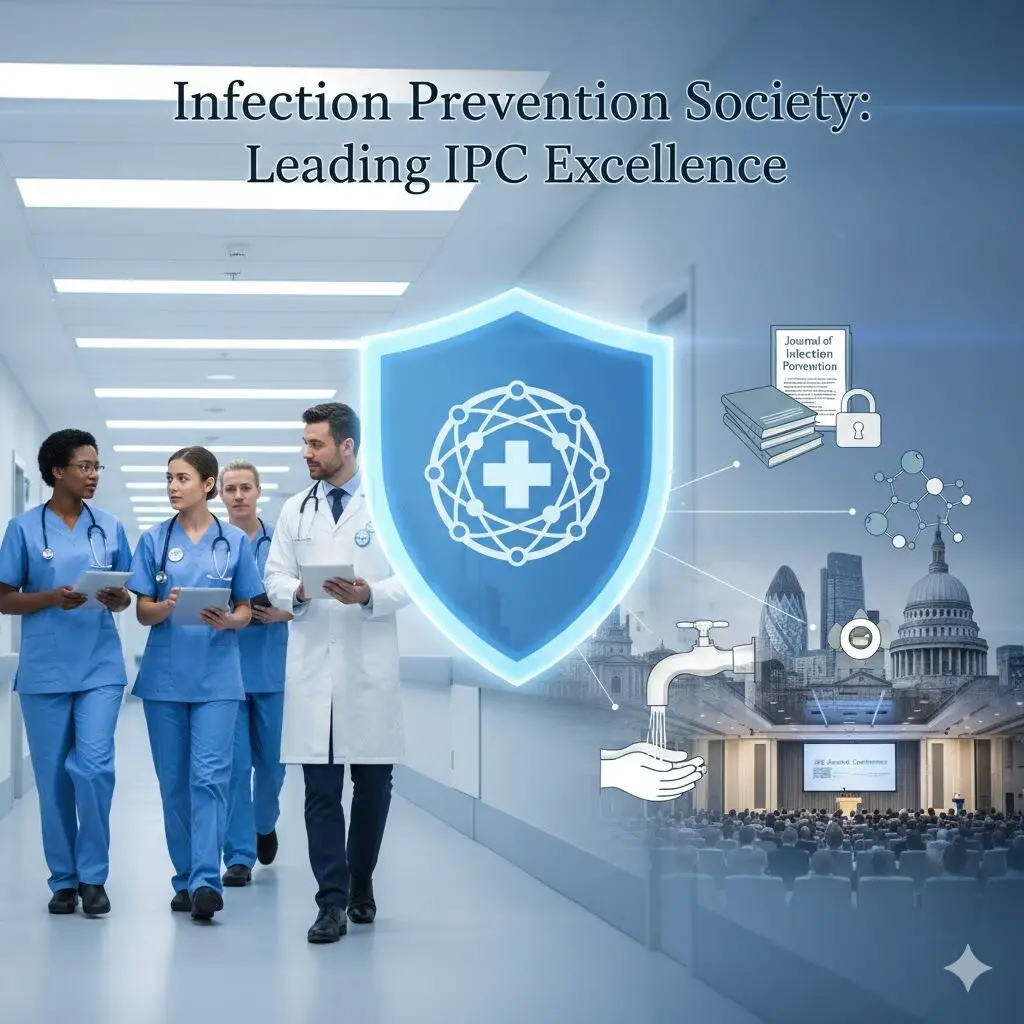
Health and Wellbeing
Apr 02, 2026
Infection Prevention Society: Leading IPC Excellence
In an era where global health security is constantly challenged by emerging pathogens and the silent shadow of antimicrobial resistance (AMR), the role of specialized healthcare associations has never been more critical. At the forefront of this battle stands the Infection Prevention Society (IPS), a premier professional organization and registered charity headquartered in London, United Kingdom.
Dedicated to shaping the future of Infection Prevention and Control (IPC), the IPS serves as a vital bridge between clinical practice, government policy, and academic research. With a rich history spanning over five decades, the society represents a vibrant network of over 2,000 members, including nurses, doctors, epidemiologists, and specialized healthcare professionals.
Our Mission: A Vision for Harm-Free Care
The core mission of the Infection Prevention Society is to inform, promote, and sustain evidence-based infection prevention policy and practice. The ultimate goal is to create a healthcare system where no person’s health or wellbeing is harmed by a preventable infection. This vision extends beyond hospital wards into social care, community settings, and the global stage.
As a registered charity (No. 1120063), the IPS operates with a commitment to public benefit, ensuring that the latest scientific advancements in IPC are translated into practical, frontline standards that save lives.
A Legacy of Excellence: From ICNA to IPS
The roots of the society trace back to 1970, when it was founded as the Infection Control Nurses Association (ICNA). This was a pioneering period in British healthcare, marking the first time infection control was recognized as a distinct nursing specialty.
In 2007, reflecting the multidisciplinary nature of modern medicine, the organization rebranded as the Infection Prevention Society (IPS). Today, while it retains its strong nursing heritage, it has evolved into a diverse body encompassing all professionals dedicated to the prevention of healthcare-associated infections (HAIs).
The IPS Value Proposition: Empowering the IPC Workforce
The IPS is globally recognized for providing a robust framework for professional development. Its value proposition is built on four key pillars:
1. Education and Accreditation
The society offers specialist training courses and accreditation schemes that set the benchmark for IPC standards. The IPC Practitioner Competence Framework is a cornerstone resource, providing practitioners with a clear roadmap for career progression, from novice to expert levels.
2. The IPS Annual Conference & Exhibition
Widely respected as the premier event in the IPC calendar, the IPS Annual Conference brings together world-leading experts, researchers, and industry partners. It serves as a hub for networking, showcasing cutting-edge technology, and debating the latest clinical guidelines.
3. The Journal of Infection Prevention (JIP)
Members receive exclusive access to the Journal of Infection Prevention, a peer-reviewed publication that features original research, clinical reviews, and policy updates. The journal is an essential resource for staying abreast of developments in antimicrobial stewardship and clinical surveillance.
4. Research Grants and Advocacy
The IPS actively funds the next generation of IPC breakthroughs through exclusive research grants and educational awards. By working closely with the UK Health Security Agency (UKHSA) and international partners like the International Federation of Infection Control (IFIC), the IPS influences national policy and advocates for the highest safety standards.
Specialist Areas of Expertise
The IPS provides technical advice and resources across several critical domains of modern healthcare:
Antimicrobial Resistance (AMR): Leading strategies to ensure the sustainable use of antibiotics.
Hand Hygiene: Promoting the "Five Moments" and behavioral change in clinical settings.
Clinical Surveillance: Developing tools for the accurate tracking and reporting of infection rates.
Healthcare-Associated Infections (HAIs): Focusing on the reduction of MRSA, C. difficile, and Gram-negative bloodstream infections.
Membership and Community
With memberships starting at accessible rates for students and retired professionals, the IPS fosters a supportive community. Members are organized into Regional Branch Networks and Specialist Interest Groups (SIGs), allowing for tailored networking and peer support based on geographic location or clinical specialty (such as Mental Health or Care Homes).
Contact and Business Information
Headquarters: 71 Queen Victoria Street, London, EC4V 4BE, United Kingdom.
Landmark: Near Mansion House Station.
Helpdesk: +44 (0)1506 811077
Email: [email protected]
Website: www.ips.uk.net
Frequently Asked Questions
1. Who can join the Infection Prevention Society?
Membership is open to any healthcare professional with an interest in IPC, including nurses, doctors, pharmacists, epidemiologists, and domestic service managers.
2. Is the IPS a government body?
No, the IPS is an independent professional association and a registered charity. However, it works closely with government bodies to influence national IPC policy.
3. What is the IPC Practitioner Competence Framework?
It is a structured guide developed by the IPS to help practitioners assess their skills, identify gaps in knowledge, and plan their professional development in infection control.
4. How often is the IPS Annual Conference held?
The conference is an annual event, typically held in the autumn, featuring international speakers and a large-scale exhibition of IPC products.
5. Does the IPS provide resources for the general public?
While primarily a professional body, the IPS provides resources and advocacy that indirectly benefit the public by improving the safety of the healthcare system.
6. What are Specialist Interest Groups (SIGs)?
SIGs are sub-groups within the IPS focused on specific areas such as decontaminating medical devices, antimicrobial stewardship, or IPC in non-acute settings.
7. How is the IPS funded?
Funding is derived from membership fees, corporate partnerships, conference revenue, and charitable donations.
8. Can international professionals join the IPS?
Yes, the IPS welcomes international members and is a member of the International Federation of Infection Control (IFIC).
9. What is the "Blue Pages" in the context of the IPS?
The "Blue Pages" is a traditional term often associated with the society’s specialized directories or clinical guides used by practitioners for quick reference.
10. How can I apply for an IPS research grant?
Grant opportunities are announced periodically on the official website. Applicants must typically be active members of the society to be eligible.
London
44 Views
- Prev
- 1
- Next
Share This Page
My Page
Scan QR to open
Barcode