
Articles for The Institute Of Mental Health
Explore 1 business insights in all locations
Insider
Share Your Business Story
Reach our community by sharing your business insights, expert guides, or success stories on the world's most trusted local platform.
Write Your Article Now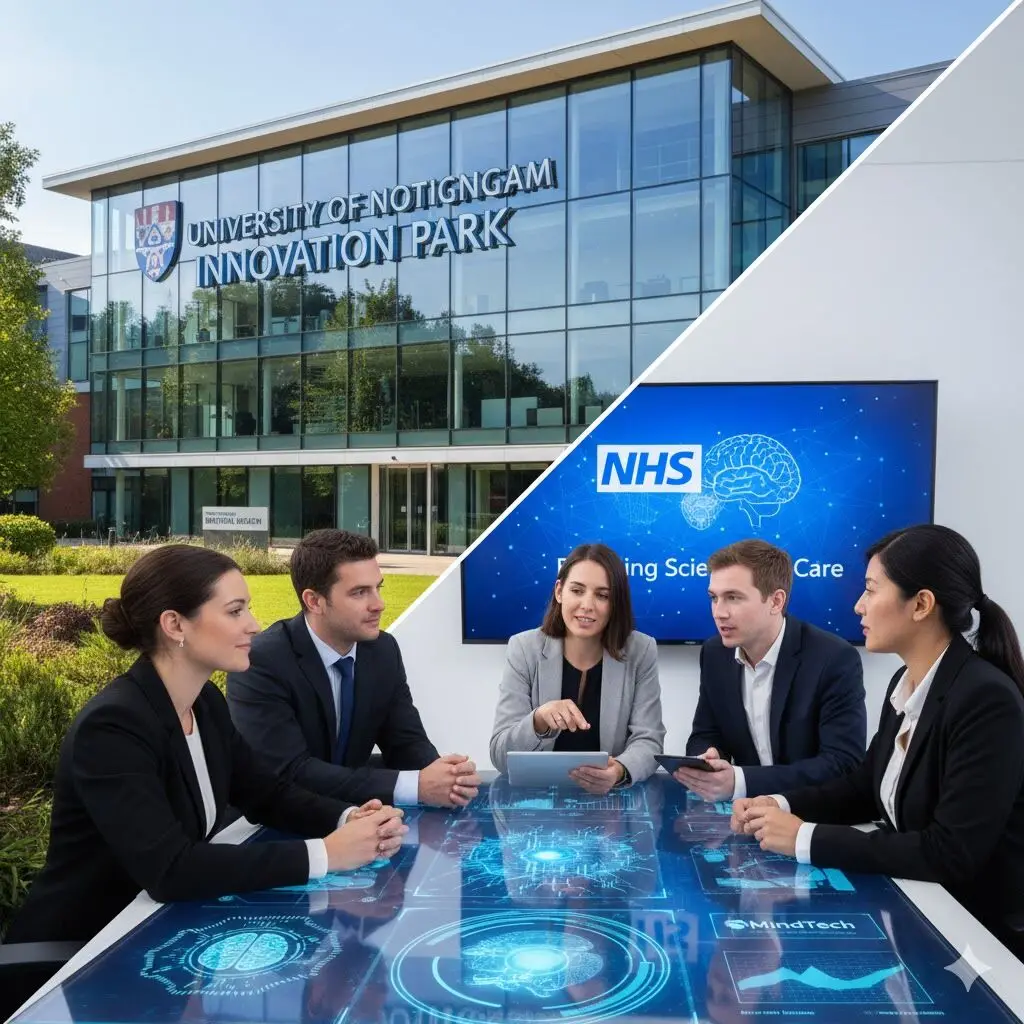
Educational Services
Apr 06, 2026
The Institute of Mental Health: Research & Innovation
In the heart of Nottingham, a unique powerhouse of innovation is redefining the landscape of psychiatric care and psychological wellbeing. The Institute of Mental Health (IMH), established on September 1, 2006, stands as a premier "Centre of Excellence" in the United Kingdom. As a pioneering partnership between the Nottinghamshire Healthcare NHS Foundation Trust and the University of Nottingham, the IMH serves as a vital conduit between high-level academic research and the frontline of clinical delivery.
Under the leadership of Professor Martin Orrell, the Institute has spent nearly two decades tackling some of the most complex challenges in modern medicine. With a mission to transform the understanding and treatment of mental illness, the IMH has become a global beacon for interdisciplinary research and evidence-based practice.
A Legacy of Partnership and Innovation
The IMH was born from the recognition that scientific discoveries often take too long to reach the patients who need them most. By physically and strategically bringing together the NHS and academia at the University of Nottingham Innovation Park, the Institute eliminated the traditional "ivory tower" barriers.
Today, the IMH manages a staggering research portfolio exceeding £46 million in active grants. This financial backing allows for a diverse range of studies, from the molecular basis of neurodevelopmental disorders to the social impact of loneliness in the elderly.
The Eight Pillars: Specialized Centres of Excellence
The IMH is not a monolithic entity; rather, it is a vibrant ecosystem comprising eight specialized centers, each dedicated to a specific facet of mental health.
1. The Centre for Dementia
Led by world-renowned experts, this center focuses on improving the quality of life for those living with dementia and their caregivers. Their work ranges from early diagnosis techniques to the development of Cognitive Stimulation Therapy (CST), which is now a standard recommendation in NICE guidelines globally.
2. MindTech: Digital Mental Health Innovation
As an NIHR HealthTech Research Centre, MindTech is at the forefront of the digital revolution in healthcare. They evaluate and develop digital therapeutics, online screening tools, and mobile apps designed to make mental health support accessible 24/7.
3. Centre for Social Futures (SoFU)
Focusing on the "Health Humanities," SoFU explores how society, culture, and the arts influence mental health. Their research emphasizes that recovery is not just a clinical process but a social one, involving community integration and the reduction of stigma.
4. Centre for ADHD and Neurodevelopmental Disorders (CANDAL)
CANDAL bridges the gap between childhood and adult services for neurodiverse individuals. Their research into ADHD, Tourette’s, and Autism helps clinicians provide continuous, life-long support.
5. Forensic Mental Health
The IMH is a leader in forensic psychiatry, investigating the intersection of mental health and the criminal justice system. Their work informs policy on how to treat and rehabilitate offenders with complex mental health needs safely and compassionately.
6. Translational Neuroscience
This center looks "under the hood" of the human brain. Using advanced neuroimaging at the University of Nottingham, researchers study the biological markers of mental illness to develop more targeted pharmacological treatments.
7. Centre for Mental Health and Human Rights
A designated World Health Organization (WHO) Collaborating Centre, this group advocates for the rights of people with disabilities and mental health conditions, ensuring that international standards of care are upheld and improved.
8. Mood Disorders and Wellbeing
Focusing on depression and bipolar disorder, this center evaluates new psychological therapies and medical interventions to help individuals manage long-term mood conditions.
Beyond Research: Services and Professional Impact
While research is the engine of the IMH, its output manifests in practical services that benefit the wider healthcare community:
Clinical Consultancy: The IMH provides bespoke evaluation for health services, helping NHS trusts and private providers optimize their care pathways.
Professional Training & CPD: The Institute is a hub for Continuing Professional Development. They offer advanced training for psychiatrists, nurses, and social workers, ensuring the workforce is skilled in the latest evidence-based techniques.
Public Involvement (PPI): A cornerstone of the IMH value proposition is its commitment to "lived experience." The Public Involvement Hub ensures that service users and carers are co-designers of research projects, not just subjects of study.
Impact on the UK Landscape
The IMH’s influence radiates far beyond its 50-mile local service radius. By hosting national entities like the Cochrane Schizophrenia Group and collaborating with the NIHR Applied Research Collaboration (ARC) East Midlands, the Institute shapes national policy and international clinical guidelines.
With a dedicated team of 100–250 staff members—ranging from data scientists to clinical psychologists—the IMH remains a vital asset to the UK’s medical infrastructure. Whether it is through a breakthrough in digital therapeutics or a new social intervention for dementia, the Institute of Mental Health continues to prove that when academia and the NHS work hand-in-hand, the possibilities for healing are infinite.
Frequently Asked Questions
1. What is the main goal of the Institute of Mental Health (IMH)?
The IMH aims to bridge the gap between academic research and clinical practice, ensuring that new scientific discoveries are quickly translated into better treatments and care for people with mental health conditions.
2. Is the IMH part of the NHS or a University?
It is a unique partnership between both. It brings together the clinical expertise of the Nottinghamshire Healthcare NHS Foundation Trust and the academic excellence of the University of Nottingham.
3. Can I access mental health treatment directly at the IMH?
The IMH is primarily a research and education facility. While it influences clinical practice and hosts specialized labs, direct patient crisis or primary care services are usually managed through the Nottinghamshire Healthcare NHS Foundation Trust.
4. What is "MindTech"?
MindTech is a specialized national center within the IMH that focuses on "HealthTech." It explores how technology—like apps, wearable devices, and online platforms—can be used to diagnose and treat mental health issues.
5. How is the IMH funded?
The Institute manages over £46 million in grants from bodies like the National Institute for Health and Care Research (NIHR), UKRI, and various medical charities.
6. Does the IMH offer training for healthcare professionals?
Yes. The IMH provides a wide range of professional training, including CPD (Continuing Professional Development) courses, workshops, and academic seminars for those working in the mental health sector.
7. Who leads the Institute of Mental Health?
The Institute is led by Professor Martin Orrell, who serves as the Director and is a renowned expert in ageing and dementia research.
8. Can members of the public get involved in research?
Absolutely. The IMH has a strong Patient and Public Involvement (PPI) program that encourages individuals with lived experience of mental health issues to help shape and guide research projects.
9. Where is the IMH located?
It is located at the University of Nottingham Innovation Park, Jubilee Campus, on Triumph Road in Nottingham, UK.
10. What are the core "Centres of Excellence" at the IMH?
There are eight centers focusing on specialized areas including Dementia, Social Futures, Neurodevelopmental Disorders (ADHD/Autism), Forensic Mental Health, and Digital Mental Health.
Contact Information: * Phone: +44 115 823 1294
Email: IMH@nottshc.nhs.uk
Website: https://institutemh.org.uk
Nottingham
14 Views
- Prev
- 1
- Next
Share This Page
My Page
Scan QR to open
Barcode