
Articles for Wessex Institute
Explore 1 business insights in all locations
Insider
Share Your Business Story
Reach our community by sharing your business insights, expert guides, or success stories on the world's most trusted local platform.
Write Your Article Now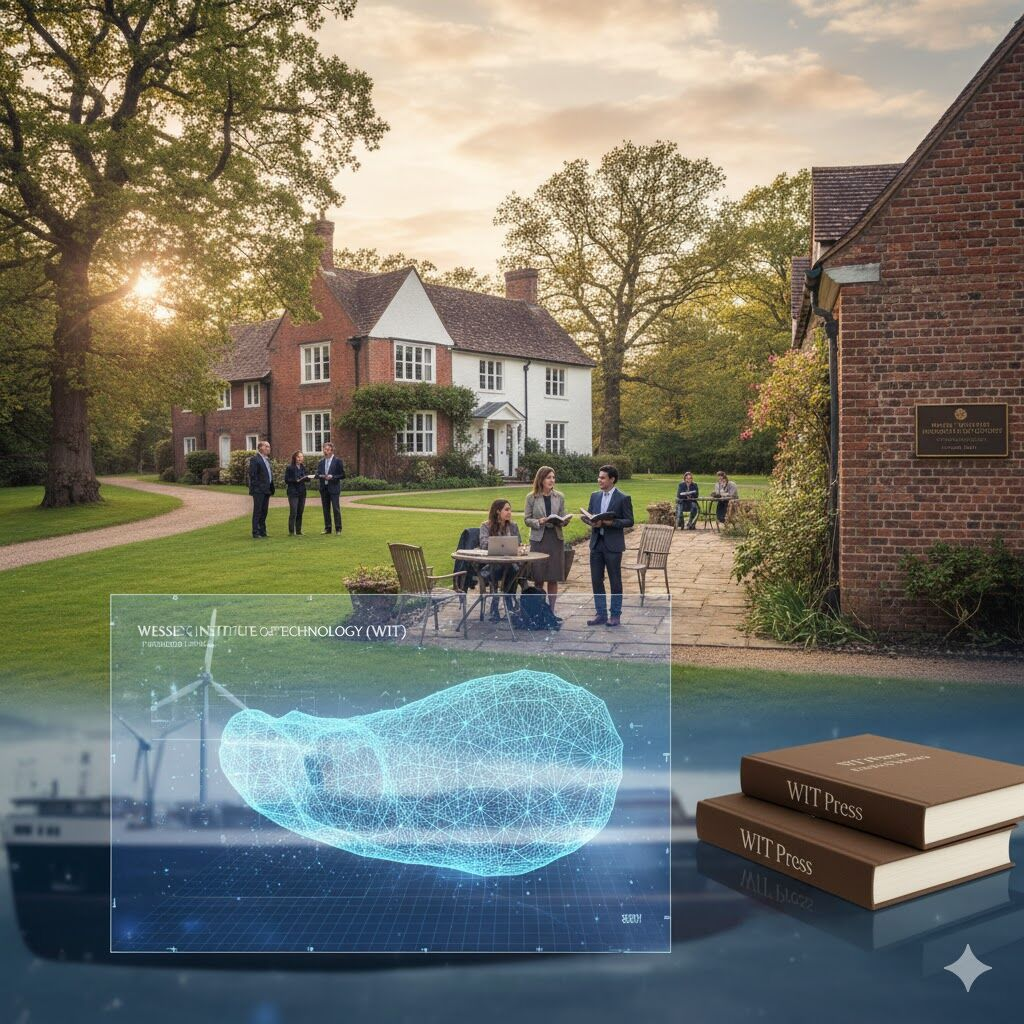
Educational Services
Apr 06, 2026
Wessex Institute: A Global Hub for Engineering Innovation
The Wessex Institute of Technology (WIT) stands as a beacon of excellence in the international scientific community. Nestled within the serene landscapes of the New Forest National Park in Hampshire, United Kingdom, this postgraduate research centre has spent nearly four decades redefining the boundaries of computational mechanics, environmental modelling, and sustainable development. Founded in 1986 by the visionary Professor Carlos Brebbia, WIT has evolved from a specialized research cell into a multi-faceted global institution that encompasses academic publishing, international conferencing, and advanced engineering consultancy.
The Vision of Professor Carlos Brebbia and the Birth of WIT
To understand the Wessex Institute, one must first understand the legacy of its founder. Professor Carlos Brebbia was a titan in the field of engineering, widely recognized as the primary developer of the Boundary Element Method (BEM). After an illustrious academic career that took him from Argentina to Southampton University, MIT, and Princeton, Brebbia realized that the traditional academic structure often lacked the agility to translate complex mathematical theories into practical industrial tools.
In 1986, he incorporated the Wessex Institute of Technology to fill this void. His mission was clear: to create a "Knowledge Transfer" hub. The institute was designed to act as a bridge, ensuring that cutting-edge research in physical sciences and engineering didn't remain trapped in journals but instead solved real-world challenges in aerospace, naval engineering, and environmental management.
The Boundary Element Method (BEM): A Computational Revolution
At the heart of WIT’s scientific identity is the Boundary Element Method. While the Finite Element Method (FEM) remains a common standard for many, BEM offers a sophisticated alternative that simplifies the modelling process.
Why BEM Matters
Unlike domain-based methods that require a complex mesh of the entire volume of a structure, BEM focuses exclusively on the surface or "boundary." This leads to:
Reduced Dimensionality: A 3D problem is reduced to a 2D surface problem, significantly lowering the time required for mesh generation.
High Precision: BEM is particularly superior in dealing with infinite domains and areas with high-stress concentrations, such as crack tips in fracture mechanics.
Efficiency in Design Iteration: Because only the surface needs to be meshed, engineers can modify designs and re-run simulations much faster than with traditional methods.
WIT remains the world's leading authority on BEM, continuing to refine the mathematics that powers modern engineering simulation.
WIT Press: Empowering Global Scientific Communication
A core pillar of the institute is its publishing arm, WIT Press. As an independent publisher of science and technology, WIT Press ensures that high-quality research is accessible to the global community.
Academic Journals and Transactions
WIT Press produces a diverse array of peer-reviewed journals, including:
International Journal of Design & Nature and Ecodynamics: Exploring the intersection of nature’s efficiency and engineering design.
International Journal of Sustainable Development and Planning: Addressing the urgent need for green infrastructure and environmental policy.
International Journal of Computational Methods and Experimental Measurements: Bridging the gap between theoretical code and laboratory results.
The WIT Transactions series serves as a permanent record of the papers presented at the Institute’s prestigious international conferences, providing a massive digital library for researchers worldwide.
A Global Stage: The International Conference Programme
Every year, the Wessex Institute organizes a rigorous schedule of international conferences. These are not merely academic gatherings; they are strategic forums where delegates from over 60 countries meet to discuss the world’s most pressing technical issues.
Key conference themes include:
Sustainability & The Built Environment: Focus on carbon-neutral construction and urban resilience.
Environmental Management: Innovations in water pollution control, air quality modelling, and waste management.
Advanced Computing: The latest developments in Big Data, AI in engineering, and high-performance simulation.
By hosting these events in various global locations—from the UK and Europe to the Americas and Asia—WIT fosters a truly international collaborative network.
BEASY: Turning Theory into Industry-Standard Software
The practical application of WIT's research is most evident in BEASY (Boundary Element Analysis System). This associated software company provides specialized tools used by top-tier engineering firms and government agencies.
Key Industrial Solutions:
Corrosion & Cathodic Protection: BEASY is the industry leader in simulating galvanic corrosion, particularly for naval vessels and offshore oil rigs.
Fracture Mechanics & Fatigue: Predicting how cracks grow in aircraft components or bridge structures is vital for safety; BEASY’s BEM-based approach provides unparalleled accuracy in these life-critical simulations.
Acoustics & Signature Management: Helping naval engineers manage the underwater signatures of ships and submarines.
The Ashurst Lodge Experience: A Unique Research Campus
The physical home of WIT, Ashurst Lodge, is far from a typical grey university building. Located near the Ashurst New Forest Railway Station, the campus offers a residential environment that encourages deep focus and "quiet innovation."
PhD students and visiting researchers benefit from:
An IET-Accredited Library: One of the finest collections of computational mechanics literature.
On-site Mentoring: Direct access to senior academic staff and industry experts.
Collaborative Spaces: Conference facilities and common rooms designed to spark interdisciplinary dialogue.
Specialist Short Courses and Postgraduate Excellence
WIT offers a range of specialized short courses designed for both PhD students and professional engineers looking to upskill. These courses often focus on niche areas such as Damage Mechanics, Environmental Modelling, and of course, advanced applications of BEM. The institute’s status as an accredited postgraduate research centre means that its training is recognized for its technical rigor and industrial relevance.
Commitment to Sustainability and the Future
In recent years, the Wessex Institute has pivoted its research focus toward the global challenge of sustainability. Through the Prigogine Medal—an award established by WIT and the University of Siena to honor the memory of Nobel Laureate Ilya Prigogine—the institute champions "Ecodynamics" and the study of complex systems. This commitment ensures that WIT remains at the forefront of the green engineering revolution.
The Wessex Institute of Technology is more than an educational establishment; it is a vital engine for scientific progress. By maintaining a niche focus on the Boundary Element Method while expanding its reach through WIT Press and global conferences, it ensures that the "bridge" between academic theory and industrial reality remains stronger than ever. For researchers, engineers, and students, WIT offers a unique ecosystem where innovation is nurtured by history and driven by the challenges of tomorrow.
Frequently Asked Questions
1. What is the Wessex Institute of Technology (WIT)?
WIT is an international postgraduate research and educational institution based in the UK, specializing in computational engineering and the exchange of scientific information.
2. Who founded the Wessex Institute?
The Institute was founded in 1986 by Professor Carlos Brebbia, a world-renowned expert in the Boundary Element Method.
3. What is the Boundary Element Method (BEM)?
BEM is a sophisticated computational technique used to solve engineering and physical science problems by discretizing only the surfaces (boundaries) of a model, rather than the entire volume.
4. What is BEASY software used for?
BEASY is a simulation tool based on BEM used by engineers for corrosion control, cathodic protection, fracture mechanics, and fatigue life prediction in sectors like aerospace and offshore energy.
5. How can I publish my research with WIT?
You can submit papers to WIT Press, which publishes several peer-reviewed international journals and transaction volumes related to engineering and environmental sciences.
6. Does WIT offer PhD programs?
Yes, WIT is a recognized postgraduate research centre that supports PhD students in specialized fields of engineering and computational science.
7. Where is the Wessex Institute located?
The institute is headquartered at Ashurst Lodge, located in the New Forest National Park, Southampton, Hampshire, United Kingdom.
8. What kind of conferences does WIT organize?
WIT hosts an annual program of international conferences covering topics such as sustainability, water resources, urban transport, and damage mechanics.
9. Is the Wessex Institute library open to the public?
The library is an IET-accredited facility primarily for the use of its researchers and students, though it serves as a major resource for the institute’s global network.
10. How do I contact the Wessex Institute for consulting?
You can reach the institute via phone at +44 (0) 23 8029 3223 or by emailing [email protected] for inquiries regarding research, publishing, or software services.
Southampton
0 Views
- Prev
- 1
- Next
Share This Page
My Page
Scan QR to open
Barcode