
Agricultural Buildings UK: Design Regulations, Materials & Contractor Guide
- 👤 admin
- 👁️ 54 Views
- Last Updated: January 17, 2026
- 🏷️ Guide
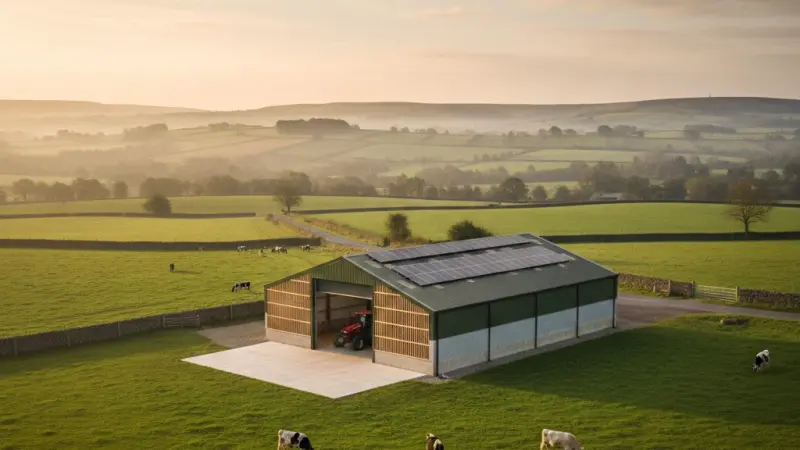
The agricultural buildings sector stands as a silent titan within the British economy. Far from being mere "sheds," modern agricultural infrastructure represents a sophisticated intersection of engineering, logistics, and animal welfare. With the UK agricultural sector contributing billions to the national GVA, the physical structures that house livestock, machinery, and produce are the literal backbone of food security.
In the United Kingdom, the demand for high-quality steel-framed buildings and sustainable timber structures has seen a significant uptick. This is driven by a need for efficiency in a competitive global market. Whether it is a bespoke grain store in East Anglia or a high-spec dairy unit in the South West, these buildings must withstand the unique rigours of the British climate while adhering to stringent planning and environmental regulations. For those seeking specialized contractors, utilizing a uk local business directory is often the first step in identifying regional experts who understand local soil conditions and planning quirks.
The Landscape of Agricultural Buildings in the UK
The landscape of the UK agricultural building industry is currently defined by a "flight to quality." As of late 2024 and heading into 2025, the market size for agricultural construction remains robust, despite fluctuating material costs. Key regions of activity include the "Breadbasket" of the East Midlands and East Anglia, where large-scale crop storage is dominant, and the Northern and Western regions, where livestock housing remains the primary focus.
Post-pandemic, the industry has evolved rapidly. Supply chain disruptions led to a shift toward "just-in-case" inventory management, prompting farmers to invest in larger storage facilities to hedge against market volatility. Furthermore, the "diversification" trend has exploded. Many traditional farm buildings are being replaced or retrofitted for commercial use, tourism, or renewable energy hubs. To find the right partners for these complex transitions, savvy farmers often consult a local business listings uk to find contractors with proven track records in multi-use conversions.
The shift toward domestic resilience has also emphasized the importance of the uk b2b business directory ecosystem. Modern farm construction requires a web of interconnected services—from steel fabricators and groundwork specialists to environmental consultants and planning agents. This interconnectedness ensures that a single project supports a wide array of local trades.
Comprehensive Services Breakdown
The diversity of services in the agricultural building niche is immense. Understanding the specifics of each is vital for any stakeholder.
1. Steel Framed Buildings
The gold standard for durability. These structures are favoured for their clear-span capabilities, allowing for unobstructed internal space. Services include design, fabrication, and erection. Contractors must ensure all steelwork is CE marked (or UKCA marked) to meet safety standards.
2. Livestock Housing
These units require specialized knowledge of ventilation, drainage, and animal welfare codes. A high-quality dairy or poultry unit is a piece of bio-technical equipment as much as it is a building. Professionals in this space are frequently found via a uk service providers directory, where specialist credentials can be verified.
3. Crop and Grain Storage
Moisture control and pest-proofing are the priorities here. Modern grain stores incorporate advanced aeration systems and drying floors. The engineering must account for the immense lateral pressure exerted by bulk grain against the walls.
4. General Purpose Sheds and Workshops
Every farm requires a "polyvalent" space for machinery maintenance and general storage. While simpler in design, they still require professional groundwork and weatherproofing to protect expensive equipment.
5. Planning and Permitted Development (Part 6)
Navigating the UK planning system is a service in itself. Many agricultural buildings fall under "Permitted Development" rights, but these still require a "Prior Notification" process. Specialists help farmers navigate these bureaucratic waters to avoid costly enforcement notices.
How to Choose the Right Service Provider
Selecting a contractor is the most critical decision in the construction process.
A poorly built structure is a 50-year liability.
Accreditations and Standards: Look for contractors who are members of the RIDBA (Rural Industrial Design and Building Association). This ensures they stay updated on the latest building standards and health and safety requirements.
Local Reputation: Agriculture is a community-driven industry. A contractor’s local standing is often more telling than their website. Checking a uk local trades directory for reviews and past projects in your specific county can provide peace of mind.
Insurance and Warranties: Ensure the provider carries comprehensive Public Liability and Professional Indemnity insurance. Furthermore, ask about the warranty on the cladding and the structural integrity of the frame.
Transparency: A good contractor will provide a detailed quote that breaks down groundworks, steelwork, cladding, and doors. Be wary of "all-in" prices that seem too good to be true, as they often hide inferior material grades. For a wider range of options, searching for uk top rated local businesses ensures you are dealing with vetted entities.
Industry Challenges & Future Outlook
The UK agricultural building sector faces a transformative decade. The primary challenge is the rising cost of raw materials—specifically steel and concrete. This has led to an increased interest in hybrid structures and sustainable timber alternatives.
Sustainability and Green Initiatives: The "Net Zero" mandate is trickling down to farm infrastructure. We are seeing a surge in demand for "Solar-Ready" roofs, where the structural calculations account for the weight of photovoltaic panels. Rainwater harvesting systems are also becoming standard, allowing farms to become more water-autonomous.
Technological Shifts: The integration of "Smart Building" technology allows farmers to monitor humidity, temperature, and even structural stress via smartphone apps. Drones are now regularly used for site surveys and roof inspections, reducing the need for expensive scaffolding.
Regulatory Changes: Post-Brexit, the UK is refining its own building codes and environmental impact assessments. Navigating these requires a high level of professional expertise. For businesses looking to offer these high-tech services, securing a business listing uk on a major directory is essential to signal their presence in the evolving market.
Business Tips for Agricultural Buildings Professionals
If you are a contractor or consultant in this niche, your "boots on the ground" reputation must be matched by a "clicks on the screen" presence.
1. Digital Visibility: The modern farmer is increasingly tech-savvy. They research contractors on their tablets during breaks. If your business isn't visible, you don't exist. Registering on a uk business directory website ensures that when a farmer searches for "Steel buildings near me," your name appears.
2. Case Studies: Take high-quality photos of your completed projects. A gallery showing
a clean, well-erected livestock unit is worth a thousand sales pitches.
3. Local SEO: Use keywords that reflect your service area. Instead of just "Agricultural Buildings," use "Agricultural Building Contractor in Yorkshire." This helps you appear in find local businesses uk searches performed by nearby clients.
4. Networking: While digital is vital, traditional networking at events like the LAMMA show or the Royal Highland Show remains powerful. Use your digital presence to follow up on the leads generated at these events.
5. Offering Value-Added Services: Can you help with the planning application? Can you provide a maintenance schedule? These extras make you a partner rather than just a supplier. Make sure these services are listed clearly on your business listing uk to attract clients looking for a "one-stop-shop" solution.
Wrapping Up & Local Page Integration
The agricultural buildings sector in the UK is a sophisticated, high-stakes industry that requires precision, local knowledge, and a commitment to quality. As the industry moves toward a more sustainable and technologically integrated future, the connection between farmers and high-quality service providers becomes even more vital.
For businesses operating in this space, visibility is the currency of growth. Whether you are a small local fabricator or a national construction firm, being accessible to your target audience is paramount. Local Page UK serves as the premier bridge between British industry and the clients who need them. By leveraging the power of a uk local business directory, businesses can ensure they are not left behind in the digital age.
Boost Your Visibility with Local Page UK
In the competitive world of agricultural construction, your reputation is your greatest asset—but only if people can find you. For professionals in the Agricultural Buildings sector, being found online by local farmers and land managers is critical to maintaining a healthy pipeline of work.
We encourage you to claim your business listing uk today. By joining our comprehensive directory, you place your business in front of a targeted audience actively searching for trade and professional services. Don't let your competitors take the lead; ensure your business is part of the most trusted local businesses list uk in the country.
Frequently Asked Questions
What are the main planning regulations for agricultural buildings in the UK? Most agricultural buildings are subject to "Permitted Development" under Part 6 of the GPDO. This allows for certain structures to be built without full planning permission, provided the farm is over 5 hectares and the building meets specific size and height criteria. However, you must still submit a "Prior Notification" to the local planning authority. If the building is within 25 metres of a metalled highway or near a protected site, full planning permission is usually required.
Which materials are best for agricultural buildings? Steel is the most popular choice for modern buildings due to its strength, clear-span capabilities, and speed of erection. Timber is often preferred for livestock housing because it provides better natural insulation and a "softer" acoustic environment.
Fiber-cement roofing is common because it prevents condensation, which is crucial for grain storage and animal welfare. The choice depends on the specific use-case and budget.
How much does a steel-framed agricultural building cost per square metre? Costs vary wildly based on the complexity, height, and location. Currently, a basic steel-framed building might start around £100 to £150 per square metre for the shell. However, once you add concrete flooring, specialized cladding, roller shutter doors, and internal fit-outs, the price can increase significantly. It is always best to get a detailed quote from a verified provider.
What is the difference between a "Prior Notification" and a "Full Planning Application"? Prior Notification is a streamlined process where the council has 28 days to decide if they need to approve the siting, design, and external appearance of the building. It is cheaper and faster than full planning. A Full Planning Application is required for non-agricultural uses, larger buildings, or sites in sensitive areas, and usually takes 8 to 13 weeks for a decision.
Do I need a building regulations inspection for an agricultural shed? Generally, buildings used for "agricultural purposes" (where no people are normally employed) are exempt from most Building Regulations in the UK. However, if the building is used for retailing, as a workshop for non-farm machinery, or if it is close to a boundary where fire spread is a risk, you may need to comply with specific safety standards.
How can I find a reliable agricultural building contractor in my area? The best way to find a reliable contractor is to check a local business directory that focuses on trade services. Look for firms that are members of RIDBA and have verified reviews. Asking for references from other local farmers who have completed similar projects is also highly recommended.
How long does it take to construct a typical farm building? For a standard steel-framed shed, the fabrication of the steel takes 4-8 weeks, and the on-site erection can often be completed in 1-2 weeks once the groundworks and foundations are ready. Larger, more complex units like grain stores or dairy parlours can take several months from initial ground-breaking to completion.
Is it better to have a concrete or dirt floor? For modern efficiency, a power-floated concrete floor is almost always superior. It allows for easier cleaning, prevents dampness, and is essential for grain storage or machinery workshops. Dirt floors are increasingly rare and are generally only suitable for very basic hay storage or temporary livestock pens.
What are the rules regarding building near a public highway? Under Permitted Development, you cannot build a structure within 25 metres of the metalled portion of a trunk road or a classified road. If you need to build closer than this, you will almost certainly require a full planning application, and the highways agency will be consulted regarding visibility and safety.
Can I use my agricultural building for a farm shop later? Not without a "Change of Use" application. Agricultural buildings are strictly for agricultural use. Converting a building into a farm shop, office, or workshop for a separate business requires planning permission. Some "Class R" permitted development rights allow for changes to flexible commercial uses, but there are strict notification requirements.
How do I prevent condensation in my farm building? Condensation is a major issue in the UK. Using "anti-drip" fleece-backed metal sheeting or fiber-cement roof sheets is the most effective way to manage it. Proper ventilation, such as ridge vents or spaced boarding on the gables, is also vital to allow moist air to escape before it condenses on cold surfaces.
What is a "Clear Span" building? A clear-span building is designed so that the entire internal area is free of supporting columns or pillars. This is achieved through engineered steel portals. It is highly desirable in agriculture because it allows for the easy movement of large tractors, combines, and telescopic handlers without the risk of hitting a support post.
Are there grants available for agricultural buildings in the UK? Yes, various grants are periodically available through schemes like the Farming Equipment and Technology Fund (FETF) or the Improving Farm Productivity grant. These often focus on specific technologies like slurry storage, precision farming equipment, or robotic systems within the building rather than just the "shell" of the shed.
What height should my agricultural building be? This depends on your tallest machinery. Modern combines and tipping trailers require significant "eaves height." Typically, 6 metres (20
feet) to the eaves is a standard for general-purpose buildings, but specialized grain stores or workshops may require more to accommodate lifting equipment.
What maintenance does a steel building require? While low-maintenance, you should inspect the gutters and downpipes annually to prevent water damage to the foundations. Check the cladding for any scratches that could lead to rust, and ensure that roller doors are greased and serviced. A well-maintained steel building can easily last 40 to 60 years in the UK climate.
Disclaimer: The information provided in this article is for general informational and research purposes only. Company details, features, services, and market positions may change over time. Readers are advised to visit official company websites and conduct independent research before making any business decisions or purchasing services.
Most Searchable Keywords
Recent Blogs


Related Listings
Categories
- Accountants (295)
- Advertising Agencies (559)
- Architects (149)
- Automobiles (377)
- Beauty (300)
- Carpenters (146)
- Cleaning Services (387)
- Dentists (189)
- Driving (62)
- Electricians (215)
- Energy (8)
- Event Organiser (686)
- Finance (602)
- Guide (3373)
- Health (2207)
- Information technology (206)
- Legal Services (353)
- Logistics (6)
- Maintenance (65)
- Manufacturing (35)
Sponsored Listings in Travel Agencies


Related Blogs
Explore Dog Friendly Walks in the Cotswolds f...
Read this insightful article "Explore Dog Friendly Walks in the Cotswolds for 2026" to expand your knowledge!

How Much Do UK Actors Really Earn Full Indust...
Read this insightful article "How Much Do UK Actors Really Earn Full Industry Breakdown" to expand your knowledge!

Blue Light Card UK 2026 Check Eligibility and...
Read this insightful article "Blue Light Card UK 2026 Check Eligibility and Claim" to expand your knowledge!
Questions & Answers – Find What
You Need, Instantly!
How can I update my business listing?
Is it free to manage my business listing?
How long does it take for my updates to reflect?
Why is it important to keep my listing updated?
