
Agricultural Machinery UK: Sales Trends, Financing & Dealer Directory
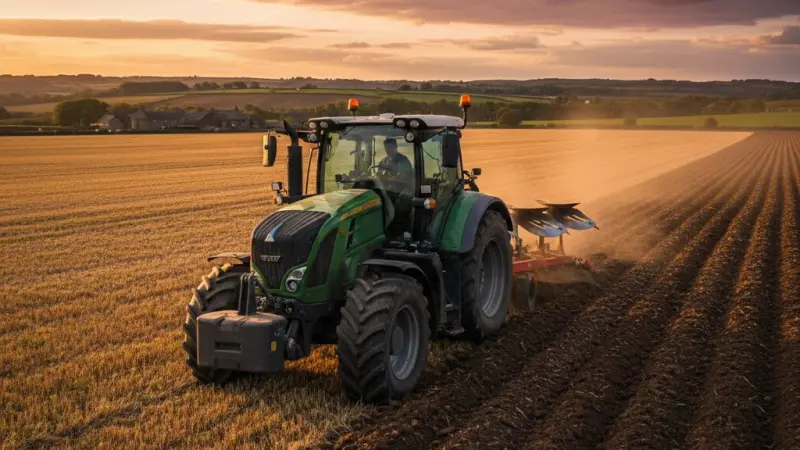
The Agricultural Machinery – Sales & Service sector stands as the operational backbone of the United Kingdom’s rural economy. In a nation where over 70% of the land is dedicated to farming, the machinery that tills, sows, and harvests is not merely equipment; it is the engine of national food security. Valued at approximately £3.3 billion, this industry encompasses a vast network of original equipment manufacturers (OEMs), local dealerships, and specialized service providers who ensure that the British farming fleet remains functional under the most demanding conditions.
The economic importance of this sector extends far beyond the initial point of sale. Each tractor, harvester, or telescopic handler represents a multi-year ecosystem of maintenance, parts supply, and technical support. For the UK, which remains a global leader in agri-tech innovation, the sector also serves as a critical export powerhouse, with British-built machinery reaching over 170 countries. However, the domestic market is currently navigating a period of profound transition. From the shift in subsidy structures following the Agricultural Transition Plan to the rapid integration of artificial intelligence and robotics, the way farmers acquire and maintain their assets is evolving.
As the industry faces a tightening of farm finances and a 25-year low in certain machinery registrations, the role of the uk online business directory has never been more vital. Dealers and service providers must now bridge the gap between traditional mechanical excellence and modern digital visibility to thrive in an increasingly competitive landscape. This guide provides a deep dive into the trends, financial structures, and strategic maneuvers defining the UK agricultural machinery market today.
The Landscape of Agricultural Machinery – Sales & Service in the UK
The current landscape of the UK’s agricultural machinery sector is one of "power over volume." Recent data from the Agricultural Engineers Association (AEA) reveals a complex picture: while total tractor registrations have seen a decline—dropping significantly in early 2025 due to waning farmer confidence and high interest rates—the machines that are being sold are larger, more powerful, and significantly more expensive. The average horsepower of new tractors has climbed to a record high of nearly 180hp, reflecting the consolidation of British farms into larger, more industrial-scale operations.
Market Size and Regional Activity
The market is heavily concentrated in the UK’s primary "breadbasket" regions. East Anglia, the Midlands, and the South West remain the dominant hubs for machinery sales and service. These areas house the highest density of large-scale arable and livestock farms, creating a consistent demand for high-capacity harvesters and precision tillage equipment. Conversely, regions like the South West and Wales, which are characterized by smaller livestock holdings, have felt the financial squeeze more acutely, leading to a sharper contraction in new machinery investment.
Post-Pandemic Evolution
The industry’s evolution post-pandemic has been defined by two major factors: supply chain resilience and the "tech-debt" of older fleets. During 2021 and 2022, lead times for new machinery often exceeded 12 months, forcing a shift toward the used machinery market and an increased reliance on maintenance services. As supply chains have stabilized in 2024 and 2025, the focus has shifted toward efficiency. Farmers are no longer just buying a "tractor"; they are buying a data-collection platform. This has forced dealers to evolve from simple mechanics into IT-literate consultants capable of supporting GPS, telematics, and autonomous systems.
Comprehensive Services Breakdown
The Agricultural Machinery – Sales & Service niche is no longer a monolithic retail business. It has branched into a highly specialized set of service offerings designed to maximize machine uptime and optimize "Total Cost of Ownership" (TCO).
New and Used Equipment Sales: While new sales often headline the industry, the used machinery market is the true volume driver. Dealers now offer "Certified Pre-Owned" programs, mirroring the automotive industry, to provide peace of mind for buyers looking at five-year-old high-spec machines.
After-Sales and Technical Support: This is the highest-margin area for most dealerships. Services include scheduled maintenance, emergency "field fixes" during harvest, and diagnostic software updates.
Parts and Consumables: From bespoke hydraulic hoses to high-tech sensors, parts departments are critical. Many top-tier dealers now utilize a uk local business directory to ensure they are the first point of contact when a local farmer needs an urgent replacement part.
Precision Farming Solutions: This includes the installation and calibration of GPS steering, yield mapping software, and soil sensor integration.
Machinery Hire and Contract Hire: In response to high interest rates, many farms are moving away from ownership. Short-term hire for seasonal peaks or long-term contract hire (including maintenance) allows for predictable monthly outgoings.
How to Choose the Right Service Provider
For the modern farm business, choosing a machinery partner is a decision that can impact productivity for a decade. A low price on a tractor is irrelevant if the dealer cannot provide a spare part at 8:00 PM on a Sunday in August.
Key Selection Criteria
Accreditations and Training: Ensure the provider is a member of the AEA (Agricultural Engineers Association) or BAGMA (British Agricultural and Garden Machinery Association). Manufacturer-trained technicians are essential for modern Tier 5 engines and complex transmissions.
Reviews and Local Reputation: In the farming community, word of mouth is king. However, digital proof matters too. Smart buyers look for a business listing uk to read verified testimonials from other local enterprises.
Insurance and Liability: Agricultural machinery is high-value and high-risk. Verify that the service provider carries comprehensive professional indemnity and public liability insurance for on-farm work.
Parts Availability: Ask about "first-pick" rates. A good dealer should have at least 90% of common wear parts in stock at all times.
Industry Challenges & Future Outlook
The path ahead for UK agricultural machinery is paved with both regulatory hurdles and technological marvels.
Technology Shifts: The Rise of AI and Robotics
The "tractor of 2030" will likely be autonomous. We are already seeing the deployment of robotic weeders and autonomous "bolt-on" kits for existing fleets. These technologies address the chronic labor shortages that have plagued the UK since the end of freedom of movement. Artificial intelligence is now being used to analyze soil health in real-time, allowing sprayers to apply chemicals only where absolutely necessary—a practice known as "variable rate application."
Sustainability and Green Initiatives
The NFU’s goal for net-zero agriculture by 2040 is driving an interest in alternative fuels. While battery-electric tractors are suitable for compact, low-duty tasks, the industry is increasingly looking toward biomethane and hydrogen for high-horsepower requirements. Furthermore, the Sustainable Farming Incentive (SFI) is rewarding farmers for using low-disturbance tillage equipment, creating a surge in demand for specialized direct drills and strip-till cultivators.
Business Tips for Agricultural Machinery Professionals
For the local dealer or independent mechanic, the days of relying solely on a roadside sign are over. To capture the next generation of "digital-native" farmers, a robust online presence is mandatory.
Marketing a Local Machinery Business
Leverage Local SEO: When a farmer’s combine breaks down, they search for "combine repair near me." Ensuring your business is
prominent in a uk business directory is the most cost-effective way to capture this urgent "intent-based" traffic.
Content as Authority: Produce "how-to" videos on basic winter maintenance or explain the benefits of new grant schemes like the Farming Equipment and Technology Fund.
Claim Your Digital Real Estate: Every service provider should secure a business listing uk entry to improve their Google ranking and provide accurate contact information, including emergency out-of-hours numbers.
Email and CRM: Use data to send maintenance reminders before the busy spring and autumn windows. A personalized email can prevent a customer from wandering to a larger national competitor.
Wrapping Up & Local Page Integration
The UK agricultural machinery sector is a resilient and technically sophisticated industry currently navigating a high-stakes transition. While economic pressures and fluctuating sales figures present challenges, the move toward precision, sustainability, and data-driven farming offers unparalleled opportunities for growth. For dealerships and service providers, success in this new era requires a dual focus: maintaining the highest standards of mechanical engineering while mastering the digital tools that connect them to their customers.
To ensure your business stands out in this crowded market, utilizing a high-authority local business directory uk is essential. By listing your services on platforms like Local Page, you gain the visibility required to reach modern agricultural decision-makers. In an industry where trust and proximity are paramount, being easily discoverable online is the first step toward building a lasting partnership with the British farming community.
Boost Your Visibility with Local Page UK
In the Agricultural Machinery – Sales & Service sector, your expertise is only as valuable as your visibility. Whether you are a multi-branch dealership or an independent hydraulic specialist, your potential clients are looking for you online right now. Don’t leave your digital presence to chance. By choosing to claim your business listing uk on Local Page, you join a network of top-tier UK service providers. This simple step enhances your SEO, builds local credibility, and ensures that when a farm needs a critical repair or a new fleet, your name is at the top of the uk service listings.
Frequently Asked Questions
What are the current trends in UK tractor sales for 2025? The UK tractor market is currently experiencing a trend of "higher power, lower volume." While unit registrations have dropped to 25-year lows due to economic pressures and high interest rates, the machines being purchased are increasingly above 240hp. This reflects the consolidation of farm sizes and a demand for higher efficiency.
How has the Farming Equipment and Technology Fund impacted machinery sales? This government grant scheme has been a significant driver for the adoption of precision agri-tech. By providing up to £25,000 toward productivity-enhancing equipment, it has allowed many farmers to invest in GPS systems, soil sensors, and low-disturbance drills that might otherwise have been cost-prohibitive.
What is the difference between Hire Purchase and a Finance Lease for farm machinery? Hire Purchase allows the farmer to own the asset after the final payment, making it ideal for long-term equipment like tractors.
A Finance Lease is essentially a long-term rental where the leasing company retains ownership, often resulting in lower monthly payments and different tax implications.
Why is after-sales service so important in the agricultural sector? Agriculture is time-sensitive; a machine failure during harvest can cost thousands of pounds in lost yields. A robust after-sales service ensures minimal downtime through rapid parts delivery, expert technicians, and preventative maintenance, which is why farmers prioritize local reputation.
Is there a demand for electric tractors in the UK? Yes, but primarily in the compact and utility segments (under 50hp). For small-scale operations, orchards, and livestock yards, electric tractors offer reduced noise and zero emissions. However, for heavy-duty field work, the industry is still waiting for battery density or alternative fuels to improve.
What role does AI play in modern agricultural machinery? AI is used for predictive maintenance (alerting dealers to parts failure before it happens) and for precision application of inputs. Modern sprayers use AI-driven cameras to identify specific weeds and only apply herbicide to those plants, drastically reducing chemical usage and costs.
How can small machinery dealerships compete with national chains? Small dealers compete through hyper-local specialization and superior customer service. By maintaining a strong presence in a uk local business directory, they can ensure local farmers find them first for urgent repairs and personalized advice that large chains may struggle to provide.
What are the benefits of buying used agricultural machinery? Buying used allows farmers to access high-specification technology at a significantly lower capital cost. With modern "Certified Pre-Owned" schemes from major dealers, used machines now often come with warranties and full service histories, reducing the risk of unexpected failures.
What is precision agriculture, and why is it growing? Precision agriculture involves using technology like GPS and data analytics to manage variations within a single field. It is growing because it allows for the precise application of seeds, water, and fertilizers, which increases yields while reducing waste and environmental impact.
How should a farmer choose between a local dealer and an online auction? While auctions offer lower prices, they lack the "relationship" factor. A local dealer provides ongoing technical support, warranty fulfillment, and trade-in options. For mission-critical machinery, the peace of mind offered by a local service provider usually outweighs the initial savings of an auction.
What impact has Brexit had on agricultural machinery regulations? Post-Brexit, the UK has moved toward its own certification standards (UKCA), leading to some divergence from EU regulations. This has increased compliance costs for manufacturers but also allowed for specific UK initiatives like the Agricultural Transition Plan to focus on local environmental goals.
Are autonomous tractors currently legal to use on UK farms? Autonomous tractors can be used on private land under specific safety protocols, but they are not yet permitted for road use. The industry is currently working with regulators to establish clear safety standards for "supervized" autonomy where a human is nearby but not in the cab.
How does soil health affect machinery choices? Increasing awareness of soil compaction has led to a demand for "low-impact" machinery. This includes tractors with wide flotation tires, tracked systems, and lighter implements that preserve soil structure—practices often incentivized by the Sustainable Farming Incentive.
What is the most effective way to market a specialized agricultural service? Digital visibility is paramount. Specialists should ensure they are listed in a uk verified business listings database to capture niche searches.
Combining this with high-quality social media content showing their work "in the field" helps build a trusted brand.
What is the long-term outlook for the UK agricultural machinery sector? The outlook is positive but transformative. We expect to see a shift from "selling iron" to "selling solutions." Success will be defined by how well dealers can integrate robotics, sustainable fuels, and data management into their service offerings to help farmers meet net-zero targets.
Disclaimer: The information provided in this article is for general informational and research purposes only. Company details, features, services, and market positions may change over time. Readers are advised to visit official company websites and conduct independent research before making any business decisions or purchasing services.
Most Searchable Keywords
Recent Blogs


Related Listings
Categories
- Accountants (295)
- Advertising Agencies (559)
- Architects (149)
- Automobiles (377)
- Beauty (300)
- Carpenters (146)
- Cleaning Services (387)
- Dentists (189)
- Driving (62)
- Education (1)
- Electricians (215)
- Energy (8)
- Event Organiser (687)
- Finance (602)
- Guide (3439)
- Health (2207)
- Information technology (206)
- Legal Services (361)
- Logistics (6)
- Maintenance (65)
Sponsored Listings in Legal Services


Related Blogs

When Is My MOT Due Free Check and Common Fail...
Read this insightful article "When Is My MOT Due Free Check and Common Failures" to expand your knowledge!

Lost V5C Log Book Cost Timescale and Rules
Read this insightful article "Lost V5C Log Book Cost Timescale and Rules" to expand your knowledge!

Intensive Driving Courses: Costs Pass Rates a...
Read this insightful article "Intensive Driving Courses: Costs Pass Rates and Who They Suit" to expand your knowledge!
Questions & Answers – Find What
You Need, Instantly!
How can I update my business listing?
Is it free to manage my business listing?
How long does it take for my updates to reflect?
Why is it important to keep my listing updated?
