
Air Ambulance Services UK: Response Times, Coverage & Funding Model
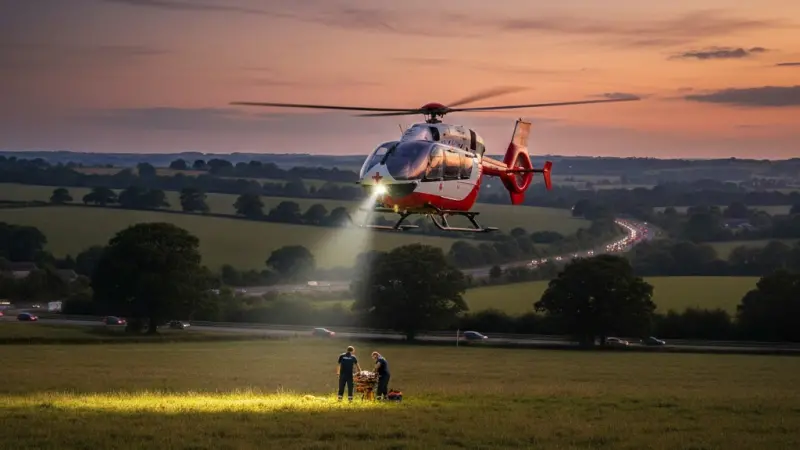
The Air Ambulance sector in the United Kingdom represents a unique and vital intersection of charitable enterprise, advanced aviation technology, and emergency medicine. Unlike many other nations where HEMS (Helicopter Emergency Medical Services) are state-funded, the UK model relies predominantly on public donations and corporate sponsorship, overseen by the Association of Air Ambulances (Air Ambulances UK).
Economically, the sector is more significant than many realize. It supports thousands of high-skilled jobs in aerospace engineering, specialized medicine, and aviation logistics. Each flight represents a complex orchestration of resources, where the cost per mission can range from £2,500 to £4,000. In a landscape where every second counts, these services bridge the gap between remote locations and Major Trauma Centres (MTCs), effectively decentralizing emergency care and significantly improving survival rates for cardiac arrests and road traffic collisions. For specialized service providers looking to connect with these regional operations, utilizing a uk local business directory is an essential step in understanding the regional infrastructure that supports these charities.
The Landscape of Air Ambulance Services in the UK
The UK market consists of 21 individual air ambulance charities operating around 40 helicopters. While they work in close partnership with the NHS and regional Ambulance Service Trusts, they remain independent financial entities. Post-pandemic, the industry has seen a shift toward more robust clinical frameworks and a greater emphasis on "All-Weather" capabilities.
During the COVID-19 lockdowns, traditional fundraising plummeted, forcing the sector to innovate its digital outreach. Post-pandemic, we have seen a "reset" in the market, with an increased focus on night-flying capabilities and the integration of specialist doctors alongside paramedics on every flight. Market activity is highest in geographically challenging regions like Scotland, Wales, and the South West, where road ambulance response times are naturally hampered by terrain.
The industry has evolved into a sophisticated network of regional hubs. As these charities continue to professionalize, their need for high-quality local suppliers—from medical equipment distributors to maintenance crews—has grown. Professionals in this space often find that appearing in a uk verified business listings database allows them to be vetted by procurement officers more efficiently. The current market size is estimated in the hundreds of millions when factoring in capital expenditure for new aircraft like the Airbus H145, which has become the industry standard for modern UK operations.
Comprehensive Services Breakdown
Air ambulance services in the UK provide much more than just a "fast taxi" to the hospital. The niche can be broken down into several distinct service layers:
HEMS (Helicopter Emergency Medical Services): The most visible wing, responding to 999 calls for trauma, medical emergencies, and accidents.
Inter-Hospital Transfers: Specialized transport for critically ill patients who need moving between hospitals for specialist care (e.g., ECMO or pediatric intensive care).
Search and Rescue (SAR) Support: While SAR is technically handled by the Coastguard (MCA), air ambulances often provide the clinical "top-up" for rescued individuals.
Specialist Critical Care Cars: Most air ambulance charities operate a fleet of rapid response vehicles (RRVs) to ensure they can still deliver a doctor-led team to a scene when the aircraft is grounded by bad weather.
Training and Consultancy: Many UK air ambulances have become global leaders in pre-hospital emergency medicine (PHEM) training, selling their expertise back to the healthcare sector.
For those operating within the supply chain of these services, visibility is everything. A business listing uk can help smaller, specialized medical tech firms get noticed by regional charity boards.
These services rely on a massive ecosystem of support, including fuel suppliers, specialized hangar developers, and uniform manufacturers, all of whom contribute to the UK’s status as a world leader in aeromedical logistics.
How to Choose the Right Service Provider
For consumers, insurance providers, or private hospitals looking to arrange transfers, selecting a provider requires due diligence. In the UK, the "gold standard" is CQC (Care Quality Commission) registration. Any reputable air ambulance must be registered and inspected regularly to ensure clinical safety.
Beyond clinical accreditation, one should look for:
CAMTS Global Accreditation: The Commission on Accreditation of Medical Transport Systems is the hallmark of safety and quality in aviation and clinical care.
Local Reputation: Reviews and community engagement often tell the story of a charity’s reliability.
Response Capabilities: Does the provider offer 24/7 coverage, or are they limited to daylight hours?
Equipment Levels: Ensure the provider carries blood products (Pre-hospital blood transfusion) and advanced ventilators.
Navigating the landscape of providers can be complex, especially when searching for secondary services like private medical repatriation. Using a find local businesses uk tool allows users to filter by region and specialty. It is also wise to check for a business listing uk to verify that the business has a verified physical presence and contact protocol.
Industry Challenges & Future Outlook
The primary challenge facing the sector is the "Green Transition." Aviation is notoriously difficult to decarbonize. However, we are seeing the first steps toward sustainable aviation fuel (SAF) trials in the UK. Furthermore, the Civil Aviation Authority (CAA) is currently reviewing regulations regarding drone integration. In the future, we may see "drone swarms" delivering blood or defibrillators to a scene minutes before the helicopter arrives.
Regulatory changes regarding noise pollution and night-flight paths in urban areas like London and Birmingham continue to present logistical hurdles. However, the move toward "Virtual Reality" training for flight crews and the use of 5G for real-time data transmission from the helicopter to the hospital are revolutionary shifts. As these technologies emerge, businesses providing digital infrastructure for the sector should ensure they are listed in the uk service listings to stay at the forefront of procurement cycles.
Business Tips for Air Ambulance Services Professionals
If you are running a business in the aeromedical or emergency services sector, digital visibility is your most potent tool. The "local" element of an air ambulance is its strongest brand asset; people donate to and work with the service that saves lives in their county.
Marketing Strategies:
Hyper-Local SEO: Ensure your business appears in searches for "emergency services support [City Name]."
Trust Signals: Display your CQC ratings and CAA certifications prominently.
Business Directories: To compete with larger national firms, a uk small business directory entry can provide the necessary backlink profile and local relevance to boost your search engine rankings.
B2B Networking: Many air ambulances are charities looking for corporate partners. Positioning your business as a community-minded entity via a uk b2b business directory can open doors to high-value sponsorship and procurement contracts.
Wrapping Up & Local Page Integration
The Air Ambulance sector is a cornerstone of the UK’s healthcare resilience. Its ability to innovate, despite a funding model based on public generosity, is a testament to British business ingenuity and clinical excellence. As the industry moves toward a more digital and sustainable future, the connections between service providers and the communities they serve will only become more vital.
For any business operating in or alongside this sector—whether you provide the medical tech, the aviation fuel, or the marketing support—the need to be discoverable is paramount. Local Page UK provides the infrastructure to ensure your business is visible to the right people at the right time.
Boost Your Visibility with Local Page UK
In the high-stakes world of emergency services, being found online is not just about profit—it’s about being part of a vital supply chain that saves lives. Whether you are a specialized medical consultant or a local engineering firm, you need to be where your clients are looking. We encourage all UK-based service providers to claim their business listing uk today. By joining the local page uk listings, you ensure that your business is indexed in a premium environment, helping you reach more customers and contribute to the flourishing UK local economy.
Frequently Asked Questions
1. How are air ambulance services funded in the UK? Air ambulance services in the UK are almost entirely funded by public donations. While they work alongside the NHS, they are independent charities that receive little to no direct government or National Lottery funding for their daily operations. Each charity must raise millions of pounds annually through community fundraising, charity shops, and corporate partnerships to keep their helicopters flying.
2. What is the average response time for an air ambulance? The goal is usually to be airborne within 2 to 4 minutes of a call being accepted. Depending on the distance, an air ambulance can reach most patients within its region in under 15 to 20 minutes.
This "Golden Hour" response is critical for trauma patients where rapid transit to a Major Trauma Centre significantly improves the chances of survival and recovery.
3. Do air ambulances fly at night? Many UK air ambulance charities now operate 24/7 or have extended their hours into the night. This is made possible through the use of Night Vision Imaging Systems (NVIS) and high-tech cockpit equipment. However, night operations are more complex and require specific landing site surveys, often meaning they will land at pre-designated "lit" sites or use powerful onboard searchlights.
4. Can an air ambulance land anywhere? Pilots are highly trained to land in "unimproved" sites, such as parks, school fields, or even blocked motorways. However, safety is the primary concern. They require a clear area, usually about the size of a tennis court, free from overhead wires, loose debris, and livestock. The final decision on landing safety always rests with the aircraft commander.
5. What clinical staff are on board? Typically, a UK air ambulance carries a pilot and a team of two clinical staff. This usually consists of a Specialist Critical Care Paramedic and a Consultant-level Doctor specializing in anesthesia or emergency medicine. This allows the team to perform advanced procedures at the scene, such as pre-hospital emergency anesthesia or even thoracotomies, which are usually only done in hospitals.
6. Is there a charge for being rescued by an air ambulance? No, there is no charge to the patient for the services of a charitable air ambulance in the UK. Because they are funded by donations, the care provided at the scene and the flight to the hospital are free at the point of use, ensuring that life-saving intervention is available to everyone regardless of their financial status.
7. How do air ambulances decide which calls to attend? Dispatchers known as "HEMS Despatchers" sit in the regional ambulance control rooms. They monitor all 999 calls in real-time. They look for "triggers" such as falls from height, high-speed road accidents, or cardiac arrests in remote areas. They then "task" the air ambulance to the incidents where the speed of the aircraft or the skills of the medical team will make the most difference.
8. What is the difference between HEMS and the Coastguard? HEMS (Air Ambulances) focus on medical emergencies and trauma, usually landing on solid ground. The Coastguard (MCA) helicopters are primarily for Search and Rescue, equipped with winches for sea rescues or mountain cliff extractions. While their roles overlap, the Coastguard is a government-funded emergency service, whereas Air Ambulances are charities.
9. What aircraft are most commonly used in the UK? The most popular models are the Airbus H135 and the larger H145. These helicopters are preferred because of their compact footprint, rear-loading "clamshell" doors for stretchers, and high performance in hot or high-altitude conditions. They are often described as "flying emergency rooms" due to the amount of medical equipment packed into the cabin.
10. Can air ambulances carry children? Yes, though most HEMS teams treat both adults and children, there are also specialized "Children’s Air Ambulances." These are dedicated high-speed transfer services that move critically ill children and babies between specialist pediatric intensive care units. They function more as an inter-hospital transfer service rather than a scene-response service.
11. How much does a single air ambulance mission cost? The cost varies by region, but on average, a single mission costs between £3,000 and £4,500. This includes fuel, aircraft maintenance, medical supplies, and the salaries of the professional crew. Because they receive no state funding, these costs must be covered entirely by the charity's reserves and ongoing fundraising efforts.
12. Do air ambulances carry blood? Yes, most major air ambulances in the UK now carry "Blood on Board." This usually consists of O-negative blood and freeze-dried plasma. This allows the medical team to perform life-saving blood transfusions at the side of the road, which is a major factor in surviving catastrophic bleeding before reaching the hospital.
13. What happens if the weather is too bad to fly? If the cloud base is too low or the wind is too high, the aircraft is "grounded." However, the medical team is not. They will deploy in a Rapid Response Vehicle (a high-performance car) equipped with the same medical kit as the helicopter. They can still reach the patient and provide the same level of doctor-led care, even if they can't fly them to the hospital.
14. How can a business support an air ambulance? Businesses can support through "Charity of the Year" partnerships, payroll giving, or sponsoring specific pieces of equipment.
Many businesses also provide "in-kind" support, such as professional services or products. This is a great way for a company to build local brand equity and demonstrate social responsibility within its operating region.
15. Is the air ambulance sector regulated? Yes, it is strictly regulated by two bodies. The Civil Aviation Authority (CAA) oversees all flight safety, pilot licensing, and aircraft maintenance. The Care Quality Commission (CQC) oversees the clinical side, ensuring that the medical care provided to patients meets national standards of safety, effectiveness, and compassion.
Disclaimer: The information provided in this article is for general informational and research purposes only. Company details, features, services, and market positions may change over time. Readers are advised to visit official company websites and conduct independent research before making any business decisions or purchasing services.
Most Searchable Keywords
Recent Blogs


Related Listings
Categories
- Accountants (295)
- Advertising Agencies (559)
- Architects (149)
- Automobiles (377)
- Beauty (300)
- Carpenters (146)
- Cleaning Services (387)
- Dentists (189)
- Driving (62)
- Electricians (215)
- Energy (8)
- Event Organiser (686)
- Finance (602)
- Guide (3373)
- Health (2207)
- Information technology (206)
- Legal Services (353)
- Logistics (6)
- Maintenance (65)
- Manufacturing (35)
Sponsored Listings in Travel Agencies



Related Blogs

Explore Dog Friendly Walks in the Cotswolds f...
Read this insightful article "Explore Dog Friendly Walks in the Cotswolds for 2026" to expand your knowledge!

How Much Do UK Actors Really Earn Full Indust...
Read this insightful article "How Much Do UK Actors Really Earn Full Industry Breakdown" to expand your knowledge!

Blue Light Card UK 2026 Check Eligibility and...
Read this insightful article "Blue Light Card UK 2026 Check Eligibility and Claim" to expand your knowledge!
Questions & Answers – Find What
You Need, Instantly!
How can I update my business listing?
Is it free to manage my business listing?
How long does it take for my updates to reflect?
Why is it important to keep my listing updated?
