
Air Tightness Testing UK: Building Standards, Methods & Certification Steps
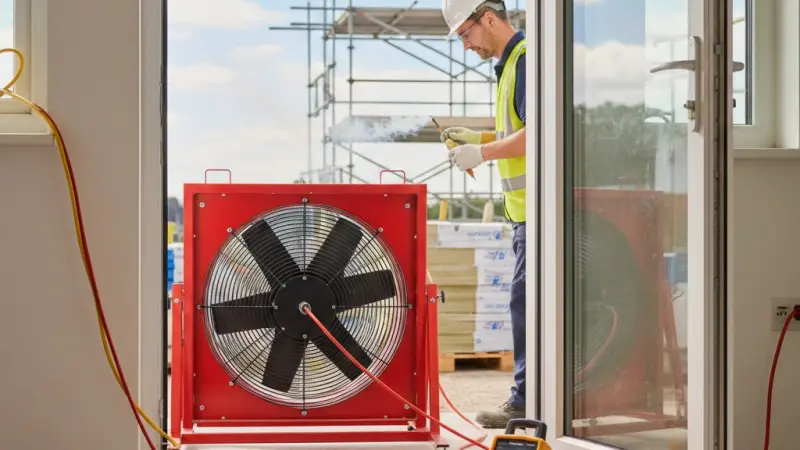
In the contemporary landscape of British construction, air tightness testing—often referred to as air permeability or blower door testing—has shifted from a niche technical requirement to a cornerstone of building compliance and sustainability. As the UK strives toward its ambitious Net Zero 2050 goals, the economic importance of this sector cannot be overstated. Air leakage accounts for a significant portion of heat loss in residential and commercial properties; consequently, ensuring a building envelope is "airtight" is essential for thermal efficiency and reducing carbon footprints.
For the UK economy, this sector represents a burgeoning professional services niche. It bridges the gap between architectural design and real-world performance. From an investment perspective, high-quality air tightness testing saves property owners thousands of pounds in energy bills over the building's lifecycle. Furthermore, for those looking to find local businesses uk that specialise in energy efficiency, the market is more competitive than ever. The industry now supports thousands of skilled technicians and assessors, contributing to a robust green-building supply chain that underpins the UK’s transition to a low-carbon economy.
The Landscape of Air Tightness Testing in the UK
The UK market for air tightness testing has seen exponential growth over the last decade, primarily driven by successive updates to Part L of the Building Regulations. Currently, the market is estimated to be worth tens of millions of pounds annually, with a high concentration of activity in urban development hubs such as Greater London, Manchester, and Birmingham. However, with the rise of regional "levelling up" projects and the demand for high-performance housing in rural areas, the need for qualified technicians is spreading nationwide.
Post-pandemic, the industry has evolved significantly. The lockdown periods highlighted the importance of indoor air quality and mechanical ventilation, leading to a more holistic view of how air tightness interacts with occupant health. Many firms have shifted toward digital-first operations, using a uk business directory website to manage their visibility and lead generation as site visits became more regulated. We have also seen a shift toward "Pulse" testing—a newer, low-pressure method—alongside traditional blower door tests, reflecting an industry that is rapidly innovating to meet faster construction timelines. For contractors seeking reliable partners, consulting a uk professional services listings has become the standard method for vetting regional specialists.
Comprehensive Services Breakdown
The services within the air tightness niche are diverse, ranging from pre-construction design reviews to final certification.
Air Permeability Testing (Residential & Commercial): The core service involves using fans to pressurise or depressurise a building to measure the rate of air leakage. Residential tests are mandatory for new builds, while commercial tests often require more complex multi-fan setups.
Smoke Testing and Thermal Imaging: Often performed alongside air tests, these diagnostic tools help identify exactly where air is escaping. Smoke pens or thermal cameras can pinpoint cracks in joints, window frames, or service penetrations.
Design Stage Consultancy: Expert analysts review architectural drawings to identify potential "leakage paths" before a single brick is laid. This proactive approach prevents costly failures at the final stage.
Acoustic Testing: Many providers offer "sound insulation testing" as a bundled service, as both air and sound testing are often required for Building Control sign-off.
Ventilation Validation: With tighter buildings comes the need for better airflow. Services now often include testing the flow rates of extractor fans and MVHR (Mechanical Ventilation with Heat Recovery) systems.
For businesses looking to offer these specialised services, appearing in a uk b2b business
directory is essential for securing contracts with major developers and local authorities.
How to Choose the Right Service Provider
Selecting a service provider is a critical decision for developers and homeowners alike. A "failed" test can delay the issuance of a Completion Certificate, leading to significant financial penalties.
Accreditations: Ensure the provider is registered with a government-authorised scheme such as iATS (Independent Air Tightness Testing Scheme) or ATTMA (Air Tightness Testing & Measurement Association).
Reviews and Local Reputation: Check for a business listing uk on reputable platforms to read client testimonials and verify their track record in your specific region.
Insurance: The provider must hold professional indemnity and public liability insurance.
Equipment Calibration: Ask to see calibration certificates for their fans and gauges; inaccurate equipment can lead to false failures or, worse, false passes.
By utilizing a uk service listings platform, consumers can compare different providers based on these criteria, ensuring they hire a verified professional rather than an uncertified amateur.
Industry Challenges & Future Outlook
The industry faces several challenges, notably the "performance gap"—the discrepancy between how a building is designed to perform and how it actually performs. Regulatory changes, such as the Future Homes Standard, are set to tighten air permeability limits even further, potentially making "Pulse" testing the preferred method for its ease of use in occupied buildings.
Sustainability initiatives are also driving the adoption of bio-based insulation and smart vapour barriers, which require different testing considerations. Furthermore, the integration of IoT (Internet of Things) sensors to monitor air tightness in real-time is on the horizon. To stay ahead, professionals must maintain a strong digital presence; a business listing uk is often the first step for a small firm to demonstrate its adoption of these new technologies to a wider audience.
Business Tips for Air Tightness Testing Professionals
For professionals in this sector, technical expertise is only half the battle; digital visibility is the other. In a competitive local market, your business needs to be where the contractors are looking.
Local SEO: Ensure your business is listed in a uk local business directory to capture "near me" searches from developers.
Content Marketing: Write case studies on how you helped a client achieve a difficult air tightness target.
Networking: Use a uk b2c business directory to reach individual homeowners who may need retrospective testing for energy renovations.
Verified Status: Having a uk verified business listings badge builds immediate trust with high-value clients who are wary of "cowboy" operators.
Wrapping Up & Local Page Integration
Air tightness testing is more than a regulatory hurdle; it is a vital service that ensures the UK's building stock is fit for the future. As standards become more stringent, the demand for authoritative, accredited, and highly visible testing professionals will only grow. For businesses in this sector, the ability to be discovered by local developers and homeowners is paramount to success.
Local Page UK serves as the premier solution for UK businesses looking to bridge the gap between their technical services and the digital marketplace. By providing a platform where expertise meets visibility, Local Page ensures that the best service providers are always just a click away.
Boost Your Visibility with Local Page UK
In the specialised field of Air Tightness Testing, your reputation is built on being found at the right time. Whether you are a solo surveyor or a large national consultancy, having a strong presence in a uk local trades directory is the most effective way to grow your client base. Don't let your competitors take the lead; take five minutes today to claim your business listing uk and start reaching the thousands of developers and homeowners searching for your expertise every month.
Frequently Asked Questions
What is a "good" air tightness score in the UK? Under current Part L regulations, the maximum allowable air permeability is 8.0 $m^3/(h \cdot m^2)$ at 50 Pa for new dwellings. However, many modern builds, especially those aiming for Passivhaus standards, strive for scores below 1.0 $m^3/(h \cdot m^2)$, representing a very high level of thermal efficiency.
When should an air tightness test be carried out? The formal test is usually conducted at the "second fix" stage, once the building envelope is complete but before final decorations. It is often wise to conduct a "pre-test" earlier in the build when leakage paths are still accessible and easier to seal.
How long does a standard air test take? For a standard three-bedroom semi-detached house, the physical test takes about 60 to 90 minutes.
This includes setting up the equipment, taking measurements, and packing away. Larger commercial units can take several hours or even days depending on complexity.
What happens if a building fails its air tightness test? If a building exceeds the target score, the technician will usually use smoke pens to identify the leaks. The contractor must then seal these areas and a re-test is performed. Failure to eventually pass means the building cannot be signed off by Building Control.
Is air tightness testing mandatory for extensions? Generally, air tightness testing is mandatory for new-build properties. However, for large extensions or "change of use" projects, Building Control may request a test if the energy calculations (SAP) require a specific permeability level to pass.
What is the difference between air tightness and ventilation? Air tightness refers to uncontrolled air leakage through gaps in the structure. Ventilation is controlled air movement designed to provide fresh air and remove moisture. The mantra in the industry is "build tight, ventilate right."
How much does air tightness testing cost in the UK? Prices vary by region and building size, but a single residential test typically costs between £150 and £300. Commercial tests are significantly more expensive due to the increased equipment and time required for larger volumes.
What are the most common areas for air leakage? Common culprits include service penetrations (pipes and wires), around window and door frames, gaps under skirting boards, and loft hatches. In timber-frame houses, the "sole plate" and junction between floors are also high-risk areas.
Can I do an air tightness test myself? While you can hire a smoke machine to find leaks, a formal certificate for Building Control must be issued by a registered and accredited professional using calibrated equipment. Self-testing is not valid for legal compliance.
What is the "Pulse" testing method? Pulse testing is a relatively new technique that measures air leakage at low pressure (4 Pa) by releasing a short burst of air. It is less invasive than the traditional 50 Pa blower door test and is gaining popularity for domestic assessments.
Does air tightness testing affect my EPC rating? Yes, the results of the air test are fed into the SAP or SBEM calculations, which directly determine the Energy Performance Certificate (EPC) rating. A better air tightness score can significantly improve the final grade.
Are there different standards for commercial buildings? Yes, commercial buildings fall under Part L2 of the Building Regulations. Because of their size and volume, they often require multiple fans and more rigorous calculations to determine the air permeability across the larger surface area.
What is the ATTMA? The Air Tightness Testing & Measurement Association (ATTMA) is a professional body that ensures testing standards are met. Members must undergo regular audits and use software that uploads results directly to a central database to prevent fraud.
How do I prepare a site for an air test? Ensure all windows and external doors are closed, all internal doors are propped open, and all water traps (sinks, toilets) are filled.
All "uncontrolled" openings must be sealed, while "controlled" ventilation (like trickle vents) should be closed.
What is the future of air tightness in the UK? The Future Homes Standard 2025 is expected to make air tightness even more stringent. We will likely see the integration of air testing with heat pump installations to ensure that low-carbon heating systems operate at maximum efficiency.
Disclaimer: The information provided in this article is for general informational and research purposes only. Company details, features, services, and market positions may change over time. Readers are advised to visit official company websites and conduct independent research before making any business decisions or purchasing services.
Most Searchable Keywords
Recent Blogs


Related Listings

Categories
- Accountants (295)
- Advertising Agencies (559)
- Architects (149)
- Automobiles (377)
- Beauty (300)
- Carpenters (146)
- Cleaning Services (387)
- Dentists (189)
- Driving (62)
- Electricians (215)
- Energy (8)
- Event Organiser (686)
- Finance (602)
- Guide (3374)
- Health (2207)
- Information technology (206)
- Legal Services (354)
- Logistics (6)
- Maintenance (65)
- Manufacturing (35)
Sponsored Listings in Travel Agencies


Related Blogs

Meet the Fair Work Agency Changing UK Work Ru...
Read this insightful article "Meet the Fair Work Agency Changing UK Work Rules in 2026" to expand your knowledge!

Collective Redundancy Errors Now Carry Higher...
Read this insightful article "Collective Redundancy Errors Now Carry Higher 2026 Penalties" to expand your knowledge!

Explore Dog Friendly Walks in the Cotswolds f...
Read this insightful article "Explore Dog Friendly Walks in the Cotswolds for 2026" to expand your knowledge!
Questions & Answers – Find What
You Need, Instantly!
How can I update my business listing?
Is it free to manage my business listing?
How long does it take for my updates to reflect?
Why is it important to keep my listing updated?
