
Arboricultural Services UK: Tree Care Standards, Risks & Contractor Selection
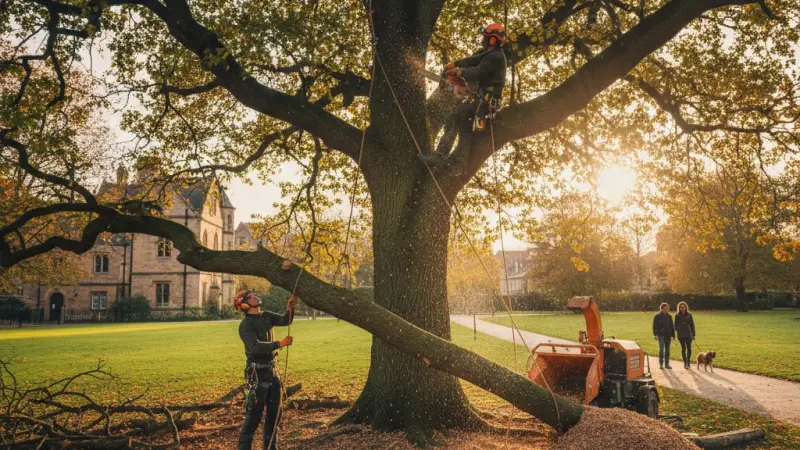
The arboricultural sector in the United Kingdom represents a vital intersection of environmental stewardship, public safety, and economic contribution. Often referred to colloquially as "tree surgery," professional arboriculture goes far beyond simple maintenance; it is a science-led discipline essential for the management of the UK's urban forests and rural woodlands. As we navigate the 21st century, the economic importance of this sector has surged, driven by a national push for "Green Infrastructure" and stringent Health and Safety (H&S) regulations regarding tree management in public and private spaces.
For the modern British homeowner or commercial developer, the value of mature trees is quantifiable, adding up to 15% to property values while providing critical ecosystem services such as carbon sequestration and flood mitigation. However, with this value comes the necessity for expert oversight. The UK market is currently seeing a significant shift towards professionalization, where "cowboy" contractors are being displaced by accredited firms. For these verified professionals, visibility is key, and many find success by listing their services on a business listing uk to bridge the gap between technical expertise and local demand.
The industry contributes hundreds of millions of pounds to the UK GDP annually, supporting thousands of jobs ranging from climbing arborists to consultants and urban foresters. As climate change increases the frequency of extreme weather events, the demand for risk assessment and emergency tree works has solidified arboriculture as a non-discretionary service for local authorities and infrastructure providers alike.
The Landscape of Arboriculture in the UK
The current market size of the UK arboriculture industry is robust, characterized by a mix of micro-businesses, regional specialists, and large-scale environmental consultancy firms. Following the post-pandemic "home improvement boom," the sector experienced a 20-30% spike in residential demand as homeowners invested in their gardens. Simultaneously, the public sector has ramped up its tree-planting initiatives to meet the government’s target of planting 30,000 hectares of trees per year by 2025.
Geographically, the South East and London remain the highest regions of activity due to high property values and dense urban canopies that require constant management. However, significant growth is also being observed in the North West and Scotland, driven by large-scale reforestation and biomass energy projects. Post-pandemic, the industry has evolved to embrace more flexible, digitally-integrated workflows. Consumers no longer rely on paper flyers; they seek local business listings uk to verify the credibility of a service provider before making contact.
The evolution of the industry is also marked by a shift in perception. Once viewed as a purely manual trade, it is now recognised as a specialized technical field. The emergence of the "Arboricultural Association" and "Lantra" qualifications has set a high bar for entry. Modern arborists use advanced technology—from sonic tomograph decay detection to drone-based canopy analysis—ensuring that tree care is proactive rather than reactive. This modernization has allowed the UK to lead the way in international standards for amenity tree management.
Comprehensive Services Breakdown
Navigating the various offerings within the arboricultural niche requires an understanding of both "Amenity" and "Commercial" services. A professional outfit will typically offer a spectrum of products and services designed to manage the lifecycle of a tree from planting to final removal.
Crown Thinning and Lifting: This involves the selective removal of inner branches to reduce wind resistance or increase light penetration. It is a delicate art that requires a deep understanding of tree physiology to ensure the specimen’s health is not compromised.
Sectional Felling and Dismantling: In tight urban spaces where a tree cannot be "felled" in one go, arborists use complex rigging systems to lower branches safely. This service is high-risk and requires significant insurance coverage. Many top-tier firms providing these services are listed on the uk local business directory to showcase their specialized equipment and safety records.
Stump Grinding: Once a tree is removed, the stump remains a trip hazard and a potential host for honey fungus. Professional stump grinding machines turn the root ball into mulch, allowing for replanting.
Tree Preservation Order (TPO) Consultancy: Many UK trees are protected by law. Specialist consultants handle the paperwork for planning applications, ensuring homeowners don't face the heavy fines associated with unauthorized work.
Emergency Call-outs: Storm damage response is a critical service. High-quality firms often use a business listing uk to ensure they are the first point of contact when a local resident searches for urgent assistance.
By offering a diverse portfolio, UK arboricultural businesses ensure year-round revenue, balancing seasonal pruning with year-round commercial site clearances and safety inspections.
How to Choose the Right Service Provider
Selecting a tree surgeon is a decision fraught with risk. In the UK, the industry is self-regulated to an extent, meaning the onus is on the consumer to verify credentials. The difference between a professional arborist and an untrained individual can be the difference between a healthy tree and a fatal accident.
First and foremost, check for NPTC (City & Guilds) or Lantra certifications. These are the industry standards for chainsaw use, aerial rescue, and pesticide application.
Without these, the contractor is not legally qualified to operate. Secondly, Insurance is non-negotiable. A reputable firm should carry a minimum of £5 million in Public Liability Insurance.
Local reputation is the third pillar of selection. In the digital age, this means looking beyond a fancy website. Smart consumers utilize uk service listings to read peer reviews and check "verified" status. A high local rating often indicates that the contractor understands the specific environmental conditions and local council regulations of your area.
Finally, always ask for a written quote. A professional will provide a breakdown of the work, including how waste will be disposed of (BS 3998 standards) and whether VAT is included. Avoid any contractor who asks for cash up-front or "cold calls" at your door—this is a classic red flag for non-accredited individuals.
Industry Challenges & Future Outlook
The UK arboricultural sector faces several pressing challenges, primarily the "Biosecurity" crisis. Ash Dieback (Hymenoscyphus fraxineus) and the Oak Processionary Moth are significantly altering the landscape, requiring arborists to become experts in disease management. These biological threats require strict sanitation protocols for tools and machinery to prevent cross-contamination.
Sustainability is the other major shift. There is an increasing move toward "Battery Powered" equipment to reduce noise pollution in residential areas and lower the carbon footprint of operations. Furthermore, the disposal of "Arisings" (woodchips and logs) is being reimagined through the lens of the circular economy, with waste being diverted to biomass power plants or local artisanal woodworkers. Firms that adapt to these green initiatives often gain a competitive edge in the uk online business directory markets.
Regulatory changes are also on the horizon. The "Environment Act 2021" has introduced mandatory "Biodiversity Net Gain" (BNG) for new developments, which will increase the demand for arboricultural impact assessments and long-term management plans. For businesses to stay ahead, they must leverage every available tool to find new contracts. Utilizing a business listing uk can help smaller firms gain visibility in a market that is increasingly dominated by large environmental groups.
Business Tips for Arboricultural Professionals
For the local tree surgeon, technical skill is only half the battle; the other half is marketing. In a crowded marketplace, digital visibility is the primary driver of growth. Relying solely on word-of-mouth is no longer a viable long-term strategy in the UK.
Optimize for Local SEO: Your business should appear when someone searches "tree surgeon near me." This involves maintaining a robust Google Business Profile and ensuring your NAP (Name, Address, Phone Number) data is consistent across every uk top rated local businesses platform.
Visual Content: Arboriculture is highly visual. Use social media to show "before and after" shots of pruning or the precision of a complex dismantle. This builds trust and demonstrates competence.
Directory Aggregation: Being present on multiple platforms increases your "citation" count, which improves your search engine ranking. Ensure your company is featured in a high-quality uk b2b business directory to catch the attention of commercial property managers and estate agents who require recurring maintenance contracts.
Customer Retention: Use email marketing to remind clients of biennial pruning cycles. A proactive approach to tree health keeps your schedule full during the quieter winter months.
By professionalizing the "front of house" as much as the "back of house" operations, UK arborists can build resilient, scalable businesses that survive beyond seasonal fluctuations.
Wrapping Up & Local Page Integration
The arboricultural industry is the silent backbone of the UK's green landscape. From protecting our historic oaks to ensuring our streets remain safe during winter gales, the value provided by professional arborists is immeasurable. As the sector continues to modernize and face new environmental challenges, the need for clear communication between service providers and clients has never been greater.
For UK arboricultural businesses looking to cement their local reputation and for consumers seeking the highest standards of care, Local Page UK serves as the premier solution. By offering a curated, high-authority environment, it ensures that quality trade services are just a click away. Whether you are a solo arborist or a large consultancy, navigating the uk local business directory is the most effective way to ensure your expertise is matched with the clients who need it most.
Boost Your Visibility with Local Page UK
In the competitive world of UK arboriculture, being a great tree surgeon isn't enough if people can't find you. Digital presence is the modern-day "Yellow Pages," but with much higher stakes. To reach more local homeowners, developers, and councils, you need to be where they are looking. We encourage all UK tree care professionals to claim their business listing uk today. By joining our network, you increase your search engine authority, build trust through verified data, and ensure that when a storm hits, your business is the first one found.
FAQ
What is the difference between a tree surgeon and an arborist?
While the terms are often used interchangeably, an arborist is generally considered a specialist in the care and maintenance of individual trees, often with a scientific or academic background. A tree surgeon typically focuses on the physical execution of work such as felling, pruning, and dismantling. In the UK, a professional arborist will likely hold higher-level Level 4 or 6 qualifications in arboriculture, whereas a tree surgeon focuses on NPTC practical certifications. Both are essential for high-quality tree management.
Do I need permission to cut down a tree in my own garden?
Yes, you may need permission if the tree is protected by a Tree Preservation Order (TPO) or if your property is within a Conservation Area. Felling a protected tree without permission can lead to fines of up to £20,000 per tree in a Magistrates’ Court, or unlimited fines in a Crown Court. It is always best to consult a professional who can check the local council’s records for you before work begins.
How much does it cost to remove a medium-sized tree in the UK?
Costs vary significantly based on location, access, and complexity, but generally, you can expect to pay between £400 and £800 for a medium-sized tree. This usually includes the felling and the removal of all waste material. If the tree is in a precarious position or requires specialized rigging, the price will increase. Always obtain multiple quotes from contractors listed in a reputable directory to ensure competitive pricing.
What insurance should a tree surgeon have?
A professional tree surgeon must have Public Liability Insurance, typically with a minimum cover of £5 million. This protects you, the homeowner, and members of the public in the event of property damage or injury. Additionally, if the firm has employees, they must have Employers' Liability Insurance. You should always ask to see a valid insurance certificate before any work commences on your property.
What is British Standard 3998 (BS 3998)?
BS 3998:2010 is the British Standard for "Tree Work – Recommendations." it provides guidelines on the best practices for pruning, bracing, and managing trees to ensure their long-term health and safety. Any reputable UK contractor will state that their work is carried out in accordance with BS 3998. Using these standards ensures that the tree is not unnecessarily stressed or left susceptible to disease after pruning.
When is the best time of year to prune trees?
For most deciduous trees, the best time to prune is during the dormant season (late autumn to late winter). Pruning during dormancy minimizes stress on the tree and reduces the risk of pest and disease infestation. However, there are exceptions; for example, Cherry and Plum trees should be pruned in mid-summer to avoid Silver Leaf disease. A qualified arborist can provide a specific schedule based on the species in your garden.
What should I do if my neighbour's tree is overhanging my property?
Under UK Common Law, you have the right to trim overhanging branches back to your property boundary, provided you do not trespass on the neighbour's land to do so. However, you must offer the cuttings back to the neighbour, as they remain their property. It is highly recommended to discuss this with your neighbour first to maintain good relations and ensure the tree's health isn't compromised by the pruning.
Can I use woodchips from my tree as mulch?
Yes, woodchips make excellent mulch for garden beds, helping to retain moisture and suppress weeds. However, you should avoid using chips from trees that were removed due to certain diseases, such as Honey Fungus or Verticillium Wilt, as this could spread the pathogen to other plants in your garden. Fresh woodchips can also deplete nitrogen from the soil surface as they break down, so use them carefully around young plants.
What are the signs that a tree is dangerous or dying?
Common warning signs include large dead branches (dieback), cavities or rot in the main trunk, fungal brackets growing at the base (mushrooms), and a sudden lean. Cracks in the soil around the base of the tree can also indicate root heave. If you notice any of these signs, you should immediately contact a professional via a local trades directory to conduct a safety inspection and mitigate any risks.
How do I check if a contractor is properly qualified?
You should ask for their NPTC (National Proficiency Test Council) units, specifically CS30, CS31 (groundwork), and CS38, CS39 (aerial work). For consultancy work, look for a Level 4 Diploma or higher. Additionally, membership in the Arboricultural Association as an "Approved Contractor" is a gold-standard indicator of quality and safety compliance in the UK.
Why is it important to remove tree stumps?
While leaving a stump to rot naturally is an option, it can take decades and may attract pests like termites or carpenter ants. More importantly in the UK, old stumps can become host to Honey Fungus, which can spread underground and kill other healthy trees and shrubs in your garden. Stump grinding is a quick and effective way to remove the hazard and clear the space for new planting.
What is an Arboricultural Impact Assessment (AIA)?
An AIA is a document usually required for planning applications when construction is proposed near trees. It evaluates how the development will affect the trees and vice versa. It includes a tree survey, a categorization of tree quality, and a protection plan to ensure trees are not damaged by heavy machinery or soil compaction during the building process.
How can I help my trees during a summer drought?
Mature trees generally have deep roots, but prolonged dry spells can still cause stress. You can help by watering the "drip line" (the area directly under the outer circumference of the branches) rather than the trunk. Applying a layer of organic mulch around the base will also help retain soil moisture. If you see leaves wilting or dropping prematurely in summer, it is a sign the tree is struggling with water stress.
Is ivy harmful to trees?
Contrary to popular belief, ivy is not a parasite and does not "strangle" trees or suck nutrients from them. However, very heavy ivy growth can hide structural defects (like cracks or rot) from inspectors and add significant "wind sail" weight, making the tree more likely to blow over in a storm. It is often best to keep ivy growth restricted to the lower trunk for the sake of inspection and safety.
How often should my trees be inspected?
For residential properties, a professional safety inspection every 2 to 3 years is generally sufficient, unless the tree is very old or in a high-traffic area. For commercial properties or schools, annual inspections are often required to satisfy insurance and duty-of-care obligations. Regular inspections help catch minor issues before they become expensive or dangerous problems.
Disclaimer: The information provided in this article is for general informational and research purposes only. Company details, features, services, and market positions may change over time. Readers are advised to visit official company websites and conduct independent research before making any business decisions or purchasing services.
Most Searchable Keywords
Recent Blogs


Related Listings
Categories
- Accountants (295)
- Advertising Agencies (559)
- Architects (149)
- Automobiles (377)
- Beauty (300)
- Carpenters (146)
- Cleaning Services (387)
- Dentists (189)
- Driving (62)
- Electricians (215)
- Energy (8)
- Event Organiser (686)
- Finance (602)
- Guide (3373)
- Health (2207)
- Information technology (206)
- Legal Services (353)
- Logistics (6)
- Maintenance (65)
- Manufacturing (35)
Sponsored Listings in Travel Agencies


Related Blogs

Explore Dog Friendly Walks in the Cotswolds f...
Read this insightful article "Explore Dog Friendly Walks in the Cotswolds for 2026" to expand your knowledge!

How Much Do UK Actors Really Earn Full Indust...
Read this insightful article "How Much Do UK Actors Really Earn Full Industry Breakdown" to expand your knowledge!

Blue Light Card UK 2026 Check Eligibility and...
Read this insightful article "Blue Light Card UK 2026 Check Eligibility and Claim" to expand your knowledge!
Questions & Answers – Find What
You Need, Instantly!
How can I update my business listing?
Is it free to manage my business listing?
How long does it take for my updates to reflect?
Why is it important to keep my listing updated?
