
Archaeologists UK: Field Methods, Projects & Heritage Regulations
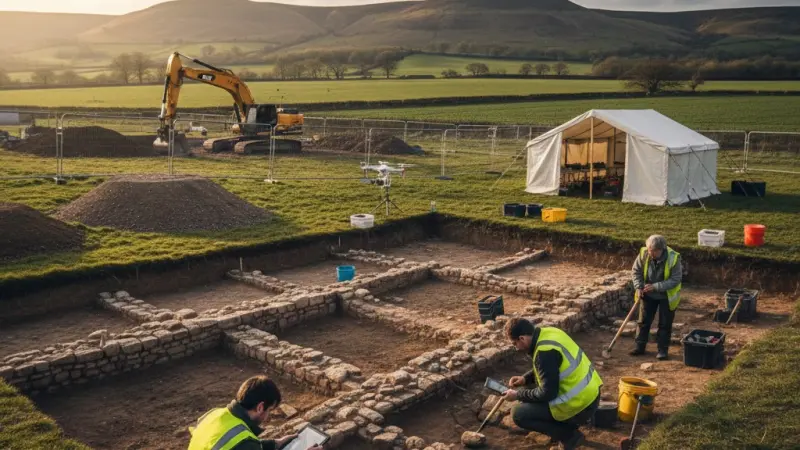
The archaeology sector in the UK represents a vital intersection of cultural preservation, academic rigor, and commercial necessity. Far from being a niche interest reserved for ivory towers, professional archaeology is a robust contributor to the British economy, fundamentally linked to the construction and infrastructure industries. As the UK continues to expand its housing stock and modernise its transport networks through projects like HS2, the role of the archaeologist has transitioned into a critical frontline consultant. These professionals ensure that our shared heritage is not lost to the march of progress, but rather documented, understood, and preserved for future generations.

The economic footprint of the sector is substantial, employing thousands of specialists across the country. In the current climate, any firm looking to establish its presence in this competitive field must consider its digital footprint. Startups and established consultancies alike often begin their growth journey by securing a business listing uk to ensure visibility among developers and local authorities. This integration of ancient history with modern commercial strategy defines the current state of British archaeology, where the "polluter pays" principle ensures that heritage management is an integral part of any significant development budget.
The Landscape of Archaeologists in the UK
The UK archaeology market has shown remarkable resilience in the face of global economic shifts. Post-pandemic, the industry has experienced a surge in demand, driven by the government's "build, build, build" agenda. Current market valuations suggest a sector that is more professionalised than ever, with a focus on commercial archaeology—often referred to as 'Developer-Led Archaeology.' Key regions of activity mirror the UK’s major infrastructure hubs, with significant concentrations of work in London, the South East, and the burgeoning 'Northern Powerhouse' regions where urban regeneration is at its peak.
The evolution of the industry post-pandemic has seen a rapid adoption of remote sensing technologies and digital data management. While fieldwork remains the heart of the profession, the way data is synthesised and presented to clients has become increasingly sophisticated. For those seeking these expert services, the most efficient method remains using a comprehensive local business listings uk service to filter by region and specialism. This digital transition has allowed smaller, regional units to compete with national heavyweights, provided they maintain a strong online presence and local reputation.
Comprehensive Services Breakdown
Archaeological services in the UK are diverse, ranging from initial desk-based assessments to full-scale excavations and post-excavation analysis. The primary service offered by commercial units is the Archaeological Evaluation. This usually follows a desk-based study and involves trial trenching to determine the presence, extent, and significance of archaeological remains within a proposed development site. This is a mandatory step in the planning process for many projects, ensuring that developers are aware of potential heritage constraints before significant capital is committed.
Beyond the initial assessment, the sector provides 'Mitigation' services. This might include 'Excavation' (the total record of remains before they are removed) or 'Watching Briefs' (where an archaeologist monitors construction groundworks). Specialist services also include environmental archaeology, human osteology, and maritime archaeology for coastal or offshore wind farm projects. To find these niche providers, businesses often consult a uk business directory or browse a business listing uk to find consultants who specialise in specific periods or regions. By leveraging these platforms, developers can find a balance between cost-effectiveness and high-quality heritage management.
How to Choose the Right Service Provider
Selecting an archaeological contractor is a decision that can significantly impact a project’s timeline and budget. The first thing to look for is accreditation. The Chartered Institute for Archaeologists (CIfA) is the leading professional body; hiring a Registered Organisation ensures that the work will meet high ethical and professional standards. Furthermore, local knowledge is invaluable. An archaeologist who has worked extensively in a specific county will have a better relationship with the local planning authority’s archaeological advisor, potentially smoothing the path for planning approvals.
In addition to credentials, insurance is non-negotiable. Professional Indemnity and Public Liability insurance protect both the consultant and the client during complex site works. Reviews and local reputation are also critical indicators of reliability.
Many developers now turn to uk top rated local businesses to see which firms have a proven track record of delivering reports on time and within budget. A provider who understands both the archaeology and the commercial realities of construction is a rare and valuable partner.
Industry Challenges & Future Outlook
The industry faces a unique set of challenges as it looks toward 2030. One of the most pressing issues is the "skills gap." As older professionals retire, there is a constant need for fresh talent capable of handling both the physical demands of digging and the digital demands of modern data recording. Furthermore, sustainability is becoming a key driver. Archaeological units are increasingly asked to demonstrate their "green" credentials, from reducing site vehicle emissions to implementing digital-only reporting to save paper.
Regulatory changes also loom on the horizon. Changes to the National Planning Policy Framework (NPPF) can have immediate effects on how archaeology is handled within the planning system. To stay ahead of these shifts, many firms are turning to a uk business listings online or searching a business listing uk to network with other industry leaders and heritage consultants. The future will likely see an even greater integration of Artificial Intelligence in predictive modeling, helping to identify potential heritage sites before a single spade touches the ground.
Business Tips for Archaeologists Professionals
For the independent archaeologist or the small unit, marketing can often feel like an afterthought. However, in a crowded market, digital visibility is paramount. Your website should not just be a CV; it should be a resource that demonstrates your expertise through case studies and white papers on local history. Local SEO is particularly effective for archaeologists because planning authorities often require "local" experts.
The most effective way to boost local visibility is to ensure your business is listed where developers look. Being part of a uk service listings platform allows your firm to appear in searches specifically tailored to regional service providers. Beyond this, engaging with local heritage groups and maintaining a presence on professional social networks can help build the "referral engine" that sustains many successful consultancies. Remember, in archaeology, your reputation is built on the quality of your last report and the efficiency of your last site clearance.
Wrapping Up & Local Page Integration
The UK's archaeological sector is a shining example of how heritage and modern development can coexist through professional management and clear regulation. It is an industry that requires a delicate balance of academic passion and commercial pragmatism. For the professionals working within this field, the goal is always the same: to provide the best possible data with the least possible disruption to the progress of the nation.
As we have explored, the digital landscape is now as important as the physical landscape. Whether you are a developer looking for a consultant or a professional looking for your next contract, having a centralised place to connect is essential. This is where uk online business directory services like Local Page UK become indispensable. By providing a bridge between specialized service providers and those who need them most, we ensure that the UK’s business ecosystem remains robust, visible, and historical.
Boost Your Visibility with Local Page UK
In the archaeology and heritage sector, being discovered by the right developer at the right time is the difference between a thriving consultancy and a quiet one. Local Page UK is the premier platform designed to help British businesses bridge the gap between their services and their local audience. By ensuring your firm is listed, you gain access to a network of professionals and clients actively seeking verified expertise. Don't let your heritage expertise remain buried—claim your business listing uk today and join the ranks of the UK's most visible and trusted service providers.
Frequently Asked Questions
1. What is the role of an archaeologist in a UK construction project?
The role of an archaeologist in UK construction is primarily to act as a heritage consultant during the planning and development phases. They are responsible for assessing whether a proposed site contains significant historical remains. This process usually begins with a desk-based assessment, where historical maps and records are analyzed.
If potential is found, the archaeologist will conduct fieldwork, such as trial trenching or geophysical surveys. Their ultimate goal is to ensure that the developer complies with the National Planning Policy Framework (NPPF). By identifying heritage risks early, they help avoid costly delays during the construction phase, ensuring that any historical data is "preserved by record" through excavation and documentation if it cannot be "preserved in situ."
2. Is archaeological work a legal requirement for all developments?
Archaeological work is not a blanket legal requirement for every single development, but it is a standard condition of the planning process under the NPPF. Local Planning Authorities (LPAs) have archaeological advisors who review planning applications. If a site is located within an Area of Archaeological Interest or is larger than a certain size, the LPA will likely attach a "condition" to the planning permission. This condition requires the developer to undertake a programme of archaeological work before any groundworks begin. Failure to comply with these conditions is a breach of planning control and can lead to enforcement action, including the halting of all site activities. Therefore, while it's a planning requirement rather than a standalone law, it is effectively mandatory for most significant projects.
3. What is a "Desk-Based Assessment" (DBA)?
A Desk-Based Assessment is the first stage of archaeological investigation. It involves a thorough review of existing information to determine the archaeological potential of a site without any physical digging. An archaeologist will consult the Historic Environment Record (HER), study old Ordnance Survey maps, examine aerial photographs, and review records of previous finds in the vicinity. The resulting report provides a "likelihood" score for different types of heritage assets being present. This document is crucial for developers as it provides an early warning system for potential costs and delays. If a DBA concludes there is low potential, the planning authority may not require further fieldwork, saving the developer significant time and resources.
4. How much does an archaeological excavation cost in the UK?
The cost of an archaeological excavation varies wildly depending on the size of the site, the depth of the archaeological deposits, and the complexity of the remains found. A simple watching brief might cost a few hundred pounds per day, whereas a full-scale urban excavation in a city like London or York can run into hundreds of thousands or even millions of pounds. Costs typically include the field staff's time, the hire of machinery (like toothless ditching buckets), specialist analysis (such as radiocarbon dating or bone analysis), and the final publication of the report. Most commercial units provide fixed-price quotes based on the project specification (WSI) agreed upon with the local planning authority's advisor.
5. What happens if an archaeologist finds human remains?
Finding human remains is a sensitive and strictly regulated occurrence in UK archaeology. If remains are discovered, work in that immediate area must stop, and the archaeologist must notify the Ministry of Justice to obtain an exhumation license under the Burial Act 1857. The discovery must also be reported to the local coroner and the police to ensure the remains are not part of a modern crime scene. Once the legalities are cleared, the remains are carefully excavated by specialists, often including an osteologist. Depending on the project's requirements, the remains may be scientifically analyzed to learn about the person's diet, health, and origin before being reburied or archived in a museum.
6. What is the difference between a "Watching Brief" and a "Full Excavation"?
A Watching Brief is a lower-level monitoring exercise where an archaeologist is present on-site during the developer’s groundworks (such as foundation trenching or soil stripping). The archaeologist observes the digging to ensure that if anything of interest appears, it can be recorded. It is often used when the archaeological potential is considered low but not zero. In contrast, a Full Excavation is a proactive, controlled investigation where archaeologists dig the site themselves before construction starts. This happens when significant remains are known to exist. Excavations are much more time-consuming and expensive but allow for a total record of the site’s history to be made before the remains are destroyed by development.
7. How long does an archaeological survey take to complete?
The timeframe for a survey depends on its type. A geophysical survey (using ground-penetrating radar or magnetometry) for a small field might take only one or two days on-site, with a week for the subsequent report. Trial trenching—where 3-5% of a site is sampled—can take anywhere from a few days to several weeks.
A full-scale excavation of a large site can take months. It is important to note that the "fieldwork" is only half the battle; the "post-excavation" phase, where finds are cleaned, labeled, and analyzed, often takes twice as long as the time spent digging. Developers are encouraged to build these timelines into their initial project management schedules.
8. Who owns the artifacts found during an excavation?
In England, Wales, and Northern Ireland, the ownership of archaeological finds (excluding those covered by the Treasure Act) generally rests with the landowner. However, it is standard practice and often a planning requirement for the landowner to sign a "Transfer of Title," donating the artifacts to a local museum so they can be kept in the public domain. If the find is made of gold or silver, or is part of a hoard of coins, it may be declared "Treasure" under the Treasure Act 1996. In such cases, the find must be reported to the local Coroner within 14 days, and the Crown may claim ownership, although a reward is usually paid to the finder and/or landowner.
9. What is a "Written Scheme of Investigation" (WSI)?
A Written Scheme of Investigation (WSI) is a formal document produced by an archaeological consultant that outlines exactly how they intend to carry out a specific piece of work. It details the methodology, the number of staff, the types of equipment to be used, and the standards for recording finds. Crucially, the WSI must be submitted to and approved by the Local Planning Authority’s archaeological advisor before any work begins. It acts as a contract between the archaeologist, the developer, and the planning authority, ensuring that the work meets professional standards and fulfills the planning conditions attached to the development.
10. Can I build over an archaeological site?
Yes, it is possible to build over an archaeological site, provided the significance of the remains has been appropriately addressed. The planning system prefers "preservation in situ," which means designing the building's foundations (using piles instead of deep strips, for example) so that they do not disturb the archaeology. If preservation in situ is not possible or the remains are not significant enough to warrant it, "preservation by record" is the alternative. This involves fully excavating and documenting the site so that even though the physical remains are removed, the information they contained is saved for history. Only the most significant sites (Scheduled Monuments) are strictly protected from development.
11. What is a Scheduled Monument?
A Scheduled Monument is a "nationally important" archaeological site or historic building, given protection against unauthorized change under the Ancient Monuments and Archaeological Areas Act 1979. Scheduling is the oldest form of heritage protection in the UK. Unlike listed buildings, which are managed through the local planning system, works on Scheduled Monuments require "Scheduled Monument Consent" (SMC) directly from the Secretary of State, advised by Historic England. Developing on or near a Scheduled Monument is extremely restricted, and any unauthorized work is a criminal offense. These sites range from prehistoric burial mounds to Cold War bunkers.
12. How do archaeologists use technology today?
Modern archaeology is highly technological. Beyond traditional shovels and trowels, archaeologists use drones for aerial photography and 3D photogrammetry to create digital models of excavations. Geographic Information Systems (GIS) are used to map finds with millimeter precision using GPS. Non-invasive techniques like LiDAR (Light Detection and Ranging) allow archaeologists to "see" through dense woodland to find hidden earthworks. In the lab, X-ray fluorescence (XRF) can determine the chemical composition of metals, and stable isotope analysis of teeth can reveal where a person grew up and what they ate. This tech-heavy approach makes the modern archaeologist a data scientist as much as a field worker.
13. What is the "Chartered Institute for Archaeologists" (CIfA)?
CIfA is the leading professional body for archaeologists in the UK and overseas. It sets the ethical and professional standards for the industry. While membership is not a legal requirement to practice, many developers and local authorities insist on hiring "CIfA Registered Organisations." This gives the client peace of mind that the firm adheres to a strict code of conduct and has been peer-reviewed for quality. For individual archaeologists, CIfA grades (PCIfA, ACIfA, MCIfA) represent their level of experience and expertise. Choosing a CIfA-accredited professional ensures that your heritage requirements are handled with the highest degree of integrity and professionalism.
14. How does archaeology contribute to sustainability?
Archaeology contributes to sustainability by fostering a sense of place and identity, which is a key pillar of social sustainability. By understanding the history of a landscape, communities can feel more connected to their environment. In practical terms, archaeology often informs sustainable land management; for example, studying ancient irrigation or drainage systems can help modern flood prevention.
Furthermore, the commercial archaeology sector is moving toward "green" site practices, such as using electric plant machinery and reducing the carbon footprint of digital data storage. Reusing historic buildings—often informed by archaeological building recording—is also much more carbon-efficient than demolition and rebuilding.
15. Why should I use a business directory to find an archaeologist?
Using a business directory is the most efficient way to navigate the specialized world of UK archaeology. Because the sector is fragmented into hundreds of small regional units and specialized consultants, a centralized directory allows you to compare providers based on their location, services, and accreditations. It saves time during the procurement process and ensures you are reaching out to active, verified businesses. For the archaeologist, being listed in a directory like Local Page UK is essential for "discoverability." It ensures that when a developer searches for "archaeologists in [Your City]," your firm appears as a professional, local solution to their planning needs.

Disclaimer: The information provided in this article is for general informational and research purposes only. Company details, features, services, and market positions may change over time. Readers are advised to visit official company websites and conduct independent research before making any business decisions or purchasing services.
Most Searchable Keywords

Recent Blogs



Related Listings

Categories
- Accountants (295)
- Advertising Agencies (559)
- Architects (149)
- Automobiles (377)
- Beauty (300)
- Carpenters (146)
- Cleaning Services (386)
- Dentists (189)
- Driving (62)
- Electricians (215)
- Energy (8)
- Event Organiser (685)
- Finance (599)
- Guide (3365)
- Health (2207)
- Information technology (206)
- Legal Services (353)
- Logistics (6)
- Maintenance (65)
- Manufacturing (35)

Sponsored Listings in Locksmith Services


Related Blogs

Gen Z Political Reporters and News Creators i...
Read this insightful article "Gen Z Political Reporters and News Creators in the UK" to expand your knowledge!

Famous Female Social Media Influencers Across...
Read this insightful article "Famous Female Social Media Influencers Across the UK" to expand your knowledge!

Your UK Sponsor Licence 2026 Step by Step Gui...
Read this insightful article "Your UK Sponsor Licence 2026 Step by Step Guide" to expand your knowledge!
Questions & Answers – Find What
You Need, Instantly!
How can I update my business listing?
Is it free to manage my business listing?
How long does it take for my updates to reflect?
Why is it important to keep my listing updated?
