
Artificial Grass Suppliers UK: Installation, Maintenance & Types Comparison
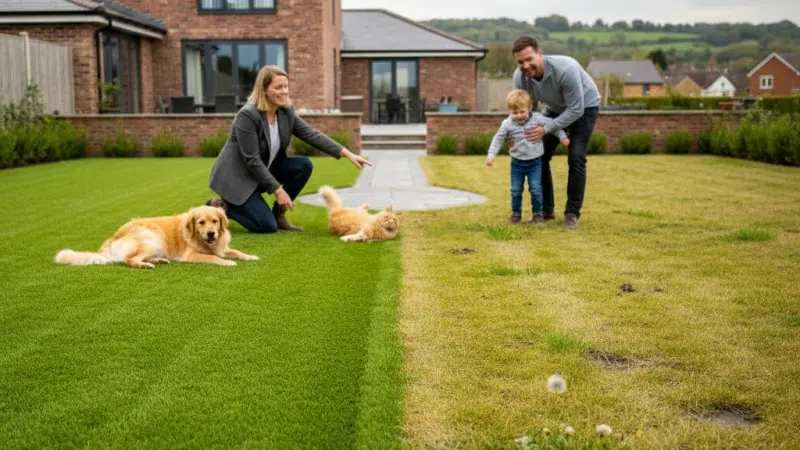
The British landscaping sector has witnessed a profound transformation over the last decade. Once a niche product reserved for professional sports pitches, synthetic turf has become a staple of modern residential and commercial design. As homeowners seek to balance aesthetic perfection with the time constraints of 21st-century life, the demand for high-quality business listing uk options has surged.

This guide serves as a comprehensive manual for property owners, developers, and trade professionals navigating the complex market of artificial grass. We will dissect the evolution of the industry, evaluate material technologies, and provide a strategic framework for choosing the right installation partners.
The Synthetic Green Revolution
The UK artificial grass market is no longer a peripheral industry; it is a multi-million-pound powerhouse. Recent economic data indicates a steady compound annual growth rate (CAGR) as British consumers prioritise "outdoor rooms" that remain functional year-round. This shift is driven by a combination of factors: the UK's unpredictable weather, which often leaves natural lawns waterlogged or scorched, and an increasing desire for low-maintenance living.
In the current climate, finding a reliable uk online business directory is the first step for many consumers looking to source local installers. The industry contributes significantly to the UK economy, supporting thousands of jobs in manufacturing, logistics, and skilled landscaping. From small urban balconies in London to sprawling commercial estates in the Midlands, synthetic turf is being deployed to solve drainage issues, improve accessibility, and provide pet-friendly environments.
2. The Landscape of Artificial Grass Suppliers in the UK
The post-pandemic era redefined our relationship with domestic space. During successive lockdowns, the garden became a sanctuary, leading to a "home improvement boom" that saw artificial grass sales skyrocket. Today, the landscape of local business listings uk reveals a maturing market where specialisation is the new competitive edge.
Market Size and Regional Activity The UK market is valued at hundreds of millions of pounds, with the highest concentration of activity in the South East and North West. Major urban hubs like London, Manchester, and Birmingham are hotspots for residential installations, where garden space is at a premium and time for lawn care is scarce. However, we are now seeing a rise in "trade-only" suppliers who focus on high-volume distribution to professional landscapers across the country.
The Post-Pandemic Evolution The industry has evolved from selling a "product" to selling a "lifestyle solution." Post-2020, suppliers have had to adapt to supply chain fluctuations by increasing domestic stockholdings. There is also a notable shift toward high-spec products that mimic the specific species of grass native to the UK, such as Fescue or Rye, ensuring that the synthetic alternative looks indistinguishable from the real thing.
3. Comprehensive Services Breakdown
Navigating the offerings of uk business directory members requires an understanding of the three primary pillars of synthetic turf: material, pile height, and backing technology.
Material Science: PET vs. Polyethylene vs. Nylon
Polyethylene: The most popular choice for residential lawns. It offers a perfect balance between softness and durability.
Polypropylene: Often used for budget-friendly options or as a "thatch" layer to provide support to taller fibres.
Nylon (Polyamide): The "Gold Standard" for durability. It is incredibly resilient and has a
high melting point, making it ideal for high-traffic commercial zones or putting greens.
Installation Services Professional suppliers now offer "Full-Turnkey" solutions. This includes site excavation, the installation of a permeable sub-base (typically Type 1 MOT and grit sand), weed membrane application, and precision cutting. For those looking for specialized contractors, a business listing uk can help identify local teams with the right heavy machinery for the job.
4. How to Choose the Right Service Provider
With hundreds of firms listed in any uk service listings, due diligence is paramount. British consumers should look for the following "Red Flags" and "Green Flags":
Accreditations: Look for members of the Association of Professional Landscapers (APL) or the British Association of Landscape Industries (BALI).
Insurance: A minimum of £2m Public Liability Insurance is standard for reputable installers.
Reviews and Portfolio: Always request to see "aged" installations. A lawn that looks good on day one might fail by year three if the sub-base was poorly constructed.
Local Reputation: Check verified feedback on a local page uk business directory to see how the company handles aftercare.
5. Industry Challenges & Future Outlook
The industry is currently at a crossroads regarding sustainability. While artificial grass reduces water usage and eliminates the need for chemical fertilisers (a key point for business listing uk listings focused on eco-services), the end-of-life recyclability remains a challenge.
Technology Shifts We are seeing the rise of "100% Recyclable" turf, where the backing and the fibres are made from the same polymer family (Polyolefin), allowing the entire carpet to be melted down and reused. Furthermore, "Cooling Technology" is being integrated into fibres to reflect infrared light, keeping lawns up to 20% cooler during British heatwaves.
Regulatory Changes The UK government is increasingly scrutinising urban drainage (SuDS). Suppliers are responding by moving away from "sand-only" bases toward "fully porous" systems that mitigate the risk of surface flooding. For businesses looking to stay ahead, appearing in a local businesses list uk that highlights sustainable practices is becoming a major USP.
6. Business Tips for Professionals
For the local landscaper or supplier, the digital "high street" is now more important than the physical one. To compete with national franchises, local firms must master digital visibility.
The Importance of Local SEO Most customers search for "Artificial Grass [City Name]." If your business isn't prominent in uk home
services directory results, you are losing leads to competitors who may have inferior products but better web presence.
Tip 1: Optimise your Google Business Profile.
Tip 2: Use high-resolution, geo-tagged photos of your UK projects.
Tip 3: List your services on Localpage to gain authoritative backlinks and local trust.
7. Wrapping Up & Local Page Integration
The artificial grass industry in the UK is a testament to British innovation and our evolving lifestyle preferences. Whether you are a homeowner seeking a mud-free play area for children or a business owner looking to reduce maintenance overheads, the value of a high-quality synthetic lawn is undeniable.
However, the quality of your installation is entirely dependent on the quality of your supplier. This is where Local Page becomes an indispensable tool. As the premier uk local business directory, it bridges the gap between expert UK service providers and the customers who need them.
Boost Your Visibility with Local Page UK
In the competitive landscape of UK trade services, being invisible online is a business risk you cannot afford. Whether you are an independent installer in Cornwall or a major supplier in Leeds, Local Page UK provides the infrastructure to showcase your expertise. By joining our platform, you ensure that your business is found by customers specifically searching for high-quality landscaping solutions. Don’t let your competitors take your leads—claim your business listing uk today and start growing your local footprint.
Frequently Asked Questions
1. Is artificial grass safe for dogs and cats?
Yes, modern synthetic turf is designed with pets in mind. High-quality products are non-toxic and incredibly durable, resisting digging and "zoomies." The key for pet owners is to ensure a permeable sub-base is used to allow urine to drain away efficiently. Many suppliers also offer specialized "Pet Turf" with anti-microbial coatings to prevent odours. Regular hosing with water and an enzyme-based cleaner will keep the area fresh and hygienic for your furry friends.
2. How long does a professional installation typically last?
A high-quality artificial lawn, installed correctly by a reputable professional, should last between 15 and 20 years. The longevity depends heavily on the UV stability of the fibres and the integrity of the sub-base.
Cheap, DIY-grade products may begin to "flatten" or fade within 5 years, whereas trade-grade polyethylene or nylon products maintain their structural integrity and vibrant green hue for decades under normal residential use.
3. Does artificial grass require any maintenance at all?
While often marketed as "maintenance-free," it is actually "low-maintenance." To keep it looking its best, you should occasionally remove organic debris like leaves with a leaf blower or a plastic rake to prevent weed growth. "Brushing" the lawn with a stiff broom once a month helps keep the fibres upright and prevents matting in high-traffic areas. You don't need to mow or water it, but an occasional rinse with a hose during dry spells will remove dust.
4. Can artificial grass be recycled in the UK?
Sustainability is a major focus for the industry. Historically, recycling was difficult because the blades and backing were made of different plastics. However, many UK suppliers now offer "Circular" products made from a single polymer family, which are 100% recyclable at the end of their life. Some specialised recycling plants in the UK and Europe can now process old turf, separating the sand/rubber infill from the plastic carpet for reuse in other industries.
5. Will weeds grow through the synthetic turf?
A professional installation includes a heavy-duty weed membrane laid beneath the turf, which prevents most weeds from pushing through from the soil below. However, "surface weeds" can occasionally germinate in the sand infill or in debris trapped in the fibres. These are usually very easy to pull out by hand or can be treated with a mild, water-based weedkiller that is safe for synthetic fibres. Regular brushing significantly reduces the chance of surface weeds taking hold.
6. Does it get very hot in the summer?
Artificial grass can absorb more heat than natural grass. On exceptionally hot UK summer days, the surface can feel warm to the touch. To combat this, many premium suppliers use "cool-yarn" technology that reflects sunlight. If the lawn feels too hot, a quick 30-second spray with a garden hose will significantly drop the temperature through evaporative cooling, making it comfortable for children and pets to play on immediately.
7. How does the drainage compare to natural grass?
Artificial grass actually has superior drainage to many natural lawns, particularly those on heavy clay soil common in the UK. Professional turf is manufactured with perforated holes in the backing, allowing water to pass through at a rate of roughly 60 litres per minute per square metre. Combined with a porous sub-base of crushed stone and sand, this system prevents puddling and ensures your garden remains usable even after a heavy British downpour.
8. Is artificial grass flammable?
Artificial grass is generally manufactured using fire-retardant materials. While it won't "catch fire" and spread like dry natural grass, high heat sources—such as a dropped cigarette, a hot BBQ coal, or reflected sunlight from a mirror—can melt the plastic fibres. It is essential to keep BBQs and fire pits on a paved or decked area away from the lawn. If a small area does melt, it can often be repaired by a professional using a "patching" technique.
9. Can I install artificial grass myself?
While DIY installation is possible for small, simple areas like balconies, a professional installation is recommended for gardens. The process involves moving tonnes of soil and stone, precise "seaming" of the grass rolls, and careful edging. A DIY job often results in visible seams, poor drainage, or "sinking" over time due to an inadequate sub-base. Hiring a professional from a verified directory ensures the job is done to a standard that protects your investment.
10. Does it increase property value?
In the UK market, a well-maintained, high-quality artificial lawn is often seen as a significant asset, especially by busy families and retirees. It adds "kerb appeal" and presents the garden as a functional, year-round living space rather than a chore-heavy liability. While it may not add a specific fixed amount to the valuation, it often helps a property sell faster by making the outdoor space look pristine during viewings, regardless of the season.
11. What is the difference between "Pile Height" and "Density"?
"Pile Height" refers to the length of the grass blades, usually ranging from 20mm (short/neat) to 40mm (lush/natural). "Density" refers to how many stitches or fibres are packed into every square metre. A high-density lawn feels thicker and more luxurious underfoot and is generally more durable. For a realistic UK look, most homeowners choose a 30mm-35mm pile height with a high stitch rate to ensure it doesn't look "flat" or like a carpet.
12. Can you lay artificial grass on concrete?
Yes, artificial grass can be laid directly onto concrete or patio slabs, provided they are in good condition and have adequate drainage. In these cases, it is standard practice to use a "Shock Pad" underlay. This foam layer provides cushioning for safety (especially if children are playing) and helps to mask any minor imperfections in the concrete surface. It also aids drainage by allowing water to run through the turf and along the concrete to a drain.
13. What is "Infill" and do I need it?
Infill usually consists of kiln-dried silica sand that is brushed into the base of the grass fibres. It serves three main purposes: it provides weight to keep the carpet in place, it protects the backing from UV damage, and it supports the fibres so they stay upright. While some "non-infill" grasses exist, the vast majority of professional UK installers recommend a sand infill to ensure the longevity and natural appearance of the lawn.
14. How do I remove snow and ice?
In the UK winter, snow and ice will not damage the artificial grass. It is usually best to let it melt naturally and drain away through the permeable base. If you must clear it, use a plastic snow shovel, as metal tools can tear the fibres.
Avoid using "Grit" or rock salt, as the residue can clog the drainage holes in the backing. A simple plastic shovel and a bit of patience are all you need to clear a path for pets.
15. Are there different shades of green available?
Yes, suppliers offer a wide variety of "colour profiles." Some products are a vibrant, uniform green for a "perfect" look, while others incorporate brown "thatch" fibres and multiple shades of green (olive, lime, and emerald) to mimic the slightly imperfect, multi-tonal look of a natural British lawn. When choosing a colour, it is best to view samples in your own garden at different times of the day to see how the light reflects off the fibres.

Disclaimer: The information provided in this article is for general informational and research purposes only. Company details, features, services, and market positions may change over time. Readers are advised to visit official company websites and conduct independent research before making any business decisions or purchasing services.
Most Searchable Keywords

Recent Blogs



Related Listings

Categories
- Accountants (295)
- Advertising Agencies (559)
- Architects (149)
- Automobiles (377)
- Beauty (300)
- Carpenters (146)
- Cleaning Services (386)
- Dentists (189)
- Driving (62)
- Electricians (215)
- Energy (8)
- Event Organiser (685)
- Finance (599)
- Guide (3365)
- Health (2207)
- Information technology (206)
- Legal Services (353)
- Logistics (6)
- Maintenance (65)
- Manufacturing (35)

Sponsored Listings in Locksmith Services


Related Blogs

Gen Z Political Reporters and News Creators i...
Read this insightful article "Gen Z Political Reporters and News Creators in the UK" to expand your knowledge!

Famous Female Social Media Influencers Across...
Read this insightful article "Famous Female Social Media Influencers Across the UK" to expand your knowledge!

Your UK Sponsor Licence 2026 Step by Step Gui...
Read this insightful article "Your UK Sponsor Licence 2026 Step by Step Guide" to expand your knowledge!
Questions & Answers – Find What
You Need, Instantly!
How can I update my business listing?
Is it free to manage my business listing?
How long does it take for my updates to reflect?
Why is it important to keep my listing updated?
