
Belting Manufacturers UK: Material Types, Applications & Custom Specs
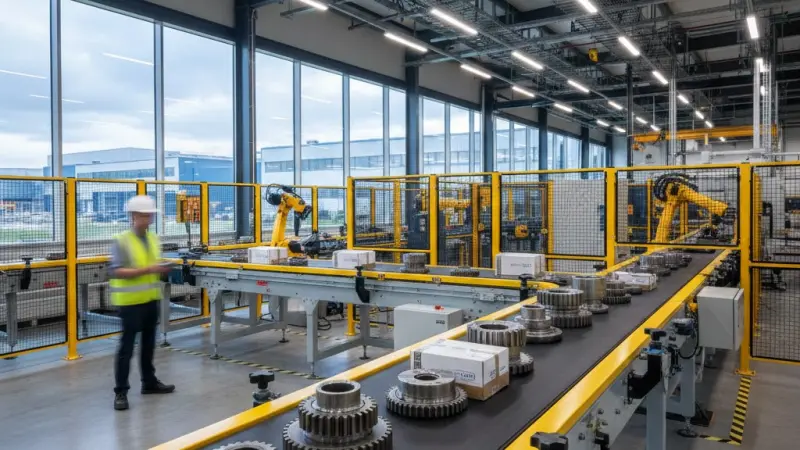
The United Kingdom’s industrial heritage is inextricably linked to the development of conveyor and transmission systems. Today, the sector comprising Belting Manufacturers UK stands as a cornerstone of the nation’s manufacturing infrastructure. From the massive aggregate conveyors in Derbyshire quarries to the precision timing belts used in high-tech pharmaceutical packaging in Cambridge, belting systems are the literal "veins" of British industry.

The economic importance of this sector cannot be overstated. As the UK moves towards "Industry 4.0," the demand for intelligent, durable, and energy-efficient belting solutions has surged. British manufacturers have transitioned from being bulk producers of commodity rubber to specialized engineering hubs that provide bespoke solutions for global markets. This evolution has solidified the UK’s position as a leader in technical textiles and polymer science. For procurement managers and plant engineers, navigating this landscape requires a deep understanding of material science, environmental regulations, and local supply chain resilience.
In an era defined by rapid digital transformation, the visibility of these specialized manufacturers is paramount. For a sector that traditionally relied on "word-of-mouth," the shift toward digital procurement means that appearing in a uk business directory is no longer optional—it is a fundamental requirement for business continuity.
The Landscape of Belting Mnfrs in the UK
The UK belting market has demonstrated remarkable resilience in the face of post-pandemic supply chain disruptions. Historically concentrated in the industrial heartlands of the West Midlands, Yorkshire, and the North West, the industry has modernized significantly. Current market estimates suggest the UK industrial belting sector contributes hundreds of millions of pounds to the annual GDP, supporting thousands of highly skilled jobs in polymer engineering and mechanical design.
Post-pandemic, the industry has seen a distinct shift toward "reshoring." UK businesses, wary of the delays associated with Far East imports, are increasingly looking to find local businesses uk to secure their supply lines. This has led to a renaissance for domestic manufacturers who can offer rapid prototyping, on-site vulcanization, and emergency repair services that overseas competitors simply cannot match.
Furthermore, the "Amazon effect" on logistics has created a boom in lightweight conveyor belting. The massive expansion of distribution centers across the "Golden Triangle" in the Midlands has driven demand for low-noise, energy-saving belts that can operate 24/7. To stay competitive, manufacturers are now utilizing a uk online business directory to ensure their specialist services reach the right logistical hubs at the right time.
Comprehensive Services Breakdown
The sheer variety of products offered by UK belting specialists reflects the diversity of the British economy. Generally, the services are categorized into three primary streams: Materials, Custom Fabrication, and Maintenance.
Material Specializations
Rubber & Heavy-Duty Belting: Essential for mining, quarrying, and heavy recycling. These belts are engineered for high impact and abrasion resistance.
PVC & PU (Polyurethane): Predominantly used in the food and pharmaceutical sectors. These materials must comply with stringent FDA and EU food-grade standards.
Modular Plastic Belting: Ideal for applications requiring frequent wash-downs or complex tracking, such as bottling plants.
Specialty Fabrics: Including silicone-coated glass cloth for high-temperature ovens and PTFE belts for non-stick applications.
Custom Specifications and Engineering
A significant portion of the value added by UK manufacturers lies in customisation. This includes adding cleats, flights, and sidewalls to belts to facilitate inclined transport. Modern CNC cutting and high-frequency welding allow for precision that was previously unattainable. Many of these high-end engineering firms offer a business listing uk to showcase their niche capabilities, such as bespoke "v-guide" profiles or perforated vacuum belts for the printing industry.
On-Site Maintenance and Emergency Repair
In manufacturing, downtime is the enemy. Therefore, many providers offer 24/7 breakdown cover. This involves mobile vulcanizing units that can join belts on-site, minimizing the need to dismantle complex machinery. For smaller firms looking to enter this high-stakes service market, securing a business listing uk can provide the necessary digital footprint to attract local plant managers in urgent need of assistance.
How to Choose the Right Service Provider
Selecting a belting partner is a strategic decision that affects long-term operational costs. It is not merely about the lowest price per meter; it is about "Total Cost of Ownership."
Accreditations and Compliance
Ensure your provider holds ISO 9001 certification for quality management. For specific industries, look for ISO 22000 (Food Safety) or ATEX certification if the belt will operate in explosive atmospheres (common in grain handling). A reliable uk local business search will often highlight verified firms that meet these rigorous standards.
Insurance and Liability
Given the safety-critical nature of heavy belting systems, confirm that the manufacturer carries comprehensive public and product liability insurance. This is particularly important for on-site installations where third-party contractors are present.
Local Reputation and Reviews
Digital presence is a strong indicator of transparency. Check uk top rated local businesses to see how a provider is perceived by their peers. A company that actively manages its online reputation is more likely to provide the level of customer service required for complex industrial projects.
Industry Challenges & Future Outlook
The UK belting industry faces a dual challenge: the "Green Transition" and the integration of "Smart" technologies.
Sustainability and the Circular Economy
Traditional rubber manufacturing is energy-intensive. However, leading UK firms are now exploring bio-based polymers and recycled carcass materials. There is a growing movement toward "Belt Life Extension" programs, where manufacturers provide data-driven maintenance to ensure belts last 50% longer, reducing waste. To find these innovative green providers, many procurement officers now use a business listing uk to filter for companies with sustainability credentials.
Smart Belting and IoT
The future of the industry lies in "Sense-and-Act" technology. We are seeing the introduction of belts with embedded RFID tags or sensors that can monitor tension, temperature, and wear in real-time. This allows for predictive maintenance, where a belt effectively "orders" its own replacement before a failure occurs. This level of technical sophistication is being spearheaded by firms found on the business listing uk platforms, where they can market their R&D-heavy services to global tech-integrated clients.
Business Tips for Belting Mnfrs Professionals
For the independent belting manufacturer or distributor, the path to growth lies in local dominance and digital authority.
Mastering Digital Visibility
Even the most specialized B2B business must be discoverable. You should ensure your company is listed on local business listings uk to capture local search traffic.
When a maintenance manager in Leeds searches for "conveyor repair near me," your business needs to be the first name they see.
Content Marketing for Engineers
Technical buyers are looking for solutions, not sales pitches. Publishing white papers on "Reducing Belt Slippage" or "Comparing PU vs. PVC for Poultry Processing" establishes your firm as an authority. Once you have built this authority, linking your content to uk professional services listings can drive high-quality leads that convert into long-term contracts.
Networking and Local B2B Relationships
While digital is king, the "Local" in local page uk listings is still vital. Attend regional trade shows and maintain a presence in local trade directories to foster the trust that is essential for high-value industrial contracts.
Wrapping Up & Local Page Integration
The UK belting manufacturing industry is a vibrant, technologically advanced sector that continues to underpin the nation's industrial output. From the food we eat to the packages we receive, belting systems are the silent workhorses of our economy. As we look to the future, the integration of material science and digital connectivity will define the next generation of industry leaders.
For businesses operating within this niche, standing out in a crowded marketplace is the ultimate challenge. Whether you are a manufacturer of custom timing belts or a provider of 24/7 emergency vulcanizing, your digital presence is your most valuable asset. This is where Local Page serves as the premier solution. By utilizing a uk local business directory, you bridge the gap between your specialized factory floor and the procurement managers who need your expertise.
Boost Your Visibility with Local Page UK
In the industrial sector, being "findable" is just as important as being "capable." For UK-based belting manufacturers and service providers, Local Page UK offers a powerful platform to enhance your local SEO and B2B reach. By claiming your business listing uk, you put your brand in front of thousands of potential clients actively searching for verified UK trade and professional services. Don't let your expertise go unnoticed—join the definitive local businesses list uk today and power your growth for the decade ahead.
Frequently Asked Questions (FAQs)
1. What are the most common materials used by UK belting manufacturers?
UK manufacturers typically utilize a range of polymers depending on the application. For heavy-duty industrial use, SBR (Styrene Butadiene Rubber) is the standard due to its high abrasion resistance. In the food industry, PU (Polyurethane) and PVC are preferred because they are non-porous and easy to clean. Specialist applications might require Silicone, Teflon (PTFE), or even Aramids like Kevlar for high-strength, low-stretch requirements.
2. How do I determine which belt material is right for my application?
Selection depends on four main factors: the product being carried, the environment (temperature/moisture), the conveyor geometry (incline/curves), and the cleaning requirements. For example, oily food products require an oil-resistant PU belt, whereas heavy rocks require a fabric-reinforced rubber belt. Consulting a specialist found on a uk b2b business directory is the best way to get a technical recommendation.
3. Can UK manufacturers create bespoke belts with custom profiles?
Yes, one of the strengths of the UK market is custom fabrication. Manufacturers can add cleats (for inclines), sidewalls (to prevent spillage), and tracking guides to almost any base belt.
High-frequency welding and CNC precision ensure these additions are durable enough for industrial cycles.
4. What is the difference between vulcanized and mechanical belt joining?
Vulcanization uses heat and pressure to chemically bond the belt ends, creating a seamless, strong joint ideal for high-tension or food-grade applications. Mechanical joining uses metal fasteners; while quicker and easier to install, it creates a "bump" in the belt and is not suitable for applications where hygiene or product marking is a concern.
5. Why is it important to use a local belting service provider?
Response time is critical. Using Localpage to find a nearby provider ensures that if a belt snaps, a technician can be on-site within hours. Shipping a custom belt from overseas can take weeks, resulting in catastrophic production losses.
6. Are there specific regulations for food-grade belting in the UK?
Post-Brexit, UK manufacturers follow the UKMC standards, which currently align closely with EU (EC 1935/2004) and FDA regulations. Belts must be "Migration Tested" to ensure no harmful chemicals transfer from the belt material to the food product.
7. How often should industrial conveyor belts be inspected?
A monthly visual inspection is recommended for most light-to-medium applications. Heavy-duty belts in mining or recycling should be checked weekly for signs of carcass exposure, edge fraying, or splice failure.
8. What causes a conveyor belt to mistrack?
Mistracking (the belt shifting to one side) can be caused by uneven loading, worn rollers, an unlevel conveyor frame, or a belt that was not cut perfectly square. Modern UK manufacturers often add "v-guides" to the underside of the belt to force correct tracking.
9. Can old rubber belts be recycled in the UK?
Yes, sustainability is a major focus. Many UK firms now offer recycling programs where old belts are shredded for use in rubber crumb flooring, playground surfaces, or even as fuel for cement kilns, contributing to a more circular economy.
10. What is the benefit of modular plastic belting?
Modular belts consist of interlocking plastic bricks. If one section is damaged, you only replace the broken modules rather than the whole belt. They are excellent for drainage and are highly popular in the bottling and seafood industries.
11. How does temperature affect belt performance?
Standard PVC belts can become brittle in freezing temperatures (cold storage) and soft in high heat. Silicone or glass-fiber belts are required for industrial ovens where temperatures exceed 200°C.
12. Is it possible to repair a torn belt without replacing it?
Minor tears can often be patched using "cold cure" resins or mechanical "alligator" clips. However, if the internal fabric carcass is compromised, a professional vulcanized repair or full replacement is usually necessary to ensure safety.
13. What information do I need to provide for a belting quote?
You should provide the total length (circulated), the width, the material type, the pulley diameters, and details of any profiles (cleats/guides). If unsure, many UK firms offer a site survey service.
14. What are "Energy Saving" belts?
These are belts designed with a high-coefficient friction underside and a flexible carcass that reduces the power required to turn the pulleys.
In large warehouses, switching to energy-saving belts can reduce electricity costs by up to 15%.
15. How do I find verified belting experts in my specific region?
The most efficient method is to use a dedicated industrial portal. By searching the Local page, you can filter by region and service type to find manufacturers who have been vetted and reviewed by other UK businesses.

Disclaimer: The information provided in this article is for general informational and research purposes only. Company details, features, services, and market positions may change over time. Readers are advised to visit official company websites and conduct independent research before making any business decisions or purchasing services.
Most Searchable Keywords

Recent Blogs


Related Listings


Categories
- Accountants (295)
- Advertising Agencies (559)
- Architects (149)
- Automobiles (377)
- Beauty (300)
- Carpenters (146)
- Cleaning Services (386)
- Dentists (189)
- Driving (62)
- Electricians (215)
- Energy (8)
- Event Organiser (685)
- Finance (599)
- Guide (3365)
- Health (2207)
- Information technology (206)
- Legal Services (353)
- Logistics (6)
- Maintenance (65)
- Manufacturing (35)

Sponsored Listings in Locksmith Services


Related Blogs

Gen Z Political Reporters and News Creators i...
Read this insightful article "Gen Z Political Reporters and News Creators in the UK" to expand your knowledge!

Famous Female Social Media Influencers Across...
Read this insightful article "Famous Female Social Media Influencers Across the UK" to expand your knowledge!

Your UK Sponsor Licence 2026 Step by Step Gui...
Read this insightful article "Your UK Sponsor Licence 2026 Step by Step Guide" to expand your knowledge!
Questions & Answers – Find What
You Need, Instantly!
How can I update my business listing?
Is it free to manage my business listing?
How long does it take for my updates to reflect?
Why is it important to keep my listing updated?
