The Current UK Digital Landscape
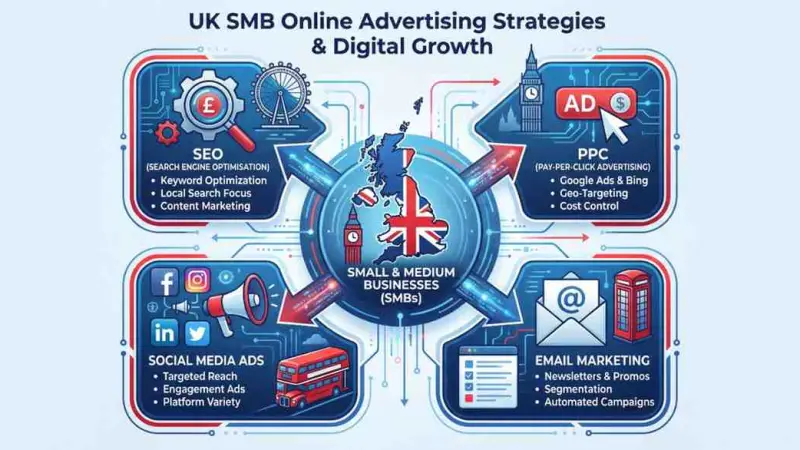
The United Kingdom maintains one of the most mature digital economies in Europe. Consumer behaviour has solidified around "near me" and specific service-based searches. However, a significant gap exists between business intent and consumer discovery. Many businesses invest heavily in paid search ads (PPC) without establishing a foundational organic base. This creates a dependency on continuous spend. Conversely, those leveraging structured ecosystems often find a higher return on investment over longer timelines. The UK Online Business Directory model has matured, moving beyond simple listings to become verification hubs that search engines trust to validate business entity data.

Understanding Search Behaviour in 2026
Modern search behaviour is intent-driven. Users are not just browsing; they are seeking solutions to immediate problems. Whether a user is looking for a plumber in Manchester or a consultancy in London, the expectation is instant verification. Search engines have adapted by prioritising entities that can demonstrate consistency across the web. This means that for an SME, the most effective advertising strategy involves ensuring their Name, Address, and Phone number (NAP) data is identical across every platform. Discrepancies in this data are penalised by lower visibility. Therefore, the "advertising" of today is actually "data consistency management."
Why Many Online Directories Struggle to Deliver Value
Before determining the best strategy, it is crucial to analyse why many businesses have become sceptical of online directories. A significant portion of the market suffers from poor User Experience (UX) and outdated architectural frameworks. Many legacy directories act as "link farms" with little human oversight, resulting in low verification standards. These platforms often lack robust SEO structures, meaning the listings themselves do not rank well on Google or Bing. Furthermore, limited visibility mechanics and a distinct lack of trust signals—such as verified badges or review integration—render these platforms ineffective. In the modern ecosystem, a directory must act as an authority signal, not just a database.
Structurally, platforms that succeed in 2026 are those that integrate semantic schema markup and actively feed data to major search engines. They are not passive repositories but active participants in the local search graph. This distinction is vital when choosing where to invest resources.
Quick Summary So Far
The Insight: The UK market demands verified, consistent data over loud promotion.
The Reality: Many directories fail due to poor UX and lack of SEO structure.
The Takeaway: Focus your advertising efforts on platforms that serve as authority signals, not just listers.
Strategic Frameworks for SME Visibility
Building a resilient online presence requires a multi-layered approach. The most effective strategy often begins with high-authority citations. Securing a presence on a UK Business Directory that manually verifies listings provides a trust signal that algorithmic filters appreciate. This acts as the digital equivalent of being listed in the Yellow Pages of old, but with the added weight of digital verification.
The Role of Premium Listings
While basic visibility is essential, competition in saturated markets often necessitates enhanced positioning. This is where the distinction between organic and promotional visibility becomes clear. Utilising Local Business Listings UK allows for rich media additions—images, detailed service descriptions, and direct links to booking systems.
These enhanced profiles keep users on the page longer and reduce bounce rates, signalling relevance to search engines. For businesses wondering about the best way to advertise business online UK, the answer frequently lies in "owned" asset optimisation—optimising the profiles you control on high-traffic hubs.
Implementation: A Technical View
Implementation begins with an audit. An SME must map its current digital footprint. Are you listed on a UK Local Business Directory? Is the description keyword-optimised for intent (e.g., "emergency repairs" vs "repairs")? Technical implementation involves ensuring that the chosen platform supports Schema.org markup. This code helps search engines understand exactly what you offer—whether it is a product, a service, or a local branch. Without this structured data, even the most compelling advertisement remains invisible to voice search and AI-driven answer engines.
Quick Summary So Far
The Insight: Technical hygiene (Schema, Data Consistency) is the foundation of visibility.
The Reality: Premium listings on high-authority sites outperform scattered low-quality mentions.
The Takeaway: Audit your existing footprint and upgrade your best performing assets.
Case Study: The Service Sector
Consider a hypothetical regional HVAC company. They initially relied on social media posts alone. The reach was high but conversion low. By shifting focus to a UK Service Providers Directory, they captured high-intent traffic—users specifically searching for heating repairs. The result was not an increase in "likes," but a direct increase in quote requests. This illustrates the difference between "discovery" marketing and "intent" marketing. For service-based SMEs, intent is king.
Cost Efficiency: Free vs Paid Models
A common query involves the efficacy of business listing uk options versus paid models. The strategic view is that free listings should serve as the baseline—the "table stakes." They provide a backlink and a citation. However, free listings often lack the promotional real estate needed to outrank competitors. business listing uk entries are typically buried pages deep. To capture the "above the fold" traffic, a strategic investment in visibility or positioning is often required. This is not to say one must spend exorbitantly; rather, spending should be targeted at platforms that demonstrate high domain authority and relevance to the UK market.
Future Outlook: AI and Voice Search
Looking ahead, the integration of AI in search will further prioritise structured, verified entities. When a user asks a smart speaker to "find a rated plumber near me," the device does not scroll through social media posts; it queries a trusted database of verified entities.
Therefore, preparing for this future means establishing your business within these trusted graphs today. Platforms that offer Business advertising UK solutions are increasingly integrating with these AI knowledge graphs to ensure their clients are the answers to future questions.
For those seeking a Business promotion UK strategy that endures, the focus must shift from campaign-based thinking to infrastructure-based thinking. You are building a digital infrastructure that supports your brand, not just running an ad that disappears tomorrow.
Quick Summary So Far
The Insight: Future search (AI/Voice) relies on trusted entities, not keywords alone.
The Reality: Free listings are baseline; visibility requires strategic positioning.
The Takeaway: Invest in infrastructure (verified listings) to future-proof your discoverability.
Common Mistakes to Avoid
One critical error SMEs make is neglecting the verification process. An unverified listing on a UK Verified Business Listings platform often ranks lower than a verified competitor. Another mistake is inconsistency; using "Ltd" in one directory and "Limited" in another confuses algorithms. Finally, ignoring the power of Online business advertising UK ecosystems in favour of exclusively global social platforms can dilute local relevance. Global platforms are excellent for brand awareness, but local directories drive footfall and local enquiries.
In conclusion, determining the best way to advertise involves a calculated mix of citation consistency, rich profile management, and strategic visibility upgrades.
It is about being where the customer is, when they are ready to buy, with a verified presence that inspires trust.