
Booking Cleaning Services for Medical Equipment Sterilization
- 👤 Alex
- 👁️ 73 Views
- Last Updated: April 21, 2026
- 🏷️ Cleaning Services
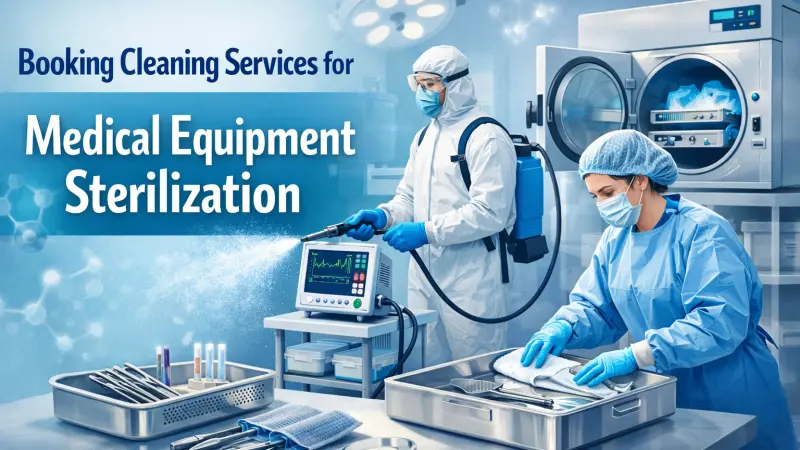
In the modern healthcare landscape, the difference between an successful procedure and a life-threatening complication often rests on the microscopic level. Booking cleaning services for medical equipment sterilization is one of the most critical logistical tasks a healthcare administrator or private clinic manager can undertake. This process involves far more than simple surface sanitation; it requires a deep understanding of the Central Sterile Supply Department (CSSD) standards, microbial decontamination protocols, and the stringent regulatory frameworks that govern patient safety. As medical devices become increasingly complex—incorporating delicate electronics, fiber optics, and intricate mechanical joints—the expertise required to maintain them has shifted from general cleaning to highly specialized sterile processing. This article provides a comprehensive, objective exploration of how to navigate the market for these vital services, ensuring that your facility remains compliant, your equipment stays functional, and your patients remain protected.

The Critical Role of Sterile Processing in Healthcare
Sterilization is the absolute destruction of all microbial life, including highly resilient bacterial spores. When we discuss booking services for this task, we are looking at a multi-stage process that begins long before the equipment reaches an autoclave.
The Decontamination Life Cycle
The journey of a medical instrument begins with "point-of-use" cleaning, where organic debris is removed immediately after a procedure to prevent the formation of biofilms. Professional sterilization services manage the subsequent steps: transport, ultrasonic cleaning, manual scrubbing, and eventually, the high-level disinfection or sterilization itself. Failure at any stage of this life cycle can compromise the entire process, making the choice of a service provider a high-stakes decision.
Regulatory Compliance and Standards
In the United Kingdom and globally, medical device reprocessing is governed by strict standards, such as ISO 13485 (Medical devices — Quality management systems) and various HTM (Health Technical Memorandum) guidelines. A specialist provider must demonstrate not only their technical capability but also their adherence to these rigorous documentation and validation requirements.
Key Technologies and Methods in Medical Sterilization
When vetting providers, it is essential to understand the methodologies they employ. Different materials require different sterilization "modalities."
Steam Sterilization (Autoclaving)
The gold standard for heat-tolerant instruments. This method uses saturated steam under pressure. A professional provider will offer validation reports for their autoclaves, proving that the required temperature and pressure were maintained for the necessary "kill time."
Low-Temperature Sterilization
For heat-sensitive items like endoscopes or plastic-based instruments, low-temperature methods such as Hydrogen Peroxide Gas Plasma or Ethylene Oxide (EtO) are used. These methods are technically demanding and require sophisticated aeration systems to ensure no toxic residues remain on the equipment.
Chemical High-Level Disinfection (HLD)
Some semi-critical items may only require HLD. This involves immersion in specialized chemical solutions. A reputable service provider will have strict protocols for monitoring chemical concentrations (MEC) and contact times to ensure efficacy.
A Step-by-Step Guide to Booking Sterilization Services
The procurement process for medical sterilization should be exhaustive. Follow these steps to ensure you select a partner that meets clinical requirements.
1. Define Equipment Inventory and Sensitivity
Create a detailed list of every instrument requiring service. Note the manufacturer's Instructions for Use (IFU), which dictate the validated cleaning methods for each specific device. Any provider you consider must be able to demonstrate they can follow these IFUs to the letter.
2. Verify Facility Accreditations
Ask for proof of certification. A specialist provider should operate within a facility that is regularly audited. Their staff should be certified Sterile Processing Technicians who undergo continuous education on emerging pathogens and new device technologies.
3. Evaluate Logistics and Chain of Custody
In medical sterilization, the "chain of custody" is paramount. How is the equipment transported? Are contaminated and sterile items kept in strictly separated environments? Look for providers who use sealed, color-coded transport containers and offer digital tracking for every instrument tray.
4. Review Quality Assurance and Documentation
A sterilization cycle is only as good as its documentation. Ensure the provider offers:
-
Biological indicator results (proving microbial kill).
-
Chemical indicator logs.
-
Digital records of cycle parameters (time, temperature, pressure).
-
Traceability data that links a specific instrument set to a specific sterilization load.
Common Mistakes in Booking Sterilization Partners
Avoiding these errors can prevent clinical failures and regulatory penalties.
Prioritizing Turnaround Time Over Safety
While a fast turnaround is necessary for high-volume clinics, it should never come at the expense of proper "dwell times" or aeration periods. If a provider promises times that seem impossibly fast, they may be skipping critical steps in the decontamination process.
Overlooking the "Cleaning" Stage
You cannot sterilize what is not clean. If organic matter—like blood or tissue—remains on an instrument, it acts as a shield for microbes during the sterilization process. Ensure your provider places as much emphasis on the manual and mechanical cleaning stages as they do on the final sterilization.
Neglecting Environmental Controls
Sterilization facilities must maintain specific air pressure gradients, humidity levels, and temperature controls to prevent re-contamination of items after they exit the autoclave. A general cleaning company moving into the medical space may lack the specialized HVAC infrastructure required for this level of control.
Supporting Local Business Visibility Beyond Core Marketing Efforts
Clinics and surgical centers often utilize digital discovery tools to identify high-compliance partners within their region. For a specialized firm, ensuring that their facility appears on a Local Page UK is a fundamental step in being reached by local healthcare procurement officers. This type of digital footprint is essential for long-term business discoverability in a niche market.
Many firms choose to advertise company uk directory listings to provide a verified source of contact information and service descriptions for prospective clients. Through strategic directory marketing uk, these technical service providers can differentiate themselves from general janitorial companies by highlighting their specific medical certifications.
The healthcare industry relies heavily on peer verification, making company ratings uk an important metric for building initial trust between a clinic and a third-party reprocessor. Inclusion in a free business database directory further supports local presence consistency, ensuring that a provider's credentials and location remain synchronized across various platforms, ultimately serving as a local discovery aid for smaller, specialized labs.
Prioritizing Patient Safety Through Professionalism
Booking cleaning services for medical equipment sterilization is a commitment to the highest standards of patient care. By selecting a partner based on their technical mastery, regulatory compliance, and transparent documentation, you mitigate the risks of healthcare-associated infections and ensure the longevity of your medical assets. In an era where "good enough" is never sufficient, taking the time to thoroughly vet your sterilization partner is the most important step you can take toward operational excellence. Ensure your chosen provider views sterilization not just as a service, but as a critical link in the chain of survival. With the right expertise, your facility can focus on what it does best: healing patients with the absolute confidence that every instrument is as safe as modern science allows.
Frequently Asked Questions (FAQs)
Q1: What is the difference between "clean," "disinfected," and "sterile"?
A: "Clean" means visible soil is removed. "Disinfected" means most pathogenic microorganisms are killed, but some spores may remain. "Sterile" means the total absence of all viable microorganisms, including spores.
Q2: How do I know if my instruments are compatible with steam sterilization?
A: You must always refer to the manufacturer’s Instructions for Use (IFU). Most stainless steel instruments are compatible, but those with cameras, batteries, or specialized coatings usually require low-temperature methods.
Q3: Can we outsource sterilization for all types of medical equipment?
A: Most surgical and diagnostic equipment can be outsourced, provided the service provider has the validated equipment to handle the specific requirements of those devices.
Q4: How often should sterilization equipment be validated?
A: Professional providers typically perform daily biological and chemical indicator tests, with more comprehensive annual or semi-annual validation and calibration of the machinery by third-party engineers.
Q5: What is a biological indicator (BI)?
A: A BI is a test containing a standardized population of highly resistant bacterial spores. It is placed inside a sterilization load; if the spores are killed, it proves the cycle was effective.
Q6: How should sterile items be stored after they are returned?
A: They should be stored in a clean, dry area with limited access, away from moisture, dust, and extreme temperatures. The integrity of the wrap or container must be checked before use.
Q7: What happens if a sterilization load fails a test?
A: The entire load must be quarantined, the cause of the failure investigated, and the items must be completely re-processed from the cleaning stage onward.
Q8: Are "benchtop" sterilizers sufficient for a small clinic?
A: They can be, provided they are medical-grade (Type B) vacuum sterilizers that are regularly maintained and validated according to healthcare standards.
Q9: Do sterilization services include instrument repair?
A: Some premium providers offer integrated "Clean-Repair-Sterilize" programs where they check for alignment, sharpness, and insulation integrity during the processing cycle.
Q10: What is "event-related" shelf life?
A: This is the concept that a sterile item remains sterile as long as the packaging remains intact and undamaged, rather than simply expiring based on a calendar date.
Q11: Why is ultrasonic cleaning necessary before sterilization?
A: Ultrasonic cleaners use cavitation (microscopic bubbles) to remove debris from areas that manual scrubbing cannot reach, such as the hinges of surgical forceps or the lumens of narrow tubes.
Q12: Can a service reprocess "single-use" medical devices?
A: In some regions, third-party reprocessors are regulated to "re-manufacture" certain single-use devices, but this requires significantly higher levels of validation and liability than standard reusable instrument sterilization.
Q13: What is "Immediate Use Steam Sterilization" (IUSS)?
A: Formerly known as "flash" sterilization, IUSS is only for urgent situations where an instrument is dropped during surgery. It is not a substitute for the comprehensive, wrapped sterilization cycles provided by professional booking services.

Disclaimer: The information provided in this article is for general informational and research purposes only. Company details, features, services, and market positions may change over time. Readers are advised to visit official company websites and conduct independent research before making any business decisions or purchasing services.
Most Searchable Keywords

Recent Blogs
-

Explore Supermarkets in Chepstow and the Surrounding Wye Valley
-
Elite Guide to Taxi and Private Hire Services in Hereford
-
Explore Fuel and Roadside Convenience Across Beckington Today
-
Explore Abergavenny Tyre Services with Expert Local Fitters
-
Claim Your HMRC UK Tax Refund Before Application Deadlines


Related Listings
-
Platinum Exterior Cleaning
-
End of Tenancy Cleaning Agency
-
Royal Cleaning
-
FastKlean
-
Fantastic Services


Categories
- Accountants (295)
- Advertising Agencies (559)
- Architects (149)
- Automobiles (376)
- Beauty (300)
- Carpenters (146)
- Cleaning Services (386)
- Dentists (189)
- Driving (61)
- Electricians (215)
- Energy (7)
- Event Organiser (683)
- Finance (597)
- Guide (3358)
- Health (2205)
- Information technology (206)
- Legal Services (352)
- Logistics (6)
- Maintenance (65)
- Manufacturing (35)

Sponsored Listings in Cleaning Services


Related Blogs

Explore Supermarkets in Chepstow and the Surr...
Read this insightful article "Explore Supermarkets in Chepstow and the Surrounding Wye Valley" to expand your knowledge!

Elite Guide to Taxi and Private Hire Services...
Read this insightful article "Elite Guide to Taxi and Private Hire Services in Hereford" to expand your knowledge!

Explore Fuel and Roadside Convenience Across...
Read this insightful article "Explore Fuel and Roadside Convenience Across Beckington Today" to expand your knowledge!
Questions & Answers – Find What
You Need, Instantly!
How can I update my business listing?
Is it free to manage my business listing?
How long does it take for my updates to reflect?
Why is it important to keep my listing updated?
