
Calendar Specialists: Custom Printing & Promotional Solutions Explained
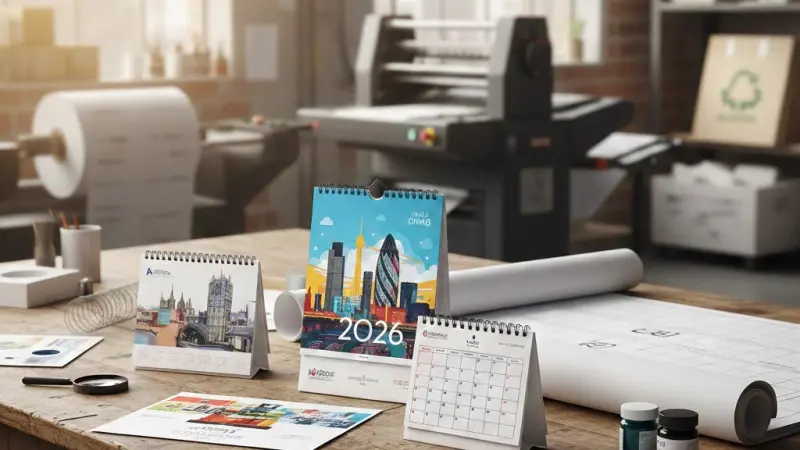
The UK’s calendar specialist sector remains a cornerstone of the domestic promotional merchandise and commercial printing industries. While digital transformation has undoubtedly altered how individuals manage their time, the physical calendar continues to hold an almost uniquely resilient position in British corporate and domestic life. This sector is not merely about ink on paper; it is a sophisticated ecosystem of design, logistics, and tactile marketing that contributes significantly to the UK’s £25 billion commercial printing market.
Economically, calendar specialists provide high-value manufacturing jobs and support a vast supply chain involving paper mills, binding equipment manufacturers, and logistics firms. From a marketing perspective, the physical calendar represents one of the most cost-effective forms of "brand real estate." Unlike a digital ad that vanishes in seconds, a well-produced calendar occupies a prominent position on a desk or wall for 365 days. This durability ensures a level of cumulative brand exposure that few other promotional items can match. As we enter 2026, the sector has transitioned from a volume-based commodity market into a high-margin, service-oriented niche that leverages personalisation and sustainable manufacturing to stay relevant in a digital-first economy.
The Landscape of Calendar Specialists in the UK
The current landscape for UK calendar specialists is defined by a robust recovery following the turbulence of the early 2020s. Post-pandemic, the industry has seen a marked shift in consumer and corporate behaviour. While the "working from home" revolution initially threatened the office-bound desk calendar, it conversely spurred a boom in the home-office gift market. Small businesses and remote workers now seek high-quality, aesthetic organizational tools that double as decor. This has led to a geographic concentration of activity in traditional printing hubs such as the East Midlands, Yorkshire, and parts of the South East like Watford and Welwyn Garden City, where advanced digital presses are increasingly replacing older lithographic setups.
To find the most reliable providers across these regions, many procurement managers and marketing heads now rely on a uk business directory to filter through specialists who have adapted to these modern demands. The evolution of the industry is characterized by "Mass Customisation." Specialists are no longer just running 50,000 identical wall planners; they are managing complex workflows that allow for 500 individualised units, each featuring different photography or even recipient-specific date markers. This agility is the sector's primary defence against digital scheduling tools, offering a tangible, sensory experience that a smartphone notification simply cannot replicate.
Comprehensive Services Breakdown
The modern calendar specialist offers a diverse portfolio that extends far beyond the standard "12-month wall hanging." The services are generally categorised into three main pillars: Corporate Promotional, Personalised Retail, and Functional Planning.
Corporate Promotional Solutions: These are designed for high ROI marketing. They include 1/3 A4 "Tent" calendars for desks, wire-bound A4 wall calendars, and large-format wall planners. The value-add here is in the bespoke nature of the content—integrating a client’s industry-specific events, deadlines, and contact details on every page.
Bespoke Personalisation: Leveraging high-spec digital printing, specialists now offer photo-led calendars where every single page can be unique. This service is particularly popular for charity fundraising and internal corporate engagement.
Specialist Finishing: Premium specialists distinguish themselves through finishing techniques such as "Soft Touch" lamination, UV spot varnishing, and various wire-o binding colours (silver, black, or white) to match brand identities.
For many emerging specialists looking to enter this lucrative B2B market, securing a business listing uk is a vital first step in showcasing these diverse service capabilities to a national audience. By highlighting specific niches—such as 3-month-to-view "memo" calendars or eco-friendly stapled books—providers can attract highly targeted leads.
How to Choose the Right Service Provider
Selecting a calendar specialist requires a balance of evaluating technical capability and service reliability. In the UK, the "cheapest" option often leads to issues
with paper weight or binding durability, which can ruin a brand’s reputation when the calendar starts to sag by July.
Buyers should prioritize providers with verified credentials. Look for FSC (Forest Stewardship Council) certification, which guarantees the paper is sustainably sourced. Furthermore, check for "Carbon Balanced" printing options, as sustainability is now a non-negotiable metric for most UK corporate procurement teams.
Local reputation remains a powerful indicator of quality. Utilizing local business listings uk allows buyers to read authentic reviews and verify the physical presence of a specialist. A provider with a strong local footprint is more likely to offer "press pass" opportunities—where a client can physically inspect a proof before the full run—and will generally have a more reliable delivery network than overseas competitors. Always ask for samples to check the "GSM" (weight) of the silk or uncoated stock used, ensuring it is thick enough to prevent ink "show-through" on double-sided prints.
Industry Challenges & Future Outlook
The industry faces significant headwinds, primarily from the volatility of raw material costs and the rapid advancement of AI-driven design. Paper prices have fluctuated significantly in the UK post-Brexit, forcing specialists to become more efficient in their waste management.
However, the future is bright for those embracing "Smart Print." We are seeing the rise of Interactive Calendars that feature AR (Augmented Reality) overlays. By scanning a month’s image with a smartphone, a user might be directed to a personalised video message or a promotional landing page. This turns a static paper product into a dynamic digital portal.
Sustainability also remains a dominant trend. The UK government’s Environmental Improvement Plan 2025 has placed pressure on manufacturers to move away from plastic laminates and towards aqueous coatings and vegetable-based inks. To maintain transparency in these green initiatives, many specialists use their business listing uk to publish their environmental certificates and carbon-neutral status, appealing to the growing demographic of eco-conscious consumers.
Business Tips for Calendar Specialists Professionals
For professionals within this sector, the primary challenge is not the quality of the print, but the visibility of the business. The calendar market is highly seasonal, with peak demand occurring between September and January. Therefore, marketing efforts must be consistent throughout the year to capture early-bird corporate planners.
Digital visibility is the most critical factor. A local specialist in Bristol or Manchester must ensure they appear when a user searches for "custom calendars near me." This is achieved through a combination of SEO-optimised content on their website and active participation in high-traffic platforms. Registering on a uk service listings site ensures that your business appears in searches filtered by sector and geography.
Furthermore, specialists should focus on "Content as a Service." Don't just sell a calendar; sell a design solution. Offer templates, help with image resolution, and provide advice on the best binding for the client's specific use case. By positioning yourself as a consultant rather than just a manufacturer, you build long-term B2B relationships that survive the annual "lowest bid" tender process.
Wrapping Up & Local Page Integration
The UK calendar specialist industry is a testament to the enduring value of physical media in a digital world. By providing a tangible, high-quality, and useful product, these businesses help brands maintain a constant presence in the lives of their customers.
Whether it is a small desk calendar for a home office or a mass-produced wall planner for a large corporation, the craftsmanship involved in modern printing ensures that the sector remains vital to the UK economy.
For businesses looking to thrive in this competitive environment, visibility is the key to longevity. Navigating the complexities of digital marketing can be daunting for a local printer focused on production. This is where local page uk business directory serves as the premier solution. By bridging the gap between local craftsmanship and national search demand, it allows specialists to reach the exact audience they need at the right time.
Boost Your Visibility with Local Page UK
In the Calendar Specialists sector, your reputation is built on quality, but your growth is built on being discovered. With thousands of UK businesses searching for promotional solutions daily, ensuring your company appears in the right results is critical. We invite all UK-based calendar printers and promotional specialists to claim their business listing uk today. By joining our network, you place your services directly in front of procurement officers, marketing managers, and local customers looking for the expertise only you can provide.
Frequently Asked Questions
1. What are the main types of calendars offered by specialists?
Calendar specialists typically provide a range of formats including wire-bound wall calendars (A3, A4, and A5), tent-style desk calendars (often in 1/3 A4 or DL sizes), and large-format wall planners. Some also offer stapled booklets which are often used as more cost-effective handouts. Each format serves a different purpose; wall calendars are excellent for shared spaces and high-impact imagery, while desk calendars are designed for individual workstations and daily reference. Modern specialists also offer "perpetual" calendars made from sustainable materials like wood or thick recycled cards that can be reused year after year, catering to the growing eco-friendly market in the United Kingdom.
2. How has digital printing changed the calendar industry?
Digital printing has revolutionised the sector by making short-run orders economically viable. Historically, lithographic printing required expensive plate setups, meaning companies had to order thousands of units to get a reasonable price. Today, digital technology allows for high-quality production of as few as 10 to 25 units. This has opened the market to small businesses and individual consumers who want high-end personalisation without the bulk cost. Additionally, digital workflows allow for "Variable Data Printing," enabling the inclusion of recipient names or specific company dates within the layout of each individual calendar in a single print run.
3. Why should I choose a UK-based calendar specialist over overseas options?
Choosing a UK-based provider offers several critical advantages including faster turnaround times, lower carbon footprints due to reduced shipping, and easier communication. Most importantly, UK specialists are familiar with British bank holidays and academic term dates, which are essential for a functional calendar. Working with a local provider also allows for better quality control; you can often request physical samples or proofs to verify paper weights and colour accuracy. Supporting local manufacturing also strengthens the domestic economy and ensures that your business is contributing to the high standards of the British printing industry.
4. What is the standard turnaround time for custom calendar orders?
Turnaround times vary depending on the time of year and the complexity of the order. During the peak season (October to December), a standard order might take 7 to 10 working days. However, many specialists offer "Express" services for simpler digital prints, sometimes delivering within 24 to 48 hours. It is always advisable to start the design process in the summer months to ensure you have ample time for proofing and to avoid the end-of-year rush. Early planning often allows you to secure "Early Bird" pricing and ensures your promotional gifts arrive well before the January 1st deadline.
5. Is it possible to get a sustainable or eco-friendly calendar?
Absolutely. Modern UK printers are increasingly focused on green initiatives. You can specify calendars made from FSC-certified paper, which ensures the material comes from responsibly managed forests. Many specialists also offer "Carbon Balanced" paper, where the carbon emissions of the paper production are offset through forest conservation projects.
You should also look for vegetable-based inks and avoid plastic laminations; instead, opt for aqueous coatings or simple uncoated stocks which are fully recyclable. When searching for these providers on Localpage, look for those who highlight their environmental credentials and ISO 14001 certifications.
6. What information should be included in a corporate promotional calendar?
A successful corporate calendar should balance utility with branding. Beyond your logo and website URL, you should include your telephone number and physical address on every page. Smart businesses also include "calls to action," such as monthly discount codes or reminders for industry-specific events (e.g., tax deadlines or trade shows). Including these functional dates makes the calendar an indispensable tool for the recipient, ensuring it stays on their desk rather than being discarded. The goal is to provide enough value that the recipient refers to it daily, keeping your brand at the forefront of their mind.
7. What paper weight (GSM) is best for a wall calendar?
For a professional feel, we recommend a minimum of 170gsm for the internal pages and 250gsm to 300gsm for the cover. Heavier paper prevents the "curling" that can occur with changes in humidity and ensures that ink does not bleed through to the reverse side. If you are producing a high-end photography calendar, a "Silk" finish is often preferred for its vibrant colour reproduction, whereas an "Uncoated" stock provides a more tactile, premium feel and is easier to write on with standard pens. Always ask your specialist for a sample pack to feel the different weights before committing to a large run.
8. How do I provide my artwork to a specialist?
Most specialists require artwork in high-resolution PDF format (300dpi) with a "bleed" area—usually 3mm—to allow for trimming. Many providers now offer online design tools where you can upload your photos directly into pre-made templates, which is ideal for those without professional design software. If you are creating your own layout, ensure that your "safe zone" (the area containing text and logos) is at least 5mm away from the edge and the binding wire to avoid any important information being cut off or obscured. Providing clean, high-resolution files is the best way to ensure a sharp, professional finish.
9. Can I order calendars with custom start months?
Yes, this is a common feature of modern calendar specialists. While most people want a January start, many educational institutions prefer an August or September start to align with the academic year. Similarly, some businesses might want a calendar that aligns with the financial year (April start). Because digital printing doesn't rely on fixed plates, specialists can easily adjust the starting month to suit your specific requirements. This flexibility is a key advantage of choosing a bespoke service over off-the-shelf retail products that are strictly limited to the standard calendar year.
10. What are the benefits of a wall planner over a standard calendar?
Wall planners are ideal for "at-a-glance" scheduling for entire teams. Typically printed in A2 or A1 sizes, they allow multiple people to see the year's trajectory simultaneously, making them perfect for project management, holiday tracking, and marketing campaign planning. Unlike a monthly calendar where pages are turned and hidden, a wall planner keeps the entire year visible. This high-level view is invaluable for strategic planning and ensures that major deadlines are never missed. Many specialists offer laminated versions that can be used with "dry-wipe" markers for even greater functionality.
11. Are there minimum order quantities for custom calendars?
One of the greatest shifts in the industry is the reduction of minimum order quantities (MOQs). While lithographic printers might still require runs of 250 or more, many digital specialists now offer MOQs as low as a single unit. For corporate gifts, an MOQ of 25 to 50 is standard, providing a balance between cost-effectiveness and volume. This accessibility allows small businesses to test the effectiveness of calendar marketing without a significant upfront investment. It also allows for "niche" campaigns where different versions of a calendar are produced for different segments of a client base.
12. What is wire-o binding and why is it used?
Wire-o binding (also known as twin-loop or double-loop binding) is the industry standard for calendars. It consists of a continuous hinge of double-wire loops that pass through punched holes. This method allows the calendar to lay completely flat when opened and enables the pages to be turned 360 degrees without damaging the spine. It is far more durable than stapled (saddle-stitched) binding for items intended to last a full year. Specialists usually offer wire-o in various colours, with silver being the most popular for its professional, neutral appearance that complements most brand colours.
13. How do I distribute my promotional calendars effectively?
The best way to distribute calendars is through direct mail or as "leave-behind" items during client meetings. Because they are perceived as a "gift" rather than "junk mail," they have a much higher retention rate. Sending them in early December ensures they arrive just as people are thinking about the year ahead. If your budget allows, a personalised envelope or a stiff cardboard mailer can protect the calendar during transit and add to the premium feel of the gift. Some specialists even offer fulfillment services, where they will print, pack, and post the calendars directly to your mailing list for you.
14. Can I add QR codes to my calendar pages?
Yes, integrating QR codes is a brilliant way to bridge the gap between physical and digital marketing. You can set up a QR code for each month that links to a specific offer, a video, or an event sign-up page.
This not only makes the calendar more interactive but also allows you to track engagement. By seeing how many people scanned the code in March versus October, you gain valuable data on when your audience is most active. It transforms a traditional time-tracking tool into a measurable lead-generation asset for your marketing department.
15. Where can I find a list of verified UK calendar specialists?
The most efficient way to find a verified professional is through the Local page directory. This platform allows you to search for specialists based on their specific services, location, and customer ratings. By using a dedicated directory, you avoid the clutter of general search engines and can quickly identify providers who have a proven track record in the calendar and promotional printing niche. Whether you are looking for a small-run photo calendar specialist or a high-volume corporate printer, the directory provides all the contact details and website links you need to get a quote and start your project.
Disclaimer: The information provided in this article is for general informational and research purposes only. Company details, features, services, and market positions may change over time. Readers are advised to visit official company websites and conduct independent research before making any business decisions or purchasing services.
Most Searchable Keywords
Recent Blogs


Related Listings
Categories
- Accountants (295)
- Advertising Agencies (559)
- Architects (149)
- Automobiles (377)
- Beauty (300)
- Carpenters (146)
- Cleaning Services (387)
- Dentists (189)
- Driving (62)
- Electricians (215)
- Energy (8)
- Event Organiser (686)
- Finance (602)
- Guide (3373)
- Health (2207)
- Information technology (206)
- Legal Services (353)
- Logistics (6)
- Maintenance (65)
- Manufacturing (35)
Sponsored Listings in Travel Agencies


Related Blogs

Explore Dog Friendly Walks in the Cotswolds f...
Read this insightful article "Explore Dog Friendly Walks in the Cotswolds for 2026" to expand your knowledge!

How Much Do UK Actors Really Earn Full Indust...
Read this insightful article "How Much Do UK Actors Really Earn Full Industry Breakdown" to expand your knowledge!

Blue Light Card UK 2026 Check Eligibility and...
Read this insightful article "Blue Light Card UK 2026 Check Eligibility and Claim" to expand your knowledge!
Questions & Answers – Find What
You Need, Instantly!
How can I update my business listing?
Is it free to manage my business listing?
How long does it take for my updates to reflect?
Why is it important to keep my listing updated?
