
Car Disposal Services Explained: Legal, Safe & Eco-Friendly Options
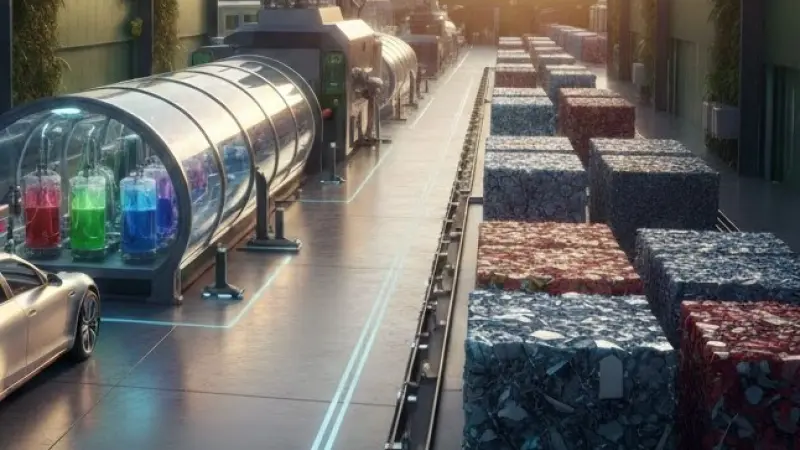
The automotive landscape in the United Kingdom is undergoing a seismic shift. As the nation pushes toward a greener economy, the end-of-life vehicle (ELV) sector has emerged as a cornerstone of British industrial sustainability. Car disposal is no longer merely about "scrapping" an old banger; it is a sophisticated multi-billion pound industry that balances environmental protection, legal compliance, and economic recovery. Every year, over two million vehicles reach the end of their useful lives in the UK, presenting a massive logistical and ecological challenge.

The economic importance of this sector cannot be overstated. It supports thousands of jobs across the country, from local collection agents to high-tech recycling facilities. Moreover, it plays a vital role in the circular economy by recovering precious metals, plastics, and reusable parts that would otherwise require energy-intensive primary production. For the modern consumer or business owner, navigating this space requires an understanding of the uk business directory ecosystem to find reputable partners who adhere to the stringent standards set by the Environment Agency and the DVLA.
Historically, car disposal was often associated with "backstreet" scrap yards and cash-in-hand deals. Today, the industry is heavily regulated. The Introduction of the Scrap Metal Dealers Act 2013 effectively ended anonymous cash sales, mandating electronic transfers and identity verification to combat metal theft. This professionalization has transformed the sector into a transparent service industry where efficiency and environmental stewardship are the primary drivers of growth.
The Landscape of Car Disposal in the UK
The UK car disposal market is a dynamic environment influenced by vehicle age, MOT failure rates, and the rising cost of repairs. Current market data suggests that the average age of a vehicle at the point of disposal is roughly 14 to 16 years. This "replacement cycle" provides a steady stream of work for Authorised Treatment Facilities (ATFs). Key regions of activity remain concentrated around industrial hubs and major metropolitan areas like Birmingham, Manchester, and the outskirts of London, where the demand for efficient disposal is highest due to ULEZ (Ultra Low Emission Zone) and other clean air initiatives.
Post-pandemic, the industry has evolved significantly. The global shortage of semi-conductors led to a surge in used car prices, which paradoxically meant that many vehicles were kept on the road longer than usual. However, as the supply chain stabilized, a wave of older, less efficient vehicles began hitting the scrap market. This period also saw a rapid acceleration in digital adoption. Customers now expect to arrange a vehicle collection via a uk online business directory rather than browsing physical phone books.
The evolution of the industry is also marked by a shift in vehicle composition. The rise of Electric Vehicles (EVs) presents a new frontier. Disposing of a 20-year-old diesel hatchback is a well-understood process; however, handling high-voltage lithium-ion batteries requires specialized skills and equipment. The industry is currently investing millions in training and infrastructure to ensure that the UK remains a leader in EV battery recycling. Businesses that have successfully transitioned to these modern demands are often found at the top of a uk local business directory, highlighting their expertise in handling both traditional and alternative fuel vehicles.
Comprehensive Services Breakdown
Car disposal services in the UK have branched out into several specialized niches to meet diverse consumer and commercial needs. Understanding these products is essential for making an informed decision.
Standard Scrap Car Collection: The most common service, where a vehicle is collected and taken to an ATF. Here, it undergoes "depollution"—the removal of hazardous fluids like oil, coolant, and brake fluid.
Salvage and Parts Recovery: If a vehicle is damaged but not "totaled," salvage specialists may buy it for more than its scrap weight value. They carefully dismantle the car to recover high-quality components for resale.
Specialist EV Recycling: As mentioned, this is a growing niche focused on the safe discharge and recycling of traction batteries.
Commercial Fleet Disposal: Businesses with large fleets of vans or cars require bulk disposal solutions that provide full auditing and certificates of destruction for every unit.
Export Services: Some vehicles that are no longer viable for UK roads are ethically exported to markets
where they can be refurbished and put back into service, extending their lifecycle significantly.
Finding these specialized services is made easier by utilizing a business listing uk to identify local providers who offer the specific type of disposal you require. Furthermore, many providers now offer "instant quote" engines. These tools use the vehicle's registration number and your postcode to provide a guaranteed price based on current metal market values.
For those looking to list their own services, appearing in a business listing uk is the first step in reaching a customer base that is increasingly looking for transparent, fixed-price disposal options. The integration of high-tech shredders and separation technologies in the UK means that we can now recycle up to 95% of a vehicle's weight, a feat that seemed impossible just two decades ago.
How to Choose the Right Service Provider
With so many operators in the market, consumers must be diligent. The primary credential to look for is the "Authorised Treatment Facility" status. Only an ATF can issue an official Certificate of Destruction (CoD), which is your legal proof that the vehicle has been disposed of correctly and that you are no longer responsible for its road tax or insurance.
When researching, start by looking at local business listings uk. These platforms allow you to compare multiple providers in your immediate vicinity. Reputation is everything in this industry. Check for independent reviews and testimonials. A provider with a high rating on a uk service listings platform is likely to offer punctual collection and fair pricing.
Insurance and licensing are also non-negotiable. Any operator collecting your vehicle must have a Waste Carrier’s Licence. If your car is collected by an unlicensed "white van man," and subsequently fly-tipped, you could still be held legally liable. Therefore, checking uk verified business listings ensures that the company you are dealing with is a legitimate, tax-paying entity. Transparency regarding the payment process is the final piece of the puzzle. Remember, it is illegal for a scrap metal dealer to pay in cash. Payment must be made via bank transfer or a non-transferable cheque.
Industry Challenges & Future Outlook
The road ahead for the car disposal industry is paved with both challenges and opportunities. The most significant shift is the "Green Revolution." Sustainability is no longer a buzzword; it is a regulatory requirement. The UK government’s commitment to banning the sale of new petrol and diesel cars by 2035 means the industry must prepare for a massive influx of internal combustion engine (ICE) vehicles being phased out simultaneously.
Technology is playing a major role in overcoming these hurdles. Automated dismantling robots and AI-driven sorting systems are being developed to increase the purity of recycled materials. This allows for "closed-loop" recycling, where the steel from an old car is used to create the chassis of a new one. Such innovations are often showcased by leading firms listed in a business listing uk, as they seek to differentiate themselves through technological prowess.
Regulatory changes also continue to shape the market. The tightening of "Extended Producer Responsibility" (EPR) means that car manufacturers are becoming more involved in the end-of-life stage of their products. This could lead to more franchise-led disposal schemes. For independent operators, staying visible through a business listing uk is vital to remain competitive against these large-scale manufacturer programmes. The future will likely see a more consolidated market where only the most efficient and eco-friendly operators survive.
Business Tips for Car Disposal Professionals
If you are operating a local car disposal business, your digital presence is your most valuable asset. The days of relying on word-of-mouth or a sign on a fence are over. Most customers will find you via a mobile search, which is why appearing in uk top rated local businesses is crucial for lead generation.
Here are three core tips for digital growth:
Optimize for Local Search: Ensure your business name, address, and phone number (NAP) are consistent across all platforms. Being featured in a uk home services directory helps search engines verify your location and services.
Content and Trust: Use your website to explain the depollution process. Showing
that you care about the environment builds trust with eco-conscious consumers.
Active Listings: Don't just list your business and forget it. Keep your uk professional services listings updated with your latest opening hours and service areas.
Marketing a local business in this sector also requires a B2B approach. Many of your best clients will be local garages or insurance assessors. Ensuring you are prominent in a uk b2b business directory can help you secure these high-volume contracts. In a competitive market, being the most "reachable" and "visible" provider is often more important than being the cheapest.
Wrapping Up & Local Page Integration
The car disposal industry is a vital, albeit often overlooked, part of the UK’s economic and environmental infrastructure. From ensuring that hazardous chemicals do not enter our water table to providing the raw materials for future manufacturing, the sector's value is immense. As we move toward a more sustainable future, the synergy between automotive tech and recycling efficiency will only deepen.
For consumers, the message is clear: prioritize legality and safety by using trusted platforms to find your provider. For business owners, the message is equally vital: visibility is the key to survival. Local Page UK provides the premier solution for businesses looking to bridge the gap between their services and the local customers who need them. By ensuring your company is present where people are searching, you secure your place in the future of the British automotive trade.
Whether you are looking to find a reliable ATF or you are a provider seeking to expand your reach, the find local businesses uk functionality on Local Page is your most effective tool. In an era defined by digital transparency, being part of a reputable local businesses list uk is no longer optional—it is a fundamental requirement for success in the car disposal sector.
Boost Your Visibility with Local Page UK
In the fast-paced Car Disposal sector, being found online by local customers at the exact moment they need to scrap a vehicle is critical. If your business isn't visible, you're losing leads to competitors every single day.
Don't leave your growth to chance. Take control of your digital footprint today. We encourage all UK car disposal professionals to claim their business listing uk. By joining our directory, you'll reach a wider audience, build trust through verified information, and ensure that your eco-friendly services are just a click away for your local community.
Frequently Asked Questions (FAQs)
1. What is an Authorised Treatment Facility (ATF)?
An Authorised Treatment Facility is a site that has been specifically licensed by the Environment Agency (in England), Natural Resources Wales, or the Scottish Environment Protection Agency to handle the depollution and dismantling of end-of-life vehicles. These facilities must adhere to strict environmental standards to ensure that hazardous materials like battery acid and oil do not contaminate the environment. If you do not use an ATF, you will not receive a valid Certificate of Destruction.
2. Is it legal to receive cash for my scrap car in the UK?
No, it is strictly illegal. The Scrap Metal Dealers Act 2013 was introduced to prevent metal theft and money laundering. Any reputable car disposal service will pay you via a bank transfer or a crossed cheque.
This creates a clear paper trail for the authorities. If a collector offers you "cash in hand," they are likely operating illegally and may not dispose of your vehicle in an environmentally friendly manner.
3. What is a Certificate of Destruction (CoD)?
A Certificate of Destruction is an official document issued by the DVLA through an ATF. It proves that you have handed over your vehicle to be scrapped and that it will be destroyed. Once the CoD is issued, your responsibility for the vehicle ends. It is vital to keep this document, as it protects you from potential fines related to road tax or if the vehicle is used in a crime after you have parted with it.
4. How much is my scrap car worth?
The value of a scrap car is primarily determined by its weight and the current global market price for ferrous and non-ferrous metals. However, other factors can influence the price, such as the vehicle's location, whether it has all its original parts (especially the catalytic converter, which contains precious metals), and if any parts can be salvaged for resale. Most providers offer instant online quotes based on your registration number.
5. Where can I find a reliable local car disposal service?
The most effective way to find a reliable provider is to use a reputable business directory. Platforms like Localpage allow you to filter through verified businesses in your specific area. You should look for listings that include their ATF license numbers and have positive customer feedback. Using a centralized directory ensures you are comparing legitimate businesses rather than unregulated independent collectors.
6. Do I need to have the V5C logbook to scrap my car?
While it is much easier to scrap a car with the V5C (logbook), it is not strictly necessary. If you have lost it, you will need to provide proof of identity and proof that you are the rightful owner of the vehicle. You must also notify the DVLA in writing that the vehicle has been sold for scrap. However, most ATFs prefer you to have the V5C as it streamlines the notification process with the DVLA.
7. What happens during the depollution process?
Depollution is the most important environmental step in car disposal. It involves the careful removal of all hazardous substances from the vehicle. This includes draining the fuel, engine oil, transmission fluid, coolant, and brake fluid. The battery is removed, and any switches containing mercury are extracted. Tires are also removed, as they require specific recycling processes. Only after these steps is the car sent to a shredder for metal recovery.
8. Can I scrap an electric vehicle (EV) or a hybrid?
Yes, but you must ensure the ATF is specifically equipped to handle high-voltage batteries. EV and hybrid batteries contain complex chemicals and pose a significant fire risk if mishandled. Specialist disposal services involve discharging the battery and dismantling the modules for the recovery of lithium, cobalt, and nickel. Always ask your provider if they have the necessary certifications for EV recycling before booking a collection.
9. Will my car be recycled or just crushed?
Modern car disposal is focused on recycling. Once a car is depolluted, it is usually sent through a massive industrial shredder. The resulting fragments are separated using magnets, air currents, and flotation tanks to sort steel, aluminium, plastics, and glass. In the UK, current regulations require that 95% of the vehicle’s weight is recovered or recycled, minimizing the amount of "fluff" that goes to landfill.
10. Do I need to clean the car before it is collected?
You do not need to clean the car, but you must ensure it is free of any personal belongings and general waste. Most disposal services will not accept vehicles filled with household rubbish or extra tires that did not belong to the car. Removing your personal items, including any parking permits or dashcams, is your responsibility before the driver arrives for the collection.
11. What if my car is in a difficult location?
Professional car disposal services have specialized recovery trucks designed to collect vehicles from various locations, including underground car parks, narrow lanes, or cars that have no wheels. If your car is in a particularly difficult spot, you should inform the provider during the quoting process. Some specialist recovery techniques may incur a small fee, but most standard collections are free of charge.
12. How does car disposal help the environment?
Car disposal is a massive win for the environment when done correctly. It prevents hazardous fluids from leaking into the soil and groundwater. Furthermore, recycling steel uses about 75% less energy than producing it from raw iron ore. By recovering materials from old cars, we reduce the need for destructive mining operations globally and move closer to a circular economy where waste is treated as a resource.
13. Can I keep some parts of the car before scrapping it?
You can remove parts from the car, such as a high-end stereo or new tires, but you must inform the disposal company beforehand. The price you are quoted is based on the vehicle being complete. If you remove the engine, gearbox, or catalytic converter, the scrap value will drop significantly. If the car is missing too many parts, some collectors may even charge you for the collection rather than paying you.
14. Is the price I am quoted online guaranteed?
Most reputable companies will guarantee the price quoted online, provided the vehicle is as described. If you fail to mention that the engine is missing or that the car has been stripped of its interior, the collector may renegotiate the price on-site.
To ensure you get the full amount, be honest about the vehicle's condition and ensure it is accessible for the recovery vehicle at the agreed time.
15. How do I know a business directory is trustworthy?
A trustworthy directory will feature verified information, clear contact details for the businesses listed, and a transparent system for user reviews. When searching for automotive services, look for platforms that are well-established in the UK market. For the most reliable and up-to-date information on local service providers, we recommend visiting Local page to browse their comprehensive and verified listings of trade professionals across the country.

Disclaimer: The information provided in this article is for general informational and research purposes only. Company details, features, services, and market positions may change over time. Readers are advised to visit official company websites and conduct independent research before making any business decisions or purchasing services.
Most Searchable Keywords

Recent Blogs


Related Listings


Categories
- Accountants (295)
- Advertising Agencies (559)
- Architects (149)
- Automobiles (377)
- Beauty (300)
- Carpenters (146)
- Cleaning Services (386)
- Dentists (189)
- Driving (62)
- Electricians (215)
- Energy (8)
- Event Organiser (685)
- Finance (599)
- Guide (3365)
- Health (2207)
- Information technology (206)
- Legal Services (353)
- Logistics (6)
- Maintenance (65)
- Manufacturing (35)

Sponsored Listings in Locksmith Services


Related Blogs

Gen Z Political Reporters and News Creators i...
Read this insightful article "Gen Z Political Reporters and News Creators in the UK" to expand your knowledge!

Famous Female Social Media Influencers Across...
Read this insightful article "Famous Female Social Media Influencers Across the UK" to expand your knowledge!

Your UK Sponsor Licence 2026 Step by Step Gui...
Read this insightful article "Your UK Sponsor Licence 2026 Step by Step Guide" to expand your knowledge!
Questions & Answers – Find What
You Need, Instantly!
How can I update my business listing?
Is it free to manage my business listing?
How long does it take for my updates to reflect?
Why is it important to keep my listing updated?
