
Carports Explained: Affordable Protection for Vehicles
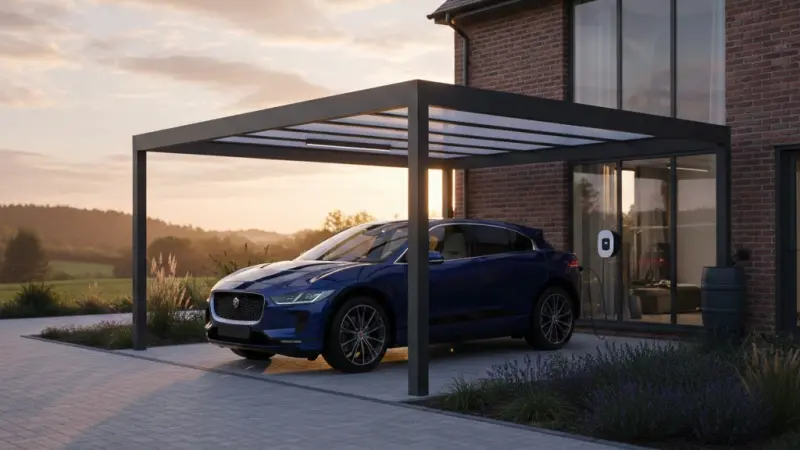
The British automotive landscape is undergoing a significant transformation. As vehicle prices continue to rise and the shift towards electric vehicles (EVs) accelerates, homeowners are increasingly prioritising the protection of their automotive investments. In this context, the UK carport sector has emerged as a vital, high-growth niche within the broader home improvement industry. Historically viewed as a secondary alternative to the traditional brick-and-mortar garage, the modern carport is now recognised for its versatility, cost-effectiveness, and architectural appeal.
Economically, the carport industry contributes millions to the UK GDP, supporting a vast network of manufacturers, local installers, and raw material suppliers. Unlike garages, which often require extensive planning permission and significant capital expenditure, carports offer a streamlined solution that fits the "improve, don't move" trend currently dominating the UK property market. For many households, a carport represents the perfect middle ground: it provides essential protection from the unpredictable British weather—shielding paintwork from frost, UV rays, and bird droppings—without the claustrophobia or expense of a full building extension.
Furthermore, the rise of the uk business directory ecosystem has made these services more accessible than ever. Consumers can now browse specialist installers with ease, comparing local expertise at the touch of a button. This digital connectivity has forced the industry to professionalise rapidly, moving away from "white-van" casual labour toward accredited, high-standard installations. As we delve into this guide, we will explore why the carport has become the quintessential British home addition for the 2020s, blending economic utility with modern lifestyle demands.
The Landscape of Carports in the UK
The current market for carports in the United Kingdom is robust, characterized by a steady annual growth rate that outperformed many other construction sectors post-pandemic. Market analysis suggests that the demand for outdoor shelters spiked as homeowners sought to maximise their external footprints during lockdowns. Today, the industry is valued in the tens of millions, with activity particularly concentrated in the South East, Midlands, and North West, where suburban housing stock often features driveways suitable for retrofitting.
Evolution in the industry has been driven by material science. Where once a carport was a simple corrugated plastic sheet on a wooden frame, we now see high-grade aluminium extrusions, polycarbonate roofing with 100% UV protection, and even integrated solar panels. This evolution is partly a response to the UK's commitment to net-zero; carports are increasingly being designed as "EV hubs," providing a mounting point for charging stations and solar arrays.
Finding these modern specialists has been simplified by the uk online business directory, which categorises providers based on their specific material expertise. Post-pandemic, the "buy local" sentiment has also played a massive role. Consumers are wary of national firms with high overheads and prefer the accountability of a local tradesperson who understands the specific weather challenges of their region—whether that be coastal salt spray in Cornwall or heavy snow loads in the Scottish Highlands.
The sector has also matured in terms of its regulatory standing. While many carports fall under "permitted development," the industry has proactively moved toward self-regulation. Trade bodies now provide frameworks for structural integrity, ensuring that a "budget" solution does not become a liability during the increasingly frequent high-wind events across the British Isles.
Comprehensive Services Breakdown
The carport niche is far from a "one-size-fits-all" market. Professional installers across the UK offer a sophisticated suite of products designed to meet diverse aesthetic and functional requirements. Understanding these options is the first step for any homeowner looking to invest.
Lean-To Carports: The most common variety in the UK. These structures are attached to the side of the house, utilizing the existing wall for structural support. They are ideal for narrow driveways and offer a seamless transition from the vehicle to the home entrance.
Freestanding Carports: These are independent structures supported by four or more posts. They offer maximum flexibility in terms of placement and are often used on larger estates or for protecting motorhomes and caravans.
Cantilever Carports: A modern engineering marvel, these are supported by posts on only one side. This design eliminates the risk of car doors hitting support pillars, making them a premium choice for high-end residential projects.
Solar Carports: A burgeoning sub-sector. These units feature photovoltaic cells on the roof, allowing homeowners to generate electricity for their home or EV.
Many businesses are now listed on a business listing uk to showcase their green credentials in this specific area.
Bespoke Commercial Shelters: Beyond residential use, the industry serves schools, hospitals, and office parks, providing large-scale covered parking solutions.
Beyond the hardware, the service includes site surveys, CAD design, drainage integration, and post-installation maintenance. Leading firms pride themselves on "turnkey" solutions, handling everything from the initial concrete footings to the final guttering. For those searching for these comprehensive providers, a business listing uk remains the most efficient way to filter companies by their specific service offering and regional availability.
How to Choose the Right Service Provider
Selecting a carport installer requires more than just looking at the lowest price. Given that these structures must withstand decades of British rain and wind, the quality of the installation is paramount. A reputable provider should offer a blend of technical skill, robust insurance, and transparent communication.
Firstly, check for industry-recognised accreditations. Look for installers who are members of trade associations or those who have their products CE/UKCA marked for structural safety. Secondly, reviews and testimonials are the lifeblood of the modern service economy. A quick search through local business listings uk will reveal the "real-world" performance of a company, highlighting whether they stick to timelines and keep their work sites clean.
Insurance is another non-negotiable factor. Any professional entering your property should have public liability insurance at a minimum. Furthermore, ask about the warranty on the roofing material; polycarbonate often carries a 10-year "non-yellowing" guarantee, while aluminium frames should be powder-coated to prevent corrosion.
Local reputation often trumps national marketing. A company that has completed dozens of carports in your specific town is likely to understand the local soil conditions and planning nuances. Using uk service listings allows you to find these local heroes who rely on word-of-mouth and high-quality finishes to maintain their business.
Industry Challenges & Future Outlook
The carport industry faces a unique set of challenges as it moves further into the 21st century. Supply chain volatility remains a concern, with the prices of aluminium and timber fluctuating due to global geopolitical shifts. This has forced many UK businesses to diversify their supplier base and improve inventory management.
Sustainability is the biggest driver of change. The "green revolution" is no longer a buzzword; it is a regulatory reality. We are seeing a move toward sustainable drainage systems (SuDS) integrated into carport designs to prevent driveway flooding. Furthermore, the use of recycled materials in construction is becoming a competitive advantage. Companies that list themselves on a business listing uk are increasingly highlighting their ISO 14001 (Environmental Management) certifications to appeal to the eco-conscious consumer.
The future outlook is exceptionally bright. As the UK bans the sale of new petrol and diesel cars by 2035, every home will effectively become a "fuel station." Carports are the logical infrastructure for this transition, providing the necessary overhead protection for sophisticated charging equipment. We anticipate a merger between the traditional construction sector and the renewable energy sector, with carport installers becoming qualified solar technicians.
To stay competitive, firms are also adopting augmented reality (AR) tools, allowing customers to "visualise" a carport on their driveway via a smartphone app before a single post is installed. This tech-forward approach is essential for businesses wanting to stand out on a business listing uk.
Business Tips for Carports Professionals
For the small business owner or independent contractor in the carport sector, the "craft" is only half the battle. Success in the modern UK market requires a sophisticated approach to digital marketing and brand building.
You are no longer just competing with the guy in the next town; you are competing for the attention of a digitally-savvy consumer.
The cornerstone of your strategy should be visibility. In the UK, most home improvement journeys start on a search engine. Ensuring your company is featured on a uk home services directory is the most cost-effective way to generate high-intent leads. Unlike expensive "pay-per-click" ads that disappear once your budget is gone, a directory listing provides a permanent digital footprint.
Content is also king. Professionals should document their builds with high-quality photography. A "before and after" gallery on a uk trade services listings page can do more for your conversion rate than a thousand-word sales pitch. It builds immediate trust and demonstrates the aesthetic value you add to a property.
Finally, never underestimate the power of "verified" status. In an era of online scams, consumers look for third-party validation. Being part of a uk verified business listings network provides that "stamp of approval" that can be the deciding factor for a homeowner hesitant to spend thousands of pounds on a new installation.
Wrapping Up & Local Page Integration
In conclusion, the carport industry represents a vibrant and essential segment of the UK's home improvement sector. By providing affordable, durable, and increasingly "smart" protection for vehicles, these structures solve a multitude of problems for the modern homeowner. From the simple lean-to that keeps the rain off the grocery run to the high-tech solar canopy that powers the family EV, the carport is a testament to British practical design.
For consumers, the journey to a better home begins with finding the right experts. For businesses, the path to growth begins with being found. This is where Local Page steps in as the bridge between need and solution. As the premier find local businesses uk platform, it offers a streamlined, authoritative environment for the carport industry to flourish. Whether you are a homeowner seeking a local specialist or a professional looking to dominate your territory, the power of a curated, high-authority directory cannot be overstated.
Boost Your Visibility with Local Page UK
In the competitive Carports sector, your digital presence is your storefront. Thousands of UK homeowners are searching for "carport installers near me" every month. If you aren't visible, you are losing revenue to your competitors. By choosing to claim your business listing uk, you position your brand at the forefront of the local market. Don't let your expertise go unnoticed; join the local page uk business directory today and connect with a community that values quality, reliability, and local service.
FAQ
1. Do I need planning permission for a carport in the UK?
In many cases, carports are considered "permitted development" and do not require formal planning permission, provided they meet specific criteria regarding height, proximity to boundaries, and total area coverage. Generally, if the structure is less than 4 metres high (or 2.5 metres if within 2 metres of a boundary) and does not take up more than 50% of the land around the original house, you are often exempt. However, rules vary significantly for listed buildings or those in conservation areas. It is always advisable to consult with a professional from a uk b2c business directory who can offer guidance based on local council precedents.
2. What are the main benefits of a carport over a traditional garage?
Carports offer several distinct advantages, primarily cost and ventilation. A carport typically costs 25-50% less than a brick garage of the same size. Furthermore, because a carport is open-sided, it allows for natural airflow, which helps dry a wet vehicle much faster
than a closed garage, significantly reducing the risk of rust and corrosion over time. They are also much quicker to install, often taking just one or two days, whereas a garage build can take weeks.
3. How long does a modern aluminium carport last?
A high-quality aluminium carport that has been professionally powder-coated is designed to last 25 years or more with minimal maintenance. Unlike timber, which requires regular staining or painting to prevent rot, aluminium is naturally resistant to rust and decay. The polycarbonate roofing panels typically come with a 10 to 15-year warranty but often last much longer if kept clear of heavy debris. Finding a durable product often starts by browsing the uk b2b business directory for specialist manufacturers.
4. Can a carport increase my property value?
Yes, a well-designed and professionally installed carport can add significant appeal and value to a UK property. In a market where off-street parking and vehicle protection are highly prized, a carport demonstrates that the property has been well-maintained. It is often seen as a "premium" feature by estate agents, particularly if it matches the architectural style of the main house and offers additional utility like EV charging or solar power.
5. Where can I find a list of reliable carport installers in my area?
The most efficient way to find local experts is to use a dedicated Localpage search. These directories allow you to filter results by location and industry, providing you with a list of businesses that have established reputations in your specific region. This saves time compared to general search engines and ensures you are looking at businesses that are actively seeking local customers.
6. Is it possible to install a carport myself?
While "DIY" kits are available, professional installation is strongly recommended for structural safety. A carport must be able to withstand significant wind loads and snow accumulation. Professionals ensure that the footings are deep enough and that the drainage is correctly integrated into your property’s existing system. An incorrectly installed carport can be a danger to your vehicle and your home during a storm.
7. What roofing materials are best for carports?
Polycarbonate is the industry standard due to its impact resistance and UV protection. It is available in clear, opal, or bronze finishes. Glass is a premium alternative that offers superior aesthetics and noise reduction during rain but is significantly heavier and more expensive. For purely functional or industrial carports, GRP (Glass Reinforced Plastic) or steel sheeting may be used, though these are less common for modern residential driveways.
8. How do I maintain my carport?
Maintenance for carports is remarkably simple. Every six months, you should clear the gutters of leaves and debris to prevent water overflow. The frame and roof can be cleaned using a soft brush and warm soapy water—avoid abrasive chemicals or pressure washers at close range, as these can damage the UV coating on polycarbonate panels. Regularly checking the bolts and fixings after a heavy storm is also a good practice.
9. Can I charge my electric vehicle under a carport?
Absolutely. Carports are becoming the preferred location for EV charging points. They provide overhead protection for the charging unit and the vehicle’s charging port, making it much more comfortable to plug in during inclement weather. Many installers now offer "EV-Ready" carports that include pre-installed trunking for electrical cabling, making the final connection by an electrician much simpler and neater.
10. Are carports suitable for protecting motorhomes?
Yes, but they require a bespoke height. Standard carports are designed for cars and SUVs, but "High-Entry" carports are specifically manufactured to accommodate the extra height of motorhomes, caravans, and horseboxes. These structures are invaluable for preventing the "green algae" buildup that often occurs on motorhomes stored outside during the British winter.
11. What is the average cost of a carport in the UK?
For a standard single-car lean-to aluminium carport, prices typically start around £1,500 to £2,500 including installation. Larger freestanding units or those with cantilever designs can range from £4,000 to £8,000. Prices vary based on the ground conditions (e.g., if concrete pads need to be poured) and the specific dimensions required. Using a business directory uk online can help you get multiple quotes for comparison.
12. Can a carport be used for other purposes?
The versatility of a carport is one of its best features. When the car is not parked there, it serves as an excellent "dry" outdoor space for DIY projects, a play area for children, or even a sheltered spot for a BBQ. Some homeowners even use them as a "veranda" extension for their garden, proving that the investment adds multi-functional value to the home.
13. How does wind affect a carport?
UK-spec carports are engineered to withstand specific wind speeds, often up to "Gale Force 10" or higher. This is achieved through robust wall-plate fixings and deep ground anchoring. This is why professional installation is critical; an expert will assess the wind exposure of your driveway and ensure the structural calcs meet the requirements for your specific postcode.
14. Are there any restrictions on where I can place a carport?
Generally, a carport cannot be placed in front of the "principal elevation" (the front of the house) if it extends beyond the original building line, unless planning permission is granted.
They are most commonly placed at the side of the property. Additionally, they should not obstruct the sightlines of drivers on a public highway. A local provider from a uk service providers directory will be familiar with these common constraints.
15. How can I verify the quality of a carport business?
Always check for a physical address, a landline phone number, and a portfolio of recent work. You should also check if they are listed on a reputable site like Local page. A business that takes the time to maintain a professional presence on a local directory is usually more invested in their long-term reputation than a "fly-by-night" operation. Don't be afraid to ask for a reference from a previous customer in your area.
Disclaimer: The information provided in this article is for general informational and research purposes only. Company details, features, services, and market positions may change over time. Readers are advised to visit official company websites and conduct independent research before making any business decisions or purchasing services.
Most Searchable Keywords
Recent Blogs


Related Listings
Categories
- Accountants (295)
- Advertising Agencies (559)
- Architects (149)
- Automobiles (377)
- Beauty (300)
- Carpenters (146)
- Cleaning Services (387)
- Dentists (189)
- Driving (62)
- Electricians (215)
- Energy (8)
- Event Organiser (686)
- Finance (602)
- Guide (3374)
- Health (2207)
- Information technology (206)
- Legal Services (354)
- Logistics (6)
- Maintenance (65)
- Manufacturing (35)
Sponsored Listings in Travel Agencies



Related Blogs

Meet the Fair Work Agency Changing UK Work Ru...
Read this insightful article "Meet the Fair Work Agency Changing UK Work Rules in 2026" to expand your knowledge!

Collective Redundancy Errors Now Carry Higher...
Read this insightful article "Collective Redundancy Errors Now Carry Higher 2026 Penalties" to expand your knowledge!

Explore Dog Friendly Walks in the Cotswolds f...
Read this insightful article "Explore Dog Friendly Walks in the Cotswolds for 2026" to expand your knowledge!
Questions & Answers – Find What
You Need, Instantly!
How can I update my business listing?
Is it free to manage my business listing?
How long does it take for my updates to reflect?
Why is it important to keep my listing updated?
