
Chain Manufacturers & Distributors for Industrial Applications
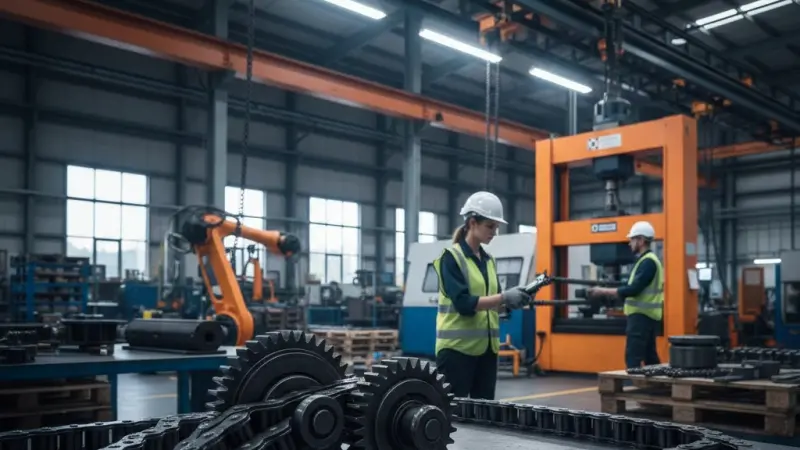
The United Kingdom’s industrial landscape is underpinned by the literal and metaphorical strength of its chain manufacturing and distribution sector. From the heavy-duty lifting chains in the ports of Felixstowe and Southampton to the precision-engineered timing chains found within British automotive manufacturing, this industry is a cornerstone of our national infrastructure. Chain manufacturers and distributors provide the critical components required for power transmission, materials handling, and securing loads across sectors as diverse as agriculture, mining, aerospace, and renewable energy.

Economically, the sector represents a vital segment of the UK’s engineering and manufacturing output. It is not merely about the production of steel links; it is about the high-value engineering, metallurgical expertise, and logistical precision that ensure British industry remains operational. In an era where supply chain resilience has become a boardroom priority, the role of domestic distributors has never been more significant. They act as the buffer between global raw material fluctuations and the immediate needs of local workshops and factories.
Moreover, the industry supports thousands of high-skilled jobs in engineering, technical sales, and logistics. By facilitating the movement of goods and the transmission of power, these businesses enable the productivity of the entire manufacturing base. For professionals looking to navigate this complex market, understanding the depth of expertise available within a uk business directory website is the first step toward building a reliable industrial partnership.
The Landscape of Chain Mnfrs & Distributors in the UK
The UK market for industrial chains is a sophisticated ecosystem composed of century-old manufacturers and agile, tech-driven distributors. Traditionally centered in the industrial heartlands of the West Midlands, South Yorkshire, and the North East, the industry has seen a geographic broadening as distribution hubs move closer to major logistics arteries like the M1 and M6 corridors.
Post-pandemic, the evolution of this sector has been marked by a shift from "just-in-time" to "just-in-case" inventory management. Manufacturers have had to contend with the soaring costs of steel and energy, leading to a renewed focus on high-efficiency production methods. Distributors, meanwhile, have become technical consultants, helping clients select the specific alloys and link designs that extend the life of equipment, thereby reducing long-term costs.
Currently, the market size is buoyed by a resurgence in British manufacturing and a robust construction sector. However, the competitive landscape is fierce. To remain relevant, many firms are now leveraging a uk local business directory to ensure their regional presence is felt by procurement managers who are increasingly looking for local, verified suppliers to mitigate the risks associated with international shipping delays. This digital pivot has allowed smaller, specialised manufacturers to compete on a level playing field with larger multinational corporations.
Comprehensive Services Breakdown
The services offered by UK chain specialists extend far beyond simple sales. A truly authoritative provider offers a cradle-to-grave approach to industrial hardware.
1. Custom Engineering and Design
Standard off-the-shelf chains are often insufficient for bespoke industrial applications. Leading manufacturers provide engineering services that include stress analysis, metallurgical testing, and custom link design. Whether it is a corrosive environment in a chemical plant requiring 316-grade stainless steel or a high-temperature furnace application, custom engineering ensures the product matches the environment.
2. Testing and Certification
Safety is paramount. Distributors often house in-house proof-load testing facilities where chains are subjected to forces far exceeding their rated capacity to ensure integrity. Certificates of conformity and LOLER (Lifting Operations and Lifting Equipment Regulations) inspections are standard services that ensure clients remain compliant with UK health and safety laws.
3. Maintenance and On-site Inspections
Preventative maintenance is a significant revenue stream and a vital client service. Technicians often visit sites to measure chain wear—checking for "stretch" or elongation that indicates the chain is nearing the end of its fatigue life.
For businesses operating in this space, offering such detailed technical services is a major differentiator. To attract high-value B2B contracts, these companies often list their expertise
on a business listing uk to capture the attention of maintenance, repair, and operations (MRO) managers who search for specialised service providers online.
How to Choose the Right Service Provider
Selecting a chain partner is a decision that impacts both operational safety and bottom-line profitability. When evaluating a manufacturer or distributor, several "gold standard" criteria should be applied.
Accreditations and Standards
Look for ISO 9001 certification as a baseline for quality management. For lifting applications, membership in the Lifting Equipment Engineers Association (LEEA) is non-negotiable. This ensures that the provider adheres to the highest safety standards in the world.
Reputation and Local Knowledge
While global suppliers have their place, a local distributor understands the specific industrial challenges of your region. They can provide rapid response times for breakdown situations, which is often the difference between a few hours of downtime and a week-long factory stoppage. Verifying these providers through uk verified business listings allows buyers to read authentic reviews and check the longevity of the business.
Insurance and Liability
Given the high-stakes nature of industrial failure, ensure your provider carries comprehensive product liability insurance. A reputable distributor will be transparent about their coverage and the origin of their raw materials, providing full traceability for every batch of steel used.
Industry Challenges & Future Outlook
The industry is currently navigating a period of rapid technological and regulatory transition. The most pressing challenge is the drive toward "Green Steel" and carbon neutrality.
Sustainability and the Circular Economy
UK manufacturers are under increasing pressure to reduce their carbon footprint. This has led to innovations in heat treatment processes that use less energy and the development of more durable chains that require less frequent replacement, aligning with circular economy principles. Distributors are also being asked to provide "Environmental Product Declarations" (EPDs) to help their clients meet their own sustainability targets.
Digitalisation and Industry 4.0
The "Smart Chain" is on the horizon. We are seeing the integration of IoT sensors within heavy-duty chain systems that can monitor tension and wear in real-time, sending alerts to maintenance teams before a failure occurs. This level of sophistication requires a workforce that is as comfortable with data as they are with a welding torch.
To stay ahead of these shifts, many firms are participating in a business listing uk to network with tech-forward partners and showcase their commitment to modern engineering standards.
Business Tips for Chain Professionals
For the owners of chain manufacturing and distribution firms, the technical side of the business is often easier than the marketing side. However, in a crowded marketplace, visibility is everything.
Digital Presence is Non-Negotiable
Gone are the days when a listing in the physical Yellow Pages was enough. Today, 80% of B2B buyers conduct their research online
before ever speaking to a sales representative. Your website must be a technical resource, not just a digital brochure.
Local SEO and Niche Directories
To capture local "near me" searches, it is essential to be visible where procurement officers look. Ensuring your company is featured in a uk home services directory or a specialised trade list is vital for capturing regional demand. It’s not just about being on the internet; it’s about being in the right corners of the internet where industrial professionals congregate. Focus on building a profile that highlights your specific niche—whether that’s conveyor chains, marine mooring, or precision roller chains.
Wrapping Up & Local Page Integration
The chain manufacturing and distribution industry remains a resilient and indispensable part of the UK’s economic fabric. As we look toward an increasingly digital and sustainable future, the bond between traditional engineering excellence and modern business practices will only grow stronger.
For businesses operating within this sector, the challenge is ensuring that your technical prowess is visible to those who need it most. Navigating the digital landscape can be daunting, but tools like Local Page UK provide a streamlined, authoritative platform for British businesses to connect. By claiming your place in the uk business directory, you aren't just adding a link; you are joining a verified network of UK service providers that value quality and local expertise.
Boost Your Visibility with Local Page UK
In the industrial sector, your reputation is your most valuable asset, but it can only help you if customers can find you. For chain manufacturers, distributors, and engineering firms, digital visibility is the bridge between a warehouse full of stock and a signed contract. Local Page UK offers a premium platform designed specifically for the British market. We encourage all industry professionals to business listing uk today. By doing so, you ensure that when a project manager or engineer searches for reliable components, your business is at the top of their list.
FAQ
1. What are the main types of industrial chains used in the UK?
Industrial chains are generally categorised into three main groups: power transmission chains, conveyor chains, and lifting/leaf chains. Power transmission chains, such as roller chains, are used to transfer mechanical power between shafts in machinery. Conveyor chains are designed specifically for moving materials along a production line, often featuring attachments like slats or rollers. Lifting chains, including high-tensile alloy chains, are engineered for overhead lifting and securing heavy loads. Each type is manufactured to specific British and International standards (BS/ISO) to ensure they can handle the required torque or load. Choosing the correct type involves assessing the application's speed, load weight, and environmental conditions to ensure safety and efficiency.
2. How do I know when an industrial chain needs replacing?
The primary indicator for chain replacement is "wear elongation," often referred to as chain stretch. As the pins and bushings wear down, the pitch of the chain increases. Most manufacturers recommend replacement once a chain has elongated by 1.5% to 2% of its original length, as exceeding this can lead to sprocket damage or catastrophic failure. Other signs include visible corrosion, cracked link plates, stiff joints (kinking), or excessive noise during operation. Regular inspections using a chain wear gauge are essential for maintaining safety. If you are unsure, consulting a professional from a uk local trades directory can help you find a certified inspector to perform a LOLER assessment or a technical wear analysis.
3. What materials are best for corrosive industrial environments?
For environments involving moisture, chemicals, or extreme temperatures, stainless steel is the standard choice, specifically Grade 316 for its superior corrosion resistance. However, stainless steel has lower tensile strength than carbon steel. For applications requiring both strength and resistance, plated chains (such as nickel-plated or zinc-plated) or dacromet-coated chains offer a middle ground. There are also "maintenance-free" chains with moisture-resistant lubricants sealed within the bushings. Selecting the right material requires a balance between the mechanical load requirements and the chemical profile of the workspace. Expert distributors can provide material test certificates to verify the alloy composition and ensure it meets the specific needs of your industrial application.
4. What is the difference between British Standard (BS) and American Standard (ANSI) chains?
While they may look similar, BS (ISO 606) and ANSI chains have different dimensions and are not interchangeable. British Standard chains are common across Europe and the UK, featuring larger pin diameters and different plate thicknesses compared to their ANSI counterparts. This means the sprockets for a BS chain will not correctly seat an ANSI chain, leading to rapid wear and potential breakage.
It is crucial to identify which standard your machinery uses before ordering replacements. Most UK-based distributors stock both, but they will require the pitch, roller diameter, and width between inner plates to confirm the exact specification. Correct identification prevents costly downtime and mechanical damage.
5. Why is lubrication so critical for industrial chain longevity?
Lubrication is the lifeblood of a chain; it reduces friction between the pin and bushing, flushes out contaminants, and prevents rust. Without proper lubrication, a chain can wear out up to ten times faster. The method of application—whether manual, drip-feed, or oil bath—depends on the chain speed and operating environment. In food processing, H1-grade food-safe lubricants are mandatory. In heavy dusty environments, "dry" lubricants are preferred to prevent abrasive paste from forming. For businesses looking for lubrication specialists or maintenance partners, checking Localpage can connect you with local chemical and industrial supply experts who understand the nuances of high-performance industrial lubrication.
6. What are the legal requirements for lifting chains in the UK?
In the UK, all lifting equipment is governed by the Lifting Operations and Lifting Equipment Regulations 1998 (LOLER). This law requires that all chains used for lifting must be "thoroughly examined" by a competent person at least every six months (or every twelve months for fixed equipment). Furthermore, every new lifting chain must be supplied with an EC Declaration of Conformity and a unique identification tag. Failure to comply can lead to severe legal penalties and, more importantly, endangers lives. It is vital to source lifting chains from reputable distributors who provide full traceability and original test certificates for every component sold.
7. How does temperature affect industrial chain performance?
Extreme temperatures significantly impact the metallurgical properties of steel. High temperatures (above 250°C) can cause tempering, which softens the steel and reduces its load capacity, while also breaking down standard lubricants. Conversely, extremely low temperatures (below -20°C) can make standard carbon steel brittle and prone to "shock" fractures. For these extremes, specialised alloys and high/low-temperature lubricants are required. If your facility operates kilns, freezers, or outdoor equipment in harsh winters, you must specify these conditions to your manufacturer. They will often recommend specific heat-treatment processes or stainless steel variants designed to maintain structural integrity under thermal stress.
8. What is the role of a chain distributor vs. a manufacturer?
A manufacturer focuses on the casting, forging, and assembly of the chain links, often producing bulk quantities of standard or bespoke specifications. A distributor acts as the vital link to the end-user, holding local stock for immediate delivery, providing technical "on-the-ground" support, and often performing value-added services like cutting chains to length or adding custom attachments. Distributors are essential for emergency breakdown support, as they can often deliver a replacement within hours. For many UK businesses, building a relationship with a local distributor is more practical than dealing directly with a distant factory, as it provides a single point of contact for diverse industrial needs.
9. Can I reuse sprockets when replacing a worn chain?
It is generally advised to replace sprockets when replacing a chain, especially if the chain has reached its wear limit. A worn chain "hooks" the teeth of the sprocket, and if you install a new chain onto worn sprockets, the mismatched geometry will cause the new chain to wear out prematurely. Think of it as putting new shoes on sore feet; the underlying issue remains. While it might seem like a cost-saving measure to keep the old sprockets, the resulting reduction in chain life usually makes it more expensive in the long run. Inspect sprocket teeth for a "saw-tooth" appearance, which is a clear sign that replacement is overdue.
10. What are "attachment chains" and where are they used?
Attachment chains are standard roller or conveyor chains fitted with specialized links, such as "K" attachments (flat tabs), "M" attachments (extended pins), or "bent" tabs. These allow the chain to perform tasks beyond simple power transmission, such as pushing, pulling, or carrying items along a production line. They are ubiquitous in packaging, bottling, and automotive assembly plants. Because attachments can be customized in thousands of configurations, they often require technical drawings and precise engineering. Working with a specialist who understands the mechanical timing and load-bearing requirements of these attachments is critical for the smooth operation of automated conveyor systems.
11. How has Brexit impacted the UK chain supply market?
Brexit introduced new complexities regarding customs declarations, "Rules of Origin" for steel components, and the transition from the CE mark to the UKCA mark for safety-critical components. This has led to increased lead times for chains imported from the EU and a greater emphasis on domestic UK manufacturing and stock-holding. Many UK distributors have increased their warehouse capacity to buffer against border delays. For buyers, this means that sourcing from a verified domestic supplier is now a strategic move to ensure continuity of supply. This shift has reinforced the importance of using a local business search to identify suppliers with significant UK-based inventory.
12. What are the benefits of "maintenance-free" or lube-free chains?
Maintenance-free chains utilize oil-impregnated sintered bushings or high-tech coatings that provide permanent lubrication to the pin-bushing joint. These are ideal for applications where manual lubrication is difficult, dangerous, or where product contamination must be avoided (such as in food, pharmaceuticals, or paper manufacturing). While the initial cost is higher than standard chain, the total cost of ownership is often lower due to eliminated lubrication labour, reduced oil consumption, and significantly longer service life. They also contribute to a cleaner, safer work environment by eliminating oil mist and spillages on factory floors, making them a popular choice for modern, sustainable facilities.
13. How do I calculate the correct tension for an industrial chain?
Correct chain tension is vital; too tight, and you cause excessive bearing wear and chain fatigue; too slack, and the chain can whip, vibrate, or even jump off the sprockets. Generally, for a horizontal drive, the slack side should have a "sag" of about 2% to 4% of the center distance between the sprockets. For vertical drives, tensioning must be much tighter and often requires an idler sprocket to maintain constant contact. Tension should be checked after the first few hours of operation (the "run-in" period) and then at regular maintenance intervals. If you are designing a new drive, using a professional engineer or a local trade expert is recommended to ensure the geometry is correct.
14. What are the environmental impacts of the chain industry?
The industry is energy-intensive due to the steel production and heat-treatment processes involved. However, the UK sector is moving toward more sustainable practices, including the use of recycled steel scrap and more efficient induction hardening methods. The longevity of the product itself is a form of sustainability—a high-quality chain that lasts five years is far better for the environment than a cheap one that needs replacing every six months.
Proper waste management of used oil and the recycling of old, worn-out steel chains also play a role. Many companies are now highlighting their "green" credentials in their digital profiles to appeal to eco-conscious procurement teams.
15. How can I find the best-rated chain suppliers in my area?
The most efficient way to find reliable industrial suppliers is to use a dedicated and verified directory that focuses on the UK market. Rather than sifting through generic global search results, a focused platform allows you to filter by location, service type, and professional accreditations. This ensures that the companies you find are legitimate, active, and capable of meeting British industrial standards. For a comprehensive list of verified engineering and distribution professionals, we recommend visiting Local page, where you can browse local experts, read customer reviews, and contact suppliers directly to request quotes for your specific industrial chain requirements.

Disclaimer: The information provided in this article is for general informational and research purposes only. Company details, features, services, and market positions may change over time. Readers are advised to visit official company websites and conduct independent research before making any business decisions or purchasing services.
Most Searchable Keywords

Recent Blogs


Related Listings


Categories
- Accountants (295)
- Advertising Agencies (559)
- Architects (149)
- Automobiles (377)
- Beauty (300)
- Carpenters (146)
- Cleaning Services (386)
- Dentists (189)
- Driving (62)
- Electricians (215)
- Energy (8)
- Event Organiser (685)
- Finance (599)
- Guide (3365)
- Health (2207)
- Information technology (206)
- Legal Services (353)
- Logistics (6)
- Maintenance (65)
- Manufacturing (35)

Sponsored Listings in Locksmith Services


Related Blogs

Gen Z Political Reporters and News Creators i...
Read this insightful article "Gen Z Political Reporters and News Creators in the UK" to expand your knowledge!

Famous Female Social Media Influencers Across...
Read this insightful article "Famous Female Social Media Influencers Across the UK" to expand your knowledge!

Your UK Sponsor Licence 2026 Step by Step Gui...
Read this insightful article "Your UK Sponsor Licence 2026 Step by Step Guide" to expand your knowledge!
Questions & Answers – Find What
You Need, Instantly!
How can I update my business listing?
Is it free to manage my business listing?
How long does it take for my updates to reflect?
Why is it important to keep my listing updated?
