
Chemical Distributors & Wholesalers Ensuring Supply Chains
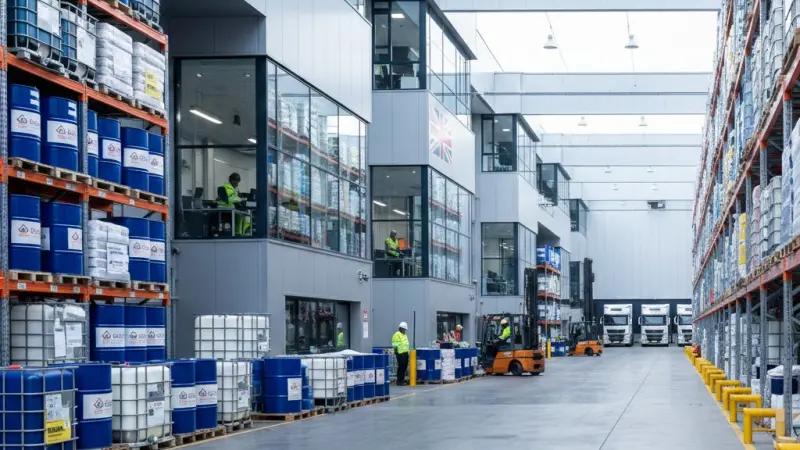
The chemical distribution and wholesale sector is the invisible backbone of the British economy. From the pharmaceuticals that sustain our healthcare system to the specialized polymers used in aerospace, chemical distributors act as the critical link between high-volume manufacturers and the diverse end-users across the United Kingdom. This sector is not merely about moving liquids and powders from point A to point B; it is an intricate dance of regulatory compliance, technical expertise, and sophisticated logistics.
In the UK, the "Chemicals – Distributors & Wholesalers" sector contributes significantly to the national GDP, supporting thousands of jobs in manufacturing, research, and transport. As the nation navigates a complex economic landscape, the importance of robust chemical supply chains has never been more evident. These businesses ensure that SMEs and large-scale industrial plants alike have access to the raw materials necessary for production, often providing just-in-time delivery services that reduce the overhead costs for their clients.
Understanding the nuances of this industry requires a deep dive into how these entities operate within the uk business directory ecosystem. By bridging the gap between global production and local consumption, UK distributors mitigate the risks of international shipping delays and geopolitical instability. Their role involves meticulous quality control, repackaging, and the provision of Technical Data Sheets (TDS) and Material Safety Data Sheets (MSDS) that are essential for workplace safety. As we look forward, the resilience and adaptability of these wholesalers will define the competitiveness of British manufacturing on the global stage.
The Landscape of Chemicals – Distributors & Wholesalers in the UK
The current landscape of chemical distribution in Britain is characterized by a blend of long-established multinational players and agile, specialized local firms. Following the post-pandemic recovery, the industry has seen a massive shift toward regional resilience. The market size remains substantial, with billions of pounds in annual turnover, concentrated heavily in industrial hubs such as the North West (the "Chemical Northwest" cluster), the Northeast (Teesside), and the Humber estuary.
These regions benefit from deep-water ports and established pipeline infrastructures, allowing wholesalers to import bulk quantities and break them down for distribution via the uk b2b business directory network. Since the transition from EU-wide REACH regulations to UK REACH, distributors have become even more vital as they navigate the administrative burdens of compliance on behalf of their customers. This evolution has transformed distributors from simple resellers into regulatory consultants who ensure that every gram of substance sold is legally accounted for.
Post-pandemic, we have observed a "de-risking" of supply chains. Companies that once relied on offshore manufacturing are now seeking local wholesalers to hold safety stocks within the UK. This trend has bolstered the local economy, driving investment in state-of-the-art warehousing facilities that meet COMAH (Control of Major Accident Hazards) regulations. For any firm looking to source these critical materials, a reliable uk local business directory serves as a starting point to identify partners who possess the specific storage capabilities required for volatile or hazardous substances. The shift toward digital procurement has also forced traditional wholesalers to modernize, integrating e-commerce and real-time stock tracking into their service offerings to meet the demands of a modern, fast-paced industrial market.
Comprehensive Services Breakdown
The services provided by chemical wholesalers go far beyond simple procurement. Modern distributors offer value-added services that simplify the manufacturing process. These include blending and formulation, where chemicals are mixed to precise customer specifications, and "white labeling" for retail products. By outsourcing these tasks to a specialist distributor, manufacturers can focus on their core competencies while benefiting from the distributor's economies of scale.
Furthermore, repackaging is a cornerstone service. Many global producers only sell in tanker-load quantities. A wholesaler provides the essential service of breaking these down into IBCs (Intermediate Bulk Containers), drums, or even smaller laboratory-grade units. This flexibility is vital for the business listing uk of small-scale specialized manufacturers who do not have the space or the budget for bulk storage.
Specialized storage is another critical offering. Many chemicals require temperature-controlled environments or specialized fire suppression systems. Wholesalers invest in these infrastructures so their clients don’t have to. Moreover, logistics and "last-mile" delivery in the chemical sector require ADR-trained drivers and specialized vehicles. This ensures that hazardous goods are transported safely and in accordance with the Carriage of Dangerous Goods regulations.
Technical support also distinguishes top-tier wholesalers. They employ chemists and regulatory experts who can suggest alternative ingredients to improve product performance or reduce costs. By appearing in a business listing uk, these service providers can showcase their unique specializations, such as focusing on surfactants, pigments, or food-grade additives.
This expertise helps customers stay ahead of market trends, such as the increasing demand for "natural" or "bio-based" chemicals, which require different handling and application methods than their synthetic counterparts.
How to Choose the Right Service Provider
Choosing a chemical distributor is a decision that impacts a company’s safety profile and operational continuity. The first criterion should always be accreditation. Look for ISO 9001 (Quality Management) and ISO 14001 (Environmental Management) certifications. In the chemical world, the "Responsible Care" initiative—a global voluntary commitment to health, safety, and environmental excellence—is a hallmark of a reputable provider.
Reviews and local reputation are equally important. While global giants offer breadth, local wholesalers often provide better service levels and faster response times. Using uk verified business listings can help procurement managers find companies that have a proven track record of reliability and compliance. It is also essential to verify their insurance coverage, specifically for pollution and public liability, which are crucial when handling hazardous materials.
Consulting uk top rated local businesses allows you to filter providers based on peer feedback. Does the distributor provide consistent lead times? Is their documentation always accurate? In an industry where a single missing safety sheet can halt production, these details matter. Additionally, consider the proximity of the distributor. Choosing a local provider not only reduces the carbon footprint of your deliveries but also ensures that emergency supplies can be delivered more rapidly in the event of a stockout. Finally, visit the facility if possible; a well-organized, clean, and secure warehouse is often a reflection of the company’s overall approach to safety and quality.
Industry Challenges & Future Outlook
The chemical distribution sector is currently facing a transformative period. One of the primary challenges is the shift toward sustainability. The "Green Chemistry" movement is no longer a niche interest; it is a regulatory and consumer-driven mandate. Wholesalers are increasingly pressured to find sustainable alternatives to traditional solvents and plastics. This transition requires significant R&D and a willingness to overhaul long-standing supply chains.
Technology is also playing a massive role. From blockchain for ingredient traceability to AI-driven demand forecasting, the "Digitalization of Chemicals" is in full swing. Distributors who fail to adopt these tools will find themselves at a disadvantage. By securing a business listing uk, smaller distributors can maintain visibility as the industry moves toward more transparent, digital-first interactions. Furthermore, the UK’s commitment to Net Zero by 2050 is forcing wholesalers to rethink their logistics, exploring electric HGV fleets and carbon-neutral warehousing.
Regulatory changes continue to be a headwind. The divergence between UK REACH and EU REACH creates a dual-compliance burden for those importing from or exporting to the Continent. This requires a high degree of administrative competence and constant monitoring of the Health and Safety Executive (HSE) updates. However, these challenges also present opportunities. Wholesalers who lead the way in sustainable practices and digital efficiency will be the ones that thrive. Utilizing a business listing uk helps these innovative companies broadcast their green credentials to a wider audience, ensuring they are found by the growing number of eco-conscious manufacturers.
Business Tips for Chemicals – Distributors & Wholesalers Professionals
For professionals in this sector, marketing can often feel secondary to operations. However, in an increasingly competitive market, digital visibility is paramount. Most B2B procurement journeys now begin with a search engine. Therefore, ensuring your business is listed in a uk local trades directory is a fundamental step in reaching local procurement officers.
Niche specialization is another effective strategy. Instead of being a generalist, focus on being the leading expert in a specific sub-sector, such as "Agrochemicals" or "Cosmetic Ingredients." This makes your SEO efforts more targeted and your sales pitch more compelling. You should also leverage your technical data; hosting webinars or publishing white papers on chemical safety and application can establish your firm as a thought leader.
Networking remains vital, but it has shifted from traditional trade shows to hybrid models. Engaging with uk local business search tools ensures that when a nearby factory needs an emergency supply of a specific catalyst, your company appears at the top of their results.
Regularly updating your digital profiles with your latest certifications and product lines shows that your business is active and compliant. Finally, never underestimate the power of social proof; encourage your long-term clients to leave detailed reviews on professional directories to build trust with prospective customers who may be wary of switching suppliers.
Wrapping Up & Local Page Integration
The British chemical distribution industry is a resilient, high-tech, and essential sector. By managing the complexities of logistics, regulation, and technical support, these wholesalers allow the rest of UK industry to function smoothly. Whether it’s ensuring the purity of water treatment chemicals or providing the base oils for automotive manufacturing, their contribution is foundational.
For businesses looking to navigate this sector—whether you are a buyer looking for a reliable partner or a wholesaler looking to expand your reach—visibility is the key. Local Page UK provides the premier platform for connecting UK businesses with the services they need. In an era where "local" and "reliable" are the most valuable adjectives in a supply chain, being part of a trusted find local businesses uk network is no longer optional. It is the strategy that will ensure your business remains at the heart of the UK’s industrial future.
Boost Your Visibility with Local Page UK
In the competitive world of chemical distribution, your reputation is your most valuable asset, but it only works if people can find you. For professionals in the Chemicals – Distributors & Wholesalers sector, digital presence is the new storefront. By choosing to claim your business listing uk, you are ensuring that your expertise, accreditations, and local reliability are visible to the thousands of businesses searching for your services every day. Don't let your competitors capture the local market—put your business on the map with Local Page UK today.
FAQ
1. What role do chemical distributors play in the UK economy?
Chemical distributors serve as the vital link between massive global chemical producers and smaller, localized end-users. They manage the logistics, storage, and regulatory compliance that many manufacturing businesses cannot handle in-house. By breaking down bulk quantities into manageable sizes and providing technical expertise, they enable the smooth operation of sectors ranging from pharmaceuticals to agriculture. Their ability to manage "just-in-time" supply chains reduces costs for British manufacturers and ensures that production lines never stop due to a lack of raw materials.
2. How has the UK REACH regulation affected wholesalers?
Since leaving the EU, the UK has implemented its own version of REACH (Registration, Evaluation, Authorisation, and Restriction of Chemicals). This has placed a significant administrative burden on wholesalers, who must now ensure that the chemicals they import or distribute are registered within the UK system. This divergence from EU regulations means that wholesalers must stay incredibly vigilant regarding compliance to avoid heavy fines or shipping delays. Many distributors have now become regulatory consultants, helping their customers navigate these new legal requirements seamlessly.
3. What should I look for when choosing a chemical wholesaler?
Reliability and safety are paramount. You should look for ISO 9001 and ISO 14001 certifications as a baseline for quality and environmental management. Additionally, check if the distributor is a member of the Chemical Business Association (CBA) and participates in the "Responsible Care" program. It is also wise to verify their ADR transport capabilities and their proximity to your site, as local providers can often offer better emergency support and lower transport costs. Always check their insurance documents for specific chemical-related liabilities.
4. Are there "green" chemical distributors in the UK?
Yes, there is a growing segment of the industry focusing on sustainable and bio-based chemistry. These distributors specialize in sourcing alternatives to traditional petroleum-based solvents and surfactants. They often provide extensive data on the lifecycle and environmental impact of their products, helping manufacturers meet their own sustainability goals.
As environmental regulations tighten, these specialized wholesalers are becoming increasingly important for companies looking to reduce their carbon footprint and appeal to eco-conscious consumers.
5. Why is a digital presence important for local chemical suppliers?
Modern procurement is digital. Even in the traditional world of chemicals, engineers and buyers use search engines to find specialized ingredients or local stockists. If a business isn’t visible online, it effectively doesn't exist to a new generation of procurement professionals. Utilizing a platform like Localpage ensures that your business appears when local customers search for specific services, allowing smaller, expert firms to compete with large multinationals on the basis of service and speed.
6. What is the difference between a distributor and a wholesaler?
While the terms are often used interchangeably, a distributor typically has a closer relationship with the manufacturer, often acting as their exclusive representative in a specific region and providing technical support. A wholesaler usually buys in bulk from various sources and sells to smaller retailers or end-users, focusing more on price and availability than on brand-specific support. In the chemical industry, many firms perform both roles, offering a wide catalogue of generic products alongside specialized lines.
7. How do wholesalers handle hazardous materials safely?
Wholesalers must adhere to strict COMAH (Control of Major Accident Hazards) regulations. This involves specialized warehouse construction, including bunded flooring to catch leaks, advanced fire suppression systems, and rigorous staff training. All transport must be handled by ADR-qualified drivers who understand the specific risks of the chemicals they are carrying. Regular audits and a culture of safety are essential components of any reputable chemical wholesale operation to prevent environmental contamination or workplace accidents.
8. Can I get custom chemical blends from a wholesaler?
Many high-end chemical distributors offer "value-added services" which include custom blending and formulation. Instead of buying raw ingredients and mixing them yourself, you can provide a specification to the distributor, and they will deliver the finished mixture ready for use. This can save manufacturers significant time and money on equipment and labor. It also ensures a high level of consistency, as the distributor uses industrial-grade mixing equipment and laboratory testing to verify every batch.
9. What are the current trends in chemical logistics?
The industry is moving toward "Smart Logistics." This includes the use of IoT sensors to monitor the temperature and pressure of chemicals in transit, as well as real-time GPS tracking for more accurate delivery windows. There is also a major push for "circular logistics," where distributors take back empty IBCs and drums for cleaning and reuse, reducing the amount of waste generated by the industry. Digital integration with customer inventory systems is also becoming more common.
10. How do wholesalers manage price volatility in chemicals?
Chemical prices are often tied to the price of oil and global demand shifts, making them highly volatile. Successful wholesalers use a variety of strategies to manage this, including bulk buying when prices are low, using hedging instruments, and maintaining strong relationships with multiple global producers. They also provide "market intelligence" to their customers, advising them on when to buy or when to expect price increases, which helps their clients plan their budgets more effectively.
11. Do wholesalers provide technical documentation for all products?
Yes, a reputable wholesaler must provide a Material Safety Data Sheet (MSDS) and a Technical Data Sheet (TDS) for every product they sell. The MSDS is a legal requirement and contains vital information on handling, storage, and emergency procedures. The TDS provides information on the chemical properties and suggested applications. Many wholesalers now provide these documents via online portals, making it easy for their customers to access the information they need for health and safety audits.
12. Can small businesses buy from large chemical wholesalers?
While some massive global producers have high minimum order quantities (MOQs), many UK-based wholesalers specialize in serving small and medium-sized enterprises. They "break bulk," allowing small businesses to buy chemicals in quantities as small as 25kg bags or 20-litre carboys. This democratization of access to raw materials is one of the most important functions of the wholesale sector, allowing small British innovators to compete with much larger companies.
13. What impact does the "Circular Economy" have on this sector?
The circular economy is pushing wholesalers to think about the entire lifecycle of the chemicals they sell. This includes developing "chemical leasing" models, where customers pay for the function of the chemical rather than the substance itself, and the distributor takes the chemical back for recycling after use. It also involves a focus on solvent recovery and the distribution of recycled chemical stocks. This shift is creating new business opportunities for distributors who can manage complex "reverse logistics" chains.
14. How does local proximity affect chemical supply chains?
Proximity is a major factor in both cost and safety. Shorter transport distances reduce the risk of accidents on the road and lower the carbon footprint of the supply chain. From a business perspective, having a local wholesaler means you can maintain lower stock
levels in your own facility, as you can rely on the wholesaler to deliver quickly when needed. This frees up working capital and reduces the amount of hazardous material you need to store on your own site.
15. How can I find verified chemical suppliers in my area?
The most efficient way to find reliable, local chemical suppliers is to use a dedicated professional directory that verifies business details. By using a service like Local page, you can filter results by location and specialization, ensuring that the company you choose has the specific capabilities you require. This saves procurement teams hours of research and provides a layer of trust that is essential when dealing with the high-stakes world of chemical procurement and supply chain management.
Disclaimer: The information provided in this article is for general informational and research purposes only. Company details, features, services, and market positions may change over time. Readers are advised to visit official company websites and conduct independent research before making any business decisions or purchasing services.
Most Searchable Keywords
Recent Blogs


Related Listings

Categories
- Accountants (295)
- Advertising Agencies (559)
- Architects (149)
- Automobiles (377)
- Beauty (300)
- Carpenters (146)
- Cleaning Services (387)
- Dentists (189)
- Driving (62)
- Electricians (215)
- Energy (8)
- Event Organiser (686)
- Finance (602)
- Guide (3374)
- Health (2207)
- Information technology (206)
- Legal Services (354)
- Logistics (6)
- Maintenance (65)
- Manufacturing (35)
Sponsored Listings in Cleaning Services


Related Blogs

Meet the Fair Work Agency Changing UK Work Ru...
Read this insightful article "Meet the Fair Work Agency Changing UK Work Rules in 2026" to expand your knowledge!

Collective Redundancy Errors Now Carry Higher...
Read this insightful article "Collective Redundancy Errors Now Carry Higher 2026 Penalties" to expand your knowledge!

Explore Dog Friendly Walks in the Cotswolds f...
Read this insightful article "Explore Dog Friendly Walks in the Cotswolds for 2026" to expand your knowledge!
Questions & Answers – Find What
You Need, Instantly!
How can I update my business listing?
Is it free to manage my business listing?
How long does it take for my updates to reflect?
Why is it important to keep my listing updated?
