
ChatGPT Health A Guide to Privacy and AI Healthcare in the UK
- 👤 Tim David
- 👁️ 95 Views
- Last Updated: March 24, 2026
- 🏷️ Information technology
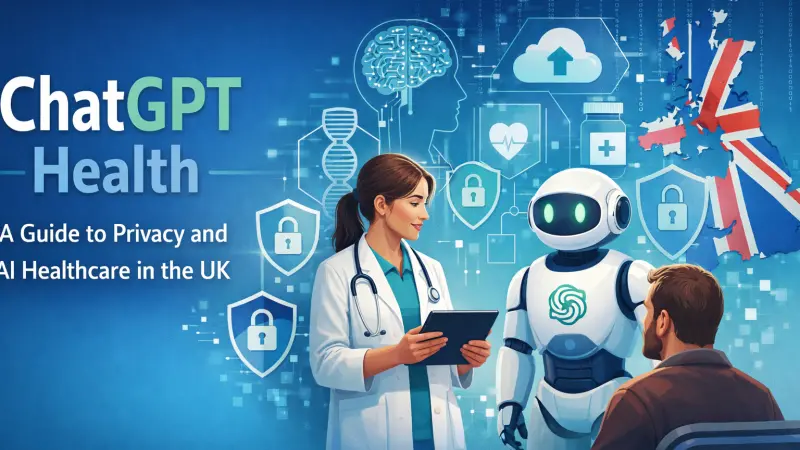
Have you ever considered the long-term implications of sharing your entire medical history with an artificial intelligence to interpret a single blood test result? The integration of AI health assistants into our daily lives is no longer a futuristic concept but a present reality. With the introduction of ChatGPT Health, OpenAI has moved beyond simple text generation into the deeply personal realm of medical diagnostics and wellness management. While the promise of clarity and instant medical insight is compelling, it raises significant questions regarding data sovereignty and privacy for users across the United Kingdom.

In Britain, where the National Health Service (NHS) serves as the cornerstone of healthcare, the introduction of third-party AI tools creates a complex intersection of public trust and private data collection. For small business owners, medical contractors, and individual patients, understanding the technical and legal framework of these tools is essential. This article provides a comprehensive analysis of the "insight versus exposure" trade-off, exploring how ChatGPT Health functions, the inherent risks to sensitive data, and the regulatory landscape within the UK.
The Emergence of AI-Driven Healthcare in the United Kingdom
The UK healthcare sector has been gradually adopting digital-first strategies for years, from GP at Hand to various wellness monitoring apps. However, ChatGPT Health represents a fundamental shift. Unlike traditional medical software that operates within strict clinical silos, this tool aggregates data from multiple sources, including hospital portals, fitness trackers, and manual user inputs. This creates a "quantified self" profile that is highly detailed but potentially vulnerable.
Recent statistics indicate that approximately 230 million people globally interact with ChatGPT for health and wellness queries every week. In the UK, the pressure on the NHS has led many to seek alternative methods for interpreting symptoms or understanding complex medical jargon. Whilst the convenience is undeniable, the security of the information shared is often overlooked. A study conducted in early 2024 revealed that nearly 10% of the workforce regularly enters sensitive company data into AI tools, suggesting that the "privacy paradox"—where users claim to value privacy but share data freely—is alive and well in the medical context.
For UK service providers and SMEs, the risk is twofold. There is the personal risk to the patient, and the professional risk to the practitioner or contractor who might use these tools to assist in administrative tasks. If a medical contractor uses AI to summarise patient notes without a robust data processing agreement, they could be in breach of the Data Protection Act 2018 and the UK General Data Protection Regulation (UK GDPR).
Understanding the Architecture of ChatGPT Health
OpenAI describes ChatGPT Health as a "dedicated experience" designed to help users track wellness trends, compare insurance options, and prepare for clinical consultations. The system is built to ingest raw data—such as PDFs of bloodwork or heart rate data from an Apple Watch—and transform it into a narrative summary. This transition from "data storage" to "data interpretation" is where the most significant privacy risks emerge.
Traditionally, medical data was static. A PDF of a lab report sat in an inbox or a secure portal. With ChatGPT Health, that data becomes part of a dynamic, interconnected profile. By connecting wellness apps like MyFitnessPal or Function, the AI can correlate a user’s caloric intake with their glucose levels or sleep patterns. The resulting insights can be life-changing for some, identifying patterns that a human doctor might miss in a standard ten-minute GP appointment.
However, the value of health data lies not just in the individual points, but in the inferences that can be drawn from them. AI algorithms are designed to find connections. When multiple datasets are combined, the resulting "derived data" can reveal more about an individual’s future health risks, lifestyle choices, and even genetic predispositions than they ever intended to share. This concentration of high-value data makes these platforms primary targets for cyber-attacks.
The Privacy Trade-off Insight versus Exposure
OpenAI has implemented several security layers to address these concerns, including purpose-built encryption and isolation of health conversations. Users are provided with tools such as multi-factor authentication and the ability to revoke access to connected apps. Furthermore, the company states that health-specific conversations are not used to train their foundational models, a move intended to prevent sensitive medical information from being "memorised" by the AI and potentially output to other users.
Despite these assurances, privacy critics in the UK and beyond remain sceptical. The primary concern is that once data is uploaded to a private AI service, it may lose the statutory protections it enjoyed within a regulated healthcare environment.
In the UK, the NHS is governed by strict "Common Law Duty of Confidentiality" and specific health data processing rules. When a user voluntarily moves that data into ChatGPT Health, they are effectively moving it into a commercial environment governed by a private company’s terms of service.
Sara Geoghegan, a senior counsel at the Electronic Privacy Information Center, has noted that ChatGPT is primarily bound by its own promises and disclosures. Without specific, stringent regulations targeting AI-driven healthcare, companies retain the right to change their terms of service at any time. For a UK citizen, this means that data shared today under a promise of "no model training" could potentially be handled differently in five years if the company’s policies evolve or if they are acquired by another entity.
Cybersecurity Risks and Data Aggregation
From a cybersecurity perspective, the aggregation of health data into a single platform creates a "honeypot" effect. For hackers, a database containing medical records, fitness trends, and AI-generated health summaries is far more valuable than a list of passwords or credit card numbers. Medical data is permanent; unlike a credit card, you cannot "cancel" your medical history or your genetic profile.
In August 2023, thousands of ChatGPT conversations were leaked via search engine indexing, reminding the world that no digital system is entirely immune to exposure. When sensitive health information is aggregated, the impact of a breach is amplified. A single leak could expose a user’s chronic conditions, mental health history, and lifestyle habits in one stroke. This is a particularly daunting prospect for UK SMEs who must manage their cyber risk to remain compliant with insurance and regulatory requirements.
Furthermore, the concentration of value in AI health platforms makes them attractive for "high-impact" data theft. Cybercriminals are increasingly moving away from bulk data theft towards targeted attacks that can be used for blackmail or sophisticated phishing schemes. If an attacker knows a person’s specific medical concerns, they can craft highly convincing fraudulent messages that appear to come from their GP or a specialist clinic.
The UK Regulatory Landscape GDPR and the ICO
In the United Kingdom, the Information Commissioner’s Office (ICO) is responsible for enforcing data protection laws. Under UK GDPR, health data is classified as "special category data," which requires the highest level of protection. Organisations must have a specific legal basis for processing this data, and transparency is a mandatory requirement.
When a UK resident uses ChatGPT Health, a complex legal question arises: Who is the data controller? While the user "consents" to the processing, the AI provider determines the "means and purposes" of that processing. If the AI service is not physically located in the UK or the EEA, the "adequacy" of data protection becomes a concern. While OpenAI has a European presence, the back-end processing often occurs on servers globally, requiring robust Standard Contractual Clauses (SCCs) to ensure the data remains protected to a UK-equivalent standard.
For UK healthcare providers and service contractors, the advice from the ICO is clear: do not enter patient data into public AI tools unless a formal, vetted Data Protection Impact Assessment (DPIA) has been completed and a secure, private instance of the tool is used. The "consumer" version of ChatGPT Health, while useful for individuals, does not currently meet the rigorous standards required for professional clinical use within the NHS framework.
Ethical Implications Bias and Discrimination
Beyond the technical risks of hacking and data leaks, AI-driven healthcare introduces ethical risks related to algorithmic bias. AI models are trained on historical data, which often reflects existing societal biases. If the data used to develop health insights is skewed—for example, by under-representing certain ethnic groups or socioeconomic backgrounds—the AI’s interpretations could lead to inaccurate or discriminatory outcomes.
In a healthcare context, this could manifest as biased treatment recommendations or skewed wellness scores. For instance, if an AI incorrectly interprets a symptom due to a lack of diverse training data, it could lead a user to delay seeking necessary medical attention. Conversely, if insurance providers in the future were to gain access to AI-generated health trends, there is a risk of "predictive discrimination," where premiums are adjusted based on AI-forecasted health risks rather than current health status.
This is a major concern for the UK’s commitment to healthcare equality. The NHS prides itself on "care for all," but the shift towards private, AI-led health interpretation could create a two-tier system.
Those who can afford sophisticated wellness subscriptions and have the "digital literacy" to navigate AI tools may receive earlier warnings about their health, while others are left behind, potentially widening the health inequality gap in Britain.
Practical Advice for UK Users and Contractors
Given the risks and rewards, how should UK individuals and businesses approach tools like ChatGPT Health? The goal should be to maximise the "insight" while minimising the "exposure." This requires a proactive approach to digital hygiene and a healthy dose of scepticism regarding AI outputs.
- Anonymise Input Data: Before uploading medical records or describing symptoms, remove personally identifiable information such as your NHS number, full name, and specific address.
- Verify with Professionals: Never treat an AI-generated summary as a final diagnosis. Use the tool to prepare questions for your GP, but ensure that any clinical decisions are made by a human medical professional.
- Audit App Permissions: Regularly review which wellness apps are connected to your AI profile. If you no longer use a tracker, revoke its access immediately.
- Enable Enhanced Security: Use multi-factor authentication (MFA) on all accounts that hold medical data and choose strong, unique passwords.
- Understand the Terms: Read the privacy disclosures specifically related to the "Health" features. Ensure you understand what data is stored in "memory" and how to clear it.
For UK SMEs and medical contractors, the stakes are higher. Professional use of AI in healthcare requires a formalised strategy. This includes using "Enterprise" versions of AI tools that offer data residency in the UK or Europe and guarantee that input data is never used to train global models. Contractors should also ensure that their professional indemnity insurance covers the use of AI tools in their workflow.
The Future of AI Health Privacy in the UK
As AI technology evolves, so too will the regulatory response. We are likely to see the UK government introduce specific "AI Safety" standards that target high-risk sectors like healthcare. This could include mandatory audits of AI algorithms for bias and more stringent rules on the aggregation of medical and wellness data.
The "Insight versus Exposure" trade-off is the defining question of our era. As ChatGPT Health becomes more integrated into the wellness routines of millions of Britons, the pressure to balance innovation with individual rights will only increase. The promise of "personalised medicine" through AI is a noble goal, but it must not be achieved at the expense of our most sensitive digital lives.
Ultimately, the power remains with the user. By staying informed, demanding transparency from tech providers, and maintaining a critical eye on AI-generated insights, we can navigate this new frontier of healthcare without compromising our fundamental right to privacy. The emergence of ChatGPT Health is not just a technological milestone; it is a call to action for better data protection and ethical AI development in the UK.
Summary of Key Data Risks
To conclude our analysis, it is useful to categorise the primary risks associated with sharing sensitive data with AI health assistants. These categories help UK users and businesses identify where their vulnerabilities lie.
- Statutory Risk: The potential loss of legal safeguards (like those under the Data Protection Act) when data is transferred to non-clinical platforms.
- Aggregation Risk: The concentration of disparate data into a single high-value target for cybercriminals.
- Inference Risk: The ability of AI to derive sensitive "new" information about a user’s future health that was never explicitly shared.
- Algorithmic Risk: The presence of bias in the AI model that could lead to inaccurate health interpretations or discrimination.
- Policy Risk: The ability of private companies to unilaterally change their data usage terms after information has already been shared.
Frequently Asked Questions (FAQ)
Is ChatGPT Health safe to use for medical advice?
ChatGPT Health is designed to support, not replace, professional medical care. It can help explain lab results or track trends, but it is prone to "hallucinations"—where the AI generates convincing but incorrect information.
In the UK, you should always consult your GP for a diagnosis or treatment plan.
Does OpenAI store my medical records permanently?
Users can review and delete their "Health memories" and revoke access to connected apps. However, it is essential to understand the difference between deleting a record from your view and ensuring it is completely purged from all back-end backups. Always refer to the latest OpenAI privacy policy for specific retention periods.
Is using ChatGPT Health a breach of UK GDPR?
For an individual user, it is not a "breach" as you are consenting to the process. However, for a UK business or contractor, entering patient data into a public AI tool without a specific DPIA and clinical-grade security measures would almost certainly be a breach of UK GDPR.
Can my insurance company see the data I share with ChatGPT?
Currently, OpenAI states that health data is isolated and not used for model training or shared with advertisers. However, as the digital health ecosystem becomes more interconnected, users should remain vigilant about future "data-sharing" partnerships that could emerge between tech companies and insurers.
How does ChatGPT Health handle NHS data?
There is currently no official integration between ChatGPT Health and the NHS. Users who upload their own records from the NHS App or GP portals are doing so as private individuals. This means the data is handled under OpenAI’s consumer terms rather than the NHS’s stringent clinical data standards.
What are the alternatives to ChatGPT for health tracking?
Many UK users prefer specialized wellness apps like ZOE for nutrition or NHS-verified apps found in the NHS App Library. These alternatives often have a more direct focus on clinical accuracy and local UK data protection standards.
Can I use ChatGPT to help manage my chronic condition?
It can be an excellent tool for organising symptoms or tracking how different factors (like sleep or diet) affect your condition. However, you should work closely with your GP or consultant to ensure that any patterns the AI identifies are clinically relevant and safe to act upon.
What should I do if I think my health data has been leaked?
If you suspect a breach involving a platform like ChatGPT, you should change your password immediately and enable MFA. You can also report concerns about data handling to the Information Commissioner’s Office (ICO) in the UK.
Does the AI understand UK-specific medical units?
AI models are generally capable of converting between imperial and metric units or different medical scales. However, there is always a risk of error. Users in Britain should ensure the AI knows they are using UK standards (e.g., mmol/L for blood glucose) to avoid dangerous misinterpretations.
Will ChatGPT Health be regulated by the UK government?
The UK government is currently developing its approach to AI regulation. It is highly likely that AI tools used for health purposes will eventually fall under the remit of the Medicines and Healthcare products Regulatory Agency (MHRA) or similar bodies to ensure safety and accuracy.
Conclusion Navigating the New Frontier of Health and AI
The defining moment of AI-driven healthcare has arrived. We are standing at a crossroads where the potential for revolutionary medical insight is tempered by the reality of digital exposure.
For the UK audience, rooted in a tradition of universal, confidential healthcare, the transition to private AI health assistants requires careful thought and active management.
By treating tools like ChatGPT Health as a secondary resource rather than a primary authority, we can leverage the power of technology while safeguarding our most personal information. Transparency, education, and robust regulation must be the pillars of this new era. As we move forward, the "Insight versus Exposure" debate will continue to shape our digital lives, reminding us that in the age of AI, our privacy is as valuable as our health itself.

Disclaimer: The information provided in this article is for general informational and research purposes only. Company details, features, services, and market positions may change over time. Readers are advised to visit official company websites and conduct independent research before making any business decisions or purchasing services.
Most Searchable Keywords
Recent Blogs


Related Listings
-
Undo Capital
-

Top Mobile App Developers in UK | Downtown Applications
-

Polar DC
-

Chronicle Online
-

Imobisoft
Categories
- Accountants (295)
- Advertising Agencies (559)
- Architects (149)
- Automobiles (377)
- Beauty (300)
- Carpenters (146)
- Cleaning Services (386)
- Dentists (189)
- Driving (62)
- Electricians (215)
- Energy (8)
- Event Organiser (685)
- Finance (599)
- Guide (3365)
- Health (2207)
- Information technology (206)
- Legal Services (353)
- Logistics (6)
- Maintenance (65)
- Manufacturing (35)

Sponsored Listings in Information Technology
Related Blogs

Gen Z Political Reporters and News Creators i...
Read this insightful article "Gen Z Political Reporters and News Creators in the UK" to expand your knowledge!

Famous Female Social Media Influencers Across...
Read this insightful article "Famous Female Social Media Influencers Across the UK" to expand your knowledge!

Your UK Sponsor Licence 2026 Step by Step Gui...
Read this insightful article "Your UK Sponsor Licence 2026 Step by Step Guide" to expand your knowledge!
Questions & Answers – Find What
You Need, Instantly!
How can I update my business listing?
Is it free to manage my business listing?
How long does it take for my updates to reflect?
Why is it important to keep my listing updated?
