
How to Apply for an NHS Job UK
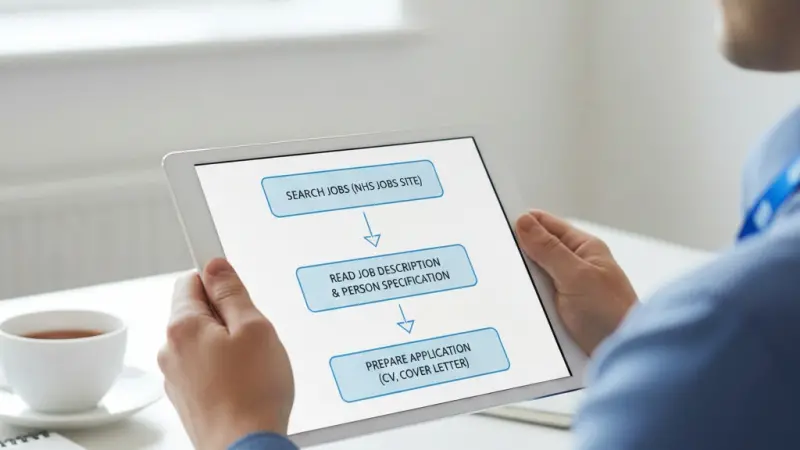
How to Apply for an NHS Job in the UK: A Strategic 2026 Guide
Published by LocalPage.uk Content Architecture Team | Updated for 2025-2026 Recruitment Cycles
Securing a position within the National Health Service (NHS) remains one of the most prestigious and stable career paths in the United Kingdom. As we move through 2025 and into 2026, the recruitment landscape has become increasingly digitalised and meritocratic. Whether you are a clinician, an administrator, or a domestic service professional, understanding the nuances of the "NHS Jobs" platform and the "Trac" recruitment system is essential for success.
1.43M+ The NHS is the largest employer in the UK, with a workforce exceeding 1.4 million across England, Scotland, Wales, and Northern Ireland (Department of Health and Social Care, 2025).
Navigating the Modern NHS Recruitment Ecosystem
The first hurdle for any applicant is identifying where to look. While "NHS Jobs" is the primary portal for England and Wales, distinct systems exist for other regions. In 2026, integration between these platforms has improved, but the core application mechanics remain region-specific.
Centralised Portals vs. Direct Trust Applications
Most vacancies are advertised on the national portal, but many Trusts now use third-party systems like Trac to manage the workflow. When you click 'Apply', you may be redirected. It is vital to maintain a consistent profile across these platforms to ensure your data remains synchronised and accurate.
Regional Platforms: Scotland, Wales, and Northern Ireland
For those seeking roles in Scotland, the NHS Scotland Recruitment site is the definitive resource. In Wales, NHS Wales Shared Services Partnership oversees many vacancies, whilst HSCni Jobs serves Northern Ireland. Each has slightly different compliance requirements regarding professional registration and right-to-work documentation.
The Digital Candidate Profile Strategy
Before searching for specific roles, spend time building a comprehensive digital profile. Ensure your employment history dates are precise, as gaps of more than three months will often trigger a request for further information during the pre-employment checking phase.
Decoding the Job Description and Person Specification
Every NHS vacancy is accompanied by two critical documents: the Job Description (JD) and the Person Specification (PS). In the 2025 recruitment climate, automated shortlisting tools are frequently used to scan for keywords found in these documents.
Differentiating Between Essential and Desirable Criteria
The Person Specification is your map to an interview. "Essential" criteria are non-negotiable; if you do not meet these, your application will likely be filtered out by the system. "Desirable" criteria are the tie-breakers. Highlighting these is what moves you from the 'qualified' pile to the 'must interview' pile.
Aligning Your Experience with NHS Values
Since the 2024 NHS Long Term Plan update, there has been an even greater emphasis on values-based recruitment. Applicants must demonstrate a commitment to the 6Cs: Care, Compassion, Competence, Communication, Courage, and Commitment. These should be woven into your personal statement, rather than just listed as bullet points.
Pro Tip: Use the "STAR" method (Situation, Task, Action, Result) when describing your experience in the personal statement. This provides the structured evidence that NHS recruitment managers prefer.
Mastering the NHS Personal Statement
The personal statement is arguably the most influential part of your application. This is your opportunity to speak directly to
the hiring manager and explain why you are the best fit for the specific team and patient demographic.
The Structure of a Winning Statement
Start with a strong opening that demonstrates your knowledge of the specific Trust or Health Board. For example, a candidate in Northern Ireland might reference the recent cross-border health initiatives, while an applicant in London might discuss the challenges of serving a diverse, high-density urban population.
Evidence-Based Claims and Quantifiable Success
Avoid vague statements like "I am a good communicator." Instead, opt for: "In my previous role at a local authority, I managed communication for a project involving 500+ stakeholders, resulting in a 15% increase in service engagement." Data-backed evidence is highly valued by NHS clinical and non-clinical leads alike.
Addressing Gaps in Employment Contextually
If you have had time out for caring responsibilities, travel, or illness, be transparent. The NHS is an inclusive employer. Briefly explain the gap and highlight any transferable skills or personal growth gained during that period.
76% of UK consumers and job seekers research organisations online before engaging. For the NHS, this means reviewing CQC (England), HIS (Scotland), HIW (Wales), or RQIA (Northern Ireland) reports before applying.
Pre-Employment Checks and Regulatory Compliance
Applying is just the first step. The NHS has some of the most rigorous pre-employment checking standards in the UK, governed by the NHS Employers organisation and various statutory bodies.
Understanding the DBS and Disclosure Process
Almost all NHS roles require a Disclosure and Barring Service (DBS) check. In Scotland, this is handled via Protecting Vulnerable Groups (PVG) schemes, and in Northern Ireland through AccessNI. Ensure you have original copies of your identity documents ready, as digital copies are rarely accepted for final verification.
Professional Registration and Right to Work
If you are a nurse, doctor, or allied health professional, your registration with the NMC, GMC, or HCPC must be current. For international applicants, the 2025-2026 immigration rules for Health and Care Worker visas are stringent. Reference the Home Office and UK Visas and Immigration (UKVI) guidance to ensure your sponsorship requirements are met.
Regional Variations in the Application Process
While the goal of patient care is universal, the administrative paths to employment vary across the four nations. Recognising these differences demonstrates a high level of preparation.
England: The Integrated Care Board (ICB) Influence
In England, recruitment is increasingly influenced by Integrated Care Boards (ICBs). When applying, check if the role involves working across multiple sites within an ICB, as this may require greater flexibility in your travel arrangements and professional networking.
Scotland and Wales: Community-Focused Health
NHS Scotland and NHS Wales place a heavy emphasis on community and rural health. For roles outside the central belts of Edinburgh/Glasgow or Cardiff/Swansea, highlighting your ability to work autonomously in remote settings or your experience with telehealth can be a significant advantage.
Northern Ireland: The HSC Framework
Northern Ireland's Health and Social Care (HSC) is uniquely integrated. Unlike in England, social care is part of the same organisational structure. Applicants should demonstrate an understanding of how health and social care pathways intersect to provide holistic patient support.
The Interview: Preparation and Performance
NHS interviews are almost always panel-based, typically consisting of three people. In 2026, many first-round interviews remain
virtual, but second rounds for senior or clinical positions have largely returned to in-person formats.
Handling Clinical and Competency-Based Questions
Expect questions that test your clinical knowledge or your ability to handle workplace scenarios. "Tell us about a time you disagreed with a colleague" is a classic competency question. The panel is looking for your ability to resolve conflict professionally while keeping patient safety as the priority.
The Importance of Patient Safety and Governance
Every answer you give should have an underlying current of patient safety. Familiarise yourself with the concept of "Clinical Governance" and the "Duty of Candour." These are fundamental to the operation of any UK health provider.
99.3% of UK businesses are SMEs, but the NHS functions as a massive corporate entity. Understanding its "corporate" side—such as budgetary constraints and government mandates—is vital for management-level applicants.
Technical Tips for the Online Application Form
The technicalities of the form can sometimes be as challenging as the content. Use these tips to ensure your application doesn't fall at the first hurdle.
Saving Your Progress and Session Timeouts
NHS Jobs and Trac sessions often timeout after 20-30 minutes of inactivity. Always draft your personal statement and long-form answers in a separate document (like Word or Google Docs) and copy them into the form once finalised. This prevents data loss during technical glitches.
Referencing Requirements and Contact Details
You will typically need at least two references, one of which must be your current or most recent employer. In the NHS, references are often requested automatically as soon as an offer is made, so ensure your referees are aware and their contact details (including professional email addresses) are correct.
Post-Application: Managing the Waiting Game
The NHS recruitment process is notoriously thorough and can take longer than the private sector. From the closing date of the advert to your first day on the ward or in the office, the timeline can span 2-4 months.
Tracking Your Status on the Portal
Most platforms provide a status bar (e.g., "Shortlisting", "Interview Scheduled", "Pre-employment Checks"). If your application remains on "Applied" for more than three weeks after the closing date, it is acceptable to send a polite email to the recruitment contact listed at the bottom of the original job advert.
Handling Rejection and Feedback
Due to the high volume of applications, many NHS Trusts cannot provide feedback at the shortlisting stage.
However, if you are unsuccessful after an interview, you are entitled to feedback. Use this constructively to refine your approach for the next vacancy.
"How do I apply for an NHS job in London?"
Search the NHS Jobs portal and filter by region. Be aware that competition is high, but "Inner London weighting" offers an additional allowance to help with the cost of living.
"What is the best way to write an NHS personal statement?"
Focus on the Person Specification. Address every 'Essential' criteria point with a specific, evidence-based example using the STAR technique.
Frequently Asked Questions
Can I apply for an NHS job if I don't live in the UK yet?
Yes, many NHS Trusts actively recruit internationally, especially for "Shortage Occupation" roles. However, you will need to meet the UKVI criteria for a Health and Care Worker visa and often demonstrate professional English language proficiency (IELTS or OET) and UK professional registration.
How long does the NHS recruitment process usually take?
On average, the process takes 12 to 16 weeks from application to start date. This includes time for shortlisting, interviews, DBS/PVG checks, occupational health assessments, and notice periods. Administrative roles may be slightly faster than clinical ones requiring specialist registration checks.
Do I need a university degree to work for the NHS?
Not necessarily. While clinical roles (Doctors, Nurses, Pharmacists) require specific degrees and registration, there are thousands of roles in administration, estates, portering, and healthcare support that require GCSEs, A-Levels, or equivalent experience. The NHS also offers extensive apprenticeship pathways.
What is 'Bank' work and should I apply for it?
NHS Professionals (NHSP) or 'Bank' work is essentially an internal temporary staffing pool. It is an excellent way to gain experience, understand the culture of a specific Trust, and enjoy flexible hours. Many people use Bank work as a stepping stone to a permanent substantive post.
Is the application process different in Scotland compared to England?
The core principles are similar, but the platforms differ. Scotland uses the NHS Scotland Recruitment portal. Scotland also uses the PVG scheme rather than the standard DBS check. Always ensure you are applying through the correct regional gateway to avoid delays.
What should I do if I have a criminal record?
The NHS is a "regulated activity" employer, meaning most roles are exempt from the Rehabilitation of Offenders Act. You must disclose all cautions and convictions. Having a record does not automatically bar you from employment; the Trust will perform a risk assessment based on the nature of the offence and the role's responsibilities.
How can I find out the salary for an NHS role?
Most NHS roles fall under the "Agenda for Change" (AfC) pay scales. The job advert will state the 'Band' (e.g., Band 5). You can check the current 2025-2026 pay scales on the NHS Employers website to see the exact starting salary and yearly increments.
Does the NHS offer support for disabled applicants?
Yes, the NHS is a 'Disability Confident' employer. This means they guarantee an interview to any disabled applicant who meets the 'Essential' criteria for the role. There is a specific section on the application form to disclose this and request reasonable adjustments.
Can I apply for multiple NHS jobs at the same time?
Absolutely. You can have multiple active applications. However, ensure each personal statement is tailored to the specific job description.
Reusing the exact same statement for different roles is a common reason for rejection at the shortlisting stage.
What are 'pre-employment checks' exactly?
These include identity verification, right to work in the UK, professional registration checks, references (usually covering the last 3 years), occupational health clearance, and a criminal record check (DBS/PVG). You cannot start your role until all these are marked as 'Satisfactory'.
Disclaimer: The information provided in this article is for general informational and research purposes only. Company details, features, services, and market positions may change over time. Readers are advised to visit official company websites and conduct independent research before making any business decisions or purchasing services.
Most Searchable Keywords
Recent Blogs


Related Listings

Categories
- Accountants (295)
- Advertising Agencies (559)
- Architects (149)
- Automobiles (377)
- Beauty (300)
- Carpenters (146)
- Cleaning Services (387)
- Dentists (189)
- Driving (62)
- Electricians (215)
- Energy (8)
- Event Organiser (686)
- Finance (602)
- Guide (3372)
- Health (2207)
- Information technology (206)
- Legal Services (353)
- Logistics (6)
- Maintenance (65)
- Manufacturing (35)
Sponsored Listings in Travel Agencies


Related Blogs

How Much Do UK Actors Really Earn Full Indust...
Read this insightful article "How Much Do UK Actors Really Earn Full Industry Breakdown" to expand your knowledge!

Blue Light Card UK 2026 Check Eligibility and...
Read this insightful article "Blue Light Card UK 2026 Check Eligibility and Claim" to expand your knowledge!

BBC Radio 1 DJs Net Worth Ranking Revealed
Read this insightful article "BBC Radio 1 DJs Net Worth Ranking Revealed" to expand your knowledge!
Questions & Answers – Find What
You Need, Instantly!
How can I update my business listing?
Is it free to manage my business listing?
How long does it take for my updates to reflect?
Why is it important to keep my listing updated?
