
Cheapest Petrol Near Me: Save Up to 15p Per Litre at UK Forecourts Today
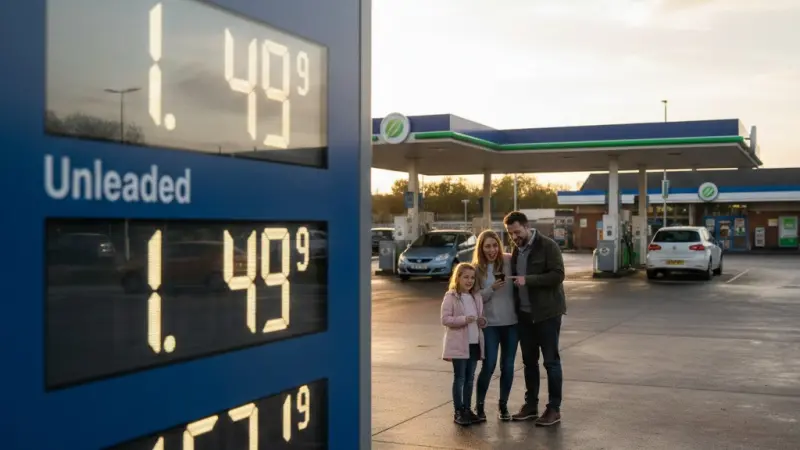
Finding the cheapest petrol prices near you in the UK requires a mix of real-time data and strategic planning. To secure the lowest rate today, compare supermarket forecourts against independent stations, as prices can vary by as much as fifteen pence per litre within a five-mile radius. Typically, large supermarkets like Asda, Tesco, and Sainsbury’s offer the most competitive rates, though Costco remains a leader for those with memberships. Local fuel costs are influenced by global crude oil indices, regional transport logistics, and the specific profit margins set by individual retailers. By using mobile applications and community-driven price trackers, UK motorists can identify the most affordable unleaded and diesel options in their immediate vicinity within seconds.
The landscape of UK fuel retail has shifted significantly in recent years. While historically we relied on passing road signs to gauge costs, the digital era has introduced transparency that empowers the consumer. Whether you are navigating the motorways or commuting through rural villages, understanding the mechanisms behind price fluctuations is essential. Fuel duty, Value Added Tax, and the underlying cost of refined product make up the bulk of what you pay at the pump. However, the final pence-per-litre figure is often decided by the level of local competition. This guide explores how to navigate these variables to ensure you never pay more than necessary for your next tank of fuel.
Navigating the landscape of local fuel costs
The price you pay for petrol in the UK is rarely a static figure. It fluctuates based on a complex interplay of international markets and local demand. When searching for fuel near your current location, it is vital to recognise that forecourts situated near motorways or in remote areas almost always command a premium. This is due to higher operating costs and a captive audience. Conversely, urban areas with a high density of competing stations tend to drive prices down. Motorists should look for "price wars" between major retailers, which frequently occur in suburban hubs where supermarkets and major oil brands vie for market share.
Understanding regional price variations across Britain
Fuel costs are not uniform across the United Kingdom. Statistics often show a marked difference between the South East of England and Northern regions. Logistics play a massive role here; stations located closer to major refineries or coastal terminals often benefit from lower delivery overheads. Furthermore, the socio-economic profile of a town can influence retail margins. If you are travelling long distances, it is often worth filling up in larger towns rather than waiting until you reach rural destinations where the lack of competition allows retailers to keep prices artificially high for longer periods.
Factors influencing the daily pump rate
Daily rates are primarily dictated by the "lag" between Brent Crude price changes and retail adjustments. When global prices fall, retailers are often slow to pass savings to the consumer—a phenomenon frequently criticised by motoring groups. Conversely, when oil prices rise, pump prices tend to climb almost instantly to protect retail margins and cover the cost of the next delivery.
Strategic timing for filling your tank
Many drivers wonder if there is a specific day of the week when fuel is cheaper. While there is no longer a universal "cheap Tuesday," patterns do emerge. Retailers often adjust their prices ahead of bank holidays or long weekends when they anticipate a surge in travel. To get the best deal, try to avoid filling up on Friday afternoons or Saturday mornings. Instead, mid-week evenings are often the most stable times. Monitoring the news for sudden shifts in the value of the Pound against the US Dollar can also give you a head start, as oil is traded in Dollars, affecting UK import costs.
The role of supermarket loyalty schemes
Supermarkets remain the dominant force in UK fuel retail. Beyond their base price, loyalty points and "pence-off" vouchers can significantly reduce your total spend. For example, spending a certain amount on groceries often unlocks a discount of five or ten pence per litre. While these deals are enticing, always calculate the base price first. Sometimes, a nearby independent station might still be cheaper than a supermarket even after a voucher is applied. It is also worth checking if your credit card offers cashback on fuel purchases, providing an additional layer of savings on every transaction.
Maximising benefits through member clubs
Wholesale clubs and specific trade organisations offer some of the lowest fuel prices in the country. While these require an annual fee, the savings can be substantial for high-mileage drivers. For instance, a single fill-up might save you several pounds compared to a standard commercial forecourt, meaning the membership fee often pays for itself within just a few months of regular commuting.
Common pitfalls in the search for cheap fuel
One of the most frequent mistakes UK motorists make is driving too far out of their way to save a few pence. If you drive five miles out of your path to save two pence per litre, the fuel consumed during that detour likely cancels out the savings. Efficiency is about finding the best price on your existing route. Another mistake is assuming that "premium" fuels are always necessary. Unless your vehicle's manufacturer explicitly requires high-octane petrol for performance or longevity, standard E10 unleaded is perfectly adequate for the vast majority of modern cars on British roads today.
The hidden costs of motorway service stations
Motorway service areas are notorious for having the highest fuel prices in the UK. The convenience of stopping without leaving the main carriage comes at a significant cost, often twenty pence per litre higher than off-motorway alternatives.
Strategic drivers use satellite navigation or dedicated apps to find stations just one or two minutes away from motorway junctions. These "off-junction" stations are usually standard local forecourts with much more reasonable pricing, allowing you to save ten pounds or more on a full tank with minimal disruption to your journey time.
Evaluating the necessity of premium additives
Premium fuels often claim to clean your engine and improve efficiency. While they do contain detergents that can help older engines, the cost-to-benefit ratio for a standard commuter car is often debatable. For most drivers, sticking to high-quality standard fuel from a reputable brand provides the necessary protection without the inflated price tag associated with "super" unleaded or high-performance diesel variants.
Technological tools for the savvy motorist
The rise of real-time price comparison apps has revolutionised how we find petrol. These tools rely on a combination of crowdsourced data and direct feeds from retailers. By entering your postcode or using your phone’s GPS, you can view a map of all nearby stations and their current prices. Some apps even allow you to filter by fuel type, ensuring you find exactly what you need. In an era of high inflation, having this information at your fingertips is one of the most effective ways to combat rising living costs and keep your household transport budget under control.
The future of fuel pricing transparency
There is growing pressure on the UK government and the Competition and Markets Authority to enforce even greater transparency. We may soon see a mandatory "open data" system where every retailer must publish their prices in real-time to a central database. This would eliminate the need for crowdsourcing and ensure that every price comparison tool is one hundred per cent accurate at all times. Until then, staying active in local community groups on social media can often provide the most up-to-date "on-the-ground" information about sudden price drops or local promotions.
Integration with modern vehicle systems
Many modern cars now have integrated software that can find the cheapest fuel along your programmed route. By syncing your vehicle’s infotainment system with live data services, your car can proactively suggest a stop at a high-value station before your tank reaches empty. This seamless integration ensures that efficiency becomes a passive part of your driving habit rather than an active chore.
Practical steps for reducing fuel consumption
While finding cheap petrol is important, using less of it is even better. Simple maintenance tasks, such as ensuring your tyres are inflated to the correct pressure, can improve fuel economy by several percentage points. Removing unnecessary weight from the boot and taking off roof racks when not in use reduces aerodynamic drag. On the road, smooth acceleration and using your gears effectively to keep engine revs low will ensure you get the most miles out of every litre. These habits, combined with smart purchasing, represent the ultimate strategy for the budget-conscious UK driver.
Adopting a smoother driving style
Aggressive braking and rapid acceleration are the enemies of fuel efficiency. By anticipating the flow of traffic and coasting towards red lights, you reduce the energy wasted through heat in your brakes. Many modern vehicles come with an "Eco" mode that softens throttle response and optimises gear shifts for economy; using this during your daily commute can lead to noticeable savings over the course of a month. It is about a mindset shift from reaching your destination as quickly as possible to reaching it as efficiently as possible.
The impact of air conditioning on economy
Using air conditioning can increase fuel consumption by up to ten per cent, especially at lower speeds. While it is essential for comfort in the summer and demisting in the winter, being mindful of its use can save money. At lower speeds, opening a window is often more efficient, whereas at motorway speeds, the aerodynamic drag of an open window is worse than the load of the air conditioning unit on the engine.
Legislative changes and the road ahead
The UK's transition away from internal combustion engines towards electric vehicles will inevitably change the fuel market. As demand for petrol and diesel eventually begins to decline, we may see a period of volatility in pricing. Refineries may close, and the tax structure surrounding fuel duty might be overhauled to compensate for lost revenue. For the current petrol car owner, this means staying informed about local and national policy changes is crucial. Environmental zones and "Clean Air" charges in cities like London, Birmingham, and Bristol also add to the total cost of operating a petrol vehicle in certain areas.
The transition to greener alternatives
As we move towards the government's net-zero targets, the composition of our fuel is changing. The introduction of E10, which contains up to ten per cent ethanol, was a significant step in reducing carbon emissions.
While it is slightly less energy-dense than the old E5 standard, it is compatible with almost all petrol cars built after two thousand and eleven. Understanding these shifts helps motorists make informed decisions about which fuels are best for their vehicle's health and the environment simultaneously.
Predicting long term price trends
Forecasting fuel prices is notoriously difficult, but certain cycles remain predictable. Global instability in oil-producing regions usually leads to immediate spikes. Conversely, advancements in extraction technology and the global shift towards renewables may put downward pressure on oil demand in the coming decades. For the UK motorist, the best defence against this uncertainty is a combination of fuel-efficient driving, smart local shopping, and a willingness to adapt to new technologies as they emerge.
The psychology of retail fuel pricing
Have you ever noticed how many stations price their fuel at ninety-nine point nine pence or similar fractions? This is a classic psychological pricing tactic designed to make the cost seem lower than it actually is. Retailers also use "loss leaders," where they set fuel prices very low to entice you into the station, hoping you will spend more on high-margin items in the convenience store like coffee, snacks, or car care products. Being aware of these tactics allows you to remain focused on the primary goal: getting the best possible price for the liquid going into your tank.
Why some independents can beat the giants
It is a common myth that supermarkets are always the cheapest. Smaller, independent stations often have lower overheads or are family-run businesses that are willing to take a smaller profit margin to maintain a loyal local customer base. Sometimes, these stations are part of a smaller buying group that allows them to compete effectively with the major oil companies. Never walk past an independent station without checking the board; you might find they are leading the local market in price reductions, especially during periods of price stability.
The influence of forecourt convenience services
Modern forecourts are transforming into mini-shopping hubs. While this is convenient, it can distract from the actual cost of fuel. A "cheap" fill-up can quickly become expensive if you spend five pounds on premium coffee and meal deals. To truly save money, treat the forecourt as a utility stop rather than a shopping trip. If you need groceries, go to the main supermarket store where prices for those items are lower, rather than paying the convenience premium at the petrol station counter.
Mastering the art of the economical commute
For most of us, our biggest fuel expenditure comes from the daily drive to work. Mapping out the most efficient route—which may not be the shortest—can save a significant amount of fuel over a year. Avoiding stop-start traffic where possible and maintaining a steady speed is far more efficient than constant idling in congestion. If your workplace offers flexible hours, travelling outside of peak rush hours can drastically reduce your fuel consumption, as your engine operates most efficiently at a steady cruise rather than sitting in a queue.
Collaborative driving and car sharing
One of the most effective ways to cut your petrol bill in half is car sharing. If you have a colleague who lives nearby, alternating driving duties immediately reduces the wear and tear on your vehicle and your monthly fuel spend. Even sharing the journey just two days a week can result in hundreds of pounds of savings annually. There are now several UK-based platforms that help professionals find reliable car-sharing partners for their daily commute, making the process safer and more organised than ever before.
The impact of remote working on fuel demand
The shift towards hybrid working has changed the peak demand periods for fuel in the UK. With fewer people on the road on Mondays and Fridays, some retailers have adjusted their pricing strategies to target the busy mid-week period.
If you have the flexibility to choose which days you work from home, staying off the road during the most congested days not only saves you time but also ensures you aren't burning fuel unnecessarily in traffic jams, further stretching the value of every tank.
Frequently Asked Questions
How can I find the cheapest petrol station near me right now?
To find the lowest petrol prices in your immediate area, use a dedicated price comparison website or mobile application. These tools aggregate real-time data from thousands of UK forecourts. Simply enter your postcode or enable GPS location services to see a ranked list of the most affordable stations nearby. Don't forget to check supermarket forecourts, as they frequently lead the market with lower prices and loyalty rewards.
Is supermarket petrol lower quality than branded fuel from major companies?
No, all petrol sold in the United Kingdom must meet strict British Standards (EN228) for quality and performance. While major brands like Shell or BP may add unique detergent packages designed to clean engine internals, the base fuel is essentially the same. Supermarket petrol is perfectly safe for your vehicle and undergoes rigorous testing to ensure it provides reliable performance and meets all legal environmental requirements.
Why are petrol prices so much higher at motorway service stations?
Motorway service stations have significantly higher operating costs than local forecourts. They are required by law to remain open twenty-four hours a day, provide free parking, and maintain extensive facilities like toilets and rest areas. Additionally, their rent and business rates are often much higher due to their location. This, combined with a lack of nearby competition, allows them to charge a premium for the convenience they offer.
Does using premium unleaded petrol actually improve my car's fuel economy?
For the average car, the improvement in fuel economy from using premium (high octane) petrol is usually negligible and rarely justifies the extra cost. Premium fuels are primarily designed for high-performance or turbocharged engines that require higher octane to prevent engine knocking. Check your vehicle's manual; if it specifies "95 RON," then standard unleaded is the most cost-effective choice. Only use premium if your manufacturer explicitly recommends it.
What is the difference between E5 and E10 petrol in the UK?
E10 petrol, which became the standard grade in the UK in two thousand and twenty-one, contains up to ten per cent renewable ethanol, which helps reduce carbon emissions. E5 petrol contains up to five per cent ethanol and is now usually sold as the "protection" or "premium" grade. While E10 is slightly less energy-dense, it is compatible with ninety-five per cent of petrol cars on the road today.
Disclaimer: The information provided in this article is for general informational and research purposes only. Company details, features, services, and market positions may change over time. Readers are advised to visit official company websites and conduct independent research before making any business decisions or purchasing services.
Most Searchable Keywords
Recent Blogs


Related Listings
Categories
- Accountants (295)
- Advertising Agencies (559)
- Architects (149)
- Automobiles (377)
- Beauty (300)
- Carpenters (146)
- Cleaning Services (387)
- Dentists (189)
- Driving (62)
- Electricians (215)
- Energy (8)
- Event Organiser (686)
- Finance (602)
- Guide (3372)
- Health (2207)
- Information technology (206)
- Legal Services (353)
- Logistics (6)
- Maintenance (65)
- Manufacturing (35)
Sponsored Listings in Travel Agencies


Related Blogs

How Much Do UK Actors Really Earn Full Indust...
Read this insightful article "How Much Do UK Actors Really Earn Full Industry Breakdown" to expand your knowledge!

Blue Light Card UK 2026 Check Eligibility and...
Read this insightful article "Blue Light Card UK 2026 Check Eligibility and Claim" to expand your knowledge!

BBC Radio 1 DJs Net Worth Ranking Revealed
Read this insightful article "BBC Radio 1 DJs Net Worth Ranking Revealed" to expand your knowledge!
Questions & Answers – Find What
You Need, Instantly!
How can I update my business listing?
Is it free to manage my business listing?
How long does it take for my updates to reflect?
Why is it important to keep my listing updated?
