
Claim Car Finance Compensation for Weather Related Damage
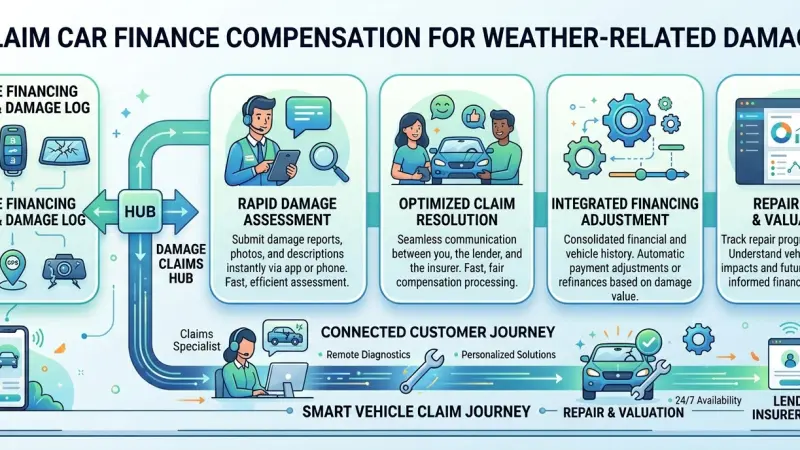
Introduction
As of April 16, 2026, the intersection of motor finance and environmental risk has become a focal point for thousands of motorists across the United Kingdom. With increasing instances of extreme weather events—including Storm-force winds, flash flooding, and heavy snowfall—the financial implications for those with active Personal Contract Purchase (PCP) or Hire Purchase (HP) agreements are significant. When a financed vehicle sustains weather-related damage, the process for seeking compensation or settling the agreement involves a complex hierarchy of insurance providers, finance companies, and regulatory bodies like the Financial Conduct Authority (FCA).

The primary concern for most drivers is the "shortfall" that occurs when a car is declared a total loss (write-off) due to flooding or storm damage. Because vehicles depreciate rapidly, the insurance payout often fails to cover the remaining balance on the finance contract. This article provides a fact-based guide on how to navigate claim car finance compensation scenarios, detailing the legal obligations of lenders, the role of Guaranteed Asset Protection (GAP) insurance, and the latest FCA redress schemes affecting motor finance as of March 2026.
Understanding Weather-Related Damage and Car Finance
Weather-related damage to a vehicle can range from minor cosmetic issues to catastrophic mechanical failure. In the context of car finance, the severity of the damage dictates the compensation path.
-
Flood Damage: This is the most common cause of total loss. If water enters the engine (hydrostatic lock) or the electrical systems, the cost of repair usually exceeds the vehicle's market value.
-
Storm Damage: High winds can cause falling debris, such as tree branches or roof tiles, to strike a vehicle. Under UK law, these are typically classed as "Acts of God," but they are covered under comprehensive insurance.
-
Hail and Snow: Heavy hail can cause significant panel damage, while the weight of snow can lead to structural collapse of the roof.
For vehicles under finance, the car is technically owned by the lender until the final payment is made. Therefore, any compensation for damage must involve the finance company as the primary stakeholder.
How to Claim Car Finance Compensation for Total Loss
When a vehicle is written off due to weather, the "claim" is two-fold: an insurance claim for the vehicle's value and a potential compensation claim for any unfair financial terms or shortfalls.
The Standard Claim Procedure
-
Step 1: Contact the Insurer: Immediately notify your comprehensive insurance provider. They will assess if the weather event (e.g., Storm-force winds) meets their policy definitions.
-
Step 2: Notify the Finance Company: You are legally required to inform your PCP or HP provider that the asset has been damaged or totaled.
-
Step 3: Valuation: The insurer will offer a settlement based on the Actual Cash Value (ACV) at the time of the incident.
-
Step 4: Settlement Allocation: The insurer pays the finance company first. If the payout is less than the outstanding debt, you are liable for the "shortfall."
The Role of GAP Insurance in Weather Claims
GAP insurance is specifically designed to address the deficit between an insurance payout and a finance balance.
-
Bridging the Gap: If your car is valued at £15,000 but your finance balance is £18,500, GAP insurance covers the £3,500 difference.
-
Total Loss Requirement: This coverage only activates if the car is declared a total loss. Partial weather damage is handled through standard repairs.
-
Timeframes: Most GAP policies must be triggered within a specific window (usually 30 to 60 days) following the weather event.
For many motorists in 2026, GAP insurance is the most direct form of car finance compensation for weather-related depreciation losses.
Lender Responsibilities and Consumer Rights
Under the Consumer Credit Act 1974, lenders have specific responsibilities when a financed asset is damaged by factors outside the user's control.
-
Fair Treatment: Lenders must follow FCA "Treating Customers Fairly" (TCF) guidelines. If a customer is in financial distress due to a weather-related write-off, the lender should offer manageable repayment options for the shortfall.
-
Insurance Requirements: Most finance agreements mandate comprehensive insurance. If the lender failed to verify this or provided inadequate information about insurance requirements, the consumer may have grounds for a complaint to the Financial Ombudsman Service (FOS).
FCA Motor Finance Redress Scheme (2026 Update)
While not directly caused by weather, many motorists currently claiming for weather damage are finding they are also eligible for the FCA Motor Finance Redress Scheme, which was finalized on March 30, 2026.
-
Eligibility: Agreements made between April 6, 2007, and November 1, 2024.
-
Key Issues: Compensation is being paid for Discretionary Commission Arrangements (DCA) where brokers or dealers artificially inflated interest rates.
-
Timeline: Payouts for loans taken out after April 1, 2014, are scheduled to begin by June 30, 2026. For older loans, the scheme starts August 31, 2026.
If you are settling a finance agreement early due to weather damage, you should check if a DCA was applied to your contract, as this could result in an average compensation of £830, which can be used to offset weather-related shortfalls.
Calculating Compensation and Shortfalls
When calculating claim car finance compensation, the following variables are utilized:
| Component | Description | Calculation Method |
| Market Value | The price of the car just before the weather damage. | Based on Glass’s Guide or CAP HPI. |
| Settlement Figure | The total amount needed to close the finance account. | Principal remaining + interest - rebates. |
| The Shortfall | The debt remaining after the insurance payout. | Settlement Figure - Insurance Payout. |
| DCA Redress | Compensation for hidden commissions. | Average of £830 (varies by loan size). |
Appealing a Rejected Weather Damage Claim
If an insurer or finance company refuses to acknowledge a weather-related claim, consumers have a structured path for appeal.
-
Internal Complaint: Submit a formal letter to the firm's complaints department. They have 8 weeks to respond.
-
Evidence Gathering: Use Met Office records to prove storm conditions existed. The Financial Ombudsman often uses the Beaufort Scale to verify if winds were strong enough to cause the claimed damage.
-
Financial Ombudsman Service (FOS): If the internal response is unsatisfactory, refer the case to the FOS. In 2026, consumers have until July 2026 to bring forward certain motor finance-related complaints.
Featured Snippet: Can You Get Compensation for Weather Damage?
You can claim car finance compensation for weather-related damage primarily through comprehensive insurance and GAP insurance. If the vehicle is written off, the insurer pays the market value to the lender. If a shortfall remains, GAP insurance covers the difference. Additionally, if your finance agreement included hidden commissions, you may be eligible for FCA redress payouts starting in Summer 2026.
Frequently Asked Questions (FAQs)
1. Does standard car insurance cover flood damage?
Yes, provided you have a comprehensive policy. Third-party only policies do not cover weather-related damage to your own vehicle.
2. What happens to my PCP payments if my car is flooded?
You must continue making payments until the insurance company settles the claim and the finance agreement is officially closed.
3. Can I claim compensation if the dealer didn't explain GAP insurance?
If a dealer failed to offer GAP insurance or didn't explain the risks of depreciation on a financed car, you may be able to file a complaint for mis-selling.
4. How does the 2026 FCA redress scheme affect my weather claim?
If you are forced to pay off your finance early due to weather damage, you may be entitled to a refund of overpaid interest if your contract had a Discretionary Commission Arrangement.
5. What is the "Actual Cash Value" (ACV)?
This is the market value of your vehicle at the time of the damage, taking into account its age, mileage, and condition, rather than the price you paid.
6. Will my finance company provide a replacement car after a storm?
Generally, no. The finance company provides the funds, not the vehicle. Replacement car cover is usually an add-on to your motor insurance policy.
7. Is a storm considered an "Act of God" in car finance?
While often called that, insurance and finance laws still require providers to cover these events under comprehensive terms.
8. How do I prove the weather caused the damage?
Keep photos of the scene, save news reports, and reference Met Office data for the specific time and location of the incident.
9. Can I keep the car if it’s a category write-off?
On finance, you usually cannot. The lender owns the car and typically prefers the insurance payout to settle the debt.
10. What if the insurance payout is higher than my finance balance?
Any surplus funds after the finance company is paid in full are returned to you, the policyholder.
11. How long do car finance compensation claims take?
Insurance settlements usually take 2 to 4 weeks, while FCA redress claims can take 3 to 6 months depending on the lender's implementation period.
12. Can I claim for "fair wear and tear" caused by weather?
No. Compensation is only available for sudden, accidental damage (like a flood), not gradual deterioration caused by winter weather over several years.
13. What is the Beaufort Scale's role in claims?
The Financial Ombudsman uses it to determine if wind speeds were intense enough to be classified as a "storm," usually requiring at least Force 10 for structural claims, though car claims are often more flexible.
14. Are payouts from the FCA scheme capped?
In about 1 in 3 cases, payouts are capped to ensure consumers are not put in a better financial position than if they had been treated fairly originally.
15. Should I use a Claims Management Company (CMC)?
The FCA and MoneyHelper advise against it for the 2026 redress scheme, as CMCs take a significant
percentage of your compensation for a process you can do for free.
Claim car finance compensation
The landscape of claim car finance compensation in 2026 is defined by a combination of insurance protection and regulatory oversight. While weather-related damage remains a physical risk, the financial fallout is mitigated by comprehensive coverage and GAP insurance. Motorists should remain vigilant regarding the FCA's ongoing motor finance reviews, as these may provide additional financial relief when settling accounts prematurely due to environmental factors. By following the structured claim processes and understanding the role of each financial entity, consumers can ensure they are not left with unfair debts following a total loss event.

Disclaimer: The information provided in this article is for general informational and research purposes only. Company details, features, services, and market positions may change over time. Readers are advised to visit official company websites and conduct independent research before making any business decisions or purchasing services.
Most Searchable Keywords

Recent Blogs
-

Explore Supermarkets in Chepstow and the Surrounding Wye Valley
-
Elite Guide to Taxi and Private Hire Services in Hereford
-
Explore Fuel and Roadside Convenience Across Beckington Today
-
Explore Abergavenny Tyre Services with Expert Local Fitters
-
Claim Your HMRC UK Tax Refund Before Application Deadlines




Categories
- Accountants (295)
- Advertising Agencies (559)
- Architects (149)
- Automobiles (376)
- Beauty (300)
- Carpenters (146)
- Cleaning Services (386)
- Dentists (189)
- Driving (61)
- Electricians (215)
- Energy (7)
- Event Organiser (683)
- Finance (597)
- Guide (3358)
- Health (2205)
- Information technology (206)
- Legal Services (352)
- Logistics (6)
- Maintenance (65)
- Manufacturing (35)

Sponsored Listings in Accountants


Related Blogs

Explore Supermarkets in Chepstow and the Surr...
Read this insightful article "Explore Supermarkets in Chepstow and the Surrounding Wye Valley" to expand your knowledge!

Elite Guide to Taxi and Private Hire Services...
Read this insightful article "Elite Guide to Taxi and Private Hire Services in Hereford" to expand your knowledge!
Explore Fuel and Roadside Convenience Across...
Read this insightful article "Explore Fuel and Roadside Convenience Across Beckington Today" to expand your knowledge!
Questions & Answers – Find What
You Need, Instantly!
How can I update my business listing?
Is it free to manage my business listing?
How long does it take for my updates to reflect?
Why is it important to keep my listing updated?
