
Classic Car Specialists Explained: Restoration, Valuation & Care
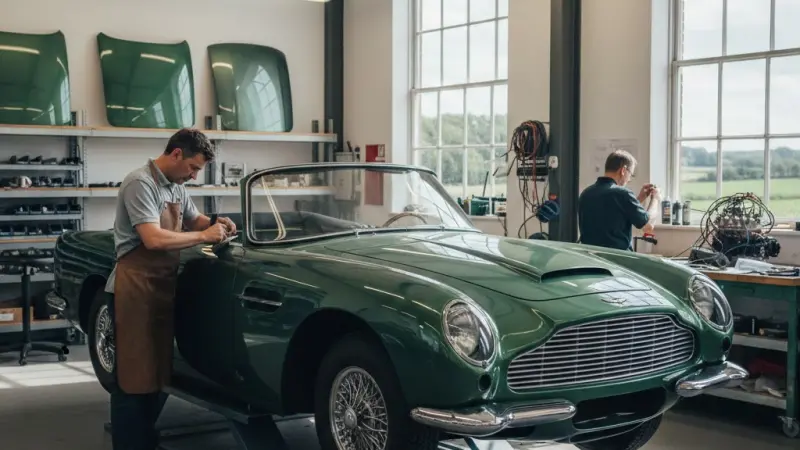
The classic car industry in the United Kingdom is far more than a collection of hobbyists; it is a multi-billion pound pillar of the British economy. From the rolling hills of the Cotswolds to the industrial heritage of the West Midlands, classic car specialists represent a unique intersection of heritage, engineering excellence, and investment management. In an era dominated by mass-produced electric vehicles and digital interfaces, the tactile, mechanical soul of a vintage Jaguar, Aston Martin, or MG offers a timeless appeal that continues to attract a global audience.
For the uninitiated, a "Classic Car Specialist" is an umbrella term for a highly skilled ecosystem of professionals, including master mechanics, coachbuilders, trimmers, and professional valuers. These experts are the custodians of history, ensuring that vehicles which might otherwise have succumbed to rust and obsolescence remain roadworthy and investment-ready. The sector contributes significantly to the UK's GDP, supporting thousands of highly skilled jobs and maintaining the UK’s reputation as the global hub for historic motoring.
Navigating this sector requires a sophisticated understanding of both mechanical craftsmanship and market dynamics. Whether you are a first-time buyer looking for a weekend cruiser or a seasoned collector managing a multi-million pound portfolio, the role of a specialist is indispensable. They provide the technical expertise required for ground-up restorations, the forensic detail needed for accurate valuations, and the meticulous care required for long-term preservation. As the market grows increasingly complex, many enthusiasts turn to a uk business directory to identify the most reputable experts in their specific region. This guide explores the intricate world of classic car specialists, offering an authoritative look at the services, challenges, and future of this quintessentially British industry.
The Landscape of Classic Car Specialists in the UK
The UK’s classic car market has shown remarkable resilience, evolving from a niche pastime into a sophisticated asset class. Currently, the historic vehicle sector is estimated to be worth over £18 billion to the UK economy. There are over 1.5 million historic vehicles registered in Britain, supported by a network of approximately 4,000 businesses. The "Motorsport Valley" corridor and the "Heritage Triangle" are key geographical hubs, yet specialists are found in every corner of the country, often operating out of discreet, high-security workshops.
Post-pandemic, the landscape has shifted significantly. During lockdowns, many owners took the opportunity to invest in long-deferred restoration projects, leading to a surge in demand that many specialists are still working through today. The rise of digital auctions and online viewing has also changed how vehicles are bought and sold, placing a higher premium on "condition reports" provided by independent specialists. However, the physical inspection remains the gold standard. To find these brick-and-mortar workshops, collectors frequently utilize a find local businesses uk search tool to connect with nearby artisans who possess the specific tooling for their vehicle’s marque.
Furthermore, the demographic of the classic car owner is changing. While the traditional "grease-monkey" enthusiast remains, a younger generation of "Modern Classic" collectors (focusing on 1980s and 90s vehicles) is entering the market. This shift has forced specialists to diversify their skills, blending traditional metal-shaping techniques with an understanding of early fuel injection systems and electronic control units. This evolution ensures the industry remains vibrant and adaptable in a changing economic climate.
Comprehensive Services Breakdown
The services offered by classic car specialists are as varied as the vehicles they maintain. To understand the value they provide, one must look at the four primary pillars of the industry: Restoration, Maintenance, Valuation, and Storage.
Restoration
Full "nut-and-bolt" restorations are the pinnacle of the specialist's craft. This involves stripping a vehicle to its bare chassis, repairing structural integrity, and sourcing or fabricating period-correct components. It is a labor of love that can take thousands of hours. In this niche, having a business listing uk listing is vital for specialists to showcase their portfolio of past projects to prospective clients who are ready to invest six-figure sums into their automotive dreams.
Maintenance and Performance Upgrades
Routine servicing for a classic car is vastly different from a modern vehicle. It requires an understanding of leaded fuel substitutes, carburettor balancing, and points-based ignition systems. Many specialists also offer "restomod" services—integrating modern upgrades like electronic power steering, improved braking systems, or even electric powertrain conversions—to make vintage cars more usable in modern traffic.
Valuation and Provenance
In the world of high-value classics, "matching numbers" and documented history are everything. Specialists provide authoritative valuations for insurance, probate, or sale purposes. They act as forensic investigators, verifying the authenticity of a vehicle's components and its racing or ownership pedigree.
Storage and Consignment
Given the vulnerability of classic cars to humidity and temperature fluctuations, climate-controlled storage is a booming sub-sector. Specialists manage the "exercise regimes" of these vehicles, ensuring seals don't dry out and batteries remain charged, providing peace of mind for international collectors.
How to Choose the Right Service Provider
Selecting a specialist is perhaps the most critical decision a classic car owner will make. The wrong choice can lead to devalued assets and safety risks. When vetting a provider, the first step is to check for specific marque expertise. A specialist who excels at air-cooled Porsches may not be the right choice for a pre-war Bentley.
Consumers should look for professional accreditations, such as membership in the Federation of British Historic Vehicle Clubs (FBHVC). Reviews and testimonials are equally important. Beyond digital feedback, visiting the workshop in person allows you to assess the cleanliness, the types of cars currently being worked on, and the transparency of their billing process. For those starting their search, looking through uk verified business listings can help narrow down providers who have a proven track record of excellence and professional indemnity insurance.
Insurance is a non-negotiable factor. A reputable specialist must have "Road Risks" and "Internal Risks" insurance to cover your vehicle while it is in their care. Always ask for a written estimate and a clear timeline, while acknowledging that in restoration, "unforeseen issues" are common once a car is stripped back.
Reputation is the currency of the classic car world; a specialist who is active in owner’s clubs and local meets often carries the highest level of trust.
Industry Challenges & Future Outlook
Despite its strength, the classic car sector faces significant headwinds. The most pressing challenge is the "skills gap." As the older generation of master panel beaters and engine builders retires, there is an urgent need for apprenticeships to pass on these "black arts." Fortunately, initiatives like the Heritage Skills Academy are working to bridge this gap, ensuring that a business listing uk will continue to feature thriving restoration businesses for decades to come.
Sustainability is the second major challenge. With the UK's move toward Net Zero, the use of fossil fuels is under scrutiny. The classic car movement has responded proactively by promoting synthetic fuels (e-fuels), which allow internal combustion engines to run carbon-neutrally. Specialists are increasingly becoming consultants on "green" classic motoring, advising on fuel system modifications required for ethanol-blended petrol.
Regulatory changes, including Ultra Low Emission Zones (ULEZ) in cities like London, also impact how these cars are used. Currently, vehicles over 40 years old are exempt from many of these charges in the UK, but specialists must stay ahead of legislative shifts to advise their clients. The future of the industry likely lies in a "curated" approach—fewer, higher-quality miles, supported by a professional network that prioritizes environmental stewardship alongside heritage preservation.
Business Tips for Classic Car Specialists Professionals
For professionals operating in this space, technical brilliance is no longer enough; digital visibility is essential. Many master craftsmen spend their days at the bench and neglect their online presence, missing out on high-value commissions. In a competitive market, appearing in a uk local trades directory is a fundamental step in reaching local collectors who may not be aware of a specialist workshop hidden in a nearby industrial unit.
Marketing a local classic car business should focus on storytelling. High-resolution photography of the restoration process, "before and after" galleries, and video content of engine first-starts are incredibly engaging. Social media platforms like Instagram are perfect for this visual industry, but they must be underpinned by a solid local SEO strategy. Ensuring your business is listed with accurate contact details and service descriptions on a reputable platform allows Google to associate your workshop with specific geographic searches.
Furthermore, networking within the B2B space is vital. A paint shop specialist should have strong ties with local mechanical shops and upholstery trimmers. Collaborative marketing—where specialists refer work to one another—builds a local ecosystem that benefits everyone. By maintaining a presence on a local businesses list uk, specialists can ensure they are part of the broader professional conversation, making it easier for partners and clients alike to find and verify their services.
Wrapping Up & Local Page Integration
The classic car specialist sector is a testament to British ingenuity and the enduring human connection to mechanical art. These businesses do more than fix cars; they preserve memories and protect significant financial investments. As we move further into the digital age, the value of the physical, the mechanical, and the authentic only grows.
For the classic car enthusiast, the journey is about finding a partner you can trust with your prized possession. For the specialist, the goal is to find clients who appreciate the value of true craftsmanship. This connection is made possible through high-quality, verified information. This is where Local Page serves as the vital link. As the premier local page uk business directory, it provides the infrastructure for UK businesses to stand out in a crowded marketplace. Whether you are searching for a master trimmer or looking to promote your own restoration shop, utilizing a dedicated platform ensures that the heritage of the UK’s automotive landscape continues to thrive, one restoration at a time.
Boost Your Visibility with Local Page UK
In the classic car industry, your reputation is built on the quality of your work, but your growth depends on being found by the right people. Whether you specialize in pre-war engine rebuilds or modern classic detailing, potential clients are searching for your expertise right now.
Don't let your workshop remain the industry's best-kept secret. By choosing to claim your business listing uk, you position your business in front of an audience specifically looking for high-quality British services. Join the thousands of specialists who are already using Local Page UK to drive enquiries, build trust, and secure their place in the UK's vibrant automotive future.
FAQ
What exactly defines a classic car specialist in the UK?
In the UK, a classic car specialist is a professional or business that focuses exclusively on vehicles typically over 20 to 25 years old. Unlike general modern garages, these specialists possess the specific technical knowledge, manual tools, and sourcing networks required for older engineering. This includes expertise in carburation, points ignition, leaded fuel requirements, and non-computerized diagnostic techniques. They often specialize by marque (e.g., Jaguar, MG, or Rolls-Royce) or by craft (e.g., coachbuilding, loom wiring, or interior trimming). Their role is to maintain the historical accuracy and mechanical integrity of a vehicle, ensuring it remains safe and roadworthy while preserving its investment value. Many enthusiasts use a directory to find these experts.
How much does a full classic car restoration typically cost?
The cost of a full restoration varies wildly based on the vehicle's starting condition and the desired end result. A "concours" restoration, where a car is returned to better-than-factory condition, can easily exceed £50,000 to £100,000 for popular models like an E-Type Jaguar or an Aston Martin.
For more common classics like a Morris Minor or an MGB, a high-quality restoration might range between £15,000 and £30,000. It is important to remember that labor is the primary cost; specialists often charge between £50 and £120 per hour. Owners should always request a staged payment plan and regular photo updates to track progress against the budget.
Why is a professional valuation important for classic car owners?
A professional valuation is crucial primarily for insurance purposes. Most standard insurance policies offer "market value," which may not reflect the true worth of a meticulously restored classic. A specialist provides an "Agreed Value" certificate, ensuring that in the event of a total loss, the payout covers the actual replacement cost. Furthermore, valuations are essential for inheritance tax (probate) calculations, divorce settlements, and securing classic car finance. A specialist valuer looks at provenance, originality, condition, and current market trends to provide a figure that stands up to scrutiny from insurers and HMRC alike.
Can I use modern unleaded petrol in my classic car?
Most classic cars were designed to run on leaded fuel, which lubricated the valve seats. Since leaded petrol was phased out in the UK, owners must either use a lead-replacement additive in every tank or have a specialist perform an "unleaded conversion." This involves fitting hardened valve seats to the cylinder head. Additionally, the rise of E10 petrol (containing 10% ethanol) poses risks to older rubber fuel lines and brass components. Specialists recommend upgrading fuel systems with ethanol-resistant materials or using high-octane "Super Unleaded" (E5) which typically contains less ethanol and is safer for vintage engines.
How do I find a reputable classic car specialist near me?
Finding a trustworthy specialist requires a combination of digital research and community engagement. You should start by searching a Localpage to identify businesses with verified addresses and contact details in your region. Once you have a shortlist, visit owner’s club forums (such as the VMCC or the various Marque clubs) to see what other members say about their experiences. Ideally, you should visit the workshop in person. A reputable specialist will be happy to show you their current projects, explain their processes, and provide references from previous clients. Word of mouth remains powerful, but digital directories provide the essential first step in the verification process.
What are the most common "hidden" problems in classic car restoration?
The most common hidden issue is structural corrosion (rust) that has been poorly repaired in the past with "filler" or "bodge" patches. Often, a car looks shiny on top, but the chassis or floor pans are dangerously weak. Other hidden problems include "electrolysis" in aluminum-bodied cars, perished internal engine seals from lack of use, and brittle wiring looms that can lead to fires. Specialists use borescope cameras and ultrasonic thickness testers to find these issues before work begins. This is why an initial "strip and blast" to bare metal is often recommended to reveal the true state of the vehicle's "bones."
Is it worth converting a classic car to an Electric Vehicle (EV)?
EV conversion is a growing trend, often called "Evergreening." It makes classics ULEZ-compliant and highly reliable for daily city driving. However, it is a controversial topic. From an investment perspective, "purist" collectors often devalue EV-converted cars because the original engine (the "heart") is gone.
If the conversion is reversible, the impact on value is lessened. For owners who want the aesthetic of a classic with the ease of a modern car, it is a fantastic option. Specialists who perform these conversions must be highly skilled in high-voltage systems and weight distribution to ensure the car still handles safely.
How often should a classic car be serviced compared to a modern car?
Classic cars require more frequent attention than modern vehicles, even if they aren't driven many miles. Most specialists recommend an oil and filter change every 3,000 miles or once a year—whichever comes first. This is because old oil can become acidic over time, damaging internal components. Additionally, items like grease points (nipples), brake fluid (which absorbs moisture), and coolant should be checked annually. Lack of use is often more damaging than regular use; tires can develop flat spots and seals can dry out if a car sits idle for more than a few months.
What is "Concours" condition in the classic car world?
"Concours d'Elegance" is a term used to describe a vehicle that is in "as-new" or "better than new" condition. In concours competitions, judges examine every detail, including the underside of the car, the inside of the wheel arches, and the correctness of every nut, bolt, and washer. A concours specialist focuses on extreme detailing and historical accuracy. While these cars are beautiful to look at, they are often "trailer queens" that are rarely driven to avoid road grime. For most owners, a "road-standard" or "usable classic" condition is more practical and enjoyable.
Do classic cars need an MOT in the UK?
In the UK, vehicles are generally exempt from the annual MOT test once they reach 40 years of age, provided no "substantial changes" have been made to them in the last 30 years. However, the owner is still legally responsible for ensuring the vehicle is in a roadworthy condition. Most specialists strongly recommend a "Voluntary MOT" or an annual "Safety Inspection." Professional mechanics can spot developing issues—like worn kingpins or leaking brake cylinders—that a layperson might miss. Just because a car is exempt from the test does not mean it is exempt from the laws of road safety.
What should I look for when buying a classic car for the first time?
The golden rule is: "Buy the best condition car you can afford." It is almost always cheaper to buy a car that has already been restored than to buy a "project" and pay a specialist to fix it. Look for a comprehensive history file with receipts and photographs of past work. Check for "matching numbers," meaning the engine and chassis numbers match the factory records. Most importantly, have an independent specialist perform a "Pre-Purchase Inspection" (PPI). The small cost of an inspection can save you thousands of pounds in unforeseen repairs later.
How does the UK's ULEZ and Clean Air Zones affect classic cars?
Currently, vehicles in the "Historic" tax class (older than 40 years) are exempt from the London ULEZ and many other Clean Air Zones across the UK. This makes classic cars a surprisingly practical choice for city dwellers who want to avoid daily charges. However, this legislation is subject to change. Specialists advise owners to keep their engines well-tuned to minimize emissions and to stay informed through organizations like the FBHVC. If a car is between 20 and 40 years old (a "modern classic"), it will likely still be subject to charges unless it meets Euro 4 (petrol) or Euro 6 (diesel) standards.
What is the difference between a "Restomod" and a "Restoration"?
A restoration aims to return a car to its original factory specifications using period-correct parts. A "Restomod" (Restoration + Modern parts) keeps the classic look but upgrades the internals. Common restomod upgrades include fuel injection, modern disc brakes, air conditioning, and improved suspension. Restomods are designed to be "daily drivers" that handle more like modern cars. While purists may prefer original restorations, restomods have a huge market among younger enthusiasts who want the style of the 60s without the mechanical temperaments of that era.
How should I store my classic car during the winter?
Proper winter storage is essential to prevent rust and mechanical degradation. Ideally, a car should be kept in a dry, ventilated garage. Specialists recommend using a "trickle charger" or "battery conditioner" to keep the battery healthy. Increasing tire pressure slightly can prevent flat spots, or better yet, put the car on axle stands. Use a breathable car cover (never plastic, which traps moisture). Finally, ensure the cooling system has the correct mix of antifreeze to prevent the engine block from cracking in freezing temperatures. Many specialists offer professional storage services that include these "lay-up" procedures.
How do I market my classic car specialist business effectively?
To market a specialist business, you must blend traditional craftsmanship with digital strategy. Start by ensuring your business is listed on a reputable Local page so that local collectors can find you easily. Collect and display high-quality testimonials from satisfied clients. Social media is a powerful tool for showing "work in progress" photos, which builds trust and demonstrates your skill level. Participating in local car shows and sponsoring club events can also build your reputation within the community. Ultimately, a combination of a strong digital footprint and a visible presence in the enthusiast community will ensure a steady stream of high-value commissions.
Disclaimer: The information provided in this article is for general informational and research purposes only. Company details, features, services, and market positions may change over time. Readers are advised to visit official company websites and conduct independent research before making any business decisions or purchasing services.
Most Searchable Keywords
Recent Blogs


Related Listings
Categories
- Accountants (295)
- Advertising Agencies (559)
- Architects (149)
- Automobiles (377)
- Beauty (300)
- Carpenters (146)
- Cleaning Services (387)
- Dentists (189)
- Driving (62)
- Electricians (215)
- Energy (8)
- Event Organiser (686)
- Finance (602)
- Guide (3373)
- Health (2207)
- Information technology (206)
- Legal Services (353)
- Logistics (6)
- Maintenance (65)
- Manufacturing (35)
Sponsored Listings in Travel Agencies

Related Blogs

Explore Dog Friendly Walks in the Cotswolds f...
Read this insightful article "Explore Dog Friendly Walks in the Cotswolds for 2026" to expand your knowledge!

How Much Do UK Actors Really Earn Full Indust...
Read this insightful article "How Much Do UK Actors Really Earn Full Industry Breakdown" to expand your knowledge!

Blue Light Card UK 2026 Check Eligibility and...
Read this insightful article "Blue Light Card UK 2026 Check Eligibility and Claim" to expand your knowledge!
Questions & Answers – Find What
You Need, Instantly!
How can I update my business listing?
Is it free to manage my business listing?
How long does it take for my updates to reflect?
Why is it important to keep my listing updated?
