
Coal Companies Explained: Operations, Regulation & Market Trends
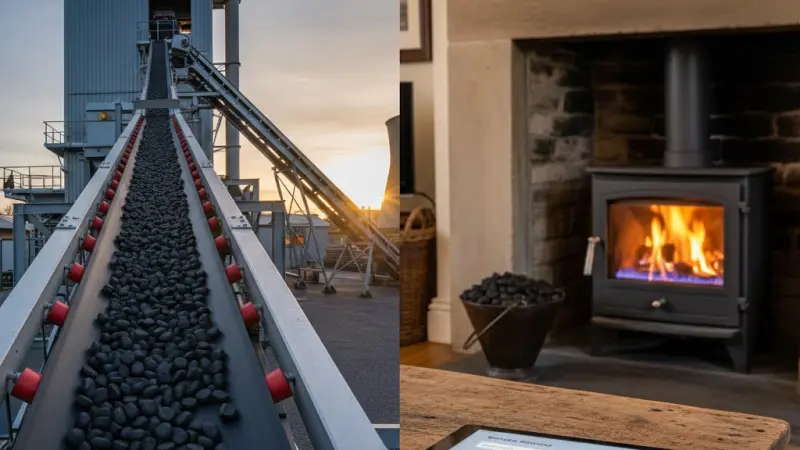
The Bedrock of British Industry
The story of coal in the United Kingdom is essentially the story of the UK itself. For centuries, coal was the primary engine of economic growth, powering the steam engines of the 19th century and providing the baseload electricity that modernised the post-war era. Today, the sector has transitioned into a highly specialised field. While the era of massive coal-fired power stations officially ended in September 2024 with the closure of the Ratcliffe-on-Soar plant, coal companies continue to play a vital role in specific industrial processes and the domestic heating market.
Economic importance is no longer measured in millions of tonnes for power, but in the precision of metallurgical coal for steel production and the supply of smokeless fuels for heritage homes. Navigating this sector requires a sophisticated understanding of logistics, environmental compliance, and supply chain management. For those looking to find specialists in this field, a uk online business directory is an essential tool for identifying verified suppliers who adhere to the stringent UK quality standards.
The current economic contribution of coal companies is nuanced. They support the UK’s remaining heavy industries, such as cement and brick manufacturing, and provide a livelihood for thousands involved in the distribution and retail of solid fuels. As we move further into the 21st century, the sector’s resilience is defined by its ability to adapt to "Net Zero" targets while fulfilling the immediate needs of British infrastructure and heritage conservation.
The Landscape of Coal Companies in the UK
The UK coal market has undergone a radical transformation over the last decade. Historically concentrated in the "Black Country," South Wales, and the North East, the footprint of active extraction has shrunk significantly. However, the commercial landscape remains active through distribution networks and the importation of high-quality industrial coal. Post-pandemic, the industry faced unique challenges, including global supply chain disruptions and the energy price volatility triggered by geopolitical tensions. These events underscored the importance of local resilience and well-managed local business listings uk to ensure that industrial consumers could find reliable domestic partners during times of uncertainty.
Market size is now dominated by a few large-scale distributors and a network of regional merchants. While domestic production of steam coal has hit record lows, the demand for metallurgical coal—used in the blast furnaces of our remaining steelworks—remains a critical component of the UK's trade balance. Regions like Nottinghamshire, Yorkshire, and South Wales still retain the logistical infrastructure necessary for the bulk handling of solid fuels, even if the pits themselves have largely fallen silent.
Evolution in the post-pandemic era has seen a "flight to quality." Consumers and industrial clients are no longer just looking for the cheapest fuel; they are seeking providers with robust environmental credentials and transparent sourcing. This shift has led to a consolidation of the market, where professional service providers who invest in digital visibility and clear communication are thriving. Whether a business is seeking bulk anthracite for a manufacturing plant or specialized fuel for a steam railway, the ability to find local businesses uk through digital platforms has become the standard for procurement.
Comprehensive Services Breakdown
The modern coal company offers far more than just "black gold." The services and products provided are diverse, ranging from raw material extraction to high-tech fuel processing and environmental consultancy. Understanding this breakdown is key for any procurement manager or homeowner.
1. Metallurgical and Industrial Coal Supply The primary industrial use for coal today is in the production of steel and cement. Coal companies supply specific grades of coking coal that are essential for the chemical reduction of iron ore. Without this, the UK’s construction and automotive sectors would be entirely dependent on imported steel.
2. Smokeless Fuels and Domestic Heating With the introduction of the Air Quality (Domestic Solid Fuel Standards) (England) Regulations 2020, the sale of traditional "house coal" has been banned in many areas. In response, companies have innovated with manufactured smokeless ovoids. These products provide high heat output with significantly lower particulate emissions. For safety-conscious consumers, consulting a business listing uk can help locate merchants who stock HETAS-approved smokeless fuels and provide the necessary Coal Companies Guide: Venues, Equipment & Safety Tips.
3. Logistics and Bulk Handling Moving thousands of tonnes of solid fuel requires specialized equipment, including rail-linked depots, high-capacity HGVs, and automated bagging plants. Many coal companies now operate as "Third-Party Logistics" (3PL) providers, managing the movement of various bulk minerals across the UK.
4. Site Restoration and Environmental Management Legacy coal sites require ongoing management. Professional firms in this sector provide services in land remediation, water treatment (dealing with ochre-rich mine water), and the
repurposing of former colliery sites into green spaces or solar farms. This aspect of the business is growing rapidly as the UK addresses its industrial heritage.
5. Technical Consultancy and Laboratory Testing Ensuring the calorific value and chemical composition of coal is correct is vital for industrial efficiency. Many top-tier companies offer in-house laboratory services to test for moisture, ash content, and sulphur levels, ensuring compliance with both contract specifications and environmental regulations.
How to Choose the Right Service Provider
In a niche and highly regulated industry, selecting the right partner is a critical business decision. The stakes involve not just financial efficiency, but also legal compliance and health and safety. When vetting a coal company or solid fuel merchant, several key factors must be considered.
Firstly, look for professional accreditations. In the UK, the Approved Coal Merchants Scheme (ACMS) and HETAS are the gold standards. Members of these schemes are held to a strict Code of Practice, ensuring that they provide high-quality fuel and expert advice on appliance compatibility. Verification is simpler than ever; users can browse uk service listings to find providers who have been vetted by their peers and the community.
Insurance and liability are equally important. Any company handling bulk materials or visiting your premises must have comprehensive public and employer's liability insurance. Furthermore, local reputation carries significant weight. In the "age of the internet," a long-standing local presence combined with positive digital feedback is a strong indicator of reliability. Before signing a long-term supply contract, it is wise to check uk verified business listings to read independent reviews and confirm the company's operating history.
Transparency in sourcing is the final pillar. A reputable provider should be able to tell you exactly where their coal or smokeless fuel originates. This transparency is vital for meeting your own CSR (Corporate Social Responsibility) targets and ensuring that the fuel you burn meets the latest UK air quality standards.
Industry Challenges & Future Outlook
The future of coal companies in the UK is inextricably linked to the "Net Zero 2050" target. The industry faces the monumental challenge of phasing out carbon-intensive processes while maintaining the economic viability of the businesses that rely on them.
Technology Shifts and Decarbonisation One of the most significant shifts is the move toward Electric Arc Furnaces (EAF) in the steel industry, which reduces the need for coking coal. However, this transition is capital-intensive and will take years to complete. In the interim, coal companies are exploring Carbon Capture and Storage (CCS) technologies and the blending of coal with biomass to reduce the overall carbon footprint. To stay competitive, many firms are listing their new "green-tech" services on a business listing uk to reach a new generation of eco-conscious industrial clients.
Regulatory Pressures The UK government continues to tighten the belt on emissions. The "Ready to Burn" legislation has already changed the face of the domestic market, and further restrictions on industrial emissions are expected. Coal companies must become masters of regulatory compliance, often acting as consultants for their clients to ensure everyone stays on the right side of the law.
The Resilience of the Niche Despite these challenges, the outlook is not entirely bleak. Coal remains essential for certain "hard-to-abate" sectors where no viable electric alternative yet exists. Moreover, the heritage sector—including steam railways and historic estates—relies on coal to maintain British history. The future of the industry lies in being "smaller, smarter, and cleaner." Companies that leverage technology, from automated logistics to advanced digital marketing, will find their place in the new British economy.
Business Tips for Coal Companies Professionals
For those operating within the coal and solid fuel sector, the days of relying solely on word-of-mouth are over. In a shrinking market, the competition for the remaining clients is fierce, and digital visibility is the primary differentiator.
1. Claim Your Digital Real Estate The first step for any local merchant or industrial supplier is to ensure they are visible where customers are searching.
For a local business, appearing in uk top rated local businesses lists can lead to a significant increase in inbound enquiries. A digital presence acts as a 24/7 storefront.
2. Content is King Educating your customers is a powerful marketing tool. By providing guides on how to store fuel, how to comply with the latest smoke control area rules, or the benefits of different smokeless fuels, you position your brand as an authority. This builds trust before a transaction even takes place.
3. Leverage Local Directories Many B2B buyers and high-end residential clients use specialized directories to find service providers. Listing your company in a uk small business directory helps with local SEO, making it more likely that you will appear in "near me" searches on Google.
4. Professionalism Through Verification In an industry sometimes plagued by "rogue traders" selling unapproved fuels, being part of a verified network is essential. Highlighting your certifications on your profile within a uk b2b business directory provides the social proof necessary to win large contracts.
Wrapping Up & Local Page Integration
The UK coal industry is a testament to the nation’s ability to evolve. From the coal-dusted pits of the Industrial Revolution to the high-tech, service-oriented firms of today, the sector continues to support the British economy in specialized and vital ways. Whether it is ensuring our homes remain warm with efficient smokeless fuels or providing the raw materials for the next generation of British infrastructure, coal companies remain a pillar of industrial reliability.
As the market continues to consolidate and digitize, the bridge between these traditional businesses and their modern customers is more important than ever. Local Page UK serves as this vital link. By providing a platform where businesses can showcase their expertise, certifications, and local heritage, we ensure that the best of British industry is never more than a click away.
Boost Your Visibility with Local Page UK
For professionals in the coal sector, from merchants to environmental consultants, being found online is no longer optional—it is critical for survival. High-intent customers are searching for your services right now. Don’t let your competitors take the lead. We encourage you to claim your business listing uk today. Join the premier network of UK service providers and ensure your business is positioned for success in the digital age.
Frequently Asked Questions (FAQs)
1. What is the current status of coal mining in the UK?
As of late 2024, large-scale coal mining for electricity generation has effectively ceased in the UK. The last coal-fired power station, Ratcliffe-on-Soar, closed in September 2024. However, small-scale extraction for industrial purposes, such as steel and cement manufacturing, and specialized domestic fuels continues under strict regulation. The industry has shifted toward distribution and the supply of high-quality imported coal to meet specific industrial needs that cannot yet be fulfilled by renewable energy.
2. Can I still burn coal in my home in the UK?
Yes, but with significant restrictions. Under the Air Quality (Domestic Solid Fuel Standards) (England) Regulations 2020, the sale of traditional bituminous "house coal" is banned for domestic use in England. Homeowners must now use "smokeless fuels" or kiln-dried wood. These fuels must be certified "Ready to Burn," meaning they have a sulphur content of less than 2% and emit less than 5g of smoke per hour. It is always best to check with a verified merchant for the latest local rules.
3. What is "Smokeless Fuel" and how is it made?
Smokeless fuel is typically a manufactured briquette made from a base of anthracite (a naturally smokeless hard coal) mixed with other carbonaceous materials and a binder. These are pressed into ovoid shapes and heat-treated.
Because they have a high carbon content and very few volatile impurities, they burn much cleaner than traditional coal, producing significantly less smoke and particulate matter, making them legal for use in Smoke Control Areas across the UK.
4. How do I find a reliable coal merchant near me?
The most effective way to find a reputable supplier is to use a dedicated directory. By searching a uk business directory, you can filter for merchants who hold the necessary accreditations, such as being members of the Approved Coal Merchants Scheme. This ensures that the provider is trained, insured, and sells fuels that meet the latest environmental standards.
5. Why is coal still used in steel production?
Coal is used in steel production not just as a heat source, but as a chemical reductant. In a blast furnace, "coking coal" is converted into coke, which then reacts with iron ore to remove oxygen, resulting in molten iron. While the industry is moving toward "Green Steel" using hydrogen or electric arc furnaces, the transition is massive and will take years. Localpage provides listings for many of the logistical firms that support this vital industrial supply chain during the transition.
6. What are the environmental regulations for coal companies?
Coal companies in the UK operate under some of the strictest environmental laws in the world. These include the Clean Air Act, the Environmental Permitting Regulations, and specific legislation regarding site restoration and water discharge. Companies must monitor their carbon footprint and ensure that any fuel sold for domestic use meets the "Ready to Burn" criteria. Failure to comply can result in significant fines and the loss of operating licenses.
7. Is coal still important for the UK economy?
While it no longer represents a major share of the GDP, coal remains strategically important for "hard-to-abate" sectors. It supports the UK's remaining steel and cement industries, which are foundational to our construction and manufacturing sectors. Additionally, the solid fuel distribution network provides employment for thousands of people in rural and former mining communities, maintaining local economic resilience.
8. What is anthracite and why is it special?
Anthracite is the highest grade of coal. It is naturally hard, has a high luster, and contains the highest percentage of fixed carbon. It is naturally smokeless and burns with a short, blue, clean flame. In the UK, anthracite is highly valued for both industrial processes and as a premium domestic fuel for closed appliances like Rayburns or Agas because of its consistent heat and low ash content.
9. How has the industry evolved post-pandemic?
The post-pandemic era saw a surge in energy prices, which led to a temporary increase in demand for solid fuels as people looked for alternatives to expensive gas heating. However, this was coupled with supply chain issues. This period accelerated the digital transformation of the industry, with more traditional merchants moving their operations online to better manage inventory and communicate with a fluctuating customer base.
10. What is a "Smoke Control Area"?
A Smoke Control Area is a specific zone designated by a local council where you cannot emit smoke from a chimney unless you are burning an authorized fuel or using an "exempt appliance" (such as a modern eco-design wood burner). Most UK cities and large towns are designated as Smoke Control Areas. Burning traditional house coal in these areas is illegal and can result in a fine of up to £1,000.
11. What are "HETAS" and "ACMS"?
HETAS is the official body recognized by the UK government to approve solid fuel domestic heating appliances, fuels, and services. The Approved Coal Merchants Scheme (ACMS) is the regulatory body for the coal trade itself. Both organizations provide consumers with peace of mind that they are dealing with professionals who prioritize safety, quality, and environmental compliance.
12. Can coal sites be repurposed for green energy?
Yes, this is a growing trend in the UK. Many former opencast and deep-mine sites are being converted into solar farms, wind farms, or used for "minewater heating" projects. Minewater heating involves pumping naturally warm water from abandoned mine shafts to provide low-carbon heating for local communities, turning a legacy industrial liability into a modern green asset.
13. How do I choose the right fuel for my stove?
The best fuel depends on your appliance. Open fires generally require fuels that are easy to light and provide a pleasant flame, while closed stoves or boilers benefit from the slow, consistent heat of anthracite or smokeless ovoids. Always consult your appliance manufacturer’s manual and ask an accredited merchant for advice to ensure you don't damage your chimney or stove.
14. What is the future of the UK's heritage railways?
Heritage railways are a significant part of UK tourism and rely heavily on high-quality steam coal. As domestic production has ceased, these railways have had to find new sources, often importing coal from abroad.
The industry is currently working with the government to ensure a "heritage carve-out" that allows these historic icons to continue operating while the rest of the grid decarbonizes.
15. How can I list my business on Local Page UK?
Listing your business is a straightforward process designed to maximize your digital visibility. By visiting our platform, you can create a profile that highlights your services, location, and contact details. Whether you are a local merchant or a national distributor, being part of the Local page network helps you reach more customers and build a stronger online reputation in the British market.
Disclaimer: The information provided in this article is for general informational and research purposes only. Company details, features, services, and market positions may change over time. Readers are advised to visit official company websites and conduct independent research before making any business decisions or purchasing services.
Most Searchable Keywords
Recent Blogs


Related Listings

Categories
- Accountants (295)
- Advertising Agencies (559)
- Architects (149)
- Automobiles (377)
- Beauty (300)
- Carpenters (146)
- Cleaning Services (387)
- Dentists (189)
- Driving (62)
- Electricians (215)
- Energy (8)
- Event Organiser (686)
- Finance (602)
- Guide (3376)
- Health (2207)
- Information technology (206)
- Legal Services (356)
- Logistics (6)
- Maintenance (65)
- Manufacturing (35)
Sponsored Listings in Entertainment Services


Related Blogs

Sexual Harassment Rules Tighten Across UK Fro...
Read this insightful article "Sexual Harassment Rules Tighten Across UK From October 2026" to expand your knowledge!

Employment Tribunal Claim Deadline Extends Fr...
Read this insightful article "Employment Tribunal Claim Deadline Extends From October 2026" to expand your knowledge!

Rainy Day Activities in Cheltenham Hidden Gem...
Read this insightful article "Rainy Day Activities in Cheltenham Hidden Gems for 2026" to expand your knowledge!
Questions & Answers – Find What
You Need, Instantly!
How can I update my business listing?
Is it free to manage my business listing?
How long does it take for my updates to reflect?
Why is it important to keep my listing updated?
