
Reliable Industrial Equipment Manufacturer and UK Buyers Guide
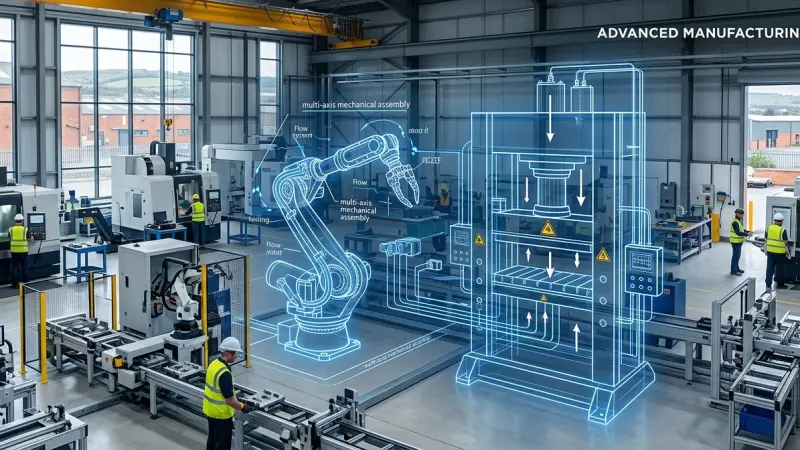
For UK industrial enterprises, high-volume manufacturing facilities, and municipal utility providers, procuring heavy-duty machinery is a highly consequential, capital-intensive decision. Selecting a competent industrial equipment manufacturer directly dictates whether your facility achieves operational excellence, safety compliance, and maximum throughput, or falls victim to unscheduled downtime and expensive engineering bottlenecks. In a national market where manufacturing accounts for roughly $10\%$ of total UK economic output and supports over $2.7$ million jobs, finding an engineering partner who understands the strict regulatory, environmental, and mechanical demands of British industry is paramount.
This comprehensive buyer's guide is designed to help UK procurement managers, plant directors, and lead mechanical engineers evaluate, compare, and onboard a leading industrial equipment manufacturer that aligns with their unique operational parameters, factory floor footprints, and commercial objectives. From custom materials-handling structures and automated production lines to heavy-duty fluid pumps and precision machining components, selecting the right partner determines your long-term operational resilience.
Underestimating the complexity of UK-specific industrial standards—including the Provision and Use of Work Equipment Regulations (PUWER), the Lifting Operations and Lifting Equipment Regulations (LOLER), and the transitioning UK Conformity Assessed (UKCA) markings—can expose your enterprise to severe Health and Safety Executive (HSE) investigations, operational shutdowns, and civil litigation. This guide analyzes regional UK manufacturing clusters, compares primary service models, provides engineering evaluation models, and profiles 12 of the most respected engineering partners operating in the UK today.
Why Your Enterprise Needs a Certified Industrial Equipment Manufacturer
In the modern high-throughput manufacturing landscape, off-the-shelf industrial machinery rarely satisfies the precise, custom spatial, and operational constraints of specialized facilities. Standard, mass-produced gear often forces operators to make manual workarounds, compromising structural safety and reducing overall processing efficiency. By collaborating directly with a certified UK industrial equipment manufacturer, engineering teams can design heavy machinery and process systems tailored to their proprietary production lines, creating a defensible competitive advantage.
To justify the high Capital Expenditure (CapEx) associated with custom industrial engineering, procurement teams must run thorough financial and performance audits. Many lead engineers and plant managers use quantitative calculations to model the projected payback period and viability of an equipment upgrade:
$$PP = \frac{C_{capex}}{B_{annual} - C_{maintenance}}$$where $PP$ represents the Payback Period in years, $C_{capex}$ represents the initial capital expenditure of the machinery in British Pounds ($\text{£}$), $B_{annual}$ represents the annual financial benefit derived from the equipment (including labor hour savings, scrap rate reductions, and increased throughput), and $C_{maintenance}$ represents the annualized cost of maintenance, calibration, and support services.
For example, if an enterprise commissions a bespoke automated sorting line where:
-
Initial capital expenditure $C_{capex} = \text{£}450,000$
-
Annual business benefit $B_{annual} = \text{£}180,000$ (achieved through faster packing cycles and a $90\%$ reduction in manual sorting labor)
-
Annualized maintenance contract cost $C_{maintenance} = \text{£}30,000$
The payback period is calculated as:
$$PP = \frac{450,000}{180,000 - 30,000} = \frac{450,000}{150,000} = 3\text{ years}$$Additionally, evaluating the proposed system's Overall Equipment Effectiveness (OEE) is critical during the front-end engineering design (FEED) stage. A high-performing industrial equipment solutions provider UK relies on precision component tolerances, robust structural FEA (Finite Element Analysis) modeling, and advanced automation controls to ensure the machinery operates with high availability, speed, and quality.
By working with certified engineering firms, UK businesses can eliminate legacy bottleneck points, integrate safety-instrumented systems (SIS), and construct high-performance production lines designed to operate continuously under extreme industrial loads.
Navigating UK Regional Manufacturing Corridors and Engineering Hubs
The UK's industrial manufacturing sector is highly regionalized, with distinct geographic zones supporting specialized industrial expertise, historical engineering lineages, and sector-specific commercial focuses. Sourcing an equipment partner with a strong presence in these key regions guarantees access to highly qualified local field service engineers, responsive spare parts networks, and shared working standards.
High-Density Urban Centres and Regional Industrial Corridors
In the South East, particularly within Greater London, the industrial landscape is characterized by a high density of advanced pharmaceutical plants, defense technology facilities, clean-tech innovators, and major municipal water infrastructure networks. Partnering with a specialized London industrial equipment company is highly beneficial for organizations requiring ultra-precise fabrication, high-spec laboratory instruments, chemical processing vessels, or high-pressure water treatment equipment. These localized manufacturers excel at navigating congested urban logistics while delivering to highly secure facilities.
Moving to the North West, Greater Manchester and its surrounding industrial corridors have a rich engineering heritage, particularly across chemicals, textiles, automotive, and packaging machinery. Securing a reliable Manchester industrial equipment supplier gives regional manufacturers access to agile engineering groups that specialize in robust materials-handling systems, heavy-duty industrial ovens, process conveyor layouts, and bespoke mechanical assemblies. These local partners are highly experienced in supporting fast-moving consumer goods (FMCG) packaging lines and chemical plants along the M62 corridor.
In the Midlands, the automotive, aerospace, and heavy foundry sectors dominate the economic landscape. Working with an accredited Birmingham industrial equipment contractor is highly advantageous for heavy manufacturing plants, metallurgy facilities, and aerospace suppliers. These regional engineering firms specialize in high-capacity hydraulic presses, automated assembly fixtures, robotic welding enclosures, and massive thermal processing ovens designed to withstand demanding industrial environments.
Sourcing Heavy Engineering in Scotland
For heavy-duty operations, mining environments, maritime docks, and offshore energy projects, utilizing a partner with localized engineering capabilities is highly effective. Sourcing a dedicated industrial equipment manufacturer Scotland is crucial for businesses operating in Scotland's specialized industrial landscapes—such as Aberdeen's oil and gas/subsea networks, Glasgow's historic shipbuilding and heavy mechanical sectors, or the central belt's food, drink, and distillery processing plants.
These Scottish engineering firms possess deep expertise in manufacturing corrosion-resistant marine alloys, explosion-proof ATEX-rated processing equipment, and heavy-duty high-torque pumps. They are uniquely positioned to navigate local Scottish environmental standards and provide rapid, on-site commissioning services to remote industrial sites.
Analyzing Core Service Models and Procurement Pathways
The industrial engineering marketplace contains several distinct operational and service models. Depending on your business's in-house engineering capabilities, project budget, and long-term maintenance resources, you may require a different type of commercial and technical partnership.
Understanding the Service Models: OEM, Distributors, Consultants, and System Integrators
To make an informed procurement decision, businesses must understand how different providers operate and align their capabilities with business goals.
For organizations requiring completely bespoke, custom-designed machinery built specifically around proprietary operational workflows, partnering with an experienced industrial equipment services company UK is the standard path. These manufacturers manage the entire mechanical lifecycle—from initial mechanical drawings and structural simulations to physical steel fabrication, electrical wiring, PLC control integration, and on-site factory acceptance testing (FAT).
If your corporate strategy focuses on purchasing high volumes of standardized industrial components, power tools, safety valves, bearings, or material-handling components, sourcing from an industrial equipment wholesale UK distributor is the most cost-effective approach. These bulk distributors maintain massive stock holdings from global manufacturers, providing rapid delivery and volume-based discounts to in-house maintenance teams.
For enterprises requiring an objective, high-level audit of their existing plant floor layout, manufacturing bottlenecks, energy consumption profiles, or structural machinery safety before purchasing new hardware, hiring an independent industrial equipment consultancy firm UK is the recommended route. These engineering consultants do not directly fabricate steel; instead, they draft request-for-proposal (RFP) specifications, conduct PUWER risk assessments, and design optimized process workflows.
| Partner Model | Primary Service Scope | Best Suited For |
| Bespoke Manufacturers | Full-scale mechanical design, custom steel fabrication, heavy-duty machinery assembly, and commissioning. | Automotive, aerospace, and chemical firms looking to deploy unique, highly specialized production assets. |
| Wholesale Suppliers | High-volume stock distribution, standardized spare parts supply, hydraulic/pneumatic components, and tools. | Plant maintenance departments looking to standardise their replacement inventories and access bulk component pricing. |
| Technical Contractors | Physical site installation, structural piping, high-voltage panel wiring, and mechanical retrofitting. | Facilities undergoing major physical relocations, plant expansions, or mechanical utility upgrades. |
| Strategic Consultancies | Feasibility studies, machine safety audits (PUWER/LOLER), energy-efficiency modeling, and plant layout design. | Enterprises planning major Capital Expenditure (CapEx) upgrades seeking independent engineering validation. |
Ultimately, establishing a relationship with a comprehensive industrial equipment solutions provider UK ensures that your organization benefits from seamless, integrated protection—combining high-level architectural consulting with agile, compliant execution on the factory floor.
Engineering Calculations for Machinery Auditing
When assessing potential suppliers, B2B procurement teams must evaluate the technical performance metrics of the manufacturer's machinery. Professional engineering consultants use standard equations to audit equipment performance, such as Overall Equipment Effectiveness (OEE). OEE is the gold-standard metric for measuring manufacturing productivity:
$$OEE = A \times P \times Q$$where $A$ represents Availability (the ratio of actual operating time to planned production time), $P$ represents Performance (the ratio of actual output to the theoretical maximum output at ideal cycle times), and $Q$ represents Quality (the ratio of good, usable units produced to the total units started).
For instance, if a manufacturing line operates with:
-
Availability $A = 0.90$ ($90\%$)
-
Performance $P = 0.85$ ($85\%$)
-
Quality $Q = 0.98$ ($98\%$)
The OEE of the machinery is calculated as:
$$OEE = 0.90 \times 0.85 \times 0.98 = 0.7497 \approx 75\%$$An OEE score above $85\%$ is considered world-class for discrete manufacturing. When vetting industrial equipment specialists UK partners, request historical case studies detailing how their custom machine designs have improved OEE for their B2B clients.
Additionally, when managing mechanical wear and maintenance, plant directors utilize the Mean Time Between Failures (MTBF) equation to model machine reliability and schedule preventative maintenance:
$$MTBF = \frac{T_{operating}}{N_{failures}}$$where $T_{operating}$ is the total operational runtime of the machinery over a given period, and $N_{failures}$ is the total number of breakdown events during that period. Partnering with a manufacturer that provides high-spec components and comprehensive maintenance contracts maximizes MTBF, ensuring your factory floor remains highly productive.
Key Procurement Criteria: How to Vet Industrial Partners
Selecting an industrial machinery partner is a long-term operational commitment. Engaging an underqualified manufacturer can lead to catastrophic mechanical failures, premature component wear, missed production schedules, and severe safety hazards. When evaluating engineering proposals, look past basic sales presentations and verify the following technical and operational standards.
Data Security, Compliance, and Structural Safety Standards
Every reputable engineering partner must demonstrate strict adherence to technical and safety standards to protect your workforce and your operational continuity:
-
Strict PUWER & LOLER Compliance: Verify how the manufacturer designs machinery controls and structural lifting points. Top-tier developers adhere to strict safety-by-design principles, ensuring all guarding, emergency stops, and load-bearing structures meet PUWER and LOLER regulatory frameworks.
-
UKCA and CE Markings: Ensure the manufacturer is fully certified to issue UKCA and CE declarations of conformity for their machinery. This proves the equipment satisfies all relevant UK and European health, safety, and environmental protection legislations.
-
ISO 9001:2015 & ISO 3834 Certifications: Verify if the manufacturer holds ISO 9001 quality management credentials and ISO 3834 fusion welding quality certifications. These standards guarantee consistent structural integrity across heavy load-bearing steel fabrications.
Why You Must Match Engineering Specialties to Your Sector
A generic engineering shop that excels at fabricating basic agricultural trailers or standard warehouse racking will not have the sophisticated, high-tolerance expertise required to design high-pressure chemical reactors, ATEX-compliant powder mixers, or clean-room pharmaceutical conveyors.
When vetting industrial equipment consultants UK or prospective industrial equipment contractors UK, request deep case studies detailing their experience in your specific domain, references from long-term B2B clients, and proof of their capability to design machinery under load. A qualified engineering partner will run finite element analysis (FEA) simulations, check electrical load characteristics, and conduct comprehensive safety reviews before providing a binding quote.
To facilitate your search, working with a specialized industrial equipment agency UK can help streamline the vendor matching process, matching your precise technical scope with certified manufacturing plants that possess the exact tooling, crane capacities, and engineering credentials required for your project.
Top 12 Industrial Equipment Manufacturers in the UK
To assist your engineering and procurement teams in selecting the ideal partner, we have profiled 12 of the most prominent, established, and certified industrial equipment manufacturers, suppliers, and distributors operating in the UK marketplace today.
1. JCB (J C Bamford Excavators Ltd)
-
Company Profile Summary: Headquartered in Rocester, Staffordshire, JCB is one of the world's
leading and most recognizable manufacturers of construction, agricultural, and waste handling equipment.
-
Key Features: Eleven advanced manufacturing plants across the UK; extensive global dealer network; pioneers in hydrogen combustion engine technology and zero-emission electric machinery.
-
Products & Services Offered: Excavators, backhoe loaders, telescopic handlers (Loadall), wheeled loading shovels, industrial forklifts (Teletruk), and generator sets.
-
UK Market Relevance: An exceptional fit for construction contractors, quarry operators, waste management firms, and agricultural businesses seeking highly durable, high-capacity material-handling machinery.
2. Spirax-Sarco Engineering PLC
-
Company Profile Summary: Based in Cheltenham, Gloucestershire, Spirax-Sarco is a FTSE 100 global engineering group specializing in industrial steam management and thermal energy solutions.
-
Key Features: Over 130 years of operational experience; deep focus on thermal energy efficiency and sustainability; extensive network of local field service engineers.
-
Products & Services Offered: Steam boilers, control valves, condensate pumps, steam traps, heat exchangers, flowmeters, and thermal energy monitoring systems.
-
UK Market Relevance: A critical partner for food and beverage processors, chemical manufacturers, hospitals, and pharmaceutical plants requiring highly efficient, reliable, and compliant steam systems.
3. Renishaw PLC
-
Company Profile Summary: Headquartered in Wotton-under-Edge, Gloucestershire, Renishaw is a world leader in high-precision metrology, metal additive manufacturing (3D printing), and motion control technologies.
-
Key Features: Extensive advanced engineering research; high-precision machining facilities in Wales and England; pioneers in laser-scanning and machine tool calibration.
-
Products & Services Offered: Coordinate measuring machine (CMM) probes, machine tool encoders, laser calibration systems, Raman spectroscopy instruments, and metal 3D printing systems.
-
UK Market Relevance: Highly favored by aerospace, automotive, medical device, and precision manufacturing firms looking to achieve microsecond-level accuracy and automated quality control.
4. The Weir Group PLC
-
Company Profile Summary: Headquartered in Glasgow, Scotland, The Weir Group is a FTSE 100 engineering giant specializing in high-wear slurry pumps and minerals processing equipment.
-
Key Features: Global manufacturing and service footprint; intensive R&D focusing on reducing energy consumption and water waste in heavy mining and sand operations.
-
Products & Services Offered: Centrifugal slurry pumps, hydrocyclones, high-pressure grinding rolls (HPGR), industrial valves, and wear-resistant plant linings.
-
UK Market Relevance: The premier industrial equipment manufacturer Scotland partner for major Scottish energy companies, sand and gravel quarries, mining operations, and heavy processing plants.
5. Rotork PLC
-
Company Profile Summary: Based in Bath, Somerset, Rotork is a leading global designer and manufacturer of industrial flow control and valve actuation systems.
-
Key Features: Trusted across highly critical environments; advanced digital control network integration; extensive asset management and valve-retrofitting services.
-
Products & Services Offered: Electric actuators, pneumatic and hydraulic actuators, gearboxes, industrial control valves, and pneumatic accessories.
-
UK Market Relevance: An elite engineering partner for the oil & gas sector, water and wastewater treatment plants, power generation facilities, and chemical processors requiring precise flow management.
6. Edwards Vacuum
-
Company Profile Summary: Based in Burgess Hill, West Sussex, Edwards Vacuum (part of the Atlas Copco Group) is a global pioneer in advanced vacuum pump technology and abatement systems.
-
Key Features: State-of-the-art manufacturing and R&D facilities; deep integration with semiconductor, industrial, and scientific research labs; absolute focus on ultra-high vacuum integrity.
-
Products & Services Offered: Rotary vane pumps, dry claw pumps, turbomolecular pumps,
scroll pumps, industrial exhaust abatement systems, and vacuum gauges.
-
UK Market Relevance: A vital supplier for semiconductor fabrication cleanrooms, chemical process laboratories, scientific research institutions, and aerospace testing chambers.
7. Howden (A Chart Industries Company)
-
Company Profile Summary: Headquartered in Renfrew, Scotland, Howden is a leading global manufacturer of air and gas handling equipment, compressors, and industrial fans.
-
Key Features: Over 160 years of industrial heritage; specialized expertise in carbon capture technology and green hydrogen compression; extensive field service support.
-
Products & Services Offered: Industrial centrifugal and axial fans, rotary heat exchangers, screw compressors, reciprocating compressors, and digital performance-monitoring software.
-
UK Market Relevance: Essential for heavy industries, power stations, district heating schemes, petrochemical plants, and marine shipping operators requiring high-capacity gas compression and ventilation.
8. David Brown Santasalo
-
Company Profile Summary: Based in Huddersfield, West Yorkshire, David Brown Santasalo is an elite mechanical power transmission specialist designing and manufacturing heavy-duty industrial gearboxes.
-
Key Features: Deep mechanical engineering heritage; heavy-industrial testing bays; comprehensive gearbox repair, rebuild, and reverse-engineering capabilities.
-
Products & Services Offered: Helical gearboxes, planetary gearboxes, custom industrial gear units, high-speed gear systems, and digital condition monitoring.
-
UK Market Relevance: Highly dominant among steel manufacturing mills, cement kilns, water utility pump stations, and defense contractors requiring heavy mechanical power transmission.
9. Niftylift Ltd
-
Company Profile Summary: Operating from a modern headquarters in Milton Keynes, Buckinghamshire, Niftylift is one of the largest manufacturers of mobile elevating work platforms (MEWPs) in Europe.
-
Key Features: Award-winning hybrid power technology (Sustained Green Technology); extensive testing facilities; lightweight, compact machine designs with high outreach capabilities.
-
Products & Services Offered: Trailer-mounted cherry pickers, self-propelled boom lifts, track-mounted access platforms, hybrid boom lifts, and vehicle-mounted access platforms.
-
UK Market Relevance: The preferred choice for plant hire companies, facilities management organizations, construction firms, and industrial maintenance teams seeking reliable, safe aerial access.
10. Street Crane Company Ltd
-
Company Profile Summary: Based in Chapel-en-le-Frith, Derbyshire, Street Crane is the UK’s largest independent manufacturer of overhead factory cranes, gantry systems, and electric wire rope hoists.
-
Key Features: Over 75 years of manufacturing excellence; massive state-of-the-art crane assembly plant; exports structural components and hoists globally.
-
Products & Services Offered: Single and double girder overhead cranes, portal cranes, jib cranes, electric wire rope hoists, chain hoists, and custom materials-handling solutions.
-
UK Market Relevance: A trusted partner for metal fabricators, aerospace hangars, railway maintenance depots, and heavy manufacturing facilities requiring robust, LOLER-compliant lifting systems.
11. Pailton Engineering Ltd
-
Company Profile Summary: Operating from Coventry, West Midlands, Pailton Engineering designs, tests, and manufactures custom steering steering systems and mechanical linkages.
-
Key Features: Complete custom design-to-manufacture engineering capability; extensive physical testing rigs; zero-outsourcing production model for critical safety parts.
-
Products & Services Offered: Steering columns, bevel boxes, steering shafts, ball joints, slider assemblies, and custom suspension linkages.
-
UK Market Relevance: Highly suited for commercial bus and coach builders, emergency vehicle builders, defense contractors, and specialized utility truck manufacturers seeking high-spec steering components.
12. Hayley Group Ltd
-
Company Profile Summary: Headquartered in Halesowen, West Midlands, Hayley Group is one of the UK’s largest independent industrial distributors and stockists of engineering components.
-
Key Features: Over 50 branches across the UK providing 24/7 emergency stock access; massive central warehouse holding over £40 million in inventory; specialist technical divisions.
-
Products & Services Offered: Bearings, power transmission drives, fluid power systems, industrial seals, personal protective equipment (PPE), and electrical motors.
-
UK Market Relevance: An exceptional partner for in-house maintenance, repair, and operations (MRO) teams seeking high-availability access to standard industrial parts and wholesale components nationwide.
Frequently Asked Questions
What is the difference between PUWER and LOLER regulations in UK factories?
In professional UK industrial plant management, distinguishing between these two sets of statutory regulations is vital for maintaining compliance:
-
PUWER (Provision and Use of Work Equipment Regulations 1998): Applies to all work equipment used in the workplace, including hand tools, CNC machinery, and packaging lines. It mandates that all machinery is suitable for its intended use, maintained in a safe condition, inspected regularly, and operated only by trained personnel.
-
LOLER (Lifting Operations and Lifting Equipment Regulations 1998): Applies specifically to equipment used for lifting or lowering loads, such as overhead gantry cranes, hoists, forklift trucks, and lifting slings. LOLER mandates that all lifting equipment must be structurally sound, clearly marked with its Safe Working Load (SWL), and undergo thorough examinations by a competent person at least every 6 to 12 months.
How do UKCA markings differ from CE markings for industrial machinery?
Following the UK’s exit from the European Union, the regulatory landscape for product marking transitioned:
-
UKCA (UK Conformity Assessed): This is the mandatory conformity marking used for industrial goods, including machinery, placed on the market in Great Britain (England, Scotland, and Wales). It indicates that the machinery complies with GB domestic safety and performance legislations.
-
CE Marking: This remains the mandatory conformity marking for goods placed on the European Union market.
To simplify supply chains, many leading manufacturers design and certify their machinery to carry dual-marking (both UKCA and CE),
ensuring the equipment can be legally operated across both the UK and European markets without modification.
Why is Factory Acceptance Testing (FAT) critical when purchasing industrial equipment?
Factory Acceptance Testing (FAT) is a critical milestone executed at the manufacturer's facility before the equipment is packaged and shipped to your site. During a formal FAT, the buyer's engineering team and the manufacturer run the machinery under simulated load conditions, testing all safety loops, control software, mechanical clearances, and throughput speeds. Conducting a rigorous FAT ensures that any design anomalies, software bugs, or structural defects are identified and corrected at the manufacturer's plant, preventing costly installation delays and downtime at your operational facility.
Disclaimer: The information provided in this article is for general informational and research purposes only. Company details, features, services, and market positions may change over time. Readers are advised to visit official company websites and conduct independent research before making any business decisions or purchasing services.
Most Searchable Keywords
Recent Blogs


Related Listings

Categories
- Accountants (295)
- Advertising Agencies (559)
- Architects (149)
- Automobiles (377)
- Beauty (300)
- Carpenters (146)
- Cleaning Services (387)
- Dentists (189)
- Driving (62)
- Education (1)
- Electricians (215)
- Energy (8)
- Event Organiser (689)
- Finance (602)
- Guide (3492)
- Health (2207)
- Information technology (207)
- Legal Services (361)
- Logistics (6)
- Maintenance (65)
Sponsored Listings in Information Technology

Related Blogs

Creamfields Daresbury: Impact on Local Reside...
Read this insightful article "Creamfields Daresbury: Impact on Local Residents" to expand your knowledge!

UK High Street Businesses in 2026-27: Which S...
Read this insightful article "UK High Street Businesses in 2026-27: Which Sectors Are Growing?" to expand your knowledge!

Why Complete Business Listings Matter More Th...
Read this insightful article "Why Complete Business Listings Matter More Than You Think" to expand your knowledge!
Questions & Answers – Find What You Need, Instantly!
Connect with local business experts, share verified insights, and find trusted answers across the Local Page UK network.
Ask Community
Ask questions to the Local Page UK community
Share Knowledge
Share your knowledge to help out others
Find Solutions
Find answers or offer instant solutions
Some of the most popular fantasy TV shows include "Game of Thrones," known for its epic battles and political intrigue, "The Witcher," which features monster hunting and magic, and "Stranger Things," blending supernatural elements with 1980s nostalgia. Other notable mentions are "His Dark Materials," "Shadow and Bone," and "The Mandalorian," each offering unique worlds and captivating storytelling that have garnered large fan bases.
When seeking bathroom renovation providers that handle both plumbing and tiling, it's advisable to look for licensed contractors who specialize in comprehensive bathroom remodels. Companies such as Home Depot, Lowe's, and Bath Fitter offer these services, often providing a seamless experience by managing all aspects of the renovation process. Additionally, local contractors with positive reviews in platforms like Angie's List or Houzz may also offer tailored solutions for your bathroom needs.
Absolutely, there are several distributors that supply crash mats and soft play equipment to gymnastics clubs in and around Birmingham. National companies like Gymnova, S & G (Spieth Gymnastics), and Jaques of London offer a wide range of crash mats, foam pits, and soft play pieces, and they typically deliver to the Birmingham area. For more local options, you might try The Gym Equipment Company, which has a showroom in the West Midlands, or check out smaller specialist suppliers like Playtime UK. Many of these distributors cater specifically to clubs, offering high-density foam mats that meet safety standards. I'd recommend reaching out to a few to compare pricing, delivery times, and whether they offer custom sizes or installation services. It's also worth checking if any of them have a physical showroom near Birmingham so you can test the equipment before buying. Happy tumbling!
For professionals seeking a reliable sanitaryware supplier in Manchester with trade account facilities, several established merchants combine extensive product ranges, competitive pricing, and dedicated trade support. The most reputable option is Graham Plumbers Merchant, which operates multiple branches across Manchester, including Salford Quays and Oldham. They offer a dedicated trade account service with preferential pricing, priority delivery scheduling, and access to a vast inventory of leading sanitaryware brands such as Villeroy & Boch, Duravit, Ideal Standard, and Roca. Their trade accounts typically include net 30-day payment terms, online account management, and a tailored project quotation system. Similarly, City Plumbing Supplies has several Manchester-based depots (such as Ashton-under-Lyne and Stockport) that cater specifically to trade customers, providing a rapid order-and-collect service, trade-only promotions, and a loyalty programme offering rebates on repeat purchases. Their product range covers everything from basins and WCs to complete bathroom suites and brassware, with in-house technical advisors available for specification support. Another key player is Plumb Center, part of the Wolseley Group, which offers trade accounts with bespoke pricing structures, direct-to-site deliveries within the Greater Manchester area, and access to over 10,000 lines of sanitaryware, including premium brands like Grohe and Hansgrohe. Their trade portal allows for real-time stock checking and order history tracking, facilitating efficient project management. For those seeking a more specialist or high-end option, Bathroom Spares in Manchester provides trade accounts with a focus on hard-to-find sanitaryware and discontinued ranges, which can be invaluable for refurbishment projects. Additionally, independent merchants such as M&B Plumbase in Trafford Park offer flexible trade terms, personalised service, and competitive pricing on both mainstream and luxury sanitaryware. When evaluating suppliers, trade customers should consider factors beyond price: reliability of stock availability, delivery timescales within Manchester’s often congested zones, clarity of returns policies, and the quality of after-sales support for warranty claims. It is advisable to request a trade account application from at least two to three suppliers to compare discounts, minimum order values, and payment terms. Many suppliers also offer showroom access for trade clients, allowing you to inspect finishes and dimensions before committing to large orders. For ongoing projects, establishing a relationship with a single supplier who offers consolidated invoicing and dedicated account management can streamline procurement. Ultimately, the most reliable supplier for your trade account in Manchester will be one that aligns with your volume requirements, preferred brands, and service expectations, so a site visit to their local branch and a discussion about your specific trade needs is highly recommended before committing to an account.
People in Leeds are loving their local florists—customers often mention gorgeous, fresh arrangements and super friendly service. Many rave about reliable same-day delivery and creative wedding bouquets. A few note pricing can vary, but overall, the buzz is all about quality and that personal touch making every order feel special.
Common problems for commercial gardening in Bristol include weed overgrowth, soil degradation, pest infestations, and irrigation malfunctions. Additionally, managing seasonal transitions, adhering to sustainability regulations, and maintaining consistent aesthetics pose significant challenges. Expert services mitigate these via structured maintenance, integrated pest management, and soil analysis to ensure long-term landscape health.