
Coffee Machines Buyer’s Guide: Home, Office & Commercial Options
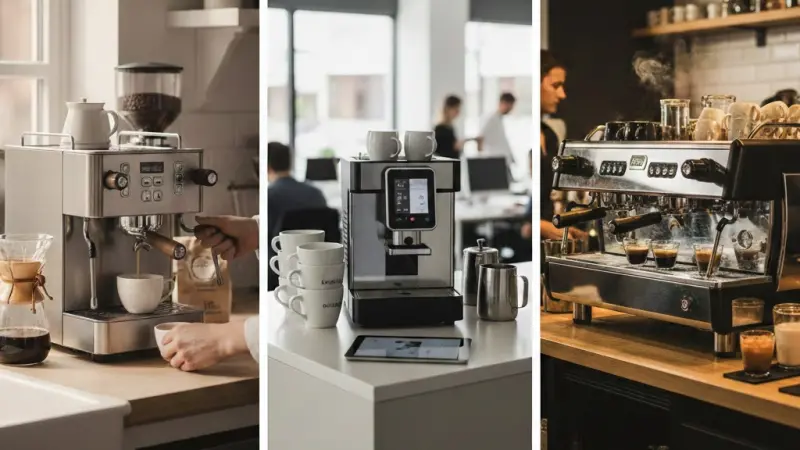
The coffee machine sector in the United Kingdom has transformed from a niche luxury market into a cornerstone of the national economy and a defining element of British social culture. As of the mid-2020s, the "Third Wave" of coffee culture has firmly established itself, driving a sophisticated demand for high-end equipment across domestic, corporate, and commercial environments. For the astute British business analyst, the coffee machine industry represents more than just appliance sales; it is a barometer for consumer spending habits and a significant contributor to the UK’s retail and hospitality GDP.
Economically, the coffee industry supports hundreds of thousands of jobs, ranging from high-street baristas to specialized engineers who service complex bean-to-cup systems. The UK’s obsession with high-quality caffeine has led to a surge in the home-brewing market, with consumers increasingly willing to invest in prosumer-grade equipment. This shift has necessitated a robust infrastructure of suppliers and technicians. For those looking to navigate this crowded marketplace, utilizing a reliable uk online business directory is the first step in identifying the premier vendors and maintenance experts that keep the nation caffeinated.
The strategic importance of this sector is highlighted by its resilience. Even during periods of economic volatility, coffee remains a non-negotiable "affordable luxury" for the British public. Consequently, the business of manufacturing, distributing, and servicing coffee machines remains a high-growth area, attracting significant domestic and international investment.
The Landscape of Coffee Machines in the UK
The UK coffee machine market is currently valued at several billion pounds, with a growth trajectory that outpaces many other household and commercial appliance categories. Historically centered in major metropolitan hubs like London, Manchester, and Birmingham, the industry has seen a remarkable post-pandemic geographical expansion. As hybrid working models become the standard, the demand for "office-quality" coffee has migrated to suburban and rural households, creating a boom in the domestic premium segment.
Post-pandemic, the evolution of the industry has been marked by a transition from simple pod-based systems to sophisticated manual and automatic machines. Commercial entities—including cafes, hotels, and restaurants—have had to upgrade their equipment to meet the expectations of an increasingly educated public. This evolution has fostered a competitive environment where service providers must offer not just hardware, but comprehensive support packages including installation, training, and preventative maintenance.
In this evolving landscape, digital visibility has become the primary battleground for equipment providers. Whether a business is a boutique roastery or a large-scale commercial distributor, appearing in a uk local business directory is essential for capturing local market share. The regional activity remains strongest in the South East, but northern tech hubs are rapidly catching up, with specialized coffee tech firms emerging to provide smart, IoT-enabled brewing solutions.
Comprehensive Services Breakdown
The diversity of the UK coffee machine market is reflected in the specialized products and services available to consumers and businesses alike. Understanding these categories is essential for making an informed investment.
Domestic Solutions
For the home user, the market is split between pod machines, filter brewers, and the increasingly popular bean-to-cup systems. Domestic users now seek machines that offer "micro-foam" capabilities and precise temperature control, features once reserved for professional baristas.
Office and Corporate Equipment
The modern UK office utilizes coffee as a productivity tool and a recruitment perk. Services in this niche often involve leasing arrangements for large-scale bean-to-cup machines that can handle high volumes without compromising on taste. Reliability is the key metric here, as "down-time" can negatively impact staff morale.
Commercial and Hospitality Hardware
In the commercial sector, traditional espresso machines remain the gold standard. These are high-pressure systems designed for continuous operation in high-traffic environments. Beyond the hardware, this niche includes crucial support services such as water filtration, pressure vessel boiler inspections, and emergency repair. Businesses seeking these specialized services can often find them by browsing a business listing uk to identify local experts who understand the unique water hardness challenges of their specific region.
Maintenance and Training
Perhaps the most undervalued aspect of the sector is the "after-sales" service. This includes the supply of ethically sourced beans, barista training for staff, and regular descaling services.
Without a comprehensive service agreement, even the most expensive Italian espresso machine will fail within a year due to the UK's high lime-scale content in many regions.
How to Choose the Right Service Provider
Selecting a coffee machine provider in the UK requires a methodical approach to due diligence. The market is saturated, making it difficult to distinguish between high-volume box-shifters and genuine specialists who offer long-term value.
Accreditations and Compliance
Firstly, check for industry-specific accreditations. In the UK, providers should ideally be members of the Beverage Standards Association (BSA). Furthermore, for commercial machines, engineers must be qualified to perform Pressure Systems Safety Regulations (PSSR) inspections on boilers. This is a legal requirement that many cut-price providers overlook.
Insurance and Local Reputation
Insurance is non-negotiable. Any technician entering your home or office must have public liability insurance. To verify the standing of a potential partner, consumers should consult uk top rated local businesses to see how a provider is viewed by their peers and existing clients. A local reputation for promptness is particularly important; if your machine breaks down on a busy Saturday morning, you need a local technician who can be on-site within hours, not days.
Reviews and Transparency
Online reviews provide a snapshot of a company’s reliability, but they should be viewed through a critical lens. Look for detailed feedback regarding the quality of the "after-care" rather than just the initial sales process.
Industry Challenges & Future Outlook
The UK coffee machine industry faces several headwinds, primarily driven by environmental concerns and technological disruption. Sustainability is no longer an optional "extra"; it is a core regulatory and consumer requirement. The industry is moving away from non-recyclable plastic pods toward compostable alternatives and "closed-loop" recycling systems for coffee grounds.
Technologically, the "Internet of Coffee" is the next frontier. We are seeing a rise in machines that can be diagnosed remotely by engineers, reducing the need for call-outs and minimizing carbon footprints. Furthermore, AI-integrated machines are now able to adjust grind sizes automatically based on humidity and bean age, ensuring a perfect shot every time.
Regulatory changes post-Brexit have also impacted the supply chain, leading to increased costs for European-manufactured parts. This has led to a resurgence in UK-based assembly and refurbishing businesses. Small enterprises entering this space can gain a foothold by ensuring they are listed on a business listing uk to connect with cost-conscious consumers looking for local, sustainable options. The future of the industry lies in the balance between high-tech automation and the traditional "craft" of the barista, with energy efficiency becoming the primary driver of new hardware sales.
Business Tips for Coffee Machines Professionals
For those operating within the coffee machine sector—be it as a retailer, a repair technician, or a roaster—the digital landscape is your most important storefront. In an era where "coffee machine repair near me" is one of the most common search queries, local SEO is paramount.
Digital Visibility and Local SEO
The first step for any local coffee business is to ensure they are discoverable. Beyond a functional website, your business must appear where customers are looking. This means maintaining an active presence on a uk local trades directory. By optimizing your profile with high-quality images of your work, clear pricing, and your specific service area, you can significantly reduce your customer acquisition costs compared to expensive paid social media ads.
Content Marketing
Establish yourself as an authority. Write guides on how to descale specific models or the best milk alternatives for latte art.
This builds trust with your local community and positions you as the "go-to" expert when a machine eventually needs professional intervention.
Networking and B2B Relationships
If you sell commercial machines, your best customers are other local businesses. Networking with office managers and hospitality owners is essential. Providing a "free trial" or a "coffee morning" for local offices can lead to lucrative long-term leasing contracts.
Wrapping Up & Local Page Integration
The UK coffee machine industry is a vibrant, multi-faceted sector that combines engineering precision with the artistry of hospitality. Whether you are a homeowner seeking the perfect morning brew, an office manager looking to boost productivity, or a cafe owner aiming for the best espresso in the city, the quality of your equipment and the reliability of your service provider will determine your success.
As the market continues to grow and become more complex, the need for a centralized, trusted source of information becomes vital. Navigating the thousands of service providers across the country can be daunting, but it is made significantly easier through the use of a uk business directory website. By utilizing these platforms, consumers can find verified professionals, and businesses can reach the customers who need them most.
In conclusion, the coffee machine sector is a testament to the UK's entrepreneurial spirit and its love for quality. As we look toward a future of smarter, greener, and more efficient brewing, staying connected through local networks will remain the key to a successful coffee journey.
Boost Your Visibility with Local Page UK
For professionals and businesses operating in the competitive Coffee Machines sector, being found by local customers at the exact moment they need your services is the difference between growth and stagnation. Digital visibility is the cornerstone of modern business success in the UK. We encourage all UK-based coffee equipment suppliers, repair specialists, and roasters to claim their business listing uk on Local Page UK today. By joining our platform, you ensure that your expertise is visible to thousands of potential clients searching for quality coffee solutions in your area.
FAQ
How do I choose between a bean-to-cup and a traditional espresso machine?
Choosing between these two depends largely on your skill level and how much time you want to spend on the brewing process. A bean-to-cup machine is fully automated; it grinds, tamps, and brews with the touch of a button, making it ideal for busy offices or homes where convenience is a priority. Conversely, a traditional espresso machine requires a separate grinder and a degree of barista skill to "dial in" the shot and manually steam milk. Traditional machines offer more control over the final flavour profile but have a steeper learning curve. For those seeking professional help to install these systems, checking local business listings uk can help you find a local specialist who can provide both the equipment and the necessary training.
What are the legal requirements for commercial coffee machines in the UK?
If you are operating a coffee machine that uses a steam boiler in a commercial environment (such as a cafe or office), you must comply with the Pressure Systems Safety Regulations 2000 (PSSR). This legislation requires you to have a "Written Scheme of Examination" and ensures the boiler is inspected by a competent person at regular intervals, usually every 12 to 14 months. Failure to comply can invalidate your insurance and lead to significant fines from the Health and Safety Executive (HSE). It is essential to partner with a certified engineer who understands these specific UK safety standards.
How often should a domestic coffee machine be descaled?
In the UK, the frequency of descaling depends heavily on the water hardness in your specific region. If you live in a hard water area like London or the South East, you should descale your machine every month.
In soft water areas like Scotland or parts of Wales, every three to four months may suffice. Using a water filter can significantly extend the time between descaling cycles. Neglecting this maintenance is the most common cause of machine failure, as lime-scale build-up restricts water flow and damages the heating elements.
Is it better to lease or buy a coffee machine for an office?
Leasing is often the preferred route for UK businesses as it allows for better cash flow management and often includes a comprehensive service and maintenance package. Leasing payments are also typically 100% tax-deductible as a business expense. Buying a machine outright requires a larger initial capital outlay and leaves the business responsible for arranging its own repairs and servicing. For most small-to-medium enterprises, the peace of mind provided by a "full-service" lease makes it the more attractive option.
Can I use any coffee beans in an automatic bean-to-cup machine?
Most beans are fine, but you should avoid "oily" or dark-roasted beans that have been coated in sugar or flavourings (often called torrefacto or caramelized beans). These oily residues can clog the internal grinder and the brew group of an automatic machine, leading to expensive repairs. It is always best to use fresh, medium-roast beans from a reputable roaster. You can find high-quality local roasters who understand the requirements of automatic machines by searching on Localpage.
What is the average lifespan of a professional coffee machine?
A well-maintained professional espresso machine should last between 7 and 10 years in a high-volume commercial setting. However, this longevity is entirely dependent on regular servicing and the quality of water filtration used. In a home environment, a premium prosumer machine can last 15 years or more if it is cared for properly. Cheaper, entry-level domestic machines typically have a lifespan of 2 to 5 years.
How much should I expect to pay for a commercial coffee machine?
Prices vary wildly based on capacity and brand. An entry-level, single-group commercial machine starts at around £1,500. For a high-end, multi-group machine used in a busy specialty coffee shop, you could expect to pay anywhere from £5,000 to £15,000. For automated bean-to-cup machines designed for high-volume offices, prices usually range between £3,000 and £8,000.
What should I look for in a coffee machine warranty?
In the UK, you should look for a warranty that includes "on-site" support rather than "back-to-base." On-site support means a technician will come to your premises to fix the machine, whereas back-to-base requires you to ship the heavy machine to a repair center, which is costly and risky. Ensure the warranty covers both parts and labour, and check if there are any exclusions regarding lime-scale damage, as many manufacturers will not cover repairs caused by poor water quality.
Do I need a special plumbing setup for a coffee machine?
Many domestic and small office machines use an internal water reservoir and do not require plumbing. However, larger commercial machines and high-volume office systems usually need to be "plumbed-in" to the mains water supply. This requires a dedicated water shut-off valve and, crucially, a professional-grade water filtration system to prevent scale build-up. You should also consider drainage; many plumbed machines require a waste pipe connection to dispose of excess water from the drip tray.
What is a "Prosumer" coffee machine?
"Prosumer" is a portmanteau of "Professional" and "Consumer." These are machines designed for home use but built with professional-grade components, such as E61 brew heads, rotary pumps, and dual boilers. They allow the home enthusiast to produce coffee that is identical in quality to a high-end cafe. They are typically more durable and repairable than standard domestic appliances but require more manual operation and maintenance.
Why does my coffee taste bitter or sour?
Taste issues are usually down to "extraction." If the coffee is bitter, it is likely over-extracted, meaning the water was too hot, the grind was too fine, or the brew time was too long. If it is sour, it is under-extracted, usually caused by water that is too cool, a grind that is too coarse, or a brew time that is too short. A high-quality machine allows you to adjust these variables to find the perfect balance for your specific beans.
Are pod machines environmentally friendly?
Standard plastic or aluminum pods have historically been a significant source of waste. However, the industry has changed. Many brands now offer aluminum pods that are 100% recyclable through dedicated schemes, and several UK startups have launched fully compostable pods that can go in your food waste bin. If environmental impact is your primary concern, look for a machine that uses loose grounds or compostable pods.
Can a coffee machine help with employee retention?
In the modern UK job market, office perks are highly valued. Providing high-quality, "barista-standard" coffee is a low-cost way to improve the daily work environment. Many employees view the "office coffee run" as a vital social break, and providing a high-quality machine on-site can foster better internal communication and save employees the cost of visiting expensive high-street chains.
What is the difference between a single boiler and a dual boiler machine?
A single boiler machine uses one boiler for both brewing coffee and steaming milk. Because these two tasks require different temperatures, you often have to wait for the machine to heat up or cool down between tasks.
A dual boiler machine has two independent boilers, allowing you to brew espresso and steam milk simultaneously at their respective optimal temperatures. This is much faster and provides better temperature stability.
How do I find a reliable repair technician in my area?
The most efficient way to find a vetted, local professional is to consult a specialized directory. These platforms allow you to compare different providers based on their proximity, services offered, and customer feedback. For the most comprehensive results in the United Kingdom, we recommend using Local page to find a qualified engineer who can handle your specific brand and model of coffee machine.
Disclaimer: The information provided in this article is for general informational and research purposes only. Company details, features, services, and market positions may change over time. Readers are advised to visit official company websites and conduct independent research before making any business decisions or purchasing services.
Most Searchable Keywords
Recent Blogs

Related Listings
Categories
- Accountants (295)
- Advertising Agencies (559)
- Architects (149)
- Automobiles (377)
- Beauty (300)
- Carpenters (146)
- Cleaning Services (387)
- Dentists (189)
- Driving (62)
- Electricians (215)
- Energy (8)
- Event Organiser (686)
- Finance (602)
- Guide (3377)
- Health (2207)
- Information technology (206)
- Legal Services (357)
- Logistics (6)
- Maintenance (65)
- Manufacturing (35)
Sponsored Listings in Entertainment Services
Related Blogs

How Much BBC Radio 4 Today Programme Hosts Re...
Read this insightful article "How Much BBC Radio 4 Today Programme Hosts Really Earn" to expand your knowledge!
New UK Trade Union Access Rules for Employers...
Read this insightful article "New UK Trade Union Access Rules for Employers in 2026" to expand your knowledge!
Winter Fuel Payment Eligibility and How Much...
Read this insightful article "Winter Fuel Payment Eligibility and How Much You Could Get" to expand your knowledge!
Questions & Answers – Find What
You Need, Instantly!
How can I update my business listing?
Is it free to manage my business listing?
How long does it take for my updates to reflect?
Why is it important to keep my listing updated?
