
Commercial Cleaning Services Explained Ultimate UK Guide
- 👤 Alex
- 👁️ 230 Views
- Last Updated: March 23, 2026
- 🏷️ Cleaning Services
Maintaining a clean and hygienic environment is a fundamental pillar of any successful business operation. While the concept of cleaning might seem straightforward, commercial cleaning is a highly specialized field that differs significantly from domestic housekeeping. It involves industrial-grade equipment, specialized chemical knowledge, and a deep understanding of health and safety regulations that govern the public and professional spheres. Whether you manage a small retail boutique, a sprawling corporate office, or a high-traffic healthcare facility, the quality of your cleaning service directly impacts employee morale, customer perception, and the longevity of your physical assets.
In the post-pandemic era, the definition of "clean" has shifted from visual tidiness to biological safety. Understanding commercial cleaning services is now essential for making informed procurement decisions that protect staff and visitors alike. It is not just about emptying bins; it is about creating a sanitized sanctuary where productivity can thrive and health risks are mitigated. This comprehensive guide will break down the intricacies of the industry, from the different types of specialized services available to the rigorous standards that professional providers must meet to operate legally and effectively in the UK.
Defining Commercial Cleaning vs. Domestic Cleaning
To understand commercial cleaning, one must first recognize that it operates on an entirely different scale and under a different set of rules than residential cleaning. While a domestic cleaner focuses on the comfort and aesthetics of a private home, a commercial cleaner is tasked with managing high-traffic environments where thousands of people may interact daily.
Scale, Volume, and Traffic
Commercial spaces feature materials and foot traffic levels rarely found in domestic settings. Heavy-duty industrial carpeting, extensive glass partitions, elevator banks, and specialized technical equipment require specific maintenance protocols. A commercial cleaner must be trained to handle the sheer volume of waste generated in a corporate setting and the frequency of use in communal areas like lobbies, restrooms, and breakrooms.
Regulatory Compliance: COSHH and RAMS
In the United Kingdom, commercial cleaning is heavily regulated by the Health and Safety Executive (HSE). The most critical of these is the Control of Substances Hazardous to Health (COSHH). Professional providers must maintain a COSHH register for every chemical used on-site, ensuring they are stored and applied safely. Furthermore, providers must supply Risk Assessments and Method Statements (RAMS) for every task, from window cleaning at height to floor buffing, to protect the business from legal liabilities.
Specialized Branches of the Commercial Cleaning Industry
The commercial sector is not a monolith; it is divided into several specialized niches, each requiring distinct skill sets, certifications, and machinery.
Office and Corporate Cleaning
This is the most common form of commercial cleaning. It typically includes dusting workstations, vacuuming high-traffic carpet tiles, mopping hard floors, and sanitizing high-touch points. Modern office cleaning often focuses on "hot-desking" hygiene, ensuring that shared keyboards, mice, and desk surfaces are disinfected daily to prevent cross-contamination between employees.
Healthcare and Clinical Cleaning
Hospitals, dental clinics, and GP surgeries require "clinical-grade" cleaning that goes far beyond aesthetics. This involves strict disinfection protocols designed to prevent the spread of healthcare-associated infections (HCAIs). Professionals in this sector must be trained in the safe disposal of sharps and clinical waste, as well as the use of hospital-grade disinfectants that meet British Standards (BS EN) for efficacy against pathogens like MRSA and Norovirus.
Industrial and Manufacturing Cleaning
Industrial environments—factories, power plants, and warehouses—present unique hazards. Cleaners in this sector deal with heavy machinery, grease, metal shavings, and chemical residues. This work often requires specialized Personal Protective Equipment (PPE), high-pressure jet washing, and the use of industrial degreasers that would be far too harsh for an office environment.
Hospitality and Food Service Cleaning
For restaurants and hotels, hygiene is a matter of legal survival. Commercial kitchen cleaning is governed by strict food safety laws. This includes deep-cleaning extraction systems to prevent fires and degreasing floors to prevent slips. In the "front of house," the focus shifts to floor polishing and upholstery care to maintain a premium brand image.
The Science of Commercial-Grade Equipment
A primary reason businesses outsource to professionals is the access to specialized machinery that is too expensive or complex for a business to own and operate themselves.
Floor Scrubbers and Buffers
In large lobbies or warehouses, a mop and bucket are insufficient. Commercial cleaners use walk-behind or ride-on floor scrubbers that apply water and chemicals, scrub the floor with rotating brushes, and
vacuum up the dirty residue in a single pass. Buffing machines then use high-speed pads to restore the "wet look" shine to vinyl or stone floors.
HEPA-Filtered Industrial Vacuums
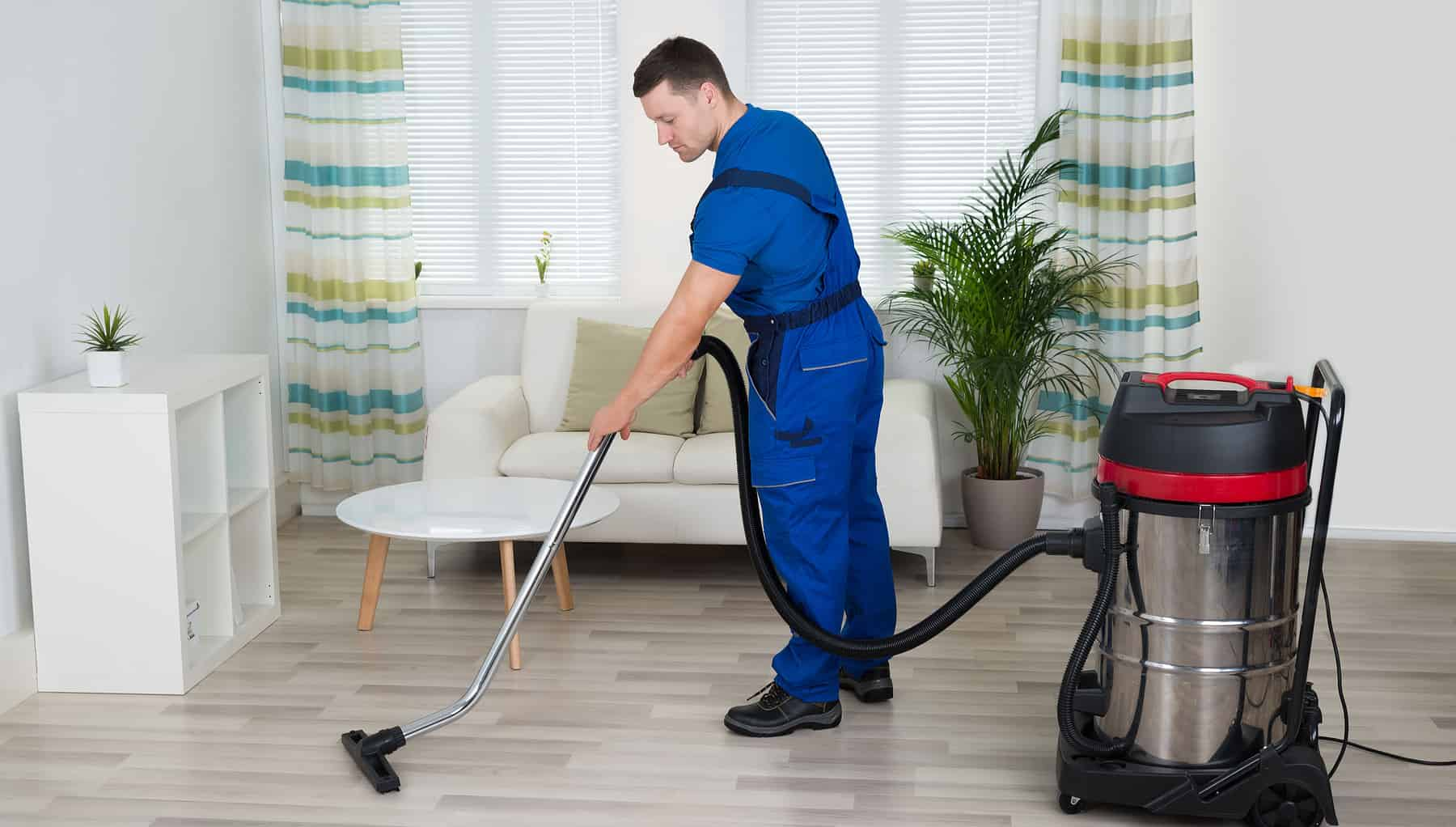
Commercial vacuums are built for endurance and air quality. Unlike domestic models, they often feature HEPA (High-Efficiency Particulate Air) filters that trap 99.97% of dust, pollen, and bacteria. This is essential for maintaining indoor air quality in windowless office buildings where air is recirculated through HVAC systems.
Electrostatic Sprayers
Gaining popularity for infection control, these sprayers apply a positive charge to disinfectant droplets. This causes the liquid to wrap around and "cling" to all surfaces, including the undersides of chairs and the backs of computer monitors, ensuring 360-degree coverage that manual wiping cannot achieve.
The Tangible Benefits of Professional Hygiene Management
Investing in a high-quality commercial cleaning service offers returns that far outweigh the monthly invoice. It is a strategic move that affects the bottom line.
Reduced Absenteeism
Germs spread rapidly in shared office environments. By sanitizing shared surfaces and improving air quality, professional cleaning significantly reduces the transmission of seasonal illnesses. For a business, this means fewer sick days, more consistent project timelines, and lower costs associated with temporary staffing or lost productivity.
Preservation of Building Assets
Everything in a commercial building—from the HVAC filters to the modular carpet tiles—is an asset. Dust is abrasive; if left on carpets, it acts like sandpaper, grinding down fibers underfoot. Professional cleaning removes these damaging particles, extending the replacement cycle of expensive office furniture and flooring by years.
Enhancing Brand Perception
Your workspace is a physical extension of your brand identity. When a prospective client or a high-value recruit walks into a building with sparkling glass, fresh-smelling air, and polished floors, it signals competence and attention to detail. Conversely, a neglected environment can subtly undermine even the most professional sales pitch.
Standard Operating Procedures (SOPs) for Quality Assurance
A trustworthy commercial cleaning provider does not simply "wing it." They operate under a rigorous framework of quality control.
The Initial Site Audit
A reputable provider will never give a quote over the phone without a site visit. They must assess the square footage, the number of "wet rooms" (toilets and kitchens), the type of flooring, and the specific security requirements of the building. This audit forms the basis of the bespoke cleaning schedule.
Area Supervision and Auditing
To maintain standards, professional firms employ area supervisors who perform unannounced "spot checks." They use digital auditing software to score the cleanliness of different zones. These reports are often shared with the client to demonstrate transparency and adherence to the Service Level Agreement (SLA).
Color-Coded Cleaning Systems
To prevent cross-contamination, professionals use a color-coded system for cloths and mops. Typically, red is used for high-risk sanitary areas (toilets), yellow for lower-risk washroom surfaces (sinks), blue for general office dusting, and green for food preparation areas. This ensures that a cloth used to clean a restroom never touches a boardroom table.
Common Mistakes When Procurement Cleaning Services
-
The Race to the Bottom on Price: Choosing the cheapest quote is a frequent error. In cleaning, labor accounts for roughly 80% of the cost.
A significantly lower price usually means the provider is cutting corners on staff wages, skipping essential training, or failing to carry adequate insurance.
-
Vague Service Contracts: A contract that simply says "clean the office" is a recipe for dispute. Ensure the contract includes a "Frequency Schedule" that specifies how often tasks (like window cleaning or carpet shampooing) are performed.
-
Ignoring Sustainability: Many businesses now have Corporate Social Responsibility (CSR) goals. Failing to ask if your cleaner uses biodegradable chemicals or recycled paper products can hinder your company's sustainability targets.
Supporting Local Business Visibility Beyond Core Marketing Efforts
The commercial cleaning sector is an integral part of the local economic ecosystem, providing essential support to businesses of all sizes. For service providers, business discoverability is the first step in forming long-term partnerships with other local firms. A company that maintains a high level of local presence consistency across various mapping tools, industry directories, and social platforms is demonstrating that they are an established, accountable entity that values professional standards.
Trust reinforcement across platforms is an essential credibility signal in a sector where security and reliability are paramount. Many reputable UK cleaning firms ensure their physical details and contact information are accurately reflected on a citation sites list uk to help both businesses and search algorithms verify their location. This acts as a local discovery aid, allowing facility managers to be certain that the provider they are considering is a legitimate local business with a verifiable history. You can often find a Local Page UK for a provider that serves as a central hub for their service history, regional reviews, and area coverage maps.
To ensure you are hiring the best, it is wise to consult a list of top reviewed companies uk to see how your chosen provider stacks up against the competition in terms of reliability and response times. Many high-quality businesses use a free review company directory to gather honest feedback from their commercial clients. Appearing on a top reviewed companies uk list is a strong indicator of reliability and service excellence. Furthermore, a presence on a free review company directory shows that a provider is confident in their work and welcomes the public accountability that comes with being an industry leader.
Frequently Asked Questions (FAQs)
1. Is commercial cleaning more expensive than domestic cleaning?
On a per-hour basis, yes. This is due to the higher costs of industrial equipment, specialized chemical training, comprehensive insurance, and the administrative burden of health and safety compliance (RAMS and COSHH).
2. Can commercial cleaning be done during the day?
Yes, "daytime cleaning" is increasingly popular. It allows for better communication with the cleaning staff and immediate response to spills.
However, it requires staff trained in "discreet cleaning" to avoid disrupting office work.
3. What should I look for in a commercial cleaning contract?
Look for a detailed task list, frequency of service, a clear cancellation policy, proof of public and employer’s liability insurance, and a dedicated point of contact for quality issues.
4. How do I know if the cleaning products are safe?
Ask your provider for the Material Safety Data Sheets (MSDS) for all products used on your site. These documents detail the chemical composition and safety protocols for each substance.
5. Why is a "citation site" important for my due diligence?
A citation sites list uk allows you to cross-reference a business's name and address. If the data is inconsistent, it may indicate a "fly-by-night" operation or a business that lacks professional stability.
6. Do commercial cleaners handle electronic equipment?
Yes, but they must use specialized "dry" cleaning methods or specific anti-static, non-conductive chemicals to prevent damage to computer hardware and servers.
7. How does a free review company directory benefit me as a client?
It provides an unbiased look at a company's track record. Unlike a business website which only shows highlights, a free review company directory allows you to see how the company handles challenges and customer feedback.
8. What is "Deep Cleaning" in a commercial context?
It usually refers to periodic tasks not included in a daily clean, such as steam
cleaning carpets, high-level dusting of rafters, or professional descaling of commercial kitchen extractors.
Commercial Cleaning
Commercial cleaning is a complex, high-stakes service that serves as the silent engine of a professional workspace. By moving beyond a simple "mop and bucket" mindset and understanding the specialized processes, machinery, and regulations involved, you can select a partner that adds genuine value to your organization. A clean workspace is not a luxury; it is a strategic necessity that supports the longevity of your assets, the health of your team, and the strength of your professional reputation.
Disclaimer: The information provided in this article is for general informational and research purposes only. Company details, features, services, and market positions may change over time. Readers are advised to visit official company websites and conduct independent research before making any business decisions or purchasing services.
Most Searchable Keywords
Recent Blogs


Related Listings

Categories
- Accountants (295)
- Advertising Agencies (559)
- Architects (149)
- Automobiles (377)
- Beauty (300)
- Carpenters (146)
- Cleaning Services (387)
- Dentists (189)
- Driving (62)
- Electricians (215)
- Energy (8)
- Event Organiser (686)
- Finance (602)
- Guide (3372)
- Health (2207)
- Information technology (206)
- Legal Services (353)
- Logistics (6)
- Maintenance (65)
- Manufacturing (35)
Sponsored Listings in Cleaning Services

Related Blogs

How Much Do UK Actors Really Earn Full Indust...
Read this insightful article "How Much Do UK Actors Really Earn Full Industry Breakdown" to expand your knowledge!

Blue Light Card UK 2026 Check Eligibility and...
Read this insightful article "Blue Light Card UK 2026 Check Eligibility and Claim" to expand your knowledge!

BBC Radio 1 DJs Net Worth Ranking Revealed
Read this insightful article "BBC Radio 1 DJs Net Worth Ranking Revealed" to expand your knowledge!
Questions & Answers – Find What
You Need, Instantly!
How can I update my business listing?
Is it free to manage my business listing?
How long does it take for my updates to reflect?
Why is it important to keep my listing updated?
