
Commercial Decorating Guide: Finishes, Timelines & Quality Control
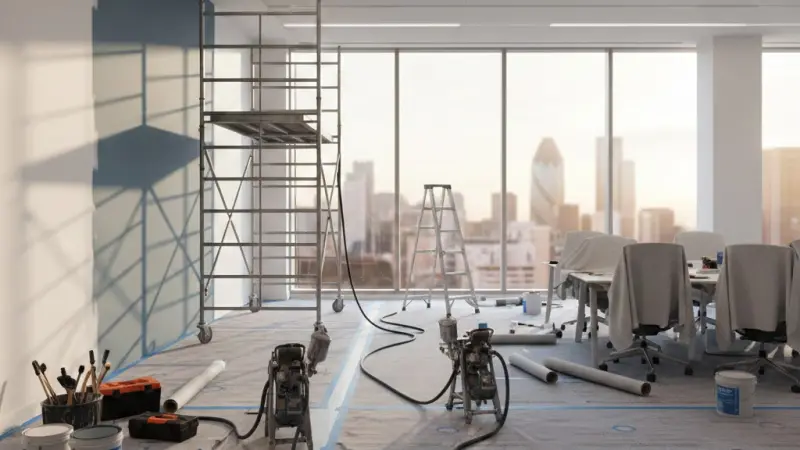
The commercial decorating sector in the United Kingdom stands as a cornerstone of the nation’s built environment, serving as the final, vital layer of professional aesthetics and structural protection for our commercial infrastructure. Far beyond simple "painting and decorating," this industry encompasses a high-stakes, technically demanding range of services that ensure the longevity and brand integrity of offices, retail units, healthcare facilities, and educational institutions. From the sleek glass-and-steel skylines of London to the industrial hubs of the North, the work of commercial decorators contributes significantly to the UK's GDP, forming a multi-billion pound sub-sector within the wider construction and maintenance industry.

Economically, the sector is a massive employer, providing livelihoods for tens of thousands of skilled tradespeople and management professionals. Its importance is underscored by its role in property value retention; a well-maintained commercial asset is significantly more attractive to investors and high-calibre tenants. Furthermore, the psychological impact of commercial decorating cannot be understated. In a post-pandemic world where the "return to the office" is a major strategic goal for British firms, the creation of vibrant, safe, and professional workspaces—delivered by high-quality services found via a uk online business directory—is essential for employee morale and productivity.
The sector operates within a strict framework of Health and Safety (H&S) regulations and environmental standards, making it a sophisticated field that requires constant adaptation. As we move further into the 2020s, the UK commercial decorating market is no longer just about aesthetics; it is about performance coatings, fire protection (intumescent coatings), and sustainable materials. This guide explores the intricacies of this professional landscape, providing a roadmap for both project managers seeking services and professionals looking to scale their businesses in this competitive arena.
The Landscape of Commercial Decorators in the UK
The landscape of the UK commercial decorating market has undergone a profound transformation over the last decade. Historically viewed as a fragmented industry dominated by small family-run firms, it has evolved into a more consolidated and professionalised market. Large-scale infrastructure projects, such as the regeneration of Manchester’s Northern Quarter or the vast commercial developments in Birmingham, have necessitated the rise of "super-decorators"—firms capable of managing multi-million pound contracts with hundreds of staff on-site.
Current market data indicates that despite economic headwinds and inflationary pressures on raw materials, the demand for commercial decorating remains robust. This is largely driven by a shift from "new build" to "retrofit and refurbishment." As the UK strives toward its Net Zero targets, the commercial property sector is focusing heavily on upgrading existing stock to meet modern energy and aesthetic standards. Key regions of activity remain concentrated in the South East, particularly within the M25, but significant growth is being witnessed in "Northern Powerhouse" cities where commercial repurposing is a high priority.
Post-pandemic, the industry has had to navigate the dual challenges of supply chain disruption and a tightening labour market. However, these challenges have also birthed innovation. We are seeing a greater reliance on digital procurement and the use of a business listing uk to bridge the gap between regional contractors and national facilities management companies. The evolution of the industry is now defined by agility; decorators who can offer rapid turnaround times to minimise business downtime are the ones securing the most lucrative contracts. The modern UK commercial decorator is as much a logistics expert as they are a master of finishes, coordinating complex schedules to ensure that a corporate headquarters or a retail mall can remain operational while undergoing a total transformation.
Comprehensive Services Breakdown
The range of services offered within the commercial decorating niche is vast and technical. Unlike residential work, commercial projects often require high-performance products designed to withstand heavy footfall, chemical exposure, or extreme weather.
1. High-Performance Surface Coatings
This includes the application of epoxy resins and polyurethanes for floorings in warehouses and hospitals. These finishes are not merely for show; they provide essential anti-slip properties and hygiene barriers that are critical in regulated environments.
2. Intumescent Coatings and Fire Protection
Safety is paramount in UK commercial law. Commercial decorators are frequently tasked with applying intumescent paint to structural steelwork. In the event of a fire, these coatings expand to create an insulating layer, preserving the structural integrity of the building for a specified period, allowing for safe evacuation.
3. Specialist Wallcoverings
From heavy-duty wide-vinyls in hotel corridors to bespoke digital murals in creative tech offices, the application of commercial-grade wallcoverings requires a high degree of precision. These materials are often chosen for their durability and "scrubbability" in high-traffic areas.
4. External Facade Refurbishment
Using a business listing uk to find experts in external coatings is standard practice for property managers. This service involves the use of weather-resistant masonry paints and anti-carbonation coatings to protect concrete structures from the corrosive effects of urban pollution and the British climate.
5. Hygiene and Anti-Bacterial Finishes
In the healthcare and food preparation sectors, decorators apply specialist paints containing silver-ion technology. These finishes actively inhibit the growth of bacteria and
mould, making them an essential part of the infection control strategy in NHS trusts and private clinics across the country.
6. Timber Care and Restoration
For heritage commercial properties or high-end legal chambers, the restoration of original timber features using French polishing or modern hard-wax oils is a highly sought-after specialist skill that bridges the gap between traditional craft and modern commercial requirements.
How to Choose the Right Service Provider
For a Facilities Manager or a Business Owner, selecting a decorator is a decision that impacts the company’s bottom line and safety profile. Price should never be the sole arbiter of choice; instead, one should consult local business listings uk to vet providers based on a rigorous set of criteria.
Accreditations and Safety Standards
In the UK, the gold standard for commercial decorating is membership in the Painting and Decorating Association (PDA). Furthermore, contractors should hold CHAS (Contractors Health and Safety Assessment Scheme) or SafeContractor accreditation. These certifications prove that the firm adheres to strict safety protocols, reducing the liability of the client.
Insurance and Liability
A professional commercial decorator must carry significant Public Liability Insurance (usually £5m to £10m for commercial sites) and Employer’s Liability Insurance. Without these, any accident on-site could lead to catastrophic financial consequences for the property owner.
Proven Track Record and Case Studies
Always ask for a portfolio. A firm that excels at decorating a boutique retail shop may not have the logistical capacity to handle a twenty-storey office block. Look for verified reviews and a solid local reputation. Many of the uk service listings provide a platform for businesses to showcase their previous successes, allowing clients to compare the scale and quality of past works.
Detailed Quotations and Timelines
A professional provider will offer a "Schedule of Works." This document should outline the preparation stages (which account for 70% of a quality finish), the specific brands of paint to be used, and a realistic timeline that accounts for drying periods and "out-of-hours" working if required.
Industry Challenges & Future Outlook
The commercial decorating sector is currently at a crossroads, facing both regulatory shifts and technological disruption. One of the primary challenges is the volatility of material costs. Global supply chain issues have seen the price of pigments and resins fluctuate, forcing decorators to be more precise in their estimating and procurement.
The Green Revolution
Sustainability is the most significant trend shaping the future. The UK government’s commitment to decarbonisation means that "Green Decorating" is no longer a niche. We are seeing a massive shift toward Low-VOC (Volatile Organic Compound) and VOC-free paints, which improve indoor air quality. Furthermore, the industry is exploring circular economy initiatives, such as paint recycling programs and the use of bio-based resins derived from sustainable sources rather than petrochemicals. Businesses often utilize a business listing uk to find suppliers who specialise in these eco-friendly solutions.
Technological Integration
Digitalisation is changing the "on-site" experience. VR (Virtual Reality) and AR (Augmented Reality) are now being used to show clients how a colour scheme or wallcovering will look before a single drop of paint is applied. Additionally, the rise of "smart coatings"—paints that can reflect heat to reduce cooling costs or absorb pollutants from the air—is on the horizon.
Regulatory Changes
Following the Grenfell tragedy, fire safety regulations regarding coatings on high-rise buildings have become incredibly stringent. Commercial decorators must now stay abreast of evolving Building Regulations (specifically Part B), ensuring that all products applied to facades and communal areas meet the highest fire-rating standards. This regulatory environment necessitates a highly educated workforce that values compliance as much as craftsmanship.
Business Tips for Commercial Decorators Professionals
For professionals operating in this space, technical skill is only half the battle. To thrive in the British market, one must master the art of business development and digital presence. The competition is fierce, and "word of mouth" is no longer enough to sustain a modern enterprise.
Marketing and Digital Visibility
Your business needs to be where your customers are looking. When a project manager in Leeds or London needs a contractor, their first port of call is the internet.
Ensuring your company is listed on uk verified business listings is non-negotiable. Digital visibility allows you to compete with larger firms by showcasing your specific expertise, local knowledge, and reliability.
Specialisation vs. Generalisation
In a crowded market, riches are in the niches. Consider becoming the "go-to" expert for a specific sector, such as pharmaceutical cleanrooms or historic building restoration. Specialisation allows you to command higher margins and reduces the likelihood of being involved in a "race to the bottom" on price.
Networking and B2B Relationships
Building relationships with Main Contractors, Architects, and Interior Designers is essential. These are the "gatekeepers" who specify products and award sub-contracts. Attend trade shows like the National Painting and Decorating Show and maintain an active profile on professional networks.
Investing in the Future
Apprenticeships are vital. The UK is facing a skills gap in the trades, and firms that invest in training the next generation of decorators will be the ones with the most stable and loyal workforces. Furthermore, investing in modern equipment, such as airless spray systems, can significantly increase productivity and the quality of the final finish, allowing you to complete projects faster and more profitably.
Wrapping Up & Local Page Integration
The commercial decorating industry is a dynamic and essential component of the UK's economic and aesthetic landscape. It is an industry built on the foundations of meticulous preparation, technical expertise, and a commitment to safety. Whether it is protecting a structural steel beam with intumescent paint or creating an inspiring office environment that draws talent back to the workplace, the work of the commercial decorator is everywhere.
As the industry continues to evolve through green initiatives and digital transformation, the need for a centralised, reliable way to connect service providers with clients has never been greater. For businesses looking to navigate this complex market, Local Page UK serves as the premier bridge. It provides the infrastructure for small-to-medium enterprises to gain the visibility they deserve and for clients to find the vetted, high-quality professionals they need.
In conclusion, the future of commercial decorating in the UK is bright for those who embrace quality, sustainability, and digital integration. By focusing on high standards and leveraging the power of a uk local business directory, the industry will continue to flourish, decorating the path toward a more vibrant and professional British business environment.
Boost Your Visibility with Local Page UK
In the highly competitive world of commercial decorating, your expertise is only valuable if it can be found. In today’s digital-first economy, property managers, architects, and business owners turn to the web to source reliable tradespeople. If your company isn't visible, you are missing out on high-value contracts. We invite all UK-based commercial decorators and trade professionals to claim their business listing uk on Local Page UK. By joining our platform, you position your brand in front of a targeted audience actively searching for local expertise. Don't let your competition take the lead—establish your digital footprint today and grow your business with the UK's most trusted local business resource.
FAQ
What exactly defines a commercial decorator compared to a residential one?
A commercial decorator specialises in larger-scale projects such as offices, retail units, and industrial sites, rather than private homes. The primary differences lie in the scale of the equipment used, the technical nature of the coatings (such as epoxy or fire-retardant paints), and the logistical ability to work around business hours to minimise downtime. Commercial projects also require much more rigorous health and safety documentation and higher levels of insurance.
How long does a typical office decorating project take to complete?
Timelines vary significantly based on the square footage and the level of preparation required. A standard 2,000 sq. ft. office might take 5 to 7 days for a full refresh, including preparation, two coats of emulsion, and woodwork.
However, larger corporate headquarters or projects requiring specialist wallcoverings can take several weeks. Most professional decorators will provide a detailed schedule of works to ensure the client can plan accordingly.
Are low-VOC and eco-friendly paints durable enough for commercial use?
Absolutely. Modern paint technology has advanced to the point where high-quality low-VOC (Volatile Organic Compound) paints match or even exceed the durability of traditional oil-based products. These eco-friendly options are now the standard for commercial projects because they allow for faster re-occupancy of the space due to reduced odours and harmful emissions, which is a major benefit for businesses that cannot afford long closures.
What is the importance of intumescent coatings in commercial buildings?
Intumescent coatings are a critical fire safety measure. When exposed to heat, these coatings expand to create a char layer that insulates structural steel or timber. This process delays the point at which the material loses its structural integrity, providing vital extra time for building occupants to evacuate safely. In the UK, applying these coatings is a highly regulated task that must be carried out by qualified professionals.
Why should I check for PDA accreditation when hiring a decorator?
The Painting and Decorating Association (PDA) is the UK's largest trade body for the industry. Choosing a member ensures that the contractor has been vetted for their experience, insurance, and quality of work. It provides an extra layer of consumer protection and a formal grievance procedure if things go wrong. You can find accredited members and Localpage listings to ensure you are hiring a verified and reputable professional for your project.
How do commercial decorators handle work in high-traffic retail environments?
Professional decorators often utilise "out-of-hours" scheduling, working through the night or during weekends when the business is closed to the public. They also use quick-drying, low-odour paints and airless spray systems to ensure a rapid turnaround. Strategic "zoning" is also used, where sections of the shop are cordoned off so that trade can continue in one area while decorating happens in another.
What are the main causes of paint failure in commercial settings?
The most common cause of paint failure is poor surface preparation. In commercial environments, surfaces may be contaminated with grease, dust, or old chemicals. If these aren't cleaned and primed correctly, the new paint will peel or bubble. Other factors include applying paint in inappropriate temperatures or using a product that isn't designed for the specific level of wear and tear the area receives.
Do commercial decorators provide colour consultancy services?
Many high-end commercial decorating firms offer colour consultancy or work closely with interior designers. They understand the psychology of colour in the workplace—for example, using blues and greens to promote focus or yellows for creativity. They can also use digital rendering tools to show you exactly how different shades will look under your specific office lighting before any paint is purchased.
What should be included in a professional decorating quote?
A professional quote should be fully transparent and broken down by area. It should include the cost of materials (specifying the brands), the cost of labour, the expected timeline, and any additional costs such as scaffolding or specialist equipment hire. It should also clearly state the level of preparation involved, as this is often where cheaper, less professional quotes cut corners to save time.
How often should a commercial property be repainted?
For most high-traffic commercial spaces like retail shops or hotel lobbies, a refresh is recommended every 3 to 5 years to maintain a professional appearance. For office environments with lower wear, 5 to 7 years is standard. However, areas like stairwells or kitchens may need more frequent attention. Regular maintenance painting can often prevent the need for more expensive, full-scale refurbishments later on.
Is spray painting better than traditional brush and roller methods?
Spray painting, particularly airless spraying, is often preferred for large commercial spaces like warehouses or open-plan offices. It provides an incredibly smooth, uniform finish and is much faster than traditional methods, which reduces labour costs. However, brush and roller methods are still superior for intricate detail work, cutting in, or smaller areas where the extensive masking required for spraying would be inefficient.
Can commercial decorators work on heritage or listed buildings?
Yes, but this requires a specialist skillset. Working on listed commercial properties involves using traditional materials like lime washes or linseed oil paints and adhering to strict conservation guidelines. It is vital to hire a decorator who has experience with the specific requirements of the local planning authority to ensure that all work is compliant and preserves the historical integrity of the structure.
What insurance should a commercial decorating company have?
At a minimum, they must have Public Liability Insurance to cover any damage to the property or injury to third parties. They should also have Employer’s Liability Insurance for their staff. For larger projects, professional indemnity insurance may also be relevant. Always ask to see a copy of their current insurance certificates before any work begins on your site to ensure your business is fully protected.
How does the weather affect external commercial decorating in the UK?
The British climate is a major factor. External painting generally cannot be done in temperatures below 5 degrees Celsius or in high humidity/rain. Professional decorators monitor weather forecasts closely and use moisture meters
to ensure the substrate is dry enough for paint application. For year-round external work, some firms use specialist "all-weather" coatings that can be applied in more challenging conditions.
Where is the best place to find reliable commercial decorators in my area?
The best way to find verified, local professionals is to use a dedicated business directory that focuses on the UK market. These platforms allow you to compare different providers, read reviews, and check their service offerings in one place. For a comprehensive list of top-rated professionals, you can consult the Local page to find the right team for your specific commercial project and budget.

Disclaimer: The information provided in this article is for general informational and research purposes only. Company details, features, services, and market positions may change over time. Readers are advised to visit official company websites and conduct independent research before making any business decisions or purchasing services.
Most Searchable Keywords

Recent Blogs



Related Listings

Categories
- Accountants (295)
- Advertising Agencies (559)
- Architects (149)
- Automobiles (377)
- Beauty (300)
- Carpenters (146)
- Cleaning Services (386)
- Dentists (189)
- Driving (62)
- Electricians (215)
- Energy (8)
- Event Organiser (685)
- Finance (599)
- Guide (3365)
- Health (2207)
- Information technology (206)
- Legal Services (353)
- Logistics (6)
- Maintenance (65)
- Manufacturing (35)

Sponsored Listings in Locksmith Services


Related Blogs

Gen Z Political Reporters and News Creators i...
Read this insightful article "Gen Z Political Reporters and News Creators in the UK" to expand your knowledge!

Famous Female Social Media Influencers Across...
Read this insightful article "Famous Female Social Media Influencers Across the UK" to expand your knowledge!

Your UK Sponsor Licence 2026 Step by Step Gui...
Read this insightful article "Your UK Sponsor Licence 2026 Step by Step Guide" to expand your knowledge!
Questions & Answers – Find What
You Need, Instantly!
How can I update my business listing?
Is it free to manage my business listing?
How long does it take for my updates to reflect?
Why is it important to keep my listing updated?
