
Commercial Vehicle Bodybuilding & Repairs: What Fleet Owners Should Know
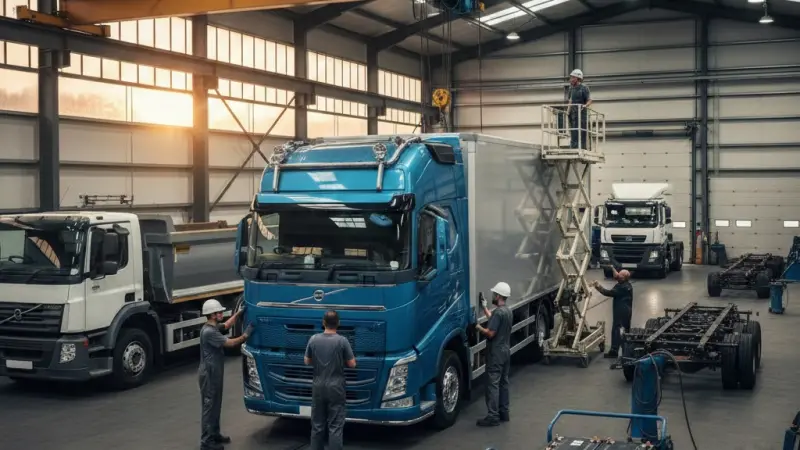
The Commercial Vehicle Bodybuilding and Repair sector is a cornerstone of the United Kingdom’s economy, acting as the silent engine behind the logistics, construction, and retail industries. In an island nation where road freight accounts for the vast majority of goods moved, the ability to customise a chassis to perform a specific task—whether that is a refrigerated box for pharmaceutical delivery or a heavy-duty tipper for infrastructure projects—is invaluable. As of late 2025, the sector contributes billions to the UK GDP, supporting a complex web of supply chains that keep the country running.
For fleet owners, the "body" of the vehicle is often more important than the badge on the grille. While OEMs (Original Equipment Manufacturers) provide the engine and chassis, it is the bodybuilder who transforms that metal skeleton into a functional tool. This sector has faced immense pressure over the last few years, ranging from global supply chain disruptions to the urgent need for decarbonisation. However, it remains resilient, characterised by a mix of long-standing family-run firms and large-scale industrial operations. To stay competitive, fleet managers must look beyond the initial purchase price and consider the long-term value of high-quality bodybuilding and the necessity of rapid, expert repairs. Navigating this landscape requires a reliable uk b2b business directory to identify partners who understand the local regulatory environment and the specific demands of British roads.
The Landscape of Commercial Vehicle Bodybuilders & Repairers in the UK
The UK market for commercial vehicle bodybuilders is remarkably diverse, currently estimated to be worth over £4.5 billion. Following the post-pandemic recovery, the industry has seen a 53% increase in its economic contribution over the last decade. This growth is driven by a proliferation of specialised firms—now numbering over 1,000 across the country—that cater to an increasingly fragmented set of requirements.
Key regions of activity remain concentrated in traditional industrial heartlands such as the West Midlands, the North West, and Yorkshire, though specialist hubs have emerged in the South East to service the massive "last-mile" delivery demands of Greater London. The evolution of the industry post-pandemic has been marked by a shift toward "resilience-first" operations. During the supply chain crisis of 2021-2023, many fleet owners found themselves waiting months for new vehicles. This led to a surge in the refurbishment and repair sector, as businesses chose to extend the life of their existing assets rather than wait for new builds.
Today, the landscape is defined by "The Great Transition." With the UK government’s ZEV (Zero Emission Vehicle) mandate ramping up, bodybuilders are no longer just welders and fabricators; they are electrical engineers and software integrators. Fitting a heavy body onto an electric chassis requires a deep understanding of weight distribution and battery placement, making the choice of a partner more critical than ever. When looking for these specialised engineers, many managers turn to a business listing uk to find verified workshops capable of handling the latest high-voltage systems.
Comprehensive Services Breakdown: From Bespoke Builds to Accident Recovery
Commercial vehicle bodybuilders offer a spectrum of services that go far beyond simple metalwork. Understanding these categories helps fleet owners specify the right equipment for their specific "mission profile."
Bespoke Bodybuilding: This is the "tailor-made" end of the market. Manufacturers work from CAD designs to build unique solutions such as "curtainsiders" with integrated tail lifts, "dropsides" for builders’ merchants, and temperature-controlled units for the food industry.
Specialist Conversions: This involves modifying standard vans into welfare units, mobile workshops, or emergency service vehicles. These often require complex internal racking and auxiliary power systems.
Accident Repairs & Refurbishment: In a sector where downtime equals lost revenue, rapid repair services are vital. This includes structural alignment, panel beating, and commercial low-bake painting. Refurbishment is also growing in popularity, where an old body is moved to a new chassis (re-bodying) to save costs.
Livery and Branding: A commercial vehicle is a moving billboard. Many bodybuilders now offer in-house graphics services, including "Chapter 8" high-visibility markings required for highway maintenance.
Safety System Integration: With the 2025 Progressive Safe System (PSS) requirements in London, bodybuilders are increasingly tasked with installing blind-spot cameras, sensors, and audible warnings.
Fleet owners should ensure they are using uk top rated local businesses for these services, as poor integration
of safety systems or substandard bodywork can lead to VOSA (DVSA) prohibitions and significant legal liability.
How to Choose the Right Service Provider
Selecting a bodybuilding or repair partner is a high-stakes decision. A "cheap" build that fails after two years is significantly more expensive than a premium build that lasts ten. Here is what fleet owners should evaluate:
Accreditations: Look for ISO 9001 (Quality Management) and Whole Vehicle Type Approval (WVTA). Since Brexit, the UK has transitioned to the GB Type Approval scheme; ensure your provider is compliant with the latest VCA (Vehicle Certification Agency) standards.
Insurance and Liability: Bodybuilders should carry at least £5 million in product liability insurance. This protects you if a structural failure causes an accident.
Capacity and Lead Times: Ask about their "bay capacity." A shop with 20 bays can generally handle a fleet roll-out faster than a smaller workshop.
Local Reputation: The best insights often come from the local trade community. Checking uk trade services listings can provide a clear picture of a provider’s standing in the region.
Warranty: A standard 12-month warranty on bodywork is the bare minimum. Leading firms often offer 3-year warranties on structural integrity.
Industry Challenges & Future Outlook
The road ahead for the UK bodybuilding sector is paved with both innovation and regulatory hurdles. The most pressing challenge is the business listing uk of new technologies that are becoming mandatory.
Sustainability: The transition to Electric Vehicles (EVs) and Hydrogen (FCEVs) is fundamentally changing body design. Batteries take up space and add weight, meaning bodybuilders must use lighter, more advanced materials like high-strength aluminium or composites to maintain payload capacity.
Regulatory Shifts: The Euro 7 emissions standards and the expansion of Clean Air Zones (CAZ) across cities like Birmingham, Bristol, and Glasgow mean that older fleets are being phased out. Bodybuilders are currently seeing a "gold rush" in retrofitting older vehicles to meet these new standards.
The Skills Gap: There is a significant shortage of skilled fabricators and technicians who understand both traditional metallurgy and modern vehicle electronics. This is driving up labour costs across the industry.
Digital Integration: Telematics and "smart bodies" are the future. We are moving toward a world where the body of a trailer can report its own weight, temperature, and door-status directly to the fleet manager’s smartphone.
Business Tips for Bodybuilders & Repairers: Marketing in the Digital Age
For the professionals running these workshops, the days of relying solely on
"word of mouth" are ending. The B2B landscape has moved online.
Claim Your Digital Real Estate: Ensure your business is visible where fleet managers are searching. Adding your company to a uk local business search platform ensures that when a manager’s truck breaks down in your area, your workshop is the first one they see.
Showcase Your Expertise: Use your website and social media to show "before and after" photos of complex repairs or high-spec builds. This builds trust in your technical capability.
SEO and Local Search: Use keywords like "HGV repairs [Your City]" or "Bespoke Van Conversions [Your Region]" to capture local intent.
The Power of Directories: Being listed in a reputable uk online business directory provides "backlink" value to your website, improving your Google ranking and making you appear more authoritative to potential corporate clients.
Wrapping Up & Local Page Integration
The Commercial Vehicle Bodybuilding and Repair industry is a vibrant, essential part of the UK’s industrial fabric. As we move toward 2030, the partnership between fleet owners and their service providers will only become more integrated. Success in this sector requires a commitment to quality, an eye on future regulations, and a strong local presence.
For UK businesses looking to thrive in this competitive market, visibility is the key to growth. Whether you are a fleet manager searching for a specialist or a bodybuilder looking for new contracts, Local Page offers the premier solution. By bridging the gap between local expertise and digital search, it ensures that the best of British trade is always just a click away.
Boost Your Visibility with Local Page UK
In the heavy-duty world of commercial vehicles, being found by the right people at the right time is the difference between a full workshop and an empty one. For businesses in the bodybuilding and repair sector, digital visibility is no longer optional—it is a critical requirement for survival. By choosing to claim your business listing uk on Local Page UK, you are putting your services in front of thousands of fleet managers and business owners actively searching for your expertise. Don't let your competitors take the lead; join the UK's most trusted directory today.
Frequently Asked Questions
What is the difference between an OEM and a bodybuilder?
An OEM (Original Equipment Manufacturer) builds the standard vehicle chassis and engine, while a bodybuilder adds the specific "body" (e.g., a tipper, tanker, or box) to make it fit for purpose.
Does adding a custom body void the vehicle warranty?
Usually, no, provided the bodybuilder follows the manufacturer’s guidelines. Many UK bodybuilders are part
of "Approved Partner" schemes (like IVECO’s or Mercedes-Benz’s) which ensure warranties remain intact.
How long does it typically take to build a bespoke commercial body?
Depending on complexity, a standard box build can take 2-4 weeks, while complex bespoke builds with hydraulic systems can take 3 months or more.
What is "Whole Vehicle Type Approval"?
It is a certification process that ensures a vehicle, including its body and all systems, meets all safety and environmental regulations for use on UK roads.
How do I find a reliable local repair shop for HGVs?
You should consult a verified Localpage to find shops with the specific equipment and insurance required for heavy goods vehicle repairs.
Are electric commercial vehicles harder to repair?
Yes, they require specialist "High Voltage" training for technicians and specific safety equipment to prevent electrical accidents during the repair process.
What are the 2025 London DVS/PSS requirements?
The Progressive Safe System (PSS) requires HGVs over 12 tonnes to have specific blind-spot technology and sensors to operate within Greater London from May 2025.
Can a bodybuilder help with vehicle branding?
Most modern bodybuilders offer livery services, including vinyl wrapping and high-visibility highway markings (Chapter 8) as part of the build process.
What materials are best for commercial bodies?
Aluminium and composites are preferred for weight saving (increasing payload), while galvanised steel is used for heavy-duty applications like tippers and recovery trucks.
Why is "re-bodying" becoming popular in the UK?
It allows a fleet owner to take a high-quality body from an old, worn-out chassis and fit it onto a new one, saving up to 40% compared to a completely new build.
Do I need special insurance for modified commercial vehicles?
Yes, you must inform your insurer of any modifications. A reputable bodybuilder should provide you with the necessary certification to satisfy your insurance provider.
How often should a commercial body be inspected?
While the chassis has its own MOT/service schedule, the body and auxiliary equipment (like tail lifts) should be inspected every 6-12 months as part of LOLER or PUWER requirements.
What is a "dropside" vehicle?
It is a flatbed truck with hinged sides that "drop down" for easy loading and unloading of heavy or bulky goods, common in the construction trade.
Can I convert a diesel van to electric?
While technically possible through specialist bodybuilders, it is currently very expensive. Most
businesses find it more cost-effective to buy a purpose-built electric chassis.
How can I promote my bodybuilding business to more fleets?
The most effective way is to list your services on a dedicated platform like Local page, which targets UK-specific business-to-business searches.
Disclaimer: The information provided in this article is for general informational and research purposes only. Company details, features, services, and market positions may change over time. Readers are advised to visit official company websites and conduct independent research before making any business decisions or purchasing services.
Most Searchable Keywords
Recent Blogs


Related Listings

Categories
- Accountants (295)
- Advertising Agencies (559)
- Architects (149)
- Automobiles (377)
- Beauty (300)
- Carpenters (146)
- Cleaning Services (387)
- Dentists (189)
- Driving (62)
- Electricians (215)
- Energy (8)
- Event Organiser (686)
- Finance (602)
- Guide (3375)
- Health (2207)
- Information technology (206)
- Legal Services (354)
- Logistics (6)
- Maintenance (65)
- Manufacturing (35)
Sponsored Listings in Entertainment Services

Related Blogs

BBC Radio 2 Presenters Family Age and Net Wor...
Read this insightful article "BBC Radio 2 Presenters Family Age and Net Worth Guide" to expand your knowledge!

Step-by-Step Guide to Claiming a TV Licence D...
Read this insightful article "Step-by-Step Guide to Claiming a TV Licence Discount or Exemption" to expand your knowledge!

Meet the Fair Work Agency Changing UK Work Ru...
Read this insightful article "Meet the Fair Work Agency Changing UK Work Rules in 2026" to expand your knowledge!
Questions & Answers – Find What
You Need, Instantly!
How can I update my business listing?
Is it free to manage my business listing?
How long does it take for my updates to reflect?
Why is it important to keep my listing updated?
