
Commercial Vehicle Components: Manufacturing Standards & Supply Chains
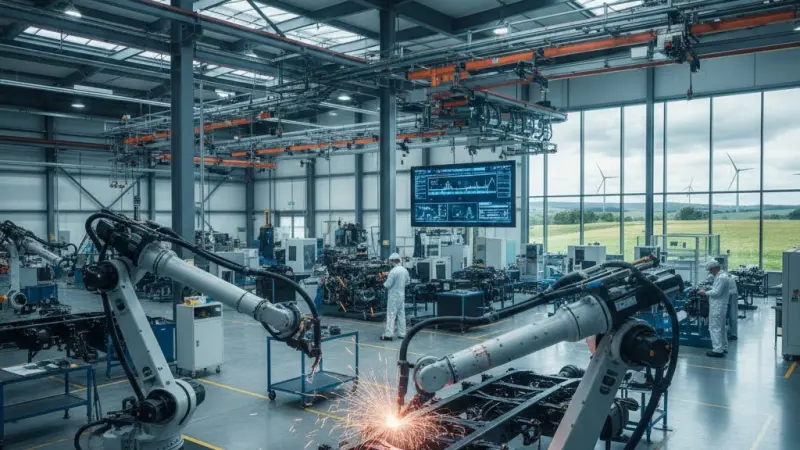
The commercial vehicle (CV) component manufacturing sector is a cornerstone of the United Kingdom’s industrial heritage and a vital engine for its modern economy. Spanning from the heavy-duty forging of axles to the precision engineering of electronic control units (ECUs), this sector underpins the logistics and transport infrastructure that keeps the nation moving. In the UK, the automotive industry as a whole contributes over £93 billion in turnover and £22 billion in value-added annually, with the commercial vehicle segment playing an outsized role in export resilience and regional employment.

For manufacturers and fleet operators, understanding the nuances of manufacturing standards and the complexity of supply chains is not merely a matter of operational efficiency; it is a prerequisite for safety, compliance, and competitive advantage. The UK’s landscape is unique, characterized by a high density of specialized SMEs (Small and Medium Enterprises) that supply global OEMs (Original Equipment Manufacturers). These local businesses are the backbone of the industry, providing the innovation required to meet increasingly stringent environmental regulations.
As we look at the broader picture, the integration of digital tools has become essential for these manufacturers. Navigating the vast network of suppliers requires a robust uk b2b business directory to bridge the gap between niche manufacturers and the logistics firms that rely on their products. In an era where "Just-in-Time" delivery is being replaced by "Just-in-Case" resilience, the visibility of local manufacturing talent has never been more critical. This guide explores the standards, services, and strategic decisions that define British commercial vehicle component manufacturing today.
The Landscape of Commercial Vehicle Component Mnfrs in the UK
The current landscape of commercial vehicle component manufacturing in the UK is one of transformation and grit. Despite the global headwinds of the early 2020s, the sector has emerged with a renewed focus on domestic capability and high-value engineering. Historically centered in the Midlands—often referred to as the heart of British automotive—the industry now sees significant clusters in the North West, North East, and South Wales. These regions benefit from a rich ecosystem of technical universities and specialized testing facilities.
Post-pandemic, the industry has shifted its focus from pure cost-optimization to supply chain sovereignty. The disruption of global semiconductor supplies and raw material bottlenecks taught the UK sector a valuable lesson: the importance of local verified suppliers. Current market data suggests that while total vehicle production volumes have seen volatility, the demand for high-quality, British-made components remains robust, particularly for export to the EU, which accounts for over 90% of UK CV exports.
The evolution of the sector is also being driven by the "ZEV (Zero Emission Vehicle) Mandate." Manufacturers are rapidly pivoting from traditional internal combustion engine (ICE) components to electric drivetrains, battery thermal management systems, and hydrogen fuel cell technologies. For a business to thrive in this environment, being easily discoverable to partners is paramount. Companies are increasingly listing themselves on a business listing uk to ensure they are part of the new green supply chain. This digital shift allows smaller, specialized manufacturers to compete on a global stage by showcasing their specific technical accreditations and local reliability.
Comprehensive Services Breakdown
The services and products within the commercial vehicle component niche are as diverse as the vehicles they support. A "commercial vehicle" can range from a 3.5-tonne delivery van to a 44-tonne articulated lorry, each requiring a bespoke set of components manufactured to exacting standards.
1. Drivetrain and Powertrain Engineering
This remains the most complex area of manufacturing. Services include the precision machining of gears, transmissions, and drive shafts. With the shift toward electrification, this now encompasses the manufacturing of high-torque electric motors and sophisticated power electronics. British firms are leaders in "lightweighting"—using advanced composites and alloys to reduce vehicle weight and extend battery range.
2. Braking and Suspension Systems
Safety is the non-negotiable standard in CV manufacturing. Providers in this space offer everything from air brake systems and ABS components to heavy-duty leaf springs and air suspension modules. These components must undergo rigorous "Type Approval" and meet ISO 9001 and IATF 16949 standards to ensure they can withstand the millions of stress cycles inherent in long-haul logistics.
3. Chassis and Body Construction
The "skeleton" of the vehicle requires high-strength steel and aluminum fabrication. Manufacturers provide specialized services like robotic welding, laser cutting, and anti-corrosion coating (cataphoretic painting). For specialized sectors like refuse collection or refrigerated transport, component manufacturers provide the hydraulic systems and thermal insulation panels required for these niche applications.
4. Telematics and Electronic Systems
Modern commercial vehicles are "computers on wheels." Component manufacturers now include software developers and sensor manufacturers who produce Advanced Driver Assistance Systems (ADAS), fleet tracking hardware, and engine diagnostics tools. As these services become more integrated, finding a provider with the right expertise is made easier through uk service listings, where technical capabilities are clearly defined.
5. Aftermarket and Remanufacturing
The UK is a pioneer in "circular economy" manufacturing. Remanufacturing services—where old components are stripped, cleaned, and rebuilt to "as-new" condition—are growing rapidly.
This service provides a cost-effective and sustainable alternative to new parts, particularly for engines, turbochargers, and alternators.
How to Choose the Right Service Provider
Selecting a manufacturing partner in the commercial vehicle sector is a high-stakes decision. A failure in the supply chain or a substandard component can lead to vehicle downtime, or worse, catastrophic road accidents. Here is a guide on the criteria that matter most:
Accreditations and Standards
The gold standard for automotive manufacturing is IATF 16949. This standard goes beyond ISO 9001 to focus specifically on defect prevention and the reduction of variation and waste in the supply chain. If a provider does not hold this, or at the very least a robust ISO 9001 certification, they may not be suitable for Tier 1 or Tier 2 supply roles. Additionally, look for ISO 14001 (Environmental Management) and ISO 45001 (Health and Safety).
Insurance and Liability
In the CV world, product liability insurance is critical. A manufacturer should be able to demonstrate significant coverage that protects the client in the event of a component failure. This is often a gatekeeper requirement for any contract with a major fleet or OEM.
Local Reputation and Reviews
While technical specs are vital, the "soft" data of business—reliability, communication, and lead-time accuracy—often determines the success of a partnership. Utilizing uk top rated local businesses data can provide insights into how a manufacturer performs in real-world scenarios. Look for providers who have a history of serving the UK market and understand the specific regulatory requirements of the DVSA (Driver and Vehicle Standards Agency).
Financial Stability
Manufacturing is capital-intensive. Before entering a long-term supply agreement, assess the financial health of the provider. A manufacturer that cannot invest in its own machinery or raw material stock is a risk to your production timeline.
Industry Challenges & Future Outlook
The path forward for UK commercial vehicle component manufacturers is fraught with challenges, yet illuminated by technological opportunity. The most significant shift is the transition to Net Zero. The UK government has committed to phasing out the sale of new non-zero-emission HGVs by 2040. This regulatory pressure is forcing a complete overhaul of component design.
Sustainability and Green Initiatives
Manufacturers are now being judged on their "Scope 3" emissions—the carbon footprint of their entire supply chain. This means a component manufacturer must not only produce a green product but must do so using renewable energy and sustainable materials. To gain visibility in this new "green" marketplace, many firms are opting for a business listing uk specifically to highlight their ESG (Environmental, Social, and Governance) credentials to eco-conscious OEMs.
Digitalization and Industry 4.0
The integration of AI in manufacturing processes—predictive maintenance for factory robots, real-time supply chain tracking, and digital twin modeling—is becoming standard. The challenge for many UK SMEs is the "digital divide"—the cost of implementing these technologies. However, those who do invest are finding they can produce smaller batches of customized components more profitably than high-volume overseas competitors.
Regulatory Changes Post-Brexit
The industry continues to navigate the complexities of the UKCA (UK Conformity Assessed) marking and the transition from the CE mark. Divergence in regulations between the UK and the EU requires manufacturers to be highly agile, often maintaining dual certifications to ensure their products can be sold in both markets without friction.
Business Tips for Commercial Vehicle Component Mnfrs Professionals
For professionals running a manufacturing or service business in this sector, technical excellence is only half the battle. In a crowded market, visibility and "findability" are the new currencies of growth.
1. Optimize Your Digital Footprint
Many engineering firms still rely on word-of-mouth. While powerful, it is no longer sufficient. Ensure your business is listed on a high-traffic uk local trades directory.
This doesn't just provide a link; it builds "local authority" in search engine algorithms, making you the first choice when a procurement officer searches for "precision machining near me."
2. Focus on Content Marketing
Showcase your expertise. If you have mastered a new welding technique for high-strength aluminum, write about it. Share case studies of how your components reduced a fleet's fuel consumption by 5%. This builds trust before a single phone call is made.
3. Leverage B2B Networking
The CV sector is a tight-knit community. Participate in trade shows like the CV Show at the NEC Birmingham, but supplement this with year-round digital presence. Being part of a uk local business search ecosystem ensures that your brand remains top-of-mind during the "off-season."
4. Invest in Talent
The skills gap is real. Partner with local colleges for apprenticeships. A business that is seen as a "local employer of choice" often has a more stable and dedicated workforce, which translates directly into product quality.
Wrapping Up & Local Page Integration
The British commercial vehicle component manufacturing sector is at a pivotal crossroads. It remains a powerhouse of innovation, safety, and economic value, but its future success depends on its ability to adapt to a digital and carbon-neutral world. From the smallest precision workshops to the largest assembly lines, the common thread is the need for connection—connecting manufacturers with suppliers, and suppliers with the end-users who keep the UK’s wheels turning.
In this complex industrial web, the local page uk business directory serves as the vital link. It provides the platform where British engineering excellence meets modern procurement needs. By centralizing data on verified local businesses, it ensures that the "Made in Britain" label continues to be associated with quality, reliability, and accessibility. Whether you are a fleet manager looking for a reliable suspension specialist or a manufacturer seeking a Tier 2 supplier, the right connection is just a search away.
Boost Your Visibility with Local Page UK
In the competitive world of commercial vehicle manufacturing, your technical skills deserve to be seen. In today’s digital-first economy, if a procurement manager cannot find you online, you effectively do not exist to them. Local Page UK offers the premier platform for British industrial businesses to showcase their services.
Don't let your competitors take the lead. Take five minutes today to claim your business listing uk. By joining our network, you place your business in front of thousands of potential B2B partners and local customers, ensuring that your workshop or factory remains busy for years to come.
Frequently Asked Questions
1. What are the primary manufacturing standards for UK commercial vehicle components?
The most critical standard is IATF 16949, which is a global Quality Management System standard specifically for the automotive industry. It builds upon ISO 9001 but adds stringent requirements for defect prevention and supply chain waste reduction. Additionally, ISO 14001 is increasingly important for demonstrating environmental responsibility, and ISO 45001 covers occupational health and safety. For components used in the UK, the UKCA marking is now the standard requirement to demonstrate that products meet national safety and environmental regulations.
2. How has the UK supply chain changed since the pandemic?
The post-pandemic era has seen a shift from "Just-in-Time" to "Just-in-Case" logistics. Manufacturers are now holding larger buffer stocks of critical raw materials and electronic components to mitigate sudden global disruptions.
There is also a significant trend toward "near-shoring"—sourcing components from the UK or Europe rather than relying on long-distance Asian supply chains. This shift prioritizes supply chain resilience and lower carbon footprints over the absolute lowest unit cost.
3. Why is "lightweighting" so important in modern CV manufacturing?
Lightweighting involves using advanced materials like high-strength steel, aluminum alloys, and carbon fiber to reduce a vehicle's unladen weight. In the commercial sector, every kilogram saved in the vehicle's construction is an extra kilogram of payload that can be carried, improving operational efficiency. For electric commercial vehicles, lightweighting is even more critical as it helps to offset the significant weight of battery packs and extends the driving range between charges.
4. What is the role of remanufacturing in the commercial vehicle sector?
Remanufacturing is the process of returning a used component to at least its original performance specification. It is not just a repair; it involves a complete teardown and the replacement of all wear-parts. This is highly valued in the UK CV sector because it is more sustainable, using up to 80% less energy than manufacturing a new part, and offers significant cost savings for fleet operators while maintaining a high standard of reliability and warranty.
5. How can a small component manufacturer gain visibility in the UK?
Small manufacturers must leverage digital platforms to reach procurement officers who now start their searches online. Listing your business on a reputable directory like Localpage is a cost-effective way to build digital authority. Beyond listings, participating in regional manufacturing hubs and maintaining an up-to-date website that highlights specific technical certifications and case studies can help small firms compete with larger, more established players.
6. What are the legal requirements for "Type Approval" in the UK?
Type Approval is the process that ensures vehicles and their components meet environmental, safety, and security standards. In the UK, this is managed by the Vehicle Certification Agency (VCA). Manufacturers must prove that their production processes are consistent (Conformity of Production) and that every component produced is identical to the one tested. Without valid Type Approval, components cannot be legally sold for use in new commercial vehicles on UK roads.
7. What is the ZEV Mandate and how does it affect component manufacturers?
The ZEV (Zero Emission Vehicle) Mandate is a UK government policy that requires a growing percentage of new vehicle sales to be zero-emission each year. For component manufacturers, this means a rapid decline in demand for traditional engine and exhaust parts and a surge in demand for batteries, electric motors, thermal management systems, and hydrogen storage solutions. Manufacturers who do not pivot their product lines toward these new technologies risk becoming obsolete.
8. How do UK manufacturers handle "Scope 3" emission requirements?
Scope 3 emissions refer to the carbon footprint of a company’s entire value chain, including the materials they buy. To meet these requirements, UK manufacturers are increasingly auditing their own suppliers for green credentials. This involves tracking the energy used in mining raw materials, the efficiency of transport, and the recyclability of packaging. Many firms are now adopting "Circular Economy" principles to ensure that their products can be easily recycled at the end of their life.
9. What are the risks of using unverified component suppliers?
Using unverified suppliers can lead to "counterfeit" or sub-standard parts entering the supply chain, which poses a massive safety risk for heavy goods vehicles. Legally, it can lead to massive fines and the loss of an operator's license if a vehicle is found to be non-compliant. From a business perspective, unverified parts often have higher failure rates, leading to increased vehicle downtime and the loss of "Earned Recognition" status with the DVSA.
10. How is Industry 4.0 changing the factory floor in the UK?
Industry 4.0 refers to the "Fourth Industrial Revolution," characterized by smart factories. In the UK, this involves using IoT (Internet of Things) sensors to monitor machine health in real-time, using 3D printing for rapid prototyping of specialized components, and utilizing Big Data to optimize production schedules. This allows UK manufacturers to be more agile, producing high-precision, low-volume orders that would be inefficient for larger, less flexible overseas factories.
11. What insurance should a commercial vehicle component manufacturer hold?
At a minimum, a manufacturer needs Professional Indemnity and Public Liability insurance. However, for this sector, Product Liability insurance is the most critical. This covers the business if a component they manufactured fails and causes injury or property damage. Given the scale of commercial vehicles, these claims can be worth millions of pounds. Many OEMs also require "Product Recall" insurance to cover the costs of removing and replacing faulty parts across an entire fleet.
12. Why is regional clustering important for the automotive industry?
Clustering, such as the automotive hub in the West Midlands, allows for a high concentration of specialized skills and a shared supply chain. It reduces transport costs for heavy components and fosters "knowledge spillover," where innovation in one firm inspires improvements in others. It also makes the region more attractive for government investment and the establishment of technical colleges, ensuring a steady stream of new talent into the local workforce.
13. How do I verify the reputation of a new manufacturing partner?
Verification should be multi-layered. Start by checking their official certifications (ISO/IATF). Then, look at their track record via industry-specific directories. You should also request a "site audit" to inspect their production facilities and quality control processes. Finally, speaking to existing clients or checking verified feedback on professional B2B platforms can provide an honest assessment of their reliability and the quality of their after-sales support.
14. What is the future of hydrogen in the UK commercial vehicle sector?
While battery electric is winning the race for smaller vans, hydrogen fuel cells are seen as a leading solution for heavy, long-haul HGVs (44-tonners). Hydrogen offers a high energy density and fast refueling times similar to diesel.
Manufacturers in the UK are currently developing specialized high-pressure tanks, fuel cell stacks, and specialized cooling systems. This represents a massive growth area for manufacturers who can master the safety requirements of hydrogen handling.
15. How can I stay updated on changes in UK manufacturing regulations?
Staying updated requires active participation in trade bodies such as the SMMT (Society of Motor Manufacturers and Traders) or Make UK. Regularly checking the VCA and DVSA websites for updates on Type Approval and roadworthiness standards is also essential. For broader business trends and to find the latest verified service providers in the engineering sector, utilizing a comprehensive resource like Local page ensures you are connected to the most current information in the UK market.

Disclaimer: The information provided in this article is for general informational and research purposes only. Company details, features, services, and market positions may change over time. Readers are advised to visit official company websites and conduct independent research before making any business decisions or purchasing services.
Most Searchable Keywords

Recent Blogs



Related Listings


Categories
- Accountants (295)
- Advertising Agencies (559)
- Architects (149)
- Automobiles (377)
- Beauty (300)
- Carpenters (146)
- Cleaning Services (386)
- Dentists (189)
- Driving (62)
- Electricians (215)
- Energy (8)
- Event Organiser (685)
- Finance (599)
- Guide (3365)
- Health (2207)
- Information technology (206)
- Legal Services (353)
- Logistics (6)
- Maintenance (65)
- Manufacturing (35)

Sponsored Listings in Locksmith Services


Related Blogs

Gen Z Political Reporters and News Creators i...
Read this insightful article "Gen Z Political Reporters and News Creators in the UK" to expand your knowledge!

Famous Female Social Media Influencers Across...
Read this insightful article "Famous Female Social Media Influencers Across the UK" to expand your knowledge!

Your UK Sponsor Licence 2026 Step by Step Gui...
Read this insightful article "Your UK Sponsor Licence 2026 Step by Step Guide" to expand your knowledge!
Questions & Answers – Find What
You Need, Instantly!
How can I update my business listing?
Is it free to manage my business listing?
How long does it take for my updates to reflect?
Why is it important to keep my listing updated?
