
Inside Brick Manufacturing: Materials, Standards & Trusted Producers
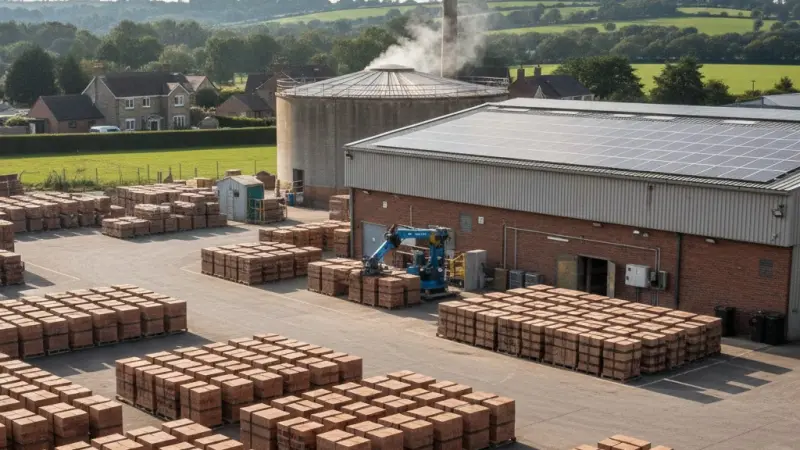
The brick manufacturing sector remains the literal and metaphorical foundation of the British built environment. For centuries, the UK has relied on the durability and aesthetic versatility of clay and concrete units to define its architectural heritage—from the industrial red-brick terraces of the North to the honey-coloured stocks of the South. Today, the industry is a powerhouse of the UK economy, contributing significantly to the construction supply chain and supporting thousands of skilled jobs.

As the government continues to push for increased housing targets, the demand for high-quality, domestically produced bricks has never been higher. This sector is not merely about "baking clay"; it is a sophisticated marriage of traditional craftsmanship and cutting-edge geological science. Brick manufacturers must navigate complex supply chains, energy-intensive production cycles, and rigorous British Standards (BS EN 771-1) to ensure every unit can withstand the volatile British climate for a century or more.
For developers, architects, and homeowners, understanding the nuances of this industry is vital. The UK market is unique in its regional diversity, where the local soil composition often dictates the "face" of entire towns. Whether it is the classic London Stock or the robust Staffordshire Blue, these products are essential for maintaining regional character while meeting modern thermal and structural requirements. In an increasingly digital world, connecting these traditional manufacturers with modern contractors is simplified through resources like a uk business directory, which bridges the gap between quarry and construction site.
The Landscape of Brick Mnfrs in the UK
The current landscape of brick manufacturing in the UK is characterized by a blend of multinational giants and smaller, artisanal "boutique" brickworks. Currently, the UK produces approximately 2 billion bricks per year, yet the demand often outstrips domestic supply, leading to significant imports from Europe. However, there is a renewed focus on "Buying British" to reduce the carbon footprint associated with transport and to ensure a perfect match for local heritage sites.
Geographically, activity is concentrated where clay deposits are most abundant. The "Brick Belt" stretches across the Midlands and South East, with regions like Bedfordshire and Leicestershire serving as historical hubs for production. Post-pandemic, the industry has undergone a rapid evolution. While the initial lockdowns caused temporary kiln closures, the subsequent "race for space" and the boom in home renovations led to a surge in demand that the industry is still balancing.
The evolution of the sector post-2020 has been marked by a shift toward automation. To combat labour shortages and rising energy costs, many manufacturers have invested in "smart kilns" and robotic handling systems. This modernisation ensures that even as the industry scales to meet the 300,000-homes-per-year target, quality remains consistent. Furthermore, the industry has seen a consolidation of logistics, with manufacturers seeking more efficient ways to get products from the factory floor to the developer. For those looking to source these materials or find logistical partners, consulting a uk local business directory has become an essential step in modern procurement strategies.
Comprehensive Services Breakdown
Modern brick manufacturing extends far beyond the standard rectangular block. The services provided by leading UK producers are now highly specialized, catering to bespoke architectural visions and demanding environmental criteria.
1. Facing Bricks
These are the primary aesthetic units used on the exterior of buildings. Services include:
Wire-cut (Extruded) Bricks: Known for their precise dimensions and uniform finish, ideal for contemporary designs.
Soft Mud (Stock) Bricks: Offering a more traditional, sanded texture often seen in residential housing.
Waterstruck Bricks: Using water as a releasing agent to create a unique,
textured surface that is highly sought after by architects.
2. Engineering Bricks
Prioritising strength over aesthetics, engineering bricks (Class A and B) are essential for civil engineering projects, damp-proof courses, and groundworks. Their low porosity and high compressive strength make them a staple for infrastructure.
3. Special Shapes and Arches
To ensure architectural continuity, manufacturers offer "specials"—bricks shaped for corners, sills, and decorative lintels. Many producers now offer a business listing uk to showcase their ability to create custom moulds for restoration projects, allowing architects to find specialists who can replicate Victorian or Georgian patterns.
4. Technical Support and Brick Matching
One of the most valuable services is brick matching. When extending an existing property, finding a brick that matches the weathered patina of the original structure is a science. Manufacturers use chemical analysis and photographic blending to suggest the best fit from their current range.
How to Choose the Right Service Provider
Selecting a brick manufacturer or supplier is a decision that affects the longevity and legality of a build. The first checkpoint should always be accreditations. Look for manufacturers who adhere to ISO 9001 (Quality Management) and ISO 14001 (Environmental Management). In the UK, bricks must carry the CE or UKCA mark, indicating they meet the safety and performance standards required by building regulations.
Reviews and Reputation are equally critical. A manufacturer might produce a beautiful brick, but if their delivery lead times are unreliable, it can stall a multi-million-pound project. Checking uk local trades directory platforms can help contractors see feedback from other site managers regarding the reliability of local yards and distributors.
Insurance and Sustainability are the final pillars. A reputable provider should offer robust product warranties. Furthermore, as the UK moves toward Net Zero, ask for the "Environmental Product Declaration" (EPD). This document details the lifecycle carbon cost of the brick. Finally, consider the proximity of the manufacturer. Choosing a local producer not only supports the local economy but significantly reduces the transport-related carbon emissions of your project.
Industry Challenges & Future Outlook
The brick industry is at a crossroads, facing the dual challenges of high energy costs and the urgent need for decarbonisation. As kiln firing requires temperatures exceeding 1000∘C, the industry has historically been a significant consumer of natural gas. However, the future outlook is increasingly "green."
Technological Shifts: We are seeing the rise of "Electric Kilns" and the experimentation with Hydrogen as a fuel source. Some manufacturers are already piloting carbon-capture technologies at the factory level. Additionally, the "Circular Economy" is gaining traction, with "reclaimed-style" bricks being manufactured from recycled construction waste rather than virgin clay.
Regulatory Changes: The UK’s "Future Homes Standard" is pushing for higher thermal efficiency. While bricks have high thermal mass, manufacturers are now developing "Perforated" or "Insulated" brick systems that work in tandem with modern insulation materials to exceed these new requirements. For those in the sector, keeping up with these shifts is easier when listed on a business listing uk, as it allows them to update their service offerings to a market that is increasingly looking for "Eco-Bricks" and "Carbon-Neutral" solutions.
Business Tips for Brick Mnfrs Professionals
For the independent brickworks or the specialist masonry contractor, digital visibility is no longer optional. While the industry is built on physical products, the "handshake" often happens online.
High-Quality Visuals: Brick is a tactile and visual product. Your website and directory profiles should feature high-resolution imagery of finished projects.
"Brick in the wild" photos are far more effective than studio shots.
SEO and Local Search: Most contractors search for "Brick manufacturers near me" or "specialist masonry [City Name]." Ensure your business is listed in a uk local business search engine to capture this high-intent traffic.
Educational Content: Position yourself as an authority by publishing guides on efflorescence, lime mortar compatibility, or frost resistance.
Networking: Use B2B platforms to connect with architects and planners early in the design phase. Being a "specified" product is the gold standard for any manufacturer. By maintaining an active presence on a uk online business directory, you ensure that when a developer is looking for a reliable partner, your name is at the top of the list.
Wrapping Up & Local Page Integration
The British brick manufacturing industry is a testament to resilience and innovation. From the raw extraction of clay to the precision engineering of modern facades, it remains a vital component of the UK’s identity. As we look toward a future of sustainable construction and smarter cities, the partnership between traditional manufacturing and digital connectivity will only grow stronger.
For businesses operating within this sector—whether you are a manufacturer, a distributor, or a specialist mason—visibility is the key to growth. Local Page UK offers the premier solution for UK businesses looking to establish a dominant online presence. By integrating your business into a trusted uk online business directory, you aren't just adding a link; you are joining a curated ecosystem of professionals designed to help the UK economy thrive.
Boost Your Visibility with Local Page UK
In the competitive world of construction and manufacturing, being "word-of-mouth" is good, but being "searchable" is better. Don't let your craftsmanship go unnoticed. Claim your business listing uk today on Local Page UK and ensure that when the next big housing project is planned, your business is the first one they find.
FAQ
1. What are the primary types of clay used in UK brick manufacturing?
The UK utilizes several types of clay, most notably Weald, Etruria Marl, and Oxford clay. Each offers different properties in terms of firing temperature and final colour. Manufacturers often blend these to achieve specific structural grades or aesthetic finishes required for regional architectural styles.
2. How do British Standards (BS EN 771-1) affect brick quality?
These standards dictate the tolerances for dimensions, compressive strength, and water absorption. Compliance ensures that bricks used in UK construction are fit for purpose, particularly concerning freeze-thaw resistance, which is critical given the damp and cold British winters.
3. What is the difference between Class A and Class B engineering bricks?
Class A bricks have a compressive strength greater than 70N/mm2 and water absorption less than 4.5%.
Class B bricks require strength over 50N/mm2 and absorption under 7%. Class A is typically used for more demanding subterranean or high-load environments.
4. Can bricks be recycled or reused?
Yes, bricks are highly sustainable. Reclaimed bricks are popular for heritage projects. Furthermore, crushed bricks can be used as aggregate in new concrete or as sub-base material for roads, contributing to a more circular construction economy within the United Kingdom.
5. Where can I find a reliable list of local brick suppliers in my area?
You can use a digital platform like Localpage to filter results by region and service type. This allows you to identify suppliers who understand the specific geological and aesthetic requirements of your local planning authority and heritage boards.
6. What causes white staining on new brickwork?
This is known as efflorescence. It occurs when soluble salts are migrated to the surface of the brick by water evaporation. While usually harmless and temporary, it can be minimized by keeping bricks dry on-site and ensuring proper ventilation in the wall cavity.
7. Why is brick matching important for home extensions?
Matching ensures visual continuity. An incorrect match can significantly devalue a property and may even be rejected by local planning officers if the building is in a conservation area. Manufacturers use specialist matching services to find the closest contemporary equivalent.
8. How long does the brick manufacturing process take?
From clay extraction to final cooling, the process usually takes between 3 to 4 weeks. The most time-consuming parts are the drying phase, which removes moisture to prevent cracking, and the firing phase, which vitrifies the clay into a stone-like material.
9. Are handmade bricks better than machine-made ones?
"Better" depends on the goal. Handmade bricks offer a unique, irregular charm essential for restoration. Machine-made (wire-cut) bricks offer superior dimensional consistency and are generally more cost-effective for large-scale modern developments where precision is paramount.
10. What is the impact of rising energy prices on the brick industry?
Since kilns run 24/7 at high temperatures, energy is the largest overhead. This has led to price fluctuations in the market. Consequently, manufacturers are investing heavily in more efficient kiln technology and alternative energy sources to stabilize long-term costs.
11. How does brick manufacturing support the UK economy?
The sector supports roughly 10,000 direct jobs and many more in the supply chain. By producing bricks domestically, the UK reduces reliance on imports, keeps construction costs more predictable, and ensures that tax revenues remain within the local British economy.
12. What are "specials" in the brick industry?
Specials are non-standard shapes such as plinths, cants, bullnose, and arches. These allow for complex architectural detailing. Most major manufacturers have a dedicated "specials" department to create these units, often finishing them by hand for a perfect match.
13. How do I check if a brick manufacturer is reputable?
Look for UKCA marking, ISO certifications, and membership in the Brick Development Association (BDA). Additionally, checking verified business directories for customer feedback and project portfolios can provide insight into their reliability and the quality of their customer service.
14. What is a "Frog" in a brick?
A frog is an indentation on the top bedding surface of a brick. It reduces the weight of the brick, makes it easier
to handle, and provides a "key" for the mortar, which can increase the lateral strength of the finished wall.
15. How can my brick business improve its online presence?
By ensuring you are listed on reputable platforms like Local page, you can increase your reach to local contractors and architects. Keeping your profile updated with your latest certifications and project photos is the best way to attract high-quality B2B leads.

Disclaimer: The information provided in this article is for general informational and research purposes only. Company details, features, services, and market positions may change over time. Readers are advised to visit official company websites and conduct independent research before making any business decisions or purchasing services.
Most Searchable Keywords

Recent Blogs


Related Listings


Categories
- Accountants (295)
- Advertising Agencies (559)
- Architects (149)
- Automobiles (377)
- Beauty (300)
- Carpenters (146)
- Cleaning Services (386)
- Dentists (189)
- Driving (62)
- Electricians (215)
- Energy (8)
- Event Organiser (685)
- Finance (599)
- Guide (3365)
- Health (2207)
- Information technology (206)
- Legal Services (353)
- Logistics (6)
- Maintenance (65)
- Manufacturing (35)

Sponsored Listings in Locksmith Services


Related Blogs

Gen Z Political Reporters and News Creators i...
Read this insightful article "Gen Z Political Reporters and News Creators in the UK" to expand your knowledge!

Famous Female Social Media Influencers Across...
Read this insightful article "Famous Female Social Media Influencers Across the UK" to expand your knowledge!

Your UK Sponsor Licence 2026 Step by Step Gui...
Read this insightful article "Your UK Sponsor Licence 2026 Step by Step Guide" to expand your knowledge!
Questions & Answers – Find What
You Need, Instantly!
How can I update my business listing?
Is it free to manage my business listing?
How long does it take for my updates to reflect?
Why is it important to keep my listing updated?
