
Commercial Vehicle Manufacturing: Design, Compliance & Innovation
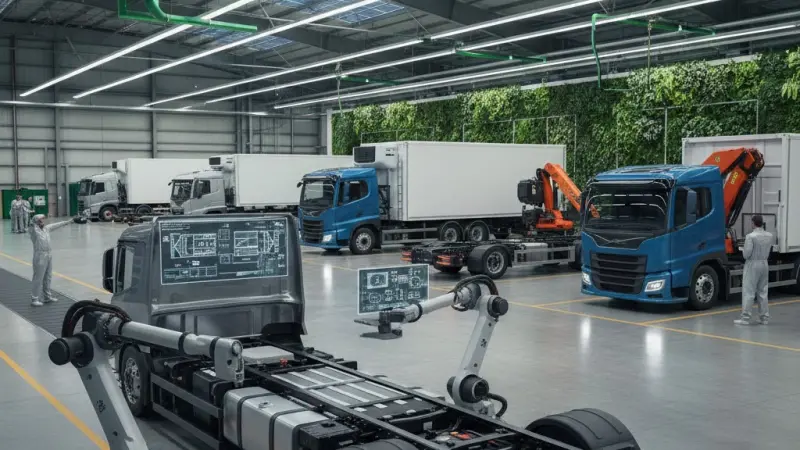
The commercial vehicle manufacturing sector serves as the lifeblood of the British economy. From the heavy-duty trucks that keep our supermarket shelves stocked to the agile delivery vans facilitating the "Amazon effect" in urban centers, this industry is a cornerstone of national infrastructure. In the United Kingdom, the production of commercial vehicles (CVs) is not merely an engineering feat; it is a high-value economic driver that supports tens of thousands of skilled jobs and generates billions in annual turnover.
As of 2024 and heading into 2025, the sector is undergoing a radical metamorphosis. The shift from internal combustion engines (ICE) to zero-emission vehicles (ZEV) has moved from a theoretical future to a present-day mandate. For stakeholders, understanding the nuances of design, strict adherence to UK compliance, and the adoption of cutting-edge innovation is no longer optional—it is a prerequisite for survival. Whether you are an operator looking to source a new fleet or a manufacturer aiming to scale, navigating this complex landscape requires a reliable uk online business directory to connect with the right partners and suppliers.
The importance of the UK’s CV manufacturing cannot be overstated. Unlike the passenger car market, which often focuses on aesthetics and consumer comfort, commercial manufacturing is driven by utility, total cost of ownership (TCO), and regulatory rigor. Every millimetre of a chassis and every gram of a payload is scrutinized to ensure maximum efficiency. As we delve into this guide, we will explore how the UK maintains its status as a global hub for automotive excellence through a unique blend of heritage craftsmanship and future-forward technology.
The Landscape of Commercial Vehicle Mnfrs in the UK
The current state of commercial vehicle manufacturing in the UK is a story of resilience and rapid adaptation. Following the global disruptions of the early 2020s, the industry has emerged with a renewed focus on domestic supply chain security and technological sovereignty. Recent data from the Society of Motor Manufacturers and Traders (SMMT) indicates that while passenger car production has faced volatility, the commercial vehicle segment has often shown more robust recovery patterns, particularly in the production of light commercial vehicles (LCVs).
Key regions of activity remain concentrated in traditional industrial heartlands. The West Midlands remains the undisputed "engine room" of the UK automotive sector, housing major assembly plants and a dense network of Tier 1 and Tier 2 suppliers. Meanwhile, the North West, specifically around Leyland and Ellesmere Port, continues to be a vital hub for truck and van assembly. These clusters are essential for fostering innovation, as they allow for the rapid exchange of ideas and talent.
Post-pandemic, the industry has seen a significant shift toward "just-in-case" rather than "just-in-time" manufacturing. This evolution has led to an increase in localized sourcing, as manufacturers seek to mitigate the risks of global logistics bottlenecks. For those looking to enter the supply chain or procure British-built vehicles, using a uk business directory is the most effective way to identify regional specialists who can offer shorter lead times and personalized service.
Market size remains substantial, with the UK remaining a top-tier producer of vans and specialized trucks in Europe. The rise of e-commerce has been the primary catalyst for the sustained demand for LCVs. As urban centers introduce Clean Air Zones (CAZ) and Ultra Low Emission Zones (ULEZ), the market for electric vans has exploded, prompting manufacturers to retool entire production lines. This transition is not just about the vehicles themselves but the entire ecosystem, including charging infrastructure and battery remanufacturing, which are becoming new pillars of the UK’s industrial strategy.
Comprehensive Services Breakdown
The commercial vehicle manufacturing niche is far more diverse than simple assembly. It encompasses a wide array of specialized services that transform a base chassis into a bespoke business tool. Understanding these services is crucial for any business owner looking to optimize their fleet operations.
1. Bespoke Body Building and Conversions
One of the most significant sectors within UK manufacturing is vehicle body building. This involves taking a "chassis cab" from a major OEM (Original Equipment Manufacturer) and adding a specialized body. This could range from refrigerated units for food transport to "curtain-siders" for general haulage or complex tipper bodies for the construction industry. The level of engineering required for these conversions is immense, ensuring that the added weight does not compromise the vehicle’s structural integrity or legal payload limits.
2. Tail Lift and Lifting Equipment Integration
For many logistics businesses, the vehicle is also a mobile loading bay. The installation and maintenance of tail lifts, cranes, and hydraulic systems are specialized services that require rigorous safety testing (often under LOLER regulations). Manufacturers in this space provide integrated solutions that sync the vehicle’s electrical system with the lifting hardware.
3. Fleet Telematics and Software Integration
Modern manufacturing now includes a digital layer. Vehicles are increasingly fitted with advanced telematics during the production phase. These systems monitor driver behavior, fuel consumption, and vehicle health in real-time. For a new business looking to establish itself, finding a partner that offers a business listing uk can help smaller telematics startups gain the visibility they need to compete with established giants.
4. Livery and Branding Solutions
A commercial vehicle is a moving billboard. High-quality vehicle wrapping and livery application are integral parts of the final manufacturing stages.
Modern materials allow for full-body wraps that protect the original paintwork while providing high-impact branding.
5. Type Approval and Compliance Consulting
Before any modified vehicle can be used on UK roads, it must undergo Type Approval. Manufacturers often provide "National Small Series Type Approval" or "Individual Vehicle Approval" (IVA) services to ensure that every modification—from a new set of beacons to a complete body overhaul—meets the strict standards set by the DVSA (Driver and Vehicle Standards Agency).
How to Choose the Right Service Provider
Selecting a manufacturing partner is a high-stakes decision. The longevity and safety of your fleet depend on the quality of the initial build. When vetting potential providers, there are several key indicators of reliability and professional standing.
Accreditations and Certifications The "gold standard" in the UK is ISO 9001 for quality management. Furthermore, look for members of the SMMT or the Road Haulage Association (RHA). If you are looking for bodybuilders, ensure they have "Approved Converter" status from the base vehicle manufacturer (e.g., Ford, Mercedes-Benz, or Volkswagen). This status guarantees that the conversion does not void the original vehicle warranty.
Local Reputation and Reviews In the era of digital transparency, a provider's local reputation is easily verifiable. Consult local business listings uk to see feedback from other fleet operators. Pay close attention to comments regarding "after-sales support." A manufacturer may build a great vehicle, but if they cannot provide parts or technical support when a vehicle is off the road, your business will suffer.
Insurance and Liability Ensure the provider carries comprehensive Product Liability insurance. Given the high value of commercial assets and the potential risks associated with structural modifications, you must be protected in the event of a manufacturing defect.
Innovation Readiness As the UK moves toward the 2030/2035 deadlines for ending the sale of new ICE vehicles, your provider must be "EV-ready." Ask about their experience with high-voltage systems and how they manage the weight distribution of heavy battery packs in their designs.
Industry Challenges & Future Outlook
The path ahead for UK commercial vehicle manufacturers is paved with both opportunity and significant hurdles. The primary challenge is the "Green Transition." Decarbonizing heavy goods vehicles (HGVs) is significantly more difficult than decarbonizing passenger cars due to the weight of batteries required for long-haul journeys. Hydrogen fuel cell technology is being touted as a viable alternative, and several UK-based startups are currently leading the world in hydrogen truck prototypes.
Regulatory changes also pose a constant challenge. The introduction of the Direct Vision Standard (DVS) in London has forced manufacturers to redesign cab interiors and external sensor arrays to protect vulnerable road users like cyclists. Keeping up with these localized yet impactful regulations requires constant vigilance. Professionals in this sector should frequently consult a business listing uk to find compliance consultants and legal experts who specialize in transport law.
Sustainability is no longer just about the tailpipe. "Circular Manufacturing" is the next big trend. This involves designing vehicles that are easier to dismantle and recycle at the end of their life. We are seeing an increase in the use of sustainable materials within the cab, such as recycled plastics and natural fibers, reducing the overall carbon footprint of the production process.
The future outlook remains cautiously optimistic. The UK Government’s "Advanced Manufacturing Plan" provides a framework for investment in battery gigafactories and electric motor production. If the UK can secure its domestic supply of these critical components, the commercial vehicle manufacturing sector will remain a global leader for decades to come.
Business Tips for Commercial Vehicle Mnfrs Professionals
For businesses operating within this sector, technical excellence is only half the battle; the other half is visibility.
Whether you are a small specialist bodybuilder or a large-scale fleet supplier, your digital footprint determines your growth trajectory.
1. Claim Your Digital Real Estate The first step for any local manufacturing business is to ensure they are discoverable. You should utilize uk service listings to ensure that when a transport manager searches for "refrigerated van conversions near me," your business appears at the top of the results.
2. Content Marketing for Authority In B2B sectors, expertise sells. Publishing case studies of complex builds, explaining the benefits of new lightweight materials, or providing guides on upcoming regulatory changes can position your brand as a "thought leader." This builds trust before a potential client ever picks up the phone.
3. Optimize for Local SEO Manufacturing is often a regional business. Ensure your website and directory profiles highlight the specific areas you serve—whether that’s the "Black Country," "Greater Manchester," or "South Wales." Accurate Name, Address, and Phone number (NAP) data across the web is essential for local search rankings.
4. Leverage Visual Proof Use high-quality video and photography of your manufacturing floor. Showing the "behind-the-scenes" process—the welding, the precision CNC cutting, and the final quality checks—reassures clients of your professional standards.
Wrapping Up & Local Page Integration
The UK commercial vehicle manufacturing industry is a testament to British engineering prowess. It is a sector that refuses to stand still, constantly innovating to meet the demands of a changing planet and an evolving economy. From the smallest artisan converter to the largest OEM, the commitment to quality and safety remains the industry’s hallmark.
As a business owner or professional within this space, staying connected to the wider business community is vital. This is where Local Page UK becomes your most valuable asset. As the premier uk online business directory, Local Page provides the platform you need to reach new clients, find reliable suppliers, and grow your local reputation. In an increasingly digital world, being part of a trusted network is the difference between being a "best-kept secret" and an industry leader.
Boost Your Visibility with Local Page UK
For businesses in the Commercial Vehicle Mnfrs sector, being found online is critical. With the industry moving toward high-tech, electric, and connected solutions, your potential customers are looking for modern partners through digital channels. Do not leave your growth to chance. Take the proactive step today and claim your business listing uk. By joining our verified community, you ensure that your expertise is visible to the thousands of businesses and fleet operators searching for your services every single day.
Frequently Asked Questions (FAQs)
1. What are the key regulations for commercial vehicle manufacturing in the UK?
Manufacturers must adhere to the Road Vehicles (Construction and Use) Regulations 1986 and the Road Vehicles Lighting Regulations 1989. Additionally, new vehicles must meet Euro 6 emissions standards (or zero-emission mandates) and undergo Type Approval (IVA, NSSTA, or ECWVTA) to ensure they are safe for public road use.
2. How is the 2035 ban on new petrol and diesel vans affecting the industry?
The ban is driving a massive shift toward electrification. Manufacturers are investing heavily in R&D to increase battery range and payload capacity.
It is also fostering a secondary market for "re-powering," where existing diesel vehicles are converted to electric drivetrains to extend their operational life in a compliant manner.
3. What is Type Approval and why is it necessary?
Type Approval is a process that certifies a vehicle design meets all environmental, safety, and security standards. It is necessary because commercial vehicles are often modified. Without proper approval, a vehicle cannot be taxed, insured, or legally driven on UK roads, making it a critical step for bodybuilders and converters.
4. What are the benefits of sourcing commercial vehicles from UK manufacturers?
Sourcing domestically reduces transport costs, lowers the carbon footprint of the procurement process, and ensures that the vehicle is built specifically for UK road conditions and regulations. Furthermore, it allows for easier communication during the design phase and faster access to after-sales support and spare parts.
5. How can I find reputable commercial vehicle bodybuilders in my area?
The most efficient way to find reliable local partners is to use a high-quality Localpage. These platforms allow you to filter by service type and location, providing you with a list of verified professionals who have established reputations within your specific region.
6. What role does telematics play in modern vehicle manufacturing?
Telematics is now often integrated at the factory level. It provides data on fuel efficiency, engine health, and driver safety. For manufacturers, this data helps in designing more efficient vehicles; for operators, it reduces insurance premiums and operational costs by allowing for predictive maintenance.
7. What is the Direct Vision Standard (DVS) for HGVs?
The DVS is a safety requirement for HGVs over 12 tonnes entering Greater London. It rates a driver’s direct view through their cab windows. Manufacturers must now design cabs with lower windows and camera-monitor systems to eliminate blind spots and comply with these life-saving safety standards.
8. Are hydrogen-powered trucks a viable alternative to electric trucks?
Yes, particularly for heavy-duty, long-haul applications where battery weight would significantly reduce payload. Hydrogen offers faster refueling times and longer ranges. Several UK companies are currently trialing hydrogen HGVs, though the widespread adoption depends on the development of a national hydrogen refueling infrastructure.
9. How can small manufacturing businesses compete with global OEMs?
Small businesses compete through specialization and agility. While OEMs produce mass-market chassis, small UK bodybuilders provide the bespoke solutions—like mobile clinics or specialized utility vehicles—that large factories aren't set up to handle. High-quality craftsmanship and personalized customer service are their competitive advantages.
10. What is the importance of 'Payload' in commercial vehicle design?
Payload is the weight of the cargo a vehicle can legally carry. In design, every kilogram saved on the vehicle body is an extra kilogram of payload for the operator. Manufacturers use advanced materials like high-strength steel and aluminum composites to maximize this efficiency without compromising safety.
11. How does the UK government support the automotive manufacturing sector?
Support is provided through the Advanced Propulsion Centre (APC) and the Automotive Transformation Fund. These initiatives offer grants for R&D in green technology, help secure supply chains for batteries and fuel cells, and provide funding for skills training to ensure the workforce can handle new technologies.
12. What are the current trends in vehicle livery and branding?
The trend is moving toward high-quality, sustainable vinyl wraps that are easily removable. Digital integration, such as large-scale QR codes that link to a company’s digital profile, is also becoming popular, turning the vehicle into an interactive marketing tool that bridges physical and digital branding.
13. How often should lifting equipment on commercial vehicles be inspected?
Under LOLER (Lifting Operations and Lifting Equipment Regulations), equipment used for lifting people must be inspected every six months, and other lifting equipment (like tail lifts or cranes) must be inspected at least every 12 months. Manufacturers often provide these ongoing compliance checks as part of a service contract.
14. What are the challenges of manufacturing electric commercial vehicles?
The primary challenges include managing the significant weight of the battery packs, which can reduce payload, and ensuring effective thermal management to maintain battery life.
Manufacturers also have to redesign the chassis to protect batteries during a collision and provide training for technicians working with high-voltage systems.
15. Why is digital visibility important for a local manufacturing shop?
Most procurement journeys now begin with an online search. If your business isn't listed on a trusted Local page, you are invisible to potential clients. Digital visibility builds credibility, allows you to showcase your work to a wider audience, and ensures you are the first choice for local contracts.
Disclaimer: The information provided in this article is for general informational and research purposes only. Company details, features, services, and market positions may change over time. Readers are advised to visit official company websites and conduct independent research before making any business decisions or purchasing services.
Most Searchable Keywords
Recent Blogs


Related Listings
Categories
- Accountants (295)
- Advertising Agencies (559)
- Architects (149)
- Automobiles (377)
- Beauty (300)
- Carpenters (146)
- Cleaning Services (387)
- Dentists (189)
- Driving (62)
- Electricians (215)
- Energy (8)
- Event Organiser (686)
- Finance (602)
- Guide (3374)
- Health (2207)
- Information technology (206)
- Legal Services (354)
- Logistics (6)
- Maintenance (65)
- Manufacturing (35)
Sponsored Listings in Cleaning Services



Related Blogs

Meet the Fair Work Agency Changing UK Work Ru...
Read this insightful article "Meet the Fair Work Agency Changing UK Work Rules in 2026" to expand your knowledge!

Collective Redundancy Errors Now Carry Higher...
Read this insightful article "Collective Redundancy Errors Now Carry Higher 2026 Penalties" to expand your knowledge!

Explore Dog Friendly Walks in the Cotswolds f...
Read this insightful article "Explore Dog Friendly Walks in the Cotswolds for 2026" to expand your knowledge!
Questions & Answers – Find What
You Need, Instantly!
How can I update my business listing?
Is it free to manage my business listing?
How long does it take for my updates to reflect?
Why is it important to keep my listing updated?
