
Common Myths About Water Purification Debunked for UK Households
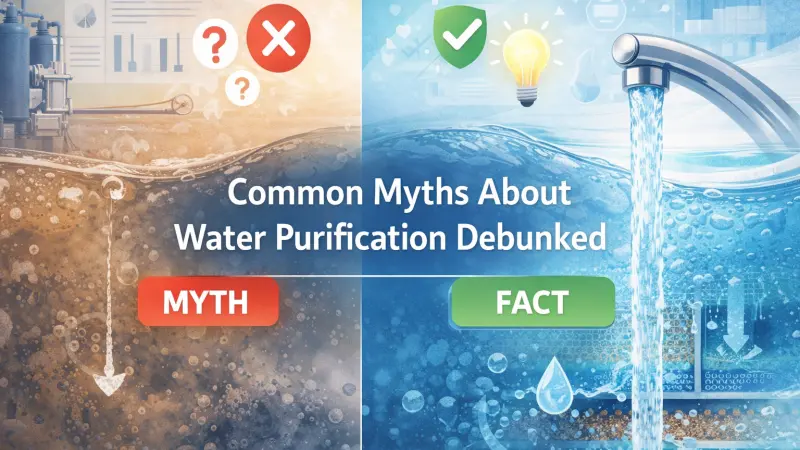
Is the water flowing from a kitchen tap as pristine as it appears or are there unseen elements that require modern intervention? In the United Kingdom, the standard of municipal water is among the highest globally, yet a significant portion of the population remains concerned about the presence of minerals, microplastics, and residual treatment chemicals. This concern has birthed a sprawling industry of filtration and purification solutions, accompanied by a vast collection of misconceptions that often lead consumers to make choices based on fear rather than scientific fact. Understanding the reality of hydration and fluid safety is essential for any modern household seeking to balance health, cost-effectiveness, and environmental sustainability.

The Misconception of Total Purity
One of the most persistent myths in the realm of fluid consumption is the idea that "pure" water—defined as H2O completely devoid of any other substances—is the healthiest option for the human body. Scientifically, this is far from the truth. Water in its natural state acts as a universal solvent, meaning it naturally picks up minerals from the earth as it flows through rivers and underground aquifers. When water is stripped of every single dissolved solid, such as through rigorous distillation or deionisation, it becomes "aggressive."
Consuming distilled water over a long period can actually lead to the leaching of essential minerals from the body, particularly from the teeth and bones. Furthermore, the absence of minerals like calcium and magnesium often results in a flat, unsatisfying taste. Most high-quality purification systems are designed not to reach a state of absolute zero dissolved solids, but rather to remove harmful contaminants while retaining the beneficial mineral content that contributes to biological health and flavour profile.
The Boiling Point Fallacy
For generations, the standard advice for making water safe was simply to boil it. While boiling is an exceptionally effective method for neutralising biological pathogens such as bacteria, viruses, and protozoa, it is a common mistake to believe it "purifies" the water of all dangers. In reality, boiling can sometimes exacerbate certain chemical issues.
If water contains non-volatile contaminants like nitrates, arsenic, or heavy metals such as lead and cadmium, the process of boiling actually concentrates these substances. As the water turns to steam and evaporates, the volume of liquid decreases, leaving the same amount of chemicals in a smaller amount of water, thereby increasing the concentration per millilitre. For UK residents in older properties where lead piping might still be a concern, boiling water is not a solution for chemical safety; instead, dedicated filtration technologies are required to physically or chemically remove these elements.
The Bottled Water Mirage
There is a widespread belief that bottled water is inherently safer and cleaner than tap water provided by British utility companies. This perception is heavily influenced by branding and aesthetic packaging rather than laboratory data. In the UK, tap water is subject to stringent daily testing and must meet hundreds of quality standards. In contrast, bottled water is often held to different regulatory benchmarks and, in some cases, is simply filtered tap water sold at a massive premium.
Moreover, the environmental impact of plastic bottles is staggering, and recent studies have raised concerns about microplastic leaching from the bottle itself into the liquid. When we consider the carbon footprint of transporting heavy pallets of water across the country or from overseas, the "purity" of the choice begins to fade. Investing in a robust domestic system is often both safer and more environmentally responsible than relying on single-use plastics.
Chlorine and the Fear of Treatment Chemicals
The smell or taste of chlorine in tap water often alarms consumers, leading to the myth that the water is toxic. Chlorine is added to the UK water supply as a vital disinfectant to ensure that water remains free of
pathogens as it travels through miles of underground infrastructure to reach the consumer. While the sensory experience of chlorine can be unpleasant, the levels used are strictly regulated and considered safe for lifelong consumption.
However, many people choose to remove this chlorine at the point of use to improve the taste and odour of their drinking water. This is a valid preference, but it is important to distinguish between a "taste preference" and a "safety hazard." Carbon-based filters are highly effective at removing chlorine, providing a cleaner taste without the need to fear the municipal treatment process that actually protects the public from waterborne diseases.
Soft Water vs. Hard Water Health Claims
The UK is divided geographically by water hardness, with the South and East generally having "hard" water due to limestone and chalk deposits, while the North and West often have "soft" water. A common myth is that hard water causes kidney stones or other health issues. Scientific consensus, supported by the World Health Organisation, suggests that the calcium and magnesium in hard water can actually contribute to a person's daily mineral intake and may have a protective effect against cardiovascular disease.
The primary "problem" with hard water is mechanical rather than biological. It causes limescale buildup in kettles, boilers, and pipes, reducing the efficiency of appliances. While water softeners are excellent for protecting home infrastructure and making soaps more effective, it is often recommended to maintain a hard water tap for drinking to continue benefiting from the natural mineral content.
The Reality of Fluoridation
Fluoride is another topic shrouded in misinformation. In certain parts of the UK, fluoride is added to the water to help reduce tooth decay, particularly in children. Critics often claim this is a form of "mass medication" with hidden dangers. However, extensive reviews by Public Health England have consistently shown that at the levels found in the UK supply, fluoridation is a safe and effective public health measure. Those who wish to avoid fluoride can do so through specific filtration methods like reverse osmosis or activated alumina, but the decision should be based on personal choice rather than the belief that the water is fundamentally poisoned.
Filter Maintenance and the Danger of Neglect
A dangerous myth is that once a purification system is installed, it works indefinitely. Whether it is a simple jug filter or an under-sink reverse osmosis system, the media used to trap contaminants has a limited capacity. Once a filter is saturated, it can no longer adsorb impurities. In some cases, a neglected filter can become a breeding ground for bacteria, potentially making the "filtered" water less safe than the original tap water. Regular maintenance and timely replacement of cartridges are non-negotiable requirements for any purification strategy.
The UK Context and Service Excellence
In the United Kingdom, the integrity of our infrastructure depends on the synergy between public utilities and private expertise. Homeowners and businesses alike benefit significantly from understanding these nuances, as it allows for the implementation of systems that are fit for purpose rather than over-engineered solutions based on myths. This topic is of vital importance in the UK, where the varying geological landscape and aging Victorian pipework in major cities create unique challenges for consistency. By debunking these myths, individuals can make informed decisions that enhance their quality of life while supporting the professional ecosystem of engineers and specialists who maintain these essential systems.
Navigating Modern Solutions for Greater Discoverability
As we move towards a more health-conscious and digitally connected society, the way we source information and services continues to evolve. Whether a household is looking for a local plumber to install a softening system or a business is seeking large-scale filtration, the ability to find verified and reliable information is paramount. For those operating within this sector, having an online business listing uk free can be the difference between remaining obscure and becoming a trusted local authority.
In an era where consumers prioritise local expertise, ensuring that services are easily found through a free online listing uk is essential for community connectivity. Businesses that embrace digital visibility through a business listing uk help to bridge the gap between scientific fact and consumer needs, ensuring that accurate information and high-quality purification services are accessible to everyone. Enhancing your online presence via a Local Page UK entry ensures that when people search for ways to improve their home environment, your expertise is just a click away.
Frequently Asked Questions
1. Does a charcoal filter remove all bacteria from water?
Standard activated carbon filters are designed primarily to remove chlorine, sediment, and volatile organic compounds to improve taste and odour. They are not typically rated to remove bacteria or viruses. For biological safety, UV sterilisation or sub-micron filtration is required.
2. Is it true that I shouldn't re-boil water in the kettle?
While re-boiling water technically increases the concentration of minerals and potential contaminants slightly due to evaporation, for standard UK tap water, the difference is negligible and not considered a health risk for the average person.
3. Can a water softener make my water safe to drink?
A water softener is not a purification system; it is an ion-exchange system designed to remove calcium and magnesium to prevent limescale.
It does not remove bacteria, lead, or chemicals. Additionally, softened water often has higher sodium levels, which may not be suitable for infants or those on low-sodium diets.
4. Do fridge filters really work?
Yes, most fridge filters use activated carbon to significantly improve the taste and smell of water by removing chlorine. However, they must be changed according to the manufacturer's schedule to remain effective and hygienic.
5. Is rainwater naturally pure and safe to drink?
Rainwater is generally soft, but as it falls, it can pick up pollutants from the air, including dust, smoke, and chemicals. Once it hits a roof, it can also pick up bacteria from bird droppings or chemicals from roofing materials, so it must be treated before consumption.
6. Does reverse osmosis waste a lot of water?
Traditional reverse osmosis systems do produce "reject water" that carries away the contaminants. However, modern high-efficiency systems have significantly reduced this ratio, and for many, the trade-off for high-purity water is acceptable.
7. Can I tell if my water is contaminated by its taste or smell?
Not necessarily. While chlorine and sulfur have distinct smells, many dangerous contaminants like lead, nitrates, and arsenic are completely tasteless, odourless, and invisible. Only laboratory testing or a high-quality filtration system can provide certainty.

Disclaimer: The information provided in this article is for general informational and research purposes only. Company details, features, services, and market positions may change over time. Readers are advised to visit official company websites and conduct independent research before making any business decisions or purchasing services.
Most Searchable Keywords

Recent Blogs
-

Explore Supermarkets in Chepstow and the Surrounding Wye Valley
-
Elite Guide to Taxi and Private Hire Services in Hereford
-
Explore Fuel and Roadside Convenience Across Beckington Today
-
Explore Abergavenny Tyre Services with Expert Local Fitters
-
Claim Your HMRC UK Tax Refund Before Application Deadlines


Related Listings


Categories
- Accountants (295)
- Advertising Agencies (559)
- Architects (149)
- Automobiles (376)
- Beauty (300)
- Carpenters (146)
- Cleaning Services (386)
- Dentists (189)
- Driving (61)
- Electricians (215)
- Energy (7)
- Event Organiser (683)
- Finance (597)
- Guide (3358)
- Health (2205)
- Information technology (206)
- Legal Services (352)
- Logistics (6)
- Maintenance (65)
- Manufacturing (35)

Sponsored Listings in Plumbers

Related Blogs

Explore Supermarkets in Chepstow and the Surr...
Read this insightful article "Explore Supermarkets in Chepstow and the Surrounding Wye Valley" to expand your knowledge!

Elite Guide to Taxi and Private Hire Services...
Read this insightful article "Elite Guide to Taxi and Private Hire Services in Hereford" to expand your knowledge!

Explore Fuel and Roadside Convenience Across...
Read this insightful article "Explore Fuel and Roadside Convenience Across Beckington Today" to expand your knowledge!
Questions & Answers – Find What
You Need, Instantly!
How can I update my business listing?
Is it free to manage my business listing?
How long does it take for my updates to reflect?
Why is it important to keep my listing updated?
