
Creating a Profile That Converts in Freight Directories
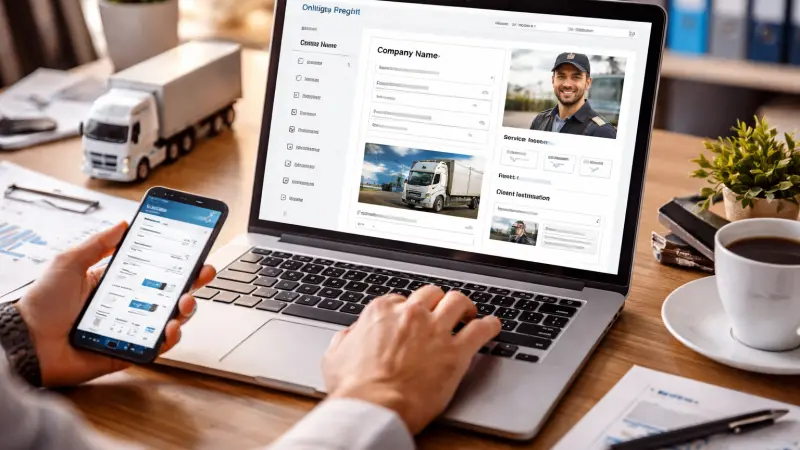
Picture this: a procurement manager at a mid-sized manufacturing firm in the East Midlands is under pressure to find a reliable freight partner quickly. She opens a freight directory, types in a search, and within seconds is scanning a list of providers. She clicks on three profiles, reads them for roughly forty-five seconds each, and shortlists one. The other two never hear from her. What made the difference? Not price — she did not even get that far. It was the quality of the profile itself.
For freight and logistics businesses operating in the UK, a well-constructed freight directory profile is far more than a digital business card. It is, in many cases, the first substantive impression a potential client receives. Yet the majority of listings on even the most established directories remain incomplete, generic, or entirely unoptimised. This guide explains precisely how to build a freight directory profile that not only appears in relevant searches but genuinely converts browsers into enquiries.
Why Your Freight Directory Profile Matters More Than You Think
The UK freight and logistics sector is highly competitive. Businesses range from independent owner-operators running a single vehicle to national third-party logistics providers managing complex multi-modal supply chains. Across this spectrum, freight directories serve as a critical discovery channel — particularly for small and medium-sized businesses that lack the marketing budgets to compete in paid search advertising.
Research consistently demonstrates that buyers in the B2B space conduct substantial research before making contact. When a logistics buyer turns to a freight directory, they are often already committed to making a decision; they are evaluating, not exploring. At that stage, your profile must do considerable work in a short period of time.
A poorly constructed profile — one with missing contact details, vague service descriptions, or no supporting evidence of credibility — will be passed over in favour of a competitor who has invested time in theirs. Conversely, a profile that clearly communicates what you do, where you operate, and why a client should trust you can generate a consistent flow of qualified enquiries without any additional advertising spend.
Understanding What Buyers Look for in a Freight Profile
Before optimising your listing, it is worth understanding the mindset of the person reading it. UK freight buyers — whether they are supply chain managers, operations directors, or business owners handling logistics themselves — tend to look for specific signals when evaluating a new provider.
Clarity of Service Offering
The single most common reason a freight profile fails to convert is ambiguity. Buyers do not have time to decode vague descriptions. If your profile states that you offer "comprehensive transport solutions," that communicates nothing useful. Does that mean full truckload haulage? Groupage services? Last-mile delivery? Temperature-controlled freight? Hazardous goods logistics?
Specificity builds trust. A buyer looking for a refrigerated transport provider in Scotland needs to know immediately — ideally within the first two sentences of your profile — whether you are relevant to their requirement. If they cannot tell, they will move on.
Geographic Coverage
UK freight buyers are often highly location-specific in their requirements. A food manufacturer in Yorkshire needs a provider who can collect from their site reliably; an importer in the South East needs port proximity or established relationships with customs agents at Tilbury or Folkestone. Your profile must make your operational geography explicit.
List the regions, countries, or corridors you serve. If you specialise in a particular trade lane — for example, UK-Ireland groupage or cross-channel express parcels — state it clearly. Do not assume the buyer will infer your capabilities from your company name or postcode.
Evidence of Reliability and Experience
In freight, the cost of a mistake is rarely just the invoice. A delayed shipment can disrupt a production line, miss a retail deadline, or result in significant contractual penalties for your client. Buyers are therefore acutely sensitive to risk when selecting a freight partner.
Your profile should address this concern directly by demonstrating track record. This might include the number of years in operation, the volume of consignments handled annually, accreditations held, or examples of the sectors you regularly serve. Each of these data points reduces the perceived risk of working with you for the first time.
The Anatomy of a High-Converting Freight Profile
1. Business Name and Headline Description
Your business name should appear exactly as it does across all other online platforms — consistency matters for both buyer trust and search engine recognition. Beneath your name, you typically have the opportunity to include a short headline or tagline. Use this space wisely.
A headline such as "Nationwide Temperature-Controlled Haulage | HACCP Accredited" tells a buyer far more than "Transport and Logistics
Services." Think of this as your professional summary: concise, specific, and immediately relevant to your target customer.
2. Full and Accurate Business Description
This is the core of your profile and the area where most businesses underinvest. A strong business description for a freight directory listing should accomplish several things simultaneously:
- Clearly identify what services you provide and in what context
- Indicate the geographic areas or trade lanes you cover
- Highlight any specialist capabilities or accreditations
- Convey the scale and maturity of your operation
- Speak directly to the concerns of your target buyer
Write in plain, professional British English. Avoid industry jargon where plain language will serve equally well. A description that reads naturally and provides genuine information will outperform one stuffed with buzzwords every time.
Aim for a description of at least 150 to 200 words. This may feel lengthy for a directory listing, but directories with search functionality often weight longer, more complete profiles more favourably — and buyers appreciate the detail.
3. Service Categories and Tags
Most freight directories allow you to select from a list of service categories or add keyword tags to your profile. This step is not optional — it is fundamental to how your listing appears in search results within the directory.
Be thorough. If your operation includes general haulage, express courier services, and pallet network distribution, ensure all three are represented in your category selections. Many operators select only their primary service and miss enquiries that would otherwise have come their way.
Similarly, if the directory supports free-text keyword input, use it to include specific terms a buyer might search for: "ADR freight UK," "NHS medical logistics," "airport airside delivery," "bonded warehouse UK," and so forth. Think from the buyer's perspective: what words would they type to find exactly what you offer?
4. Contact Information — Complete and Current
This may seem obvious, yet incomplete contact information is one of the most common and costly errors on freight directory profiles. At minimum, your listing should include:
- A main telephone number (with the correct UK dialling code if applicable)
- A direct email address for enquiries — not a generic "info@" if avoidable
- Your registered business address or operational address
- Your company website URL
- Any relevant social media profiles, particularly LinkedIn for B2B buyers
If your business has multiple depots or regional offices, list them. A buyer in Wales who sees a Welsh depot listed on your profile is far more likely to enquire than one who sees only a head office address in Coventry and is uncertain whether you can service their area efficiently.
5. Accreditations, Memberships, and Certifications
In the UK freight and logistics sector, professional accreditations carry genuine weight. Buyers use them as proxies for quality, compliance, and professionalism — particularly when they are unfamiliar with your business.
Relevant accreditations and memberships to feature prominently include:
- FORS (Fleet Operator Recognition Scheme) — particularly for urban deliveries
- ISO 9001 quality management certification
- BIFA (British International Freight Association) membership
- RHA (Road Haulage Association) membership
- Authorised Economic Operator (AEO) status for customs-related freight
- IATA accreditation for air freight agents
- Cold chain and temperature control certifications such as HACCP or BRC
- ADR certification for dangerous goods transport
Do not list accreditations you do not hold or imply certifications that have lapsed. Buyers may verify these during due diligence, and any discrepancy will immediately destroy trust.
6. Photos and Visual Content
If the directory supports image uploads, take advantage of this feature. Photographs of your fleet, warehouse, or team provide immediate visual evidence of the scale and professionalism of your operation. A fleet image showing modern, well-maintained vehicles conveys more in two seconds than three paragraphs of descriptive text.
Ensure images are well-lit, professional in composition, and current. Avoid stock photography — buyers
are accustomed to spotting generic images, and they reduce rather than enhance credibility.
7. Customer Reviews and Ratings
Where a directory supports customer reviews, actively seek them from satisfied clients. A profile with three or four genuine, detailed reviews from businesses in recognisable sectors will convert at a significantly higher rate than one with no reviews at all.
When requesting reviews, ask clients to be specific about the service provided, the volumes or routes involved, and the outcome achieved. Vague testimonials such as "excellent service" add little; a review that says "consistently reliable for our weekly groupage collections to Ireland, even during peak season" adds considerably more.
Optimising Your Profile for Directory Search
Many freight directories operate their own internal search functions, and understanding how these work can significantly improve the visibility of your listing. While each platform has its own algorithm, several principles apply broadly.
Completeness of Profile
Directories typically rank more complete profiles more highly than incomplete ones. Ensure every available field is populated. If the platform offers optional fields — such as a company description, service tags, or an "about us" section — treat them as mandatory.
Keyword Relevance
Use the specific terminology your buyers are likely to search for. In the UK context, this means using British spelling and phrasing (for example, "goods vehicle operator licence" rather than "trucking license"), referencing relevant UK ports, motorway corridors, or distribution hubs where appropriate, and including sector-specific vocabulary that reflects your specialisms.
Think carefully about the difference between how your business describes itself internally and how a buyer would search for your services externally. A buyer looking for help moving pharmaceutical products between the UK and the Republic of Ireland may search for "pharma freight Ireland UK" or "temperature-controlled cross-channel," not "specialist logistics solutions."
Regular Updates
Directory algorithms often favour recently updated profiles, on the reasonable basis that current information is more useful to buyers. Set a reminder to review and refresh your profile every three to six months. Update your service offerings if they have changed, add new accreditations as they are obtained, and refresh your contact details if anything has changed.
Common Mistakes That Undermine Freight Directory Profiles
Understanding what not to do is as valuable as knowing best practice. The following errors appear with regularity across UK freight directory listings and consistently damage conversion rates.
Copying and Pasting Your Website About Page
Your website's about page is written for a different context and a different stage of the buyer journey. It is typically more brand-focused and less specific than a directory listing needs to be. Write your directory profile from scratch, with the specific intent of converting a buyer who has just found you for the first time in a competitive listing environment.
Using Abbreviations Without Explanation
The freight industry is replete with abbreviations — FCL, LCL, FTL, LTL, POD, CMR, IMDG — and those within the sector use them naturally. However, not every buyer scanning a directory will be a logistics specialist. Where there is any ambiguity, provide the full term alongside the abbreviation, at least on first use.
Neglecting to Update After Business Changes
A profile listing a telephone number that has been discontinued, a website URL that no longer resolves, or services you no longer offer is worse than no profile at all.
It signals to buyers that your business may be disorganised or, worse, no longer trading. Review your profile after any significant business change.
Writing in the First Person Excessively
Profiles written predominantly in the first person ("We offer... We provide... We specialise in...") can feel self-congratulatory. Consider writing some sections in the third person or structuring your description around buyer outcomes: "Businesses across the North West rely on [Company Name] for time-sensitive pharmaceutical deliveries, supported by full cold-chain tracking and 24-hour customer service."
Tracking Enquiries and Measuring Profile Performance
Once your profile is live and optimised, put in place a mechanism to track where your enquiries originate. This is simpler than it may sound: ask every new enquirer how they found you, and record the response. Over time, you will build a picture of which directories are generating leads and which are not justifying the time invested in maintaining them.
Some directories provide analytics dashboards that show profile views, click-throughs, and contact actions. Review these regularly. A profile receiving substantial views but few enquiries suggests a conversion problem — your listing is appearing in searches but failing to persuade visitors to make contact. In that scenario, revisit your description, your accreditations display, and your contact information for gaps or weaknesses.
A profile receiving low views indicates a visibility problem — your listing is not appearing prominently enough in relevant searches. In that case, revisit your service categories, keyword tags, and profile completeness.
The Longer-Term Value of a Strong Directory Presence
Beyond immediate lead generation, a well-maintained presence across reputable freight directories contributes to your broader online visibility. Search engines such as Google treat directory listings as citations — references to your business that confirm your existence, location, and field of activity. Consistent information across multiple directories strengthens this signal and can improve your organic search rankings over time.
For smaller freight operators competing against larger, better-resourced rivals, this represents a genuine and relatively low-cost competitive advantage. Every directory profile that accurately represents your business adds a small but cumulative contribution to your overall digital footprint.
It is also worth noting that freight buyers often use multiple directories in the course of a single procurement process. Appearing consistently and professionally across several platforms increases the likelihood that your business will be shortlisted, even if the buyer does not enquire directly from every directory they consult.
Choosing the Right Freight Directories for Your Business
Not all directories are created equal, and the effort involved in maintaining a high-quality profile means it is worth being selective about where you invest that effort. When evaluating a freight directory, consider the following:
- Audience relevance: Does the directory attract the type of buyer you are trying to reach? A pallet network operator and an air freight forwarder have different target audiences and may find different directories more productive.
- Domain authority: Directories with strong domain authority will pass more search engine value to your listing and may rank more prominently in Google searches. Tools such as Moz or Ahrefs can help you assess this.
- Listing quality: A directory with thorough, well-maintained listings from credible competitors is a good sign. A directory dominated by outdated or incomplete profiles suggests a platform that buyers have stopped trusting.
- Verification processes: Directories that verify their listings — checking that businesses are legitimate and their contact information accurate — carry more credibility with buyers than open directories anyone can join without scrutiny.
Building a freight directory profile that genuinely converts requires more than filling in a form. It demands clarity, specificity, and a genuine understanding of what your target buyer needs to see in order to feel confident enough to make contact. The businesses that invest this effort consistently outperform those that treat directory listings as an afterthought. For freight operators across the UK — from specialist hauliers to international freight forwarders — the directory profile is often the first and most critical moment of commercial impression. Make it count.
For freight businesses looking to extend their reach beyond sector-specific directories, listing on a broader business directory in uk can complement your specialist presence. Platforms serving local business directories uk and small business directory uk audiences allow freight operators to capture enquiries from regional buyers who may not use freight-specific search tools. An all uk business directory listing ensures your business appears in searches conducted by buyers across a wider range of discovery channels, reinforcing the consistent online presence that supports long-term commercial growth. Local Page UK is one such platform where businesses can list their services to improve their visibility with UK buyers searching across industries and locations.
Questions Clients Commonly Ask
How long should my freight directory profile description be?
There is no fixed minimum, but a description of at least 150 words is advisable for most freight directory platforms. This length provides enough space to cover your core services, geographic coverage, accreditations, and a brief indication of your experience or scale. Shorter descriptions often lack the specificity buyers need to make a shortlisting decision. Longer descriptions are acceptable provided the content remains relevant and well-structured.
Should I list my freight business on multiple directories?
Yes, provided you can maintain each listing to a high standard. A presence across several reputable directories increases your chances of being discovered by buyers using different platforms, and the consistency of your business information across those listings contributes positively to your search engine visibility. However, a neglected, incomplete profile is worse than no profile at all, so only list on platforms you can commit to maintaining.
What accreditations are most valued by UK freight buyers?
This varies by sector and service type, but in general, RHA or BIFA membership signals professional credibility. ISO 9001 is widely respected across industries. FORS accreditation is particularly important for urban delivery operations. For temperature-controlled freight, HACCP or BRC certification is often essential. AEO status is increasingly valued for businesses handling customs-clearance work post-Brexit. Displaying whichever accreditations you hold prominently will strengthen buyer confidence.
How often should I update my freight directory profile?
At a minimum, review your profile every three to six months. Additionally, update it promptly whenever your contact information changes, new services are added, accreditations are gained or renewed, or significant changes occur in your operational geography.
Some directories reward recently updated profiles with higher search rankings, so regular refreshes have both practical and visibility benefits.
Can a freight directory profile help with my Google ranking?
Indirectly, yes. Directory listings function as citations in the context of search engine optimisation — they confirm your business's name, address, and telephone number to search engines. Consistent, accurate citations across multiple directories strengthen your local and organic search presence over time. While a single directory listing will not transform your Google rankings, a consistent presence across several reputable platforms contributes meaningfully to your broader SEO strategy.
Disclaimer: The information provided in this article is for general informational and research purposes only. Company details, features, services, and market positions may change over time. Readers are advised to visit official company websites and conduct independent research before making any business decisions or purchasing services.
Most Searchable Keywords
Recent Blogs


Related Listings

Categories
- Accountants (295)
- Advertising Agencies (559)
- Architects (149)
- Automobiles (377)
- Beauty (300)
- Carpenters (146)
- Cleaning Services (387)
- Dentists (189)
- Driving (62)
- Education (1)
- Electricians (215)
- Energy (8)
- Event Organiser (687)
- Finance (602)
- Guide (3482)
- Health (2207)
- Information technology (206)
- Legal Services (361)
- Logistics (6)
- Maintenance (65)
Sponsored Listings in Electricians


Related Blogs

Ghost Brokers Fake Car Insurance Scam Explain...
Read this insightful article "Ghost Brokers Fake Car Insurance Scam Explained" to expand your knowledge!

UK Baby Names Fastest Rising and Falling Name...
Read this insightful article "UK Baby Names Fastest Rising and Falling Names" to expand your knowledge!

How to Claim for Pothole Damage From Your Cou...
Read this insightful article "How to Claim for Pothole Damage From Your Council" to expand your knowledge!
Questions & Answers – Find What
You Need, Instantly!
How can I update my business listing?
Is it free to manage my business listing?
How long does it take for my updates to reflect?
Why is it important to keep my listing updated?
