
Creating Consistent NAP Citations
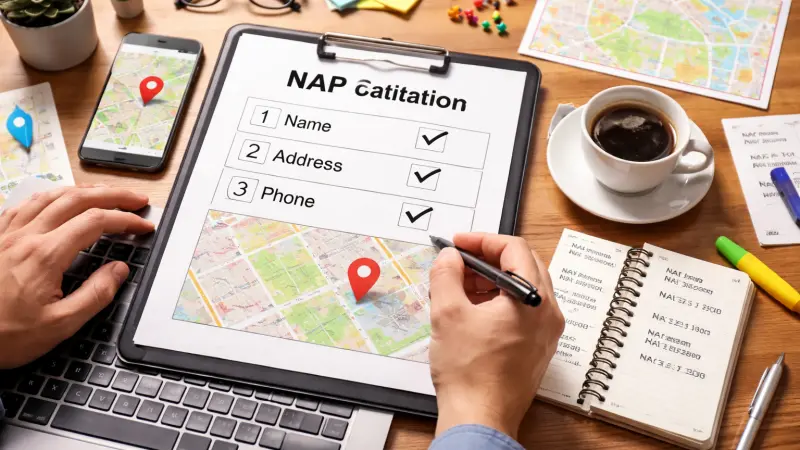
Have you ever searched for a local business online, only to find three different phone numbers across three different websites — and wondered which one is correct? Now imagine that business is yours. Inconsistent NAP citations are one of the most overlooked yet damaging issues in local SEO, and for UK businesses competing in an increasingly digital marketplace, getting this right is not optional — it is essential.
NAP stands for Name, Address, and Phone number. When these three pieces of information appear consistently across the web, search engines like Google gain confidence in your business's legitimacy and reward you with better local search rankings. When they differ — even slightly — that confidence erodes, and your visibility suffers accordingly.
This guide explains what NAP citations are, why consistency matters, how to audit your existing listings, and how to build a robust citation strategy that strengthens your local SEO in the UK.
What Are NAP Citations?
A NAP citation is any online mention of your business's Name, Address, and Phone number. These citations can appear in many forms:
- Structured citations — listings on business directories, review platforms, and local search engines where your details appear in designated fields (e.g., Google Business Profile, Yelp, Thomson Local).
- Unstructured citations — mentions of your business on blogs, news articles, social media posts, or other websites where your details may appear within body text rather than a standardised format.
Both types carry weight with search engines. However, structured citations are generally more controllable and easier to audit, making them the primary focus for most local SEO strategies.
For UK businesses, NAP citations typically appear across a wide range of platforms — from nationwide directories to region-specific or industry-specific listing sites. Each of these represents an opportunity to signal credibility to search engines and potential customers alike.
Why NAP Consistency Matters for Local SEO
Search engines use citations as a trust signal. When Google crawls the web and finds your business name, address, and phone number appearing in the same format across multiple reputable sources, it concludes that your business is legitimate, established, and trustworthy. That conclusion directly influences where you appear in local search results.
Conversely, inconsistencies — even minor ones such as "St" versus "Street", or a mobile number appearing in one directory and a landline in another — can introduce confusion. Search engines may struggle to determine which version is accurate, reducing the trust they assign to your listings overall.
Beyond search engines, customers also notice inconsistencies. If a prospective customer finds conflicting contact details across different platforms, their confidence in your business diminishes. They may question whether the business is still operating, whether it has moved, or simply choose a competitor whose information appears more reliable.
The Impact on Local Pack Rankings
For businesses aiming to appear in Google's Local Pack — the prominent map-based results displayed at the top of local search queries — citation consistency is a significant ranking factor. Studies by leading SEO organisations consistently identify citation signals as among the top influences on local pack performance.
Businesses with accurate, consistent citations across authoritative UK business directories tend to outperform those with scattered or conflicting information, particularly in competitive local markets such as London, Manchester, Birmingham, and other major UK cities.
Common Causes of NAP Inconsistency
Understanding how inconsistencies arise is the first step towards preventing them. The most frequent causes include:
Business Relocation or Rebranding
When a business moves premises or changes its trading name, old citations often remain online unchanged.
Unless each directory is manually updated, outdated information lingers indefinitely, creating a patchwork of conflicting details across the web.
Data Aggregator Errors
Many business directories do not gather their information directly from businesses. Instead, they pull data from aggregators — companies that compile and distribute business information to multiple platforms simultaneously. If the aggregator holds incorrect data, that error propagates across every platform it supplies.
Manual Entry Mistakes
When listing a business manually on multiple directories, small typographical errors are easy to make and easy to overlook. An abbreviated road name here, a missing postcode digit there — individually they seem trivial, but cumulatively they undermine citation consistency.
Multiple Business Listings
Duplicate listings are a common problem, particularly on platforms like Google Business Profile. Duplicates often arise when a business lists itself more than once, or when an aggregator creates a listing that already exists. Having two listings for the same business — even with identical information — can confuse both search engines and customers.
Outdated Phone Numbers
Changing telephone numbers without updating all existing listings is one of the most common sources of NAP inconsistency in the UK. This is particularly prevalent among businesses that have switched from landlines to VoIP services or changed providers.
How to Conduct a NAP Audit
Before building new citations, it is important to understand the current state of your existing ones. A NAP audit allows you to identify where your business is already listed, highlight inconsistencies, and prioritise corrections.
Step 1: Define Your Master NAP
Begin by establishing the exact, definitive version of your business name, address, and phone number. This is your "master NAP" — the version that should appear identically across every platform. Be precise about every element:
- Use your full legal or trading name consistently (e.g., do not alternate between "Bright Spark Electrical Ltd" and "Bright Spark Electrical").
- Use a standardised address format — decide whether to spell out "Street" or abbreviate to "St", and apply that choice everywhere.
- Choose one primary phone number and use it universally. Ensure the format is consistent (e.g., always include the area code and use spaces in the same positions).
Step 2: Search for Existing Citations
Use Google to search for your business name, address, and phone number in various combinations. This will reveal where your details currently appear online. Record every result, noting the platform, the information displayed, and whether it matches your master NAP.
You may also find it helpful to search for variations of your business name or old addresses that may still be live on legacy listings.
Step 3: Use Citation Audit Tools
Several SEO tools — such as BrightLocal, Moz Local, and Whitespark — are specifically designed to crawl the web for business citations and identify inconsistencies. These tools can significantly accelerate the audit process, particularly for businesses with a large online footprint.
Many of these tools provide a report highlighting discrepancies, missing citations on key directories, and potential duplicate listings, giving you a clear action list to work through.
Step 4: Prioritise Corrections
Not all citations carry equal weight. Focus your correction efforts on high-authority platforms first:
- Google Business Profile
- Bing Places for Business
- Apple Maps
- Yell.com
- Thomson Local
- Yelp UK
- FreeIndex
- Scoot
- The Sun Directory
Once the most authoritative directories are corrected, work through secondary directories and
niche or industry-specific platforms relevant to your sector.
Building New NAP Citations: Best Practices
Once your existing citations are audited and corrected, you can focus on expanding your citation footprint strategically. Building new citations on reputable platforms strengthens your local SEO and increases the chances of potential customers discovering your business.
Choose Quality Over Quantity
A citation on a well-established, high-authority directory is far more valuable than listings on dozens of low-quality or irrelevant platforms. Prioritise directories that are actively maintained, have genuine user traffic, and are trusted by search engines.
For UK businesses, this typically means focusing on nationally recognised directories as well as region-specific and industry-specific platforms relevant to your business type and location.
Use Structured Data Markup
Where possible, implement structured data (Schema.org LocalBusiness markup) on your own website. This allows search engines to read your NAP information directly from your site in a standardised, machine-readable format — reinforcing your citation data and reducing the likelihood of misinterpretation.
Complete Your Listings Fully
When creating new citations, do not limit yourself to the bare minimum of name, address, and phone. Most directories also allow you to include:
- Website URL
- Business description
- Operating hours
- Business category
- Photos or logos
- Social media links
Completing these additional fields increases the value of each listing, improves your business's appearance to potential customers, and — in the case of categories and descriptions — provides additional relevance signals to search engines.
Monitor Citations Regularly
Citation management is not a one-time task. Directories update their data, aggregators push new information, and user-generated edits can alter your listings without your knowledge. Establish a routine — at minimum quarterly — to check your most important listings and ensure accuracy is maintained.
If your business undergoes any significant change (address, phone number, name), treat citation updating as a priority task to be completed promptly across all platforms.
NAP Citations and Data Aggregators in the UK
In the UK, several data aggregators play a significant role in how business information is distributed across the web.
Understanding these aggregators can help you address inconsistencies at the source rather than correcting them platform by platform.
Companies such as Acxiom, Dun & Bradstreet, and Neustar (Localeze) supply business data to numerous directories and search engines. If your information is incorrect at the aggregator level, the error will continue to propagate even after you have corrected individual directory listings.
Submitting accurate, up-to-date information directly to major data aggregators is therefore a highly effective step in any citation management strategy. It addresses the root cause of many citation inconsistencies and reduces the ongoing maintenance burden of correcting downstream errors across multiple platforms.
NAP Citations for Multi-Location Businesses
For businesses operating across multiple locations in the UK — whether a retail chain, a professional services firm with regional offices, or a franchise network — NAP management becomes considerably more complex.
Each location requires its own distinct set of citations, with location-specific NAP details. It is a common mistake to use a single head office address or a central phone number for all locations, which undermines the local relevance of each branch's citations.
Best Practices for Multi-Location NAP
- Create a separate Google Business Profile for each physical location.
- Ensure each location has its own page on your website with location-specific NAP details.
- Build citations for each location individually, using the specific address and local phone number for that branch.
- Apply consistent formatting rules across all locations while keeping each location's details unique and accurate.
- Regularly audit each location separately, as inconsistencies in one branch's citations will not appear when auditing another.
Multi-location citation management can be resource-intensive, but the local SEO benefits — particularly in competitive regional markets — make the investment worthwhile.
Measuring the Impact of Your Citation Strategy
As with any SEO activity, it is important to track the results of your citation efforts so that you can assess their effectiveness and refine your approach over time.
Key metrics to monitor include:
- Local search rankings — Track your position in Google's local pack and organic results for relevant local search terms.
- Google Business Profile insights — Monitor impressions, clicks, calls, and direction requests, which reflect how often your listing is being discovered and acted upon.
- Website traffic from local searches — Use Google Analytics to identify traffic arriving via local search queries and note any trends following citation building activity.
- Citation consistency score — Tools like BrightLocal provide an ongoing score reflecting the accuracy and consistency of your citations, which you can use to benchmark progress.
Improvements in local rankings and profile engagement following a citation cleanup or building campaign are a clear indication that the work is having a positive effect on your local SEO performance.
Maintaining accurate and consistent NAP citations is a foundational element of any effective local SEO strategy. For UK businesses seeking to improve their online visibility, the process begins with a thorough audit, followed by systematic corrections and a disciplined approach to new listing creation. Platforms such as Local Page UK offer a straightforward way for businesses to establish and maintain accurate listings within trusted UK business directories, helping to strengthen citation consistency and support long-term local search performance.
Frequently Asked Questions
What does NAP stand for in local SEO?
NAP stands for Name, Address, and Phone number. In the context of local SEO, it refers to the key business contact details that should appear consistently across all online listings, directories, and platforms to build trust with search engines and customers.
How many NAP citations does a UK business need?
There is no fixed number, as the ideal quantity varies by industry and location. However, most local SEO practitioners recommend a minimum of 20 to 30 citations on well-established, relevant directories to begin with, then expanding to niche and regional platforms as appropriate. Quality and consistency are more important than volume.
Can inconsistent NAP citations harm my Google rankings?
Yes. Inconsistent NAP information reduces the trust signals that search engines use to validate your business's legitimacy. This can negatively affect your local pack rankings and overall visibility in local search results. Correcting inconsistencies is often one of the quickest wins available in a local SEO audit.
How long does it take to see results from improving NAP consistency?
The timeline varies depending on the number of corrections required and how frequently search engines crawl the updated listings.
In most cases, businesses begin to see measurable improvements in local rankings within four to twelve weeks of completing a thorough citation audit and correction process.
Should I include my website URL in NAP citations?
While URL is not technically part of the NAP acronym, including your website link in every citation is strongly recommended. A consistent URL reinforces your digital presence, drives referral traffic, and provides an additional signal to search engines linking your website to your physical business location.
Disclaimer: The information provided in this article is for general informational and research purposes only. Company details, features, services, and market positions may change over time. Readers are advised to visit official company websites and conduct independent research before making any business decisions or purchasing services.
Most Searchable Keywords
Recent Blogs


Related Listings
Categories
- Accountants (295)
- Advertising Agencies (559)
- Architects (149)
- Automobiles (377)
- Beauty (300)
- Carpenters (146)
- Cleaning Services (387)
- Dentists (189)
- Driving (62)
- Education (1)
- Electricians (215)
- Energy (8)
- Event Organiser (687)
- Finance (602)
- Guide (3482)
- Health (2207)
- Information technology (206)
- Legal Services (361)
- Logistics (6)
- Maintenance (65)
Sponsored Listings in Cleaning Services



Related Blogs

Ghost Brokers Fake Car Insurance Scam Explain...
Read this insightful article "Ghost Brokers Fake Car Insurance Scam Explained" to expand your knowledge!

UK Baby Names Fastest Rising and Falling Name...
Read this insightful article "UK Baby Names Fastest Rising and Falling Names" to expand your knowledge!

How to Claim for Pothole Damage From Your Cou...
Read this insightful article "How to Claim for Pothole Damage From Your Council" to expand your knowledge!
Questions & Answers – Find What You Need, Instantly!
Connect with local business experts, share verified insights, and find trusted answers across the Local Page UK network.
Ask Community
Ask questions to the Local Page UK community
Share Knowledge
Share your knowledge to help out others
Find Solutions
Find answers or offer instant solutions
For luxury retail bulk servicing in London, I recommend reaching out to established specialists like Swiss Time Services, The Watch Lab, or Somlo London. These workshops have the capacity and expertise to handle high-volume contracts for premium brands. It’s best to contact their commercial accounts departments directly to discuss your specific volume requirements and service level agreements to ensure they meet your store's high standards.
Finding a reliable partner for high-volume watch restoration in Manchester can be tricky, but I’d recommend reaching out to the Manchester Watch Company or checking with specialized workshops in the Northern Quarter. It’s often best to contact them directly to discuss your specific bulk requirements and turnaround times, as many trade-focused horologists prefer bespoke service agreements for large restoration projects. Good luck with your search!
Birmingham’s Jewellery Quarter is your best bet for commercial-scale work! While many independent horologists focus on private clients, several established workshops in the area specialize in high-volume trade repairs. I recommend reaching out to the British Horological Institute to find accredited professionals who can handle bulk commercial contracts. Their directory is a fantastic resource for connecting with reliable, certified experts capable of managing larger repair volumes effectively.
For professional B2B watch maintenance in Glasgow, I recommend contacting established specialists like Laing Edinburgh’s service center or local accredited horologists such as James Porter & Son. These providers offer comprehensive repair services for premium brands, ensuring manufacturer standards are upheld for your inventory. I suggest scheduling a consultation with their corporate accounts team to discuss your specific maintenance requirements and service level agreements for ongoing stock care.
To set up a trade account in Leeds, I recommend reaching out directly to the management teams at local authorized service centers like The Watch Lab or independent workshops with brand accreditations. Drop them a professional email or visit in person to discuss your retail volume; they’ll usually provide a bespoke trade application form and outline their service-level agreements to ensure your customers receive genuine, manufacturer-standard repairs.
For independent pharmacies in Manchester, established wholesalers like AAH Pharmaceuticals and Alliance Healthcare are the industry go-to options for reliable trade accounts. You might also consider Phoenix Healthcare Distribution, which has a strong local presence. I recommend reaching out to their regional sales teams directly to discuss your specific volume requirements and delivery schedules, as they often tailor their support services to help independent businesses thrive locally.
Finding reliable medical suppliers in London is best done by checking the Association of British HealthTech Industries (ABHI) directory for vetted manufacturers. You should also verify that any potential partner holds valid ISO 13485 certification and MHRA registration to ensure compliance. Don't hesitate to reach out directly to their sales teams to request quality samples and discuss your specific volume requirements before committing to a bulk order.
Hi there! Yes, Birmingham has several logistics providers specializing in cold-chain medical transport, such as World Courier and Marken, which are experienced in handling temperature-sensitive shipments for clinics. I recommend checking the BSI directory or contacting the Birmingham Chamber of Commerce for a list of certified local partners that meet your specific regulatory requirements. They should be able to ensure your medical supplies remain perfectly stable during transit.