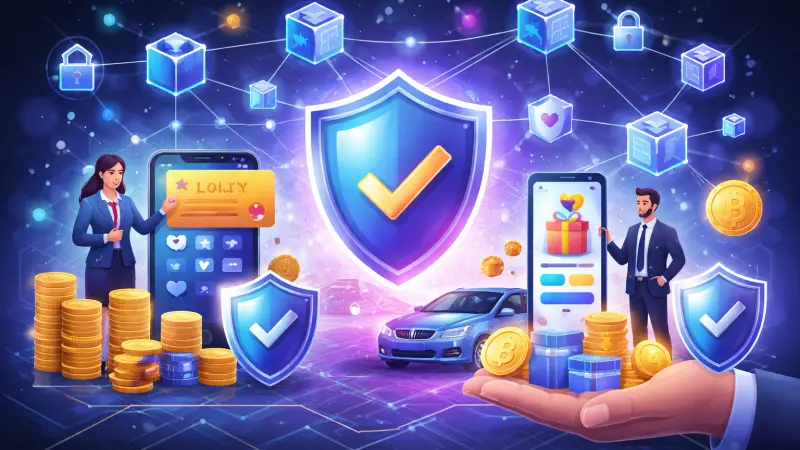
Have you ever wondered why, despite paying premiums for decades, the relationship between a policyholder and their insurer often feels transactional rather than reciprocal? In the competitive UK financial landscape, customer churn remains a significant hurdle, with many consumers switching providers annually in search of marginal savings. This persistent "loyalty penalty" has led the industry to a crossroads. The emergence of blockchain loyalty programmes in insurance offers a sophisticated solution to this stagnation. By leveraging distributed ledger technology (DLT), insurers can move beyond stagnant points systems toward dynamic, transparent, and instantly redeemable rewards. This transition represents a fundamental shift in how value is exchanged within the insurance ecosystem, ensuring that "loyalty" is no longer just a buzzword but a verifiable, cryptographically secured asset that benefits both the provider and the protected.
The integration of blockchain into the insurance sector is not merely a trend but a response to the growing demand for digital transparency and administrative efficiency. Traditional loyalty schemes often suffer from high operational costs, fragmented data, and low engagement rates due to the perceived difficulty of redeeming rewards. Blockchain addresses these pain points by providing a single, immutable source of truth where transactions are recorded in real-time. For UK insurers, this means the ability to automate reward distribution through smart contracts, significantly reducing the manual oversight required to manage complex multi-tier programmes. As we delve into the mechanics of this technology, it becomes clear that the marriage of insurance and blockchain is set to redefine the standards of customer engagement and operational excellence across the British Isles.
The primary keyword, blockchain insurance loyalty, is at the heart of this digital transformation. By decentralising the reward mechanism, insurers can create a more inclusive environment where policyholders feel a genuine sense of ownership over their accumulated benefits. Whether through "no-claims" bonuses represented as digital tokens or health-incentive rewards linked to wearable technology, the possibilities are vast. In an era where data privacy and security are paramount, the inherent features of blockchain—such as encryption and decentralisation—provide a robust framework for managing sensitive customer information. This article explores the strategic implementation, technical advantages, and future outlook of these innovative programmes, providing a comprehensive guide for industry professionals and curious consumers alike.
The Mechanics of Blockchain-Driven Reward Systems
To understand how blockchain loyalty programmes in insurance function, one must first grasp the concept of tokenisation. In this context, loyalty points are converted into digital tokens on a blockchain. Unlike traditional points, which exist solely in a company’s private database, these tokens are assets that can be held in a digital wallet. This gives the customer a tangible sense of value. When a policyholder meets certain criteria—such as renewing a policy, referring a friend, or maintaining a healthy lifestyle—a smart contract automatically executes. A smart contract is a self-executing agreement with the terms of the contract directly written into lines of code. This automation eliminates the delay between the qualifying action and the receipt of the reward, providing the instant gratification that modern consumers expect from digital services.
Furthermore, the interoperability of blockchain allows for a much broader range of redemption options. Traditional schemes are often restricted to the insurer's own ecosystem or a limited set of partners. With a blockchain-based system, tokens could potentially be exchanged for other digital assets, used at a wide variety of verified retailers, or even applied directly toward reducing future premium costs. For UK insurers, this flexibility is a powerful tool for differentiation. By participating in a wider network of partners, an insurer can offer a loyalty programme that has real-world utility in the customer's daily life, far beyond the occasional interaction of a policy renewal. This constant presence in the customer's financial habitus builds a deeper, more resilient brand connection that is difficult for competitors to disrupt.
Security and transparency are the dual pillars of this technological shift. Because every transaction on a blockchain is time-stamped and immutable, the risk of fraud or accounting errors is virtually eliminated. This transparency also extends to the customer, who can view their reward history and current balance with total confidence in its accuracy.
In the UK, where the Financial Conduct Authority (FCA) places a heavy emphasis on "Treating Customers Fairly," the auditability of blockchain provides a perfect mechanism for demonstrating compliance. Insurers can prove exactly how rewards were calculated and distributed, ensuring there are no hidden terms or "lost" points. This level of openness is instrumental in rebuilding the trust that has sometimes been eroded in the wider financial services industry.
Strategic Advantages for the UK Insurance Market
The UK insurance market is one of the most developed in the world, yet it faces unique challenges such as the rise of price comparison websites and shifting regulatory requirements. Implementing a blockchain insurance loyalty strategy provides a significant competitive edge by lowering the cost of customer acquisition. It is a well-documented fact in the industry that retaining an existing customer is significantly cheaper than acquiring a new one. By providing a reward system that is actually valuable and easy to use, insurers can drastically reduce "switch-off" rates. When a customer has a portable, liquid asset tied to their insurance provider, the friction associated with moving to a competitor increases, not because of a penalty, but because they have a genuine stake in the current provider's ecosystem.
Beyond retention, the data insights generated by blockchain interactions are invaluable. While the blockchain itself maintains privacy, the patterns of token usage and redemption provide a granular view of consumer behaviour. Insurers can use this data to refine their product offerings and create highly personalised marketing campaigns. For example, if a large percentage of policyholders are redeeming their "health tokens" for gym memberships, the insurer can proactively negotiate better rates with fitness providers or develop specific health-related insurance products. This data-driven approach moves the insurer from a passive risk-manager to an active partner in the customer’s wellbeing, aligning the interests of both parties in a way that traditional insurance models simply cannot match.
Operational efficiency is another area where blockchain delivers substantial returns. Managing traditional loyalty programmes involves significant back-office costs, including manual reconciliation, database maintenance, and customer service enquiries related to missing points. By automating these processes through DLT, UK insurers can reallocate their human and capital resources toward higher-value activities, such as risk assessment and product innovation. The reduction in administrative overhead also means that a larger portion of the loyalty budget can be directed toward the actual rewards, further enhancing the attractiveness of the programme to the end-user. In a low-margin environment, these incremental gains in efficiency can make the difference between a profitable year and a stagnant one.
Enhancing the Policyholder Experience Through Innovation
In the digital age, customer experience is the new battleground for UK insurance firms. Consumers are increasingly accustomed to the seamless, personalised experiences provided by tech giants and neobanks. A blockchain-based loyalty programme allows insurers to meet these high expectations. One innovative application is the use of "gamification." By creating challenges or milestones that reward policyholders with tokens, insurers can engage with their customers on a weekly or even daily basis. For instance, a motor insurer might reward safe driving habits recorded via telematics with immediate token deposits. This creates a positive feedback loop where the customer is incentivised to act in a way that reduces risk for the insurer, while simultaneously earning rewards for themselves.
The concept of "liquid loyalty" is also a game-changer for engagement. Traditional points are often "trapped" and eventually expire, leading to customer frustration. Blockchain tokens can be designed to never expire or to be easily transferable between family members. This flexibility respects the customer’s time and effort, fostering a sense of goodwill that goes beyond the financial value of the reward. In the UK market, where consumer advocacy is strong, being known as the insurer with the "fairest" or "most useful" loyalty scheme can be a powerful marketing tool. This reputation attracts high-quality, long-term policyholders who value the holistic service rather than just the lowest possible price point on a comparison site.
Moreover, blockchain allows for the creation of "coalition loyalty" models. Several non-competing businesses can share a single blockchain ledger for their rewards. A policyholder could earn tokens from their insurance provider and spend them at a local supermarket or utility company. This interconnectedness makes the loyalty programme a part of the local economy, increasing its relevance and frequency of use. For the insurer, being part of a broader network of trusted brands provides a "halo effect," where the positive associations of other partners rub off on the insurance brand. This collaborative approach is particularly effective in the UK, where regional and community-based business networks remain a vital part of the commercial landscape.
Navigating the Path to Implementation
While the benefits are compelling, the transition to blockchain loyalty programmes in insurance is not without its hurdles. One of the primary challenges for UK firms is the integration of new DLT systems with legacy IT infrastructure. Many insurers still rely on mainframe systems that were built decades ago, making it difficult to implement modern, API-driven blockchain solutions.
This requires a phased approach, where the loyalty programme might initially run as a standalone "sidechain" before being more deeply integrated into the core policy management systems. Investment in talent is also crucial, as the industry currently faces a shortage of professionals who understand both the intricacies of insurance actuarial science and the technical complexities of blockchain development.
Regulatory compliance is another critical consideration. The UK's regulatory environment is rigorous, particularly concerning data protection (GDPR) and financial promotions. While blockchain’s transparency is an asset, the "right to be forgotten" under GDPR can be at odds with the immutable nature of a blockchain ledger. Solutions such as "off-chain" storage of personal data, where only a hash or reference is kept on the blockchain, are being developed to address these concerns. Insurers must work closely with legal experts and regulators to ensure that their tokenised rewards are not classified as unregulated financial products, which could lead to unforeseen legal liabilities. Proactive engagement with the FCA’s "sandbox" environment can provide a safe space for testing these innovations.
Finally, there is the challenge of consumer education. While many people have heard of blockchain in the context of cryptocurrencies, fewer understand its utility as a backend technology for loyalty. Insurers need to focus their messaging on the benefits—transparency, speed, and value—rather than the underlying technology itself. The user interface must be as intuitive as a standard mobile banking app, hiding the complexity of the blockchain behind a familiar and easy-to-navigate front end. If the customer has to learn what a "private key" is just to claim a coffee voucher, the programme will likely fail. Success lies in making the technology invisible while making the rewards and the improved experience highly visible and accessible.
The Future of Insurance Loyalty in the UK
Looking ahead, the evolution of blockchain insurance loyalty is likely to be intertwined with other emerging technologies like Artificial Intelligence (AI) and the Internet of Things (IoT). We can envision a future where an AI-driven system automatically suggests the most beneficial way for a policyholder to use their accumulated tokens based on their current financial situation or lifestyle needs. IoT devices will provide the real-time data needed to trigger rewards instantly—whether it's a smart home sensor detecting a period of no leaks or a wearable device confirming a week of healthy activity. This level of automation and personalisation will move insurance from a "grudge purchase" to a proactive, value-adding service that is deeply integrated into the modern digital lifestyle.
The standardisation of blockchain protocols will also play a role in the wider adoption of these systems. As the industry moves toward common standards, the interoperability between different insurers and reward partners will become even smoother. This could lead to a universal "loyalty wallet" where UK consumers can manage all their insurance-related rewards in one place, regardless of the provider. Such a development would significantly lower the barrier to entry for smaller, boutique insurers who might not have the resources to build their own proprietary systems but can join an existing, high-quality network. This democratisation of technology will foster innovation and competition, ultimately benefiting the UK consumer through better products and more generous rewards.
In conclusion, blockchain is the catalyst that will finally allow the insurance industry to deliver on the promise of true customer loyalty. By replacing opaque, inflexible points systems with transparent, secure, and liquid digital assets, insurers can build lasting relationships based on mutual value and trust.
The road to implementation may require significant effort in terms of technical integration and regulatory navigation, but the long-term rewards—lower churn, better data, and a superior customer experience—are far too significant to ignore. As the UK continues to position itself as a global leader in FinTech and InsurTech, the adoption of blockchain loyalty programmes will be a defining characteristic of the next generation of successful insurance providers.
Frequently Asked Questions
What exactly is a blockchain loyalty programme?
It is a reward system where loyalty points are issued as digital tokens on a secure, decentralised ledger, allowing for instant redemption, transparency, and often a wider range of uses than traditional points.
Is blockchain insurance loyalty safe for my data?
Yes, blockchain uses advanced encryption. Most modern implementations ensure that your sensitive personal information is kept private (often off-chain), while only the transaction records are stored on the immutable ledger.
Do these tokens have actual monetary value?
While they are not usually "money" in the legal sense, they represent value. They can often be used to reduce insurance premiums, or be exchanged for vouchers and goods at various retail partners.
How do smart contracts help with my rewards?
Smart contracts automate the process. For example, the moment you renew your policy, the code automatically sends the loyalty tokens to your account without needing a manual check by an employee.
Can I use my insurance rewards at other shops?
This depends on the insurer's partner network, but blockchain technology makes it much easier for different companies to link their systems, meaning wider redemption options are more likely than with old-fashioned schemes.
Will I need a special 'crypto' wallet?
Usually, no. Most UK insurers will provide a user-friendly app that manages the tokens for you, making
the experience feel just like using a standard digital loyalty card or banking app.
For those looking to explore how modern technology is reshaping the commercial landscape, it is helpful to consult a company directory online. These platforms serve as an essential resource for both consumers and companies aiming to stay competitive in a digital-first economy. By utilising a free business search directory or a free company search directory, individuals can discover innovative service providers who are leading the way in sectors like InsurTech. Maintaining an accurate presence on a company directory online is a vital step for any firm wishing to enhance its reach. Local Page UK provides a dedicated space for listing businesses and improving online visibility, ensuring that forward-thinking organisations remain connected with the communities they serve.