
Cryptocurrency Prices: A Comprehensive Guide to Market Valuations and Digital Asset Trends
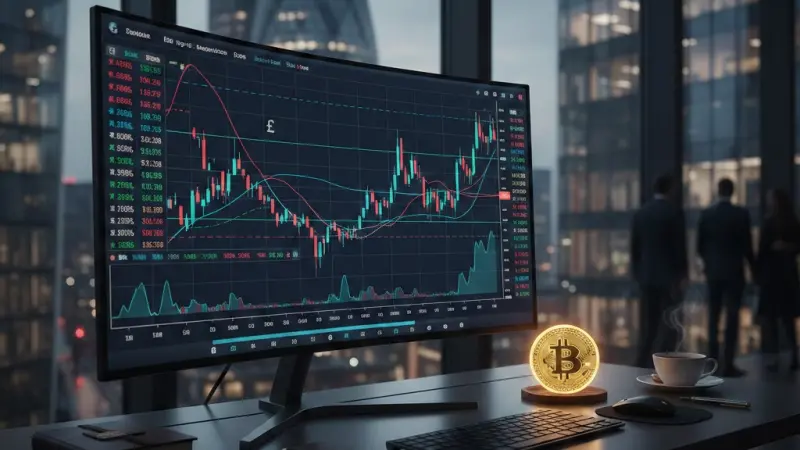
Cryptocurrency prices represent the live market value of digital assets as determined by global supply and demand across various decentralised and centralised exchanges. These valuations are typically measured in major fiat currencies, such as Great British Pounds or US Dollars, and reflect the aggregate sentiment of millions of investors worldwide. To understand the current landscape, one must look at the total market capitalisation, which encompasses the combined value of all circulating coins. Currently, the market remains highly dynamic, influenced by institutional adoption, regulatory shifts in the UK, and macroeconomic indicators like inflation rates. Cryptocurrency prices are essentially the real-time heartbeat of the blockchain economy, fluctuating based on technological breakthroughs, whale movements, and retail participation. For those monitoring the UK market, keeping a close eye on price action is vital for timing entries and understanding the broader financial shift toward digitisation.
The core mechanism of crypto pricing relies on the order book system. When more buyers are willing to pay a higher price than sellers are willing to accept, the price climbs. Conversely, a surplus of sell orders drives the valuation downward. This volatility is a hallmark of the sector, offering both significant risk and potential reward for British participants.
Understanding Market Fluctuations and Valuation Drivers
The primary drivers of cryptocurrency prices are multifaceted, ranging from simple supply and demand to complex geopolitical events. Scarcity plays a massive role; for instance, assets with a hard cap on total supply often see upward price pressure during periods of high demand. Conversely, inflationary tokens may struggle to maintain value if the issuance rate outpaces utility. Sentiment is equally powerful. News regarding UK regulatory frameworks or the approval of spot ETFs in global markets can trigger immediate and substantial price swings. Furthermore, the correlation between digital assets and traditional equity markets has tightened, meaning that shifts in the FTSE or S&P can often mirror movements in the crypto space.
The Role of Liquidity in Price Discovery
Liquidity refers to how easily an asset can be converted into cash without affecting its market price. In high-liquidity markets, large trades occur with minimal "slippage," ensuring that the displayed cryptocurrency prices remain stable and representative of true value. For smaller altcoins, low liquidity can lead to extreme price swings from relatively minor trades.
Impact of Exchange Spread
The difference between the bid and ask price, known as the spread, is a critical component of price discovery. Narrow spreads indicate a healthy, competitive market where buyers and sellers are in close agreement on the asset's current worth, which is common for Bitcoin and Ethereum.
The Evolution of Digital Asset Valuations in Britain
The British perspective on cryptocurrency prices has shifted from niche interest to mainstream financial consideration. HM Treasury and the Financial Conduct Authority have begun implementing clearer guidelines, which provides a level of stability previously absent from the market. As institutional players like London-based hedge funds and traditional banks integrate blockchain technology, the "premium" associated with volatility is beginning to settle. This institutionalisation brings more sophisticated valuation models into play, moving beyond mere speculation toward fundamental analysis. Investors now look at on-chain data, such as active wallet addresses and transaction volumes, to determine if a price is justified by actual network usage or if it is a bubble driven by social media hype.
Regulatory Clarity and Investor Confidence
Clearer rules of engagement from the UK government help to mitigate the "risk-off" sentiment that often plagues the market. When investors feel protected by a robust legal framework, they are more likely to commit capital, which leads to more sustained and less erratic price growth over the long term.
Financial Conduct Authority Oversight
The FCA's role in monitoring crypto-asset promotions ensures that retail investors are not misled by unrealistic price predictions. This oversight fosters a more mature trading environment where price action is driven by transparency and verified data rather than offshore manipulation.
Evaluating Bitcoin as the Market Bellwether
Bitcoin remains the undisputed leader of the market, and its price movements often dictate the direction of all other digital assets. When Bitcoin experiences a significant rally, it frequently pulls the rest of the market up with it, a phenomenon known as "altseason" once the profits rotate into smaller coins. This dominance is measured as a percentage of the total market cap. Monitoring Bitcoin’s price in GBP is the first step for any UK investor, as it serves as the primary gauge for overall market health. The "halving" events, which occur roughly every four years, are particularly significant, as they reduce the supply of new coins and have historically preceded major bull runs and price discovery phases.
Dominance Metrics and Capital Rotation
Bitcoin dominance is a key indicator used to determine where capital is flowing. High dominance suggests a flight to safety within the crypto space,
while falling dominance often indicates that investors are becoming more adventurous and moving funds into higher-risk altcoins for better returns.
Correlation with Global Macroeconomics
As Bitcoin is increasingly viewed as "digital gold," its price reacts to global interest rates and currency debasement. When the pound weakens or inflation rises, Bitcoin often sees increased demand as a potential hedge against traditional financial instability.
Altcoins and the Search for Value Beyond Bitcoin
While Bitcoin takes the headlines, thousands of altcoins offer diverse utility and different price structures. Ethereum, for example, is priced not just as a currency but as the fuel for a global computing platform. Its valuation is tied to the growth of decentralised finance and non-fungible tokens. Other assets focus on supply chain logistics, privacy, or cross-border payments. When assessing altcoin prices, it is crucial to look at the "fully diluted valuation," which accounts for all tokens that will ever be released. This prevents investors from being misled by a low unit price when the total supply is actually massive. Finding value in this sector requires deep research into the project’s whitepaper, team, and actual adoption rates.
Smart Contract Platforms and Ecosystem Growth
The price of tokens like Solana or Cardano depends heavily on the developers building on their networks. A thriving ecosystem of applications leads to constant demand for the underlying token, creating a fundamental floor for the price that is independent of market speculation.
Utility Tokens versus Security Tokens
Understanding the classification of an asset is vital. Utility tokens provide access to a service, while security tokens represent an investment in a company. The regulatory treatment of these categories in the UK significantly affects their long-term price potential and exchange availability.
Common Pitfalls and Mistakes to Avoid
Many new investors fall into the trap of "unit bias," believing that a coin priced at a fraction of a penny is "cheap" and has more room to grow than Bitcoin. This is a dangerous misconception, as the price must be viewed in the context of total supply. Another mistake is "revenge trading" after a price drop, which often leads to further losses. Over-leveraging is perhaps the most significant risk; using borrowed funds to trade on price movements can result in total liquidation during the market's natural volatility. Finally, failing to secure assets in a private wallet leaves investors vulnerable to exchange hacks, where the "price" becomes irrelevant if the assets are no longer accessible.
The Danger of Emotional Trading
Fear of missing out (FOMO) often drives investors to buy at the peak of a price rally, while fear leads them to sell at the bottom. Maintaining a disciplined, strategy-based approach is essential for navigating the psychological pressures of fluctuating cryptocurrency prices.
Neglecting Cold Storage Options
Keeping large amounts of capital on an exchange is a significant security risk. No matter how high the price goes, the value is only real if you have control over your private keys through a hardware wallet or similar secure storage method.
Practical Guidance for Monitoring Market Trends
To stay ahead of the curve, UK investors should utilise a combination of price aggregators, on-chain analytics, and reputable news sources. Setting up price alerts for specific GBP thresholds can help you react to market movements without needing to watch a screen all day. Dollar-cost averaging—investing a fixed amount of pounds at regular intervals regardless of the price—is a proven strategy to mitigate the impact of volatility. Additionally, following "whale" movements can provide early signals of institutional shifts. By observing the flow of funds from exchanges to private wallets, one can often gauge whether the prevailing sentiment is one of accumulation or distribution, allowing for more informed decision-making.
Using Technical Analysis Effectively
Technical analysis involves studying historical price charts and volume to predict future movements. While not foolproof, identifying support and resistance levels
can help investors find better entry and exit points, reducing the likelihood of buying into a local top.
Monitoring Social Sentiment and Trends
In the digital age, social media movements can move markets. Tools that track the "Fear and Greed Index" or mention frequency on platforms like X can provide a pulse on the retail market's emotional state, which often precedes price shifts.
Future Outlook for Digital Asset Valuations
The future of cryptocurrency prices is likely to be defined by increased integration with the traditional financial system. We are moving toward a period where "Real World Assets" (RWAs) are tokenised on the blockchain, potentially bringing trillions of dollars of value into the ecosystem. This would provide a more stable foundation for prices, as they would be backed by tangible assets like property or government bonds. Central Bank Digital Currencies (CBDCs), such as a potential "Digital Pound," could also change how we interact with the market, providing a seamless bridge between fiat and crypto. While volatility will likely remain, the maturation of the market suggests a trend toward more predictable, utility-driven price action over the next decade.
The Impact of Institutional Custody Solutions
As major UK banks begin to offer custody services, the barriers to entry for large-scale capital will disappear. This influx of professional money is expected to increase market depth and reduce the extreme volatility currently seen in cryptocurrency prices.
Technological Scalability and Price Impact
The ability of blockchains to handle millions of transactions per second will determine their ultimate value. Success in scaling technology will likely lead to a massive increase in token utility and, consequently, a positive impact on long-term market valuations.
Strategic Conclusion for UK Market Participants
Navigating cryptocurrency prices requires a blend of technical knowledge, psychological fortitude, and a clear understanding of the UK's evolving financial landscape. By focusing on fundamentals, avoiding common speculative traps, and staying informed on regulatory changes, investors can better position themselves within this transformative asset class. The transition from speculative mania to a utility-based economy is well underway, and those who treat digital assets with the same rigour as traditional investments are the most likely to succeed. Whether you are looking at Bitcoin as a store of value or Ethereum as a platform for innovation, the key is to remain objective and focus on long-term trends rather than short-term noise.
Building a Resilient Portfolio
A balanced approach, involving a mix of established large-cap assets and carefully researched smaller projects, can help manage risk. Diversification across different sectors of the blockchain industry ensures that your portfolio is not overly dependent on a single price movement.
The Importance of Continuous Education
The crypto space moves faster than any other financial market. Committing to ongoing learning about new protocols, security practices, and
economic shifts is the best way to ensure that you can interpret cryptocurrency prices with accuracy and confidence.
FAQ
Why do cryptocurrency prices fluctuate so much compared to traditional stocks?
Cryptocurrency prices are highly volatile due to the relatively small market size, lack of established valuation models, and high levels of speculative trading. Because many digital assets have a fixed supply, even moderate changes in demand can cause dramatic price swings. Additionally, the 24/7 nature of the market means news is priced in constantly without the cooling-off periods found in traditional stock market trading hours.
How can I track cryptocurrency prices in Great British Pounds accurately?
To track prices in GBP, it is best to use reputable price aggregators or UK-based exchanges that provide direct trading pairs. These platforms aggregate data from multiple sources to give a "volume-weighted average price." It is important to remember that prices may vary slightly between exchanges due to differences in local liquidity and trading fees, so using a global average is often best for general tracking.
What is the difference between market price and market capitalisation?
Market price is the current value at which a single unit of a cryptocurrency can be bought or sold. Market capitalisation is the total value of all coins currently in circulation, calculated by multiplying the market price by the total circulating supply. Market cap is generally considered a more accurate measure of a project's overall size and stability than the individual unit price of the coin.
Does the UK government tax gains made from changes in cryptocurrency prices?
Yes, HM Revenue and Customs (HMRC) treats most cryptocurrency gains as subject to Capital Gains Tax. If you sell, trade, or spend your crypto and the price has increased since you acquired it, you may owe tax on the profit above your annual tax-free allowance. It is essential for UK residents to keep detailed records of their transaction history and the GBP value at the time of each trade.
What happens to the price of a cryptocurrency during a "hard fork"?
A hard fork occurs when a blockchain splits into two separate networks, often resulting in the creation of a new coin. Historically, the price of the original coin can be volatile leading up to the fork as investors seek to receive the "free" new tokens. Post-fork, the total value usually splits between the two assets, though the market typically favours one over the other, leading to significant price divergence.
Disclaimer: The information provided in this article is for general informational and research purposes only. Company details, features, services, and market positions may change over time. Readers are advised to visit official company websites and conduct independent research before making any business decisions or purchasing services.
Most Searchable Keywords
Recent Blogs


Related Listings
Categories
- Accountants (295)
- Advertising Agencies (559)
- Architects (149)
- Automobiles (377)
- Beauty (300)
- Carpenters (146)
- Cleaning Services (387)
- Dentists (189)
- Driving (62)
- Electricians (215)
- Energy (8)
- Event Organiser (686)
- Finance (602)
- Guide (3375)
- Health (2207)
- Information technology (206)
- Legal Services (354)
- Logistics (6)
- Maintenance (65)
- Manufacturing (35)
Sponsored Listings in Legal Services



Related Blogs

BBC Radio 2 Presenters Family Age and Net Wor...
Read this insightful article "BBC Radio 2 Presenters Family Age and Net Worth Guide" to expand your knowledge!

Step-by-Step Guide to Claiming a TV Licence D...
Read this insightful article "Step-by-Step Guide to Claiming a TV Licence Discount or Exemption" to expand your knowledge!

Meet the Fair Work Agency Changing UK Work Ru...
Read this insightful article "Meet the Fair Work Agency Changing UK Work Rules in 2026" to expand your knowledge!
Questions & Answers – Find What
You Need, Instantly!
How can I update my business listing?
Is it free to manage my business listing?
How long does it take for my updates to reflect?
Why is it important to keep my listing updated?
