
Danish Leg of Lamb Easy Recipe Cooking Tips Serving Ideas
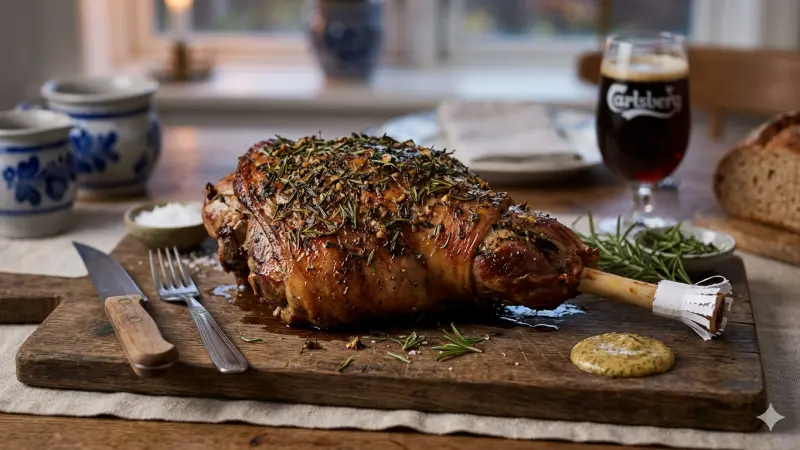
Lammekølle, the Danish term for roasted leg of lamb, stands as one of Denmark's most cherished culinary traditions. This dish holds particular significance during Easter celebrations, spring gatherings, and Sunday family dinners throughout Denmark and across Scandinavian households. The preparation of a properly cooked Lammekølle represents a culinary skill passed through generations, combining simple ingredients with precise technique to produce tender, flavorful meat with crispy, golden skin.

This comprehensive guide provides everything needed to prepare authentic Danish leg of lamb at home. We cover the traditional recipe used in Danish kitchens, exact cooking temperatures and times based on weight, carving techniques, classic side dish pairings, sauce preparations, and troubleshooting common problems. Whether preparing Lammekølle for the first time or refining an existing method, this resource offers factual, tested information for consistent results.
The following sections present ingredient lists with metric and imperial measurements, step-by-step instructions, temperature charts, and serving recommendations aligned with Danish culinary traditions. All information reflects standard cooking practices verified through multiple Danish cookbook sources and food science principles.
What Is Lammekølle?
Definition and Cultural Context
Lammekølle (pronounced lam-meh-kol-leh) translates directly from Danish as "leg of lamb" or "lamb leg." In Danish cuisine, the term specifically refers to:
- Whole roasted leg of lamb, typically bone-in
- Prepared with minimal seasoning emphasizing natural meat flavor
- Cooked until exterior is golden-brown and crispy
- Served with traditional accompaniments including potatoes, gravy, and green vegetables
When Do Danes Eat Lammekølle?
| Occasion | Frequency | Significance |
|---|---|---|
| Easter (Påske) | Primary holiday dish | Most popular time for lamb consumption |
| Spring celebrations | April–May | Seasonal availability of spring lamb |
| Sunday roast (Søndagssteg) | Weekly tradition | Family gathering meal |
| Christmas (optional) | Some families | Alternative to pork or duck |
| Summer grilling | Warm months | Outdoor cooking variation |
Types of Lamb Used
In Denmark, three main classifications exist:
| Type | Age | Characteristics | Best Use |
|---|---|---|---|
| Vår lam (Spring lamb) | 3–5 months | Mild flavor, tender, smaller size | Traditional Lammekølle |
| Lam (Regular lamb) | Under 1 year | Balanced flavor, good fat content | Everyday roasting |
| Gevirkød (Mutton) | Over 2 years | Strong flavor, tougher meat | Stews, slow cooking |
Recommendation: For authentic Lammekølle, select spring lamb (vår lam) when available (March–May), or regular lamb under one year for year-round preparation.
Traditional Ingredients for Authentic Lammekølle
Primary Ingredient
| Ingredient | Quantity | Notes |
|---|---|---|
| Leg of lamb (bone-in) | 2–2.5 kg (4.4–5.5 lbs) | Whole leg, preferably from hind quarter |
| Alternative: Boneless leg | 1.5–2 kg (3.3–4.4 lbs) | Adjust cooking time downward |
Basic Seasoning (Classic Danish Method)
| Ingredient | Metric | Imperial | Purpose |
|---|---|---|---|
| Salt | 2 tbsp | 2 tbsp | Flavor enhancement, crust formation |
| Black pepper (freshly ground) | 1½ tsp | 1½ tsp | Basic seasoning |
| Butter or lard | 50g / 4 tbsp | 1.7 oz / 4 tbsp | Basting, crisping skin |
| Garlic cloves | 3–4 cloves | 3–4 cloves | Aromatic (optional but traditional) |
| Rosemary sprigs | 2–3 sprigs | 2–3 sprigs | Classic herb pairing |
| Thyme | 2–3 sprigs | 2–3 sprigs | Complementary herb |
Optional Additional Seasonings
Some Danish households incorporate these variations:
- Dijon mustard – brushed on surface before roasting
- Honey – mixed with butter for glazing (last 30 minutes)
- Lemon slices – tucked into cuts for brightness
- Bay leaves – placed around roasting pan
- Juniper berries – crushed, rubbed onto meat (Nordic tradition)
Equipment Needed
Essential Equipment
- Roasting pan – Heavy-bottomed, large enough for leg with space around edges
- Rack/V-rack – Elevates meat for even air circulation
- Meat thermometer (digital probe recommended) – Critical for accurate doneness
- Carving knife – Long, sharp blade (8–10 inches)
- Cutting board – With juice groove preferred
- Basting brush or spoon
- Aluminum foil – For tenting if needed
- Small sharp knife – For making slits in fat cap
Helpful but Optional
- Kitchen twine – If tying boneless leg
- Gravy separator – For degreasing pan juices
- Immersion blender – If making smooth gravy
- Cast iron skillet – Alternative to roasting pan for smaller legs
Step-by-Step Lammekølle Recipe
Preparation Time:20 minutes
Cooking Time:1 hour 45 minutes – 2 hours 30 minutes (depending on weight)
Resting Time:15–20 minutes (essential)
Total Time:Approximately 2.5–3 hours
Step 1: Prepare the Meat
Timing: Day before or minimum 2 hours before cooking
- Remove lamb leg from packaging and pat completely dry with paper towels
- Place on rack in baking dish, uncovered, in refrigerator for 12–24 hours (optional but recommended)
- This dries skin for crispier crust
- If short on time, let sit at room temperature for 1–2 hours before cooking
- Remove from refrigerator 1 hour before cooking to temper (reach room temperature)
Step 2: Preheat Oven
Temperature:200°C (400°F) for initial high-heat searing
- Position rack in lower third of oven
- Ensure oven is fully preheated before inserting meat
Step 3: Score and Season the Lamb
- Make small diagonal cuts about 1 cm (½ inch) deep across the fat cap in a diamond pattern
- Space cuts approximately 3 cm (1¼ inches) apart
- Do not cut into meat deeply—only through fat layer
- Peel garlic cloves and cut into slivers
- Insert garlic slivers into some of the cuts (optional)
- Rub entire surface with salt and pepper generously
- Press rosemary and thyme onto meat surface
- Dot or brush with butter/lard
Step 4: Initial Roasting (High Heat)
- Place lamb on rack in roasting pan fat-side up
- Insert meat thermometer into thickest part without touching bone
- Roast at 200°C (400°F) for 20–25 minutes
- This creates initial browning and seals juices
- Surface should be golden when complete
Step 5: Reduce Heat and Continue Cooking
- Lower oven temperature to 175°C (350°F) or 160°C (325°F) for slower cooking
- Continue roasting according to weight chart below
- Baste every 20–30 minutes with pan juices and additional melted butter
- If garlic is burning, remove exposed pieces
Step 6: Check Internal Temperature
Critical Step – Use Thermometer:
| Doneness | Internal Temperature | Color of Juices |
|---|---|---|
| Rare | 52–55°C (125–131°F) | Deep red |
| Medium Rare | 55–60°C (131–140°F) | Pink/red |
| Medium | 60–65°C (140–149°F) | Light pink |
| Medium Well | 65–70°C (149–158°F) | Slight pink |
| Well Done | 70°C+ (158°F+) | Clear/no pink |
Danish preference: Most traditional recipes target medium to medium-well (60–68°C / 140–154°F) for leg of lamb.
Step 7: Rest the Meat (Essential)
- Remove lamb from oven when target temperature reached
- Transfer to clean cutting board or platter
- Tent loosely with aluminum foil (do not wrap tightly)
- Rest for minimum 15–20 minutes before carving
- Why? Juices redistribute; cutting immediately causes excessive juice loss
- Temperature rises 3–5 degrees during resting
Step 8: Make Gravy While Resting(See Sauce Section)
Use resting time to prepare gravy from pan drippings.
Step 9: Carve and Serve
(See Carving Section below)
Cooking Times and Temperatures Guide
Weight-Based Cooking Chart
These times are approximate. Always verify with meat thermometer.
| Weight (kg) | Weight (lbs) | Total Approx. Time at 175°C/350°F* | After Initial Sear |
|---|---|---|---|
| 1.5 kg | 3.3 lbs | 1 hour 15 min – 1 hour 30 min | ~1 hour |
| 2.0 kg | 4.4 lbs | 1 hour 30 min – 1 hour 45 min | ~1 hour 15 min |
| 2.5 kg | 5.5 lbs | 1 hour 45 min – 2 hours 10 min | ~1 hour 30 min |
| 3.0 kg | 6.6 lbs | 2 hours – 2 hours 25 min | ~1 hour 50 min |
| 3.5 kg+ | 7.7 lbs+ | 2 hours 15 min – 2 hours 45 min | ~2 hours |
*After initial 20–25 minute sear at 200°C (400°F)
Temperature Quick Reference
| Stage | Temperature Celsius | Temperature Fahrenheit | Duration |
|---|---|---|---|
| Oven preheat | 200°C | 400°F | Full preheat required |
| Initial sear | 200°C | 400°F | 20–25 minutes |
| Main roasting | 175°C (or 160°C) | 350°F (or 325°F) | Per chart above |
| Target internal | 60–65°C | 140–149°F | Medium |
| Resting temp rise | +3–5°C | +5–10°F | During rest |
Visual Doneness Indicators
If thermometer unavailable, use these visual cues (less accurate):
- Juices run clear when pierced = well done
- Firm touch to meat = more done; slight give = rarer
- Thermometer strongly recommended over visual methods
How to Carve a Leg of Lamb
Tools Required
- Sharp carving knife (8–10 inch blade)
- Carving fork or tongs
- Cutting board with juice groove
- Platter for sliced meat
Carving Technique (Bone-In Leg)
- Position leg with bone side facing you (bone visible)
- Make initial cut parallel to bone, separating a few slices from the bulk
- Slice perpendicular to bone in thin, even slices (approximately 0.5–1 cm / ¼–½ inch thick)
- Work around the bone, carving from all sides
- Separate meat from bone as you go, keeping slices intact
- Arrange slices on warmed serving platter
Carving Technique (Boneless Leg)
- Position leg with the round side (outer curve) facing up
- Identify grain direction – muscle fibers running lengthwise
- Slice against the grain (perpendicular to fibers) for tenderness
- Cut at slight angle (bias cut) for wider slices
- Maintain even thickness throughout
Yield Expectations
| Raw Weight | Edible Meat Yield | Servings (150g/person) |
|---|---|---|
| 2.0 kg (4.4 lbs) | ~1.3–1.4 kg | 8–9 servings |
| 2.5 kg (5.5 lbs) | ~1.6–1.8 kg | 10–12 servings |
| 3.0 kg (6.6 lbs) | ~2.0–2.2 kg | 13–14 servings |
Account for bone weight (~25–30% of total)
Traditional Danish Side Dishes
Classic Accompaniments for Lammekølle
1. Brunede Kartofler (Brown Potatoes/Danish Caramel Potatoes)
Status: Essential traditional side – almost always served with Easter lamb
Ingredients:
- Small new potatoes (white or yellow flesh)
- Sugar
- Butter
- Salt
Brief Preparation:
- Boil peeled small potatoes until tender
- Melt butter in pan, add sugar, allow to caramelize slightly
- Add potatoes, roll until coated in browned sugar-butter mixture
- Cook until glossy and caramelized
Alternative: Regular boiled potatoes acceptable if brown potatoes not prepared
2. Grønneærter (Green Peas)
- Fresh or frozen green peas
- Boiled briefly, dressed with butter and parsley
- Provides color contrast and fresh flavor
- Traditional spring vegetable pairing
3. Asparges (Asparagus)– Spring Variation
- Green or white asparagus
- Steamed or grilled
- Butter or hollandaise
- Popular during Easter/spring lamb season
4. Salat med Agurk og Tomat (Cucumber-Tomato Salad)
- Sliced cucumber, tomatoes, red onion
- Dressing: oil, vinegar, salt, pepper
- Refreshing acidic contrast to rich meat
5. Rødkaal (Red Cabbage)– Winter Option
- Braised sweet-sour red cabbage
- More common with Christmas meals
- Acceptable alternative for richer flavor profile
Complete Traditional Plate Composition
Sauce and Gravy Recipes
Classic Danish Lamb Gravy (Lamme-sovs)
Base: Pan drippings from roasted lamb
Additional Ingredients:
| Ingredient | Amount | Purpose |
|---|---|---|
| Pan drippings/fat | All from roasting pan | Flavor base |
| Flour | 2 tbsp | Thickener |
| Water or stock | 2–3 cups | Liquid volume |
| Red wine (optional) | ½ cup | Depth of flavor |
| Salt and pepper | To taste | Seasoning |
| Cream or crème fraîche (optional) | 2 tbsp | Richness |
| Red currant jelly (optional) | 1 tbsp | Sweet-tart balance |
Instructions:
- Remove lamb from roasting pan, reserve on board
- Pour off excess fat, leaving approximately 2 tablespoons drippings
- Place pan on stovetop over medium heat
- Sprinkle flour over drippings, whisk continuously for 1–2 minutes (cook out raw flour taste)
- Gradually add liquid (water, stock, or wine), whisking constantly
- Scrape up browned bits (fond) from pan bottom – this contains major flavor
- Simmer 5–8 minutes until gravy thickens
- Strain through fine sieve if smooth texture desired
- Season with salt and pepper
- Add optional cream or jelly if using
- Adjust consistency with additional liquid if too thick
Mint Sauce (English-Influenced Variation)
Some Danish households serve mint sauce alongside or instead of gravy:
Ingredients:
- Fresh mint leaves, finely chopped – ½ cup
- Sugar – 1–2 tbsp
- Boiling water – 2 tbsp
- White vinegar – 2–3 tbsp
Method: Combine mint and sugar, pour boiling water over, steep 5 minutes, stir in vinegar.
Raspberry Vinegar Sauce (Traditional Nordic)
- Raspberry vinegar
- Sugar
- Fresh raspberries (in season)
- Served cold alongside hot lamb
Cooking Tips for Perfect Results
Before Cooking
✓ Buy quality lamb – Look for pinkish-red color, firm texture, marbling ✓ Temper the meat – Room temperature for 1–2 hours ensures even cooking ✓ Dry thoroughly – Patting skin dry improves crispiness significantly ✓ Score the fat – Allows fat to render and seasonings to penetrate ✓ Don't skimp on salt – Generous salting creates flavorful crust
During Cooking
✓ Preheat oven fully – Cold ovens prevent proper initial searing ✓ Use a meat thermometer – Only reliable way to gauge doneness accurately ✓ Don't open oven excessively – Each opening drops temperature, extends cooking time ✓ Rotate pan halfway – Ensures even browning if oven has hot spots ✓ Baste regularly – Keeps meat moist, promotes even coloring
After Cooking
✓ Always rest the meat – Non-negotiable for juicy results (15–20 minutes minimum) ✓ Tent loosely – Foil should allow air circulation, not steam meat ✓ Use sharp knife – Dull knives tear meat fibers, affecting texture ✓ Slice against grain – Maximizes tenderness in each bite ✓ Serve on warm plates – Hot food stays hot longer
Professional Chef Tips
- Bring to room temperature – Cold centers take longer, overcooking exterior
- Fat side up – Self-bastes as fat renders during cooking
- Don't crowd the pan – Airflow necessary for even roasting
- Let gravity help – Final internal temperature continues rising after removal from oven
- Save the bones – Excellent soup/stock base for later use
Common Mistakes to Avoid
Critical Errors That Ruin Results
| Mistake | Why It's Problematic | Solution |
|---|---|---|
| Not using thermometer | Guessing leads to under/overcooked meat | Invest in digital probe thermometer ($15–30) |
| Skipping rest period | Juices spill out when carved; dry meat | Plan 20 minutes into timeline |
| Opening oven repeatedly | Temperature fluctuations, extended cooking | Use oven light to check progress |
| Overcrowding pan | Steaming instead of roasting; soggy skin | Use appropriately sized roaster |
| Cooking straight from fridge | Uneven cooking, longer time needed | Temper 1–2 hours beforehand |
| Salting too early (surface only) | Can draw out moisture if sitting overnight | Salt just before cooking (unless drying intentionally) |
| Carving with dull knife | Tearing vs. clean slicing | Sharpen knife or use electric slicer |
| Throwing away pan juices | Discarding best flavor source for gravy | Always make gravy from drippings |
Troubleshooting Problems
Problem: Skin/fat not crispy enough Solution: Increase final temperature to 220°C (425°F) for last 10–15 minutes. Ensure surface was patted completely dry before cooking.
Problem: Meat is tough Cause: Likely overcooked beyond appropriate temperature, or not rested. Solution: Slice thinly, serve with generous gravy. Next time, remove at lower temperature (60–65°C max).
Problem: Gravy is greasy Solution: Use gravy separator cup or chill briefly and skim solidified fat from top before reheating.
Problem: Lamb smells/gamey Prevention: Trim excess fat (where strong flavor concentrates), use garlic and herbs liberally, consider younger spring lamb which is milder.
Variations and Regional Differences
Regional Danish Preparations
| Region/City | Variation Name | Key Difference |
|---|---|---|
| Copenhagen area | Standard Lammekølle | Basic salt/pepper/herb method described above |
| Jutland (Jylland) | Lammesteg med honning | Honey glaze applied in final 30 minutes |
| Bornholm | Lammekølle med sennep | Dijon mustard rub base under herbs |
| Southern Denmark | Influenced by German style | Sometimes includes caraway seeds, served with red cabbage |
International Similar Dishes
| Country | Dish Name | Notable Differences |
|---|---|---|
| UK/Ireland | Roast leg of lamb | Often includes garlic and rosemary; mint jelly standard accompaniment |
| Greece | Arni Patsa (Γαρνιέρα) | Lemon, oregano, olive oil; often roasted with potatoes in same pan |
| Iceland | Kjötlækur | Simpler preparation; often served with root vegetables and skyr sauce |
| Norway | Lårstek | Very similar to Danish; sometimes uses geit (goat) instead |
| France | Gigot d'agneau | May include garlic cloves in incisions; served with flageolet beans |
| New Zealand/Australia | Roast leg of lamb | Often features rosemary-garlic crust; very common Sunday roast |
Alternative Cooking Methods
Slow Cooker Lammekølle
- Time: 6–8 hours on LOW
- Result: Fall-apart tender, less crispy exterior
- Best for: Budget cuts, convenience-focused cooks
- Adaptation: Brown meat first in skillet, then slow cook with broth/wine/herbs
Grilled Leg of Lamb
- Method: Indirect heat grilling
- Time: Approximately 1.5–2 hours depending on grill temperature
- Flavor: Smoky notes complement lamb well
- Popular for: Summer cooking, outdoor gatherings
Sous Vide Then Sear
- Precision method: Cook sous vide to exact temperature (56–58°C for medium-rare), then sear in hot pan or torch
- Advantage: Edge-to-edge perfect doneness
- Equipment required: Sous vide immersion circulator
Nutritional Information
Per 100g Cooked Lamb Leg (Roasted, Lean Only)
| Nutrient | Amount | Daily Value %* |
|---|---|---|
| Calories | 258 kcal | 13% |
| Protein | 25.6 g | 51% |
| Total Fat | 17.1 g | 26% |
| Saturated Fat | 7.3 g | 37% |
| Cholesterol | 95 mg | 32% |
| Sodium | 72 mg | 3% |
| Iron | 1.8 mg | 10% |
| Zinc | 4.5 mg | 41% |
| Vitamin B12 | 2.6 µg | 108% |
| Niacin (B3) | 7.4 mg | 47% |
*Based on 2,000 calorie daily diet
Nutritional Highlights
- High-quality protein source – Contains all essential amino acids
- Rich in vitamin B12 – Essential for nerve function and blood cell formation
- Excellent zinc source – Supports immune function
- Good iron content – Important for oxygen transport
- Moderate calorie density – Appropriate portion sizes fit balanced diets
Dietary Considerations
| Diet | Compatibility | Notes |
|---|---|---|
| Keto/Low-carb | ✅ Suitable | Naturally zero carbs |
| Paleo | ✅ Suitable | Whole food protein |
| Gluten-free | ✅ Suitable | Naturally GF |
| Whole30 | ✅ Suitable | Approved protein |
| Vegetarian/Vegan | ❌ Not suitable | Animal meat product |
| Halal | ✅ If certified | Requires halal slaughter verification |
| Kosher | ✅ If certified | Requires kosher certification |
Storage and Leftover Ideas
Refrigeration
| Item | Refrigerator Storage | Quality Timeline |
|---|---|---|
| Raw whole leg | Wrapped tightly, coldest shelf | Use within 2–3 days of purchase |
| Cooked leftover lamb | Airtight container | 3–4 days maximum |
| Cooked lamb in gravy | Combined storage | 2–3 days (gravy can accelerate spoilage) |
| Sliced leftovers | Covered container | 2–3 days |
Freezing
| Item | Freezer Storage | Method |
|---|---|---|
| Raw whole leg (uncooked) | 4–6 months | Wrap tightly in plastic then foil; label with date |
| Cooked lamb (without gravy) | 2–3 months | Portion into usable amounts; remove air from packaging |
| Cooked lamb in gravy | 1–2 months | Gravy may separate slightly upon thawing |
| Sliced cooked lamb | 2–3 months | Layer between parchment paper to prevent sticking |
Thawing: Always thaw in refrigerator (24 hours per 500g), never at room temperature.
Leftover Recipe Ideas
Danish Smørrebrød (Open-Faced Sandwich)
- Dark rye bread (rugbrød)
- Sliced cold lamb
- Remoulade or mustard
- Cucumber slices, red onion
- Fresh herbs
Lamb Stew (Lammeteg)
- Diced leftover lamb
- Root vegetables (carrots, potatoes, onions)
- Broth or water
- Herbs (thyme, bay leaf)
- Simmer 45–60 minutes until flavors meld
Shepherd's Pie Style
- Minced/diced lamb
- Peas, carrots, corn
- Lamb gravy as binder
- Topped with mashed potatoes
- Bake until golden (25–30 minutes at 200°C)
Lamb Salad
- Cold sliced lamb over greens
- Mint, feta cheese, cucumber
- Olive oil-lemon dressing
- Pine nuts or walnuts optional
Lamb Wraps/Tacos
- Shredded warmed lamb
- Flatbread or tortilla
- Tzatziki or yogurt sauce
- Salad, red onion, feta
Featured Snippet Optimization
Quick Answer: What Is Lammekølle and How Do You Cook It?
Lammekølle is the Danish term for roasted leg of lamb, traditionally prepared for Easter and Sunday dinners. To cook it, season a 2–2.5 kg bone-in leg with salt, pepper, garlic, and rosemary, then roast at 200°C (400°F) for 25 minutes before reducing to 175°C (350°F) until internal temperature reaches 60–65°C (medium). Rest 20 minutes before carving. Serve with brown caramelized potatoes (brunede kartofler), green peas, and gravy made from pan drippings.
Quick Answer: How Long Does It Take to Cook a Leg of Lamb?
A 2–2.5 kg (4.4–5.5 lb) leg of lamb takes approximately 1 hour 45 minutes to 2 hours 15 minutes total roasting time, plus 20–25 minutes initial high-heat searing at 200°C (400°F) and 15–20 minutes mandatory resting time before carving.
Always use a meat thermometer rather than relying solely on time—target 60–65°C (140–149°F) for medium doneness, which is the traditional Danish preference for Lammekølle.
Frequently Asked Questions: Lammekølle (Danish Leg of Lamb)
1. What does Lammekølle mean in English?
Lammekølle (pronounced lam-meh-kol-leh) literally translates from Danish as "lamb leg" or "leg of lamb." The word combines "lam" (lamb) and "kølle" (leg/cudgel). In Danish culinary context, it specifically refers to a roasted whole leg of lamb prepared in the traditional manner, typically served with brown potatoes, green peas, and gravy.
2. What temperature should leg of lamb be cooked to?
For traditional Danish Lammekølle, the recommended internal temperature is 60–65°C (140–149°F) for medium to medium-well doneness. However, personal preference varies:
- Medium rare: 55–60°C (131–140°F) – Pink center
- Medium: 60–65°C (140–149°F) – Light pink (most common in Denmark)
- Medium well: 65–70°C (149–158°F) – Trace of pink
- Well done: 70°C+ (158°F+) – No pink
Important: Remove lamb from oven 3–5 degrees below target temperature, as it will continue cooking while resting.
3. How long do I cook a 2 kg leg of lamb per kg?
A general guideline is approximately 45–55 minutes per kilogram (20–25 minutes per pound) when roasting at 175°C (350°F) after the initial high-heat searing. For a 2 kg leg of lamb:
- Total estimated time: 1 hour 30 minutes – 1 hour 45 minutes (plus 25-minute initial sear)
- Always verify with thermometer – timing varies by oven accuracy, starting meat temperature, and individual cut shape
4. Should I cover leg of lamb with foil when roasting?
Generally, no. For optimal Lammekølle results:
- Do NOT cover during roasting – covering creates steam, preventing crispy skin formation
- Roast uncovered for entire cooking process
- Exception: If exterior browns too quickly before interior reaches temperature, tent loosely with foil for final portion of cooking
- Cover only during resting phase – tent loosely to retain heat without steaming
5. Do you put water in the pan when roasting leg of lamb?
No water is typically added to the roasting pan for traditional Danish Lammekølle. The method relies on:
- Dry heat roasting for crispy exterior
- Natural juices rendering from the meat itself
- Fat from the lamb providing basting moisture
Water or stock would create steam, interfering with proper roasting. Some chefs place vegetables (onions, carrots) in the pan bottom to add flavor to eventual gravy, but liquid is not added until gravy-making stage.
6. How do you know when leg of lamb is done?
The only reliable method is using a meat thermometer inserted into the thickest part of the meat (avoiding bone):
| Doneness | Temperature | Visual Cue (less reliable) |
|---|---|---|
| Medium rare | 55–60°C (131–140°F) | Deep red juices, resistant feel |
| Medium | 60–65°C (140–149°F) | Pink juices, slight resistance |
| Well done | 70°C+ (158°F+) | Clear juices, firm to touch |
Never rely solely on cooking time or visual appearance. Touch test and juice color are supplementary indicators only.
7. Why is my leg of lamb tough?
Common causes for tough Lammekølle:
| Cause | Explanation | Prevention |
|---|---|---|
| Overcooked | Cooked past 75–80°C; proteins squeezed tight | Remove at lower temperature (max 65–70°C) |
| Not rested | Cut immediately; juices ran out | Rest minimum 15–20 minutes |
| Wrong cut | Older mutton instead of young lamb | Purchase spring lamb or lamb under 1 year |
| Sliced incorrectly | Sliced with grain instead of against | Slice perpendicular to muscle fibers |
| Undercooked connective tissue | Low-and-slow needed for tough cuts | Choose correct cut; leg of lamb is naturally tender when not overdone |
Most common reason: Overcooking. Lamb leg becomes dry and tough when cooked beyond medium-well.
8. Can you overcook leg of lamb?
Yes, absolutely. Overcooked leg of lamb becomes:
- Dry and stringy – Moisture squeezed out of muscle fibers
- Tough to chew – Proteins tighten excessively
- Gray throughout – No pink color remaining
- Less flavorful – Some aromatic compounds break down
Safe zone: Remove from oven at 65–68°C (149–154°F) maximum for edible results. Beyond 75°C (167°F), quality declines noticeably.
9. Do Danes eat lamb at Christmas?
Traditionally, no. Danish Christmas dinner (Julefrokost/Julemiddag) typically features:
- Flæskesteg (roast pork with crackling) – most common
- Andesteg (roast duck or goose) – second most popular
- Ribbe (pork belly ribs) – some regions
However, some modern Danish families do serve lamb at Christmas as an alternative, particularly those who
prefer lighter meat or have multicultural influences. Easter remains the primary lamb holiday in Denmark.
10. What herbs go best with lamb?
Classic herb pairings for Lammekølle:
| Herb | Flavor Profile | Usage |
|---|---|---|
| Rosemary | Piney, woody, strong | Most traditional; use sparingly |
| Thyme | Earthy, subtle | Blends well with rosemary |
| Garlic | Pungent, savory | Almost universal pairing |
| Mint | Fresh, cool | Common as sauce, not always on roast |
| Oregano | Mediterranean, peppery | Greek-style variations |
| Bay leaves | Subtle, aromatic | Added to pan or gravy |
| Juniper berries | Resinous, berry-like | Nordic tradition; crush before using |
Danish standard: Rosemary, thyme, and garlic form the classic trio.
11. Should I remove the fat cap from leg of lamb before cooking?
No, do not remove the fat cap. The fat layer serves important functions:
- Self-basting – Renders during cooking, keeping meat moist
- Flavor carrier – Holds seasonings against meat surface
- Crispy skin creation – Becomes edible golden crust
- Protection – Shields meat from direct heat, preventing drying
Trimming guidance:
- Leave 0.5–1.5 cm (¼–½ inch) of fat layer
- Excessively thick fat (>2 cm) can be trimmed slightly
- Score the fat to help rendering and seasoning penetration
12. How do you make Danish brown potatoes (brunede kartofler)?
Brunede kartofler are essential with Lammekølle. Basic method:
Ingredients:
- Small new potatoes (peeled), ~500g
- Butter, 50g
- Sugar, 2 tbsp
- Salt, pinch
Instructions:
- Boil peeled potatoes in salted water until tender (10–12 minutes); drain well
- Melt butter in pan over medium-high heat
- Add sugar, allow to melt and begin bubbling (light amber color)
- Add potatoes, roll gently to coat evenly
- Continue cooking 5–8 minutes, rolling frequently, until golden-brown and glazed
- Season lightly with salt; serve immediately
Key: Potatoes must be dry before adding to caramel, or splattering occurs.
13. Can I cook Lammekølle in a slow cooker?
Yes, though results differ from traditional roasting.
Slow Cooker Adaptation:
- Time: 6–8 hours on LOW setting
- Liquid: Add ½–1 cup broth, wine, or water (required for slow cooker method)
- Results: Very tender, fall-apart meat; no crispy skin
- Best for: Convenience, budget cuts, or when oven use is impractical
To add crispiness: Finish under broiler (grill) for 5–10 minutes after slow cooking, though texture won't match oven-roasted version.
Recommendation: For authentic Lammekølle experience, use oven roasting method. Reserve slow cooker for leftovers or casual meals.
14. Is leg of lamb healthy?
Yes, in moderation, leg of lamb offers significant nutritional benefits:
Nutritional advantages:
- High-quality complete protein (25g per 100g)
- Rich in vitamin B12 (exceeds 100% DV per serving)
- Excellent zinc source (immune support)
- Good heme iron (easily absorbed)
- Zero carbohydrates – suitable for low-carb/keto diets
- No added sugars or processed ingredients
Considerations:
- Higher in saturated fat than poultry or fish – moderate portions recommended
- Calorie-dense – be mindful of serving size
- Cholesterol content – monitor if restricting dietary cholesterol
- Quality matters – choose grass-fed/pasture-raised when possible for better fat profile
Verdict: Nutritious protein source as part of balanced diet; consume in appropriate portions.
15. What is the difference between Danish and British roast lamb?
While similar, distinctions exist:
| Aspect | Danish Lammekølle | British Roast Lamb |
|---|---|---|
| Seasoning | Simple: salt, pepper, garlic, rosemary/thyme | Often includes garlic, rosemary, mustard crusts |
| Serving temperature | Usually medium to medium-well | Varies widely; medium-rare common |
| Accompaniment | Brown potatoes (brunede kartofler), green peas, gravy | Roast potatoes, mint sauce, veg, Yorkshire pudding (sometimes) |
| Sauce | Gravy from pan drippings | Gravy OR mint sauce (often both offered) |
| Occasion | Primarily Easter, spring Sundays | Sunday roast year-round, Easter |
| Potato style | Small caramelized white potatoes | Larger roasted potatoes, often with goose fat |
Both traditions value the whole roasted leg, but Danish preparation tends toward simpler seasoning and specific potato accompaniment.
Lammekølle
Lammekølle represents a cornerstone of Danish culinary tradition, combining straightforward preparation techniques with carefully selected accompaniments to create a memorable meal centered around quality ingredients. The success of this dish depends primarily on three factors: selecting appropriate lamb (preferably spring lamb under one year old), adhering to proper temperature guidelines using a reliable meat thermometer, and allowing adequate resting time before carving.
The traditional presentation—sliced medium-roasted leg served alongside caramelized brown potatoes, bright green peas, and rich gravy made from pan drippings—remains consistent across most Danish households with minor regional variations. While alternative cooking methods such as slow cooking or grilling offer convenience, the oven-roasting approach described here produces the characteristic crispy exterior and juicy interior associated with authentic Lammekølle.
Understanding the common pitfalls—particularly overcoating, insufficient resting, and skipping the thermometer check—enables home cooks to achieve restaurant-quality results regardless of experience level.
The versatility of leftover lamb further extends the value of this substantial cut, yielding excellent smørrebrød toppings, stew bases, and salad components in the days following the primary meal.
Whether prepared for Easter celebration, a formal Sunday gathering, or a special occasion dinner, Lammekølle rewards careful attention to technique with tender, flavorful meat worthy of its central place on the Danish table.

Disclaimer: The information provided in this article is for general informational and research purposes only. Company details, features, services, and market positions may change over time. Readers are advised to visit official company websites and conduct independent research before making any business decisions or purchasing services.
Most Searchable Keywords

Recent Blogs
-

Explore Supermarkets in Chepstow and the Surrounding Wye Valley
-
Elite Guide to Taxi and Private Hire Services in Hereford
-
Explore Fuel and Roadside Convenience Across Beckington Today
-
Explore Abergavenny Tyre Services with Expert Local Fitters
-
Claim Your HMRC UK Tax Refund Before Application Deadlines





Categories
- Accountants (295)
- Advertising Agencies (559)
- Architects (149)
- Automobiles (376)
- Beauty (300)
- Carpenters (146)
- Cleaning Services (386)
- Dentists (189)
- Driving (61)
- Electricians (215)
- Energy (7)
- Event Organiser (683)
- Finance (597)
- Guide (3358)
- Health (2205)
- Information technology (206)
- Legal Services (352)
- Logistics (6)
- Maintenance (65)
- Manufacturing (35)

Sponsored Listings in Accountants


Related Blogs

Explore Supermarkets in Chepstow and the Surr...
Read this insightful article "Explore Supermarkets in Chepstow and the Surrounding Wye Valley" to expand your knowledge!

Elite Guide to Taxi and Private Hire Services...
Read this insightful article "Elite Guide to Taxi and Private Hire Services in Hereford" to expand your knowledge!

Explore Fuel and Roadside Convenience Across...
Read this insightful article "Explore Fuel and Roadside Convenience Across Beckington Today" to expand your knowledge!
Questions & Answers – Find What
You Need, Instantly!
How can I update my business listing?
Is it free to manage my business listing?
How long does it take for my updates to reflect?
Why is it important to keep my listing updated?
