
Definitive Guide to Navigating and Dominating Google Maps
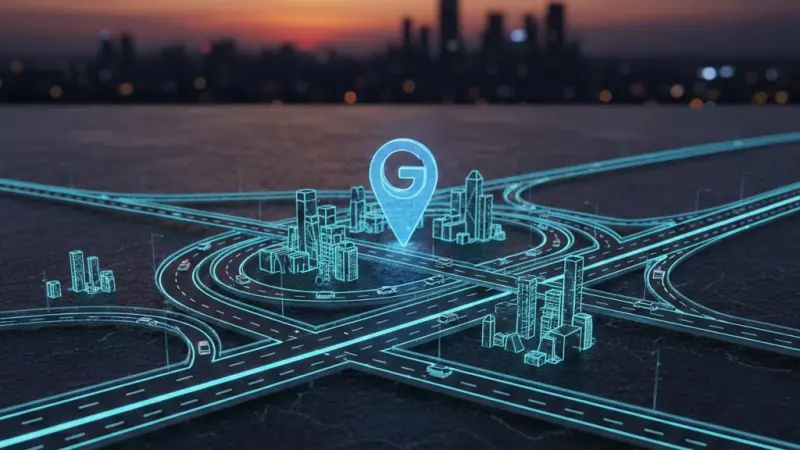
Google Maps is the world’s most comprehensive spatial data platform, providing users with real-time navigation, local business insights, and immersive street-level imagery. In the United Kingdom, it serves as the primary gateway for discovery, helping millions of people find everything from the nearest independent coffee shop to complex public transport routes across London. To define it simply: Google Maps is a web mapping service that offers satellite imagery, aerial photography, street maps, 360° interactive panoramic views, and real-time traffic conditions. For businesses and consumers alike, it is no longer just a tool for directions; it is a vital ecosystem for local commerce and geographical planning. By synchronising GPS data with massive databases of local information, the platform ensures that users can make informed decisions about where to go and how to get there with pinpoint accuracy.
The platform functions by aggregating data from various sources, including third-party providers, user-led contributions, and Google’s own Street View fleet. This multi-layered approach allows for a level of detail that remains unmatched by competitors. Whether you are looking for a specific post code or checking the opening hours of a local pharmacy, the interface provides a seamless experience across desktop and mobile devices.
Mastering the Fundamentals of Digital Navigation
Understanding the core mechanics of Google Maps is the first step toward efficiency. The platform relies on a sophisticated combination of historical traffic data and live sensors to predict arrival times. In British cities, where roadworks and congestion are common, this predictive capability is essential. Users should familiarise themselves with the layers icon, which toggles between standard map views, satellite imagery, and public transport overlays.
The integration of the platform with other services makes it a powerhouse for personal organisation. By logging in, users can save locations like 'Home' and 'Work', creating a bespoke map that highlights relevant destinations. This customisation extends to the 'Your Places' feature, allowing for the creation of lists that can be shared with friends or colleagues, making group outings much easier to coordinate.
Optimising Route Planning for Efficiency
Route planning in the UK requires a nuanced approach, especially when dealing with the transition from motorway driving to narrow urban streets. By selecting multiple stops, users can build a comprehensive itinerary. This is particularly useful for delivery drivers or families on holiday. The 'Avoid Tolls' and 'Avoid Ferries' toggles are critical for those navigating around the M25 or planning trips to the Scottish Highlands.
Selecting Transport Modes
Selecting the correct transport mode significantly alters the suggested path. While driving is the default, the walking and cycling options often reveal shortcuts through parks or pedestrianised zones that a car cannot access.
The Crucial Role of Local Business Discovery
For the British high street, appearing on the map is a prerequisite for survival. The platform has evolved into a localized search engine where intent is highest. When a user searches for 'plumbers near me' or 'best Sunday roast', they are often ready to spend money immediately. The proximity of the business to the user, combined with the relevance of the listing, determines who appears in the coveted 'Local Pack'.
Business owners must treat their map presence as a digital storefront. High-quality imagery, accurate opening hours, and prompt responses to reviews are the building blocks of trust. In a market where consumers value authenticity, a well-maintained profile acts as a powerful endorsement, often carrying more weight than a traditional website or social media advertisement.
Harnessing the Power of Customer Feedback
Reviews are the currency of the digital map. A high volume of positive feedback signals to the algorithm that a business is reliable and popular. However, it is the quality and recency of these reviews that often tip the scales. Encouraging customers to leave detailed feedback with photos can significantly boost a listing's visibility and conversion rate.
Responding to Negative Sentiment
Mistakes happen, but how a business handles a negative review on a public forum defines its reputation. Professional, empathetic responses demonstrate to potential customers that the business cares about service quality.
Advanced Features for Power Users
Beyond basic navigation, several advanced features can transform how one interacts with the physical world. 'Live View' uses augmented reality to overlay directions onto the real world through a smartphone camera. This is incredibly helpful when exiting a confusing Tube station and needing to know exactly which way to turn. It removes the guesswork associated with the 'blue dot' orientation.
Offline maps are another essential tool, especially for those venturing into rural areas with spotty 4G or 5G coverage. By downloading a specific area in advance, users can still access turn-by-turn
navigation and search for points of interest without a data connection. This feature is a lifesaver for hikers in the Lake District or travellers exploring the Cotswolds.
Integrating Calendar and Travel Bookings
The ecosystem thrives on integration. If a user has a hotel booking or a flight confirmation in their Gmail, the location and timing often appear automatically on the map. This proactive assistance ensures that users are alerted when it is time to leave, taking into account current traffic conditions across the UK road network.
Utilising Timeline History
The Timeline feature acts as a digital diary, showing exactly where a user has been and how they travelled. While some find it intrusive, it is a valuable tool for tracking mileage for business expenses or recalling the name of a restaurant visited months ago.
Common Pitfalls and How to Avoid Them
One of the most frequent mistakes is over-reliance on the suggested route without checking for live incidents. While the algorithm is fast, sudden accidents can cause delays that haven't yet been fully processed. Users should always glance at the 'alternate routes' (the grey lines) to see if a slightly longer path might actually be more reliable during peak hours.
For businesses, the biggest mistake is neglecting the 'Posts' feature. Many owners set up their profile and then forget it. Regular updates about offers, events, or new products keep the listing fresh and signal to both users and the algorithm that the business is active. Ignoring the 'Q&A' section is another risk, as competitors or misinformed users could provide incorrect answers.
Ensuring Data Accuracy and Privacy
Privacy settings are often overlooked. Users should periodically review their location sharing and history settings to ensure they are comfortable with the data being stored. For businesses, ensuring the 'Pin' is in the exact right spot is vital; a pin even fifty yards away can lead frustrated customers to the wrong entrance.
Managing Duplicate Listings
Duplicate listings dilute your authority and confuse customers. It is essential to claim and merge any stray profiles that may have been created automatically or by former employees to maintain a single, authoritative presence.
Step by Step Guide to Profile Excellence
The first step is claiming your Business Profile via the official portal. Once verified, usually via a phone code or postcard, you must fill out every single field. Do not leave the description blank; use this space to tell your brand story using local keywords. The second step is uploading high-resolution photos of the interior, exterior, and products. Research shows that profiles with photos receive significantly more clicks.
The third step is to establish a routine for generating reviews. This could be as simple as a QR code on a receipt or a follow-up email. Finally, use the 'Insights' tab to monitor how people are finding you. Are they searching for your name, or are they discovering you through category searches? Use this data to refine your description and the types of photos you post.
Developing a Content Calendar for Updates
Treat your map listing like a social media feed. Aim to post at least once a week. This keeps your business at the top of the 'Updates' tab for local followers. Whether it is a 'Mince Pie' special in December or a 'Summer Sale' in July, timely content drives engagement.
Optimising for Voice Search
As more people use Google Assistant to find businesses while driving, using natural language in your description becomes vital. Think about how a person would ask for your services verbally and incorporate those phrases into your profile.
The Future Outlook for Spatial Intelligence
The future of Google Maps lies in 'Immersive View', a feature that uses AI to fuse billions of images to create a rich, digital model of the world.
This allows users to virtually fly over a city, check the weather at a specific time, and even look inside a restaurant before booking a table. This level of detail will redefine the 'discovery' phase of the consumer journey.
Sustainability is also becoming a core focus. The platform now defaults to the most fuel-efficient route if it has a similar ETA to the fastest one. For the UK, this aligns with broader environmental goals and helps drivers save money on petrol or diesel. We can expect deeper integration with electric vehicle charging networks, showing real-time stall availability and plug compatibility directly within the navigation screen.
Artificial Intelligence and Predictive Analysis
AI will soon move beyond just telling you where to go. It will start suggesting where you *should* go based on your habits, the time of day, and current local events. Imagine the map suggesting a quiet park because it knows you have a gap between meetings and typically enjoy a walk.
Augmented Reality in Urban Environments
AR will likely move from the phone screen to smart glasses, providing heads-up navigation that blends seamlessly with the user's field of vision. This will be particularly transformative for cycling and walking in complex UK city centres like Birmingham or Manchester.
Navigating Public Transport and Urban Mobility
The platform's integration with National Rail and local bus networks across the UK is a marvel of data engineering. It provides live departure boards, platform numbers, and even 'business' indicators to tell you how crowded a carriage is likely to be. For commuters in London, the integration with the Tube map is seamless, offering 'last mile' walking directions from the station to the office.
Multi-modal transport is the next frontier. The ability to book a Lime bike or an Uber directly within the interface simplifies urban mobility. By comparing the cost and time of a taxi versus a train in one screen, users can make the most economical and efficient choice for their journey, often saving both time and GBP in the process.
Adapting to Clean Air Zones
With the expansion of ULEZ in London and similar Clean Air Zones in Bristol and Glasgow, the map now provides warnings to drivers whose vehicles may incur charges. This proactive alerting system is essential for avoiding unexpected fines when navigating unfamiliar British cities.
Accessibility and Inclusive Mapping
Google has made significant strides in mapping wheelchair-accessible routes and stations. Users can search for 'wheelchair accessible' locations to ensure that their destination has the necessary facilities, making the UK’s urban spaces more inclusive for everyone.
Strategic Value for the Modern Consumer
Ultimately, Google Maps has shifted from a convenience to a necessity. It empowers the consumer with information that was previously hard to find, such as peak hour wait times and price ranges.
For the explorer, it offers the 'Street View' feature to scout locations before visiting, ensuring that the 'vibe' of a destination matches their expectations.
In the context of the UK’s competitive landscape, the platform levels the playing field for small businesses. A tiny boutique in a hidden alleyway can compete with a major retailer if its map presence is superior. By mastering the tools provided, both users and businesses can navigate the physical and digital worlds with increased confidence and success.
Embracing the Local Guide Community
The Local Guides programme encourages users to contribute photos and reviews in exchange for badges and perks. This crowdsourced data ensures that the map remains vibrant and updated. For a user, becoming a guide adds a layer of gamification to their travels across the country.
Leveraging Maps for Travel Photography
Photographers often use the satellite and Street View functions to plan 'golden hour' shoots. By checking the orientation of a building or a landmark on the map, they can predict exactly where the sun will fall, ensuring they get the perfect shot every time.
Frequently Asked Questions
How do I claim a business on Google Maps?
To claim your business, search for your company name on Google Maps. If a profile exists, look for the 'Claim this business' or 'Own this business?' link. If no profile exists, you can add your business via the Google Business Profile website. You will need to verify your ownership through a phone call, text, or a postcard sent to your physical UK address.
Can I use Google Maps without an internet connection?
Yes, you can use Google Maps offline by downloading specific areas to your device. Search for a city or region, tap the three dots or your profile icon, and select 'Offline maps'. This allows you to navigate and search for locations within that area even when you have no mobile data, which is perfect for rural areas or when saving on data roaming.
How does Google Maps calculate traffic and arrival times?
Google Maps uses a mix of historical data and real-time signals. It anonymises location data from millions of smartphones currently using the app to determine how fast traffic is moving. It also incorporates official data from transport agencies regarding roadworks and accidents. This data is processed through machine learning models to provide highly accurate estimated times of arrival for your journey.
What is the difference between Google Maps and Google Earth?
While both use similar imagery, Google Maps is designed for navigation, local discovery, and logistics. It focuses on finding places and getting directions. Google Earth is a 3D planetary exploration tool focused on high-resolution satellite imagery and geographical education. Use Maps for your daily commute or finding a restaurant, and use Earth for deep-dive exploration and viewing complex topographical details.
How can I improve my business ranking on the map?
Improve your ranking by ensuring your profile is complete, accurate, and active. Focus on gathering high-quality, positive reviews and responding to them. Ensure your business name, address, and phone number (NAP) are consistent across the web. Regularly upload new photos and use the 'Posts' feature to share updates. Proximity to the searcher is key, but relevance and prominence are equally important factors.
Disclaimer: The information provided in this article is for general informational and research purposes only. Company details, features, services, and market positions may change over time. Readers are advised to visit official company websites and conduct independent research before making any business decisions or purchasing services.
Most Searchable Keywords
Recent Blogs


Related Listings
Categories
- Accountants (295)
- Advertising Agencies (559)
- Architects (149)
- Automobiles (377)
- Beauty (300)
- Carpenters (146)
- Cleaning Services (387)
- Dentists (189)
- Driving (62)
- Electricians (215)
- Energy (8)
- Event Organiser (686)
- Finance (602)
- Guide (3372)
- Health (2207)
- Information technology (206)
- Legal Services (353)
- Logistics (6)
- Maintenance (65)
- Manufacturing (35)
Sponsored Listings in Travel Agencies

Related Blogs

How Much Do UK Actors Really Earn Full Indust...
Read this insightful article "How Much Do UK Actors Really Earn Full Industry Breakdown" to expand your knowledge!

Blue Light Card UK 2026 Check Eligibility and...
Read this insightful article "Blue Light Card UK 2026 Check Eligibility and Claim" to expand your knowledge!

BBC Radio 1 DJs Net Worth Ranking Revealed
Read this insightful article "BBC Radio 1 DJs Net Worth Ranking Revealed" to expand your knowledge!
Questions & Answers – Find What
You Need, Instantly!
How can I update my business listing?
Is it free to manage my business listing?
How long does it take for my updates to reflect?
Why is it important to keep my listing updated?
