
Direct Contrast Crossword Clue Answer
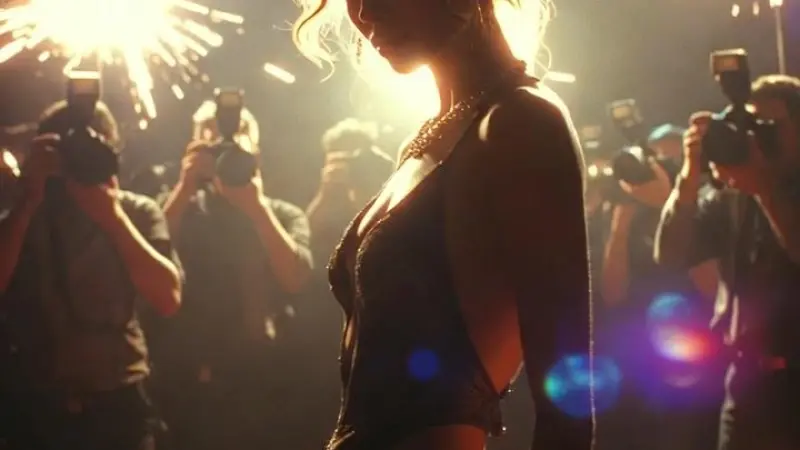
When a Crossword Clue Opens a Door to Pop Culture
It usually starts innocently enough: a quiet moment, a half-filled crossword grid, and a clue that feels deceptively simple—“direct contrast.” You pause, pen hovering, mind rifling through synonyms like a streaming service scrolling through endless options. “Opposite?” “Antithesis?” “Inverse?” The answer might be quick, but the rabbit hole it opens is anything but.

Because here’s the thing about language—especially the kind that shows up in crossword puzzles—it doesn’t live in isolation. It echoes across storytelling, performance, and the very fabric of entertainment itself. In today’s media landscape, where trend cycles shift hourly and viral series dominate conversation, contrast isn’t just a clue—it’s a narrative engine.
This feature isn’t just about solving a crossword. It’s about unpacking the idea of direct contrast—how it shapes characters, defines careers, and fuels the streaming buzz behind some of the most talked-about performances in modern entertainment news. From the elegance of a perfectly chosen antonym to the cinematic tension of opposing forces, we explore how contrast operates both on the page and on the screen.
The Answer Behind the Clue—and Why It Matters
Let’s start with the practical: the most common answers to the crossword clue “direct contrast” include “opposite,” “antithesis,” “foil,” and occasionally “inverse.” Each carries its own nuance. “Opposite” is straightforward, almost blunt. “Antithesis” feels literary, sharpened by rhetoric. “Foil,” interestingly, belongs as much to storytelling as to vocabulary—a character designed to highlight another through contrast.
And that’s where things get interesting.
Crossword puzzles, like scripts, rely on precision. A single word can shift meaning entirely, much like a single line delivery can redefine a scene. The clue “direct contrast” isn’t just asking for a dictionary answer—it’s inviting the solver to think relationally. What stands against something else? What defines itself through difference?
In entertainment, this principle is everywhere. The hero and the villain. The dreamer and the cynic. The rising star and the fading legend. These contrasts aren’t accidental—they’re structural, like beams holding up a narrative house.
Think of it like this: if storytelling were music, contrast would be the silence between notes. Without it, everything blurs into noise.
Filmography, Career Highlights, and the Power of Opposites
In filmography, contrast is often the secret ingredient behind memorable careers. Actors who thrive are rarely those who stay in one lane—they’re the ones who pivot, surprise, and occasionally contradict their own established image.
Consider the performer who moves from a brooding indie drama to a high-energy blockbuster, or from a comedic role into a psychologically intense character. That shift—that direct contrast—creates intrigue. It generates headlines, fuels entertainment news, and often becomes the defining narrative of a career phase.
Anecdotally, casting directors have long favored actors who can embody contradiction. One industry insider once described it this way: “If an actor can play both the storm and the stillness, you’ve got range. If they can only play one, you’ve got a type.”
This duality is particularly visible in today’s streaming era. Platforms thrive on variety, and audiences expect versatility. A single performer might appear in a gritty crime viral series one month and a light-hearted romantic new release the next. The ability to navigate these contrasts isn’t just impressive—it’s essential.
And audiences notice. They discuss it, clip it, remix it. A quiet scene from a dramatic role might circulate alongside a comedic
outtake, creating a digital juxtaposition that amplifies the performer’s range. It’s not just acting anymore—it’s curation by the crowd.
Streaming Buzz and the Rise of Narrative Duality
If there’s one defining feature of modern entertainment, it’s the way stories are consumed—and reshaped—by audiences in real time. The concept of direct contrast has found new life in this ecosystem, where juxtaposition drives engagement.
Scroll through any social platform and you’ll see it: side-by-side clips, before-and-after edits, character transformations compressed into seconds. A hardened antihero in one scene, a vulnerable human in another. The contrast is immediate, striking, and endlessly shareable.
This is where streaming buzz becomes more than a marketing term—it becomes a cultural feedback loop. Viewers don’t just watch; they reinterpret. They highlight contrasts, exaggerate them, turn them into memes and micro-narratives.
One particularly compelling trend involves fan-made edits that pair contrasting roles from the same actor’s filmography. A tender moment from a drama might be set against an explosive action sequence, underscoring the performer’s versatility. It’s like watching two sides of the same coin spin in midair.
The result? A kind of digital mythology, where actors are celebrated not just for individual roles, but for the distance between them.
Cultural Context—Why We’re Drawn to Contrast Right Now
There’s a reason the idea of contrast feels especially resonant today. We live in a time of extremes—fast vs. slow, digital vs. physical, curated vs. authentic. It’s no surprise that our entertainment reflects this duality.
Stories built on contrast offer clarity in a noisy world. They give us anchors—points of reference that help us navigate complexity. A character who embodies contradiction feels real, because we are, after all, contradictions ourselves.
There’s also a psychological pull. Contrast sharpens perception. It’s why a whisper can feel louder than a shout in the right context, or why a subtle performance can outshine a more flamboyant one when placed side by side.
In many ways, the current trend toward character-driven storytelling is a response to this. Audiences aren’t just looking for spectacle—they’re looking for nuance, for tension, for the interplay between opposing forces.
It’s like watching a storm roll in over a calm sea. The beauty isn’t just in the storm or the stillness—it’s in the collision.
The Crossword as a Cultural Microcosm
Returning to the crossword, it’s tempting to see it as a simple pastime. But in reality, it’s a miniature version of the storytelling process. Each clue is a prompt. Each answer is a resolution. And the best clues—like “direct contrast”—invite deeper thinking.
There’s a quiet satisfaction in filling in the correct word, a small click of alignment between question and answer.
It’s not unlike the feeling of watching a perfectly executed scene, where every element falls into place.
In both cases, contrast plays a key role. The clue sets up expectation; the answer subverts or fulfills it. The tension between the two is what makes the experience engaging.
And perhaps that’s why crossword puzzles continue to resonate, even in an age dominated by screens and streams. They tap into the same cognitive and emotional mechanisms that drive our love for stories.
More Than Just an Answer
So yes, the answer to “direct contrast” might be as simple as opposite or antithesis. But the concept it represents is anything but simple.
In entertainment, contrast is the engine of drama, the foundation of character, and the spark behind streaming buzz and viral series moments. It’s what turns a good performance into a memorable one, a familiar story into a compelling experience.
Like a mirror placed against another mirror, contrast creates depth—an illusion of infinity within a finite frame. And in a world where attention is fleeting and content is abundant, that depth is what keeps us coming back.
So the next time you encounter that crossword clue, pause for a moment. Consider not just the answer, but the idea behind it. Because sometimes, the simplest words carry the richest meanings—and the smallest puzzles reflect the biggest stories.
1. What is the answer to “direct contrast” in a crossword? Common answers include “opposite,” “antithesis,” “foil,” and “inverse.”
2. Which answer is most commonly used? “Opposite” is the most frequent due to its simplicity.
3. What does “antithesis” mean? It refers to a direct opposite, often used in literary or rhetorical contexts.
4. How is “foil” used in storytelling? A foil is a character who contrasts with another to highlight traits.
5. Why are crossword clues sometimes tricky? They rely on wordplay, multiple meanings, and context.
6. How does contrast relate to film and TV? It creates tension, depth, and character development.
7. What is streaming buzz? Online discussion and hype סביב shows or films on streaming platforms.
8. Why are viral series popular? They spread quickly through social sharing and audience engagement.
9. How do actors use contrast in performances? By portraying different emotional or character extremes.
10. What is a career highlight in acting? A standout role that defines or elevates an actor’s reputation.
11. Why is contrast important in storytelling? It helps audiences understand characters and conflicts.
12. What are synonyms for “opposite”? Antithesis, reverse, inverse, contrary.
13. How do crossword puzzles improve thinking? They enhance vocabulary, memory, and problem-solving skills.
14. What trends are shaping entertainment today? Streaming platforms, viral content, and character-driven stories.
15. How does social media impact film popularity? It amplifies visibility through clips, edits, and discussions.
16. What makes a performance memorable? Emotional depth, authenticity, and contrast.
17. Are crossword clues connected to pop culture? Often yes, as they reflect language, trends, and shared knowledge.

Disclaimer: The information provided in this article is for general informational and research purposes only. Company details, features, services, and market positions may change over time. Readers are advised to visit official company websites and conduct independent research before making any business decisions or purchasing services.
Most Searchable Keywords

Recent Blogs


Related Listings


Categories
- Accountants (295)
- Advertising Agencies (559)
- Architects (149)
- Automobiles (377)
- Beauty (300)
- Carpenters (146)
- Cleaning Services (386)
- Dentists (189)
- Driving (62)
- Electricians (215)
- Energy (8)
- Event Organiser (685)
- Finance (599)
- Guide (3365)
- Health (2207)
- Information technology (206)
- Legal Services (353)
- Logistics (6)
- Maintenance (65)
- Manufacturing (35)

Sponsored Listings in Locksmith Services


Related Blogs
Gen Z Political Reporters and News Creators i...
Read this insightful article "Gen Z Political Reporters and News Creators in the UK" to expand your knowledge!

Famous Female Social Media Influencers Across...
Read this insightful article "Famous Female Social Media Influencers Across the UK" to expand your knowledge!

Your UK Sponsor Licence 2026 Step by Step Gui...
Read this insightful article "Your UK Sponsor Licence 2026 Step by Step Guide" to expand your knowledge!
Questions & Answers – Find What
You Need, Instantly!
How can I update my business listing?
Is it free to manage my business listing?
How long does it take for my updates to reflect?
Why is it important to keep my listing updated?
