
Do I Need Business Banking? A Guide for Small Businesses
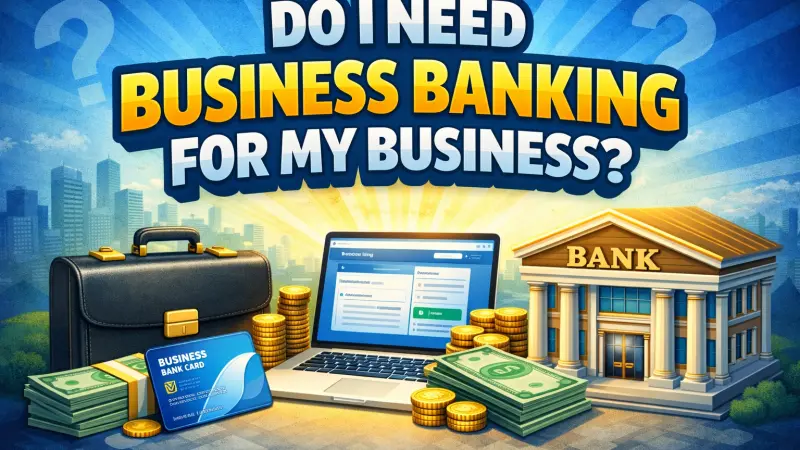
When you first launch a business, the initial instinct is often to simplify. You might think that since you are the sole owner or the primary driver of the enterprise, using your existing personal bank account is the most efficient path forward. After all, the money coming in is yours, and the expenses being paid are yours. However, this line of thinking often leads to significant legal, financial, and operational hurdles that can derail even the most promising venture.

The question of whether you "need" business banking isn't just about convenience; it is a fundamental decision regarding the structure and safety of your professional life. For many business types, it is a legal requirement, while for others, it is a strategic necessity.
The Legal Reality: Piercing the Corporate Veil
The most compelling reason to establish a dedicated business bank account is the protection of your personal assets. If you have registered your business as a Limited Liability Company (LLC) or a Corporation, you have created a separate legal "person." This separation is what shields your personal savings, your home, and your car from being seized if the business is sued or falls into debt.
However, this shield—often called the "corporate veil"—is not indestructible. If a court finds that you have not treated the business as a separate entity, they can "pierce the veil." One of the fastest ways to lose your liability protection is by commingling funds. When you pay for a personal grocery bill with a business card or deposit a client's check into your personal savings, you are signaling to the legal system that you and the business are one and the same.
If a creditor or a plaintiff in a lawsuit can prove that there is a "unity of interest" between your personal life and your business finances, your personal assets become fair game to satisfy business obligations. A dedicated business bank account is the primary piece of evidence used to prove that your business is a distinct, professional entity.
Tax Compliance and the IRS Audit Trail
From the perspective of tax authorities, a clean paper trail is the difference between a smooth tax season and a grueling audit. When business and personal transactions are mixed, calculating deductible expenses becomes an exercise in guesswork.
Deduction Accuracy To claim a business deduction, you must be able to prove the expense was "ordinary and necessary" for your trade. If your bank statement shows a charge at a restaurant alongside a charge for a personal hobby, an auditor may disallow the business deduction entirely because the records are deemed unreliable.
Audit Defense In the event of an audit, tax authorities will request your bank records. If your accounts are separate, you only need to provide the business statements. If they are mixed, the auditor has the right to scrutinize every single personal purchase you made throughout the year to ensure no business income was "hidden" as a personal deposit.
Simplified Bookkeeping Business banking allows for seamless integration with accounting software. These tools can automatically categorize business
transactions, saving you hundreds of hours or thousands of dollars in accounting fees every year.
Establishing Professional Credibility
Business is built on trust and perception. When you ask a client to write a check or send a wire transfer, seeing a personal name rather than a business name can raise red flags. It suggests that the operation might be a "hobby" or a side hustle rather than a professional enterprise.
A business bank account allows you to:
Issue checks that feature your professional business name and logo.
Set up merchant services to accept credit and debit card payments directly into a business-owned account.
Apply for a business credit card which helps build a business credit score independent of your personal credit.
Scaling and Financial Growth
As your business grows, your financial needs will evolve beyond simple deposits and withdrawals. Business banking provides access to a suite of products that are unavailable to personal account holders.
Business Credit Lines Banks are far more likely to extend credit to a business that has an established banking history. This history shows the bank your average daily balance, your cash flow patterns, and your ability to manage revenue.
Employee Access If you eventually hire an assistant or a manager, you will need to give them the ability to make purchases or handle payroll.
Business accounts allow for "sub-users" with limited permissions, ensuring your employees can do their jobs without having full access to your personal financial history.
Higher Transaction Limits Personal accounts often have daily or monthly limits on transfers and cash deposits. Business accounts are designed for higher volumes, allowing you to move the larger sums required for inventory, equipment, or large-scale service contracts.
Different Types of Business Accounts
Not all business banking is the same. Depending on your needs, you might require different types of accounts to manage your capital effectively. A Business Checking account acts as the central hub for daily operations, payroll, and expenses. Business Savings accounts are ideal for setting aside funds for quarterly tax payments or emergency reserves.
Furthermore, Merchant Accounts are specialized accounts that allow you to process credit card transactions. Money Market Accounts offer a middle ground, providing higher interest rates than savings accounts while still allowing a limited number of monthly transactions for operational flexibility.
Making the Transition
If you have already started your business using a personal account, it is never too late to make the switch. The process is straightforward but requires specific documentation including your Employer Identification Number (EIN), your formal formation documents, and valid identification for all owners.
Once the account is open, the most important rule is discipline. Stop all personal spending from the business account immediately and move your business income streams to the new account. By doing so, you are not just checking a box for the bank—you are building a fortress around your personal assets and a foundation for your future growth.
Frequently Asked Questions
Is a business bank account required for a sole proprietorship? Legally, a sole proprietorship and the owner are the same entity, so a separate account isn't strictly required by law.
However, it is highly recommended for tax organization and to maintain a professional image with clients.
Can I use my personal account for business if I have an LLC? While you physically can, doing so puts your limited liability protection at risk. Commingling funds is the primary reason courts allow "piercing the corporate veil," which makes you personally liable for business lawsuits and debts.
What documents do I need to open a business bank account? Typically, you need your Employer Identification Number (EIN) or Social Security Number, your business’s formation documents (like Articles of Organization), and a business license if applicable.
Do business bank accounts have higher fees than personal accounts? Often, yes. Business accounts may have monthly maintenance fees, transaction limits, or cash deposit fees. However, many banks offer "starter" accounts that waive these fees if you maintain a certain minimum balance.
What is an EIN and do I need one for banking? An Employer Identification Number (EIN) is like a social security number for your business. Most banks require it to open an account for any registered entity like an LLC or Corporation.
Can a business bank account help me get a loan? Yes. Banks use your business banking history to assess your cash flow and creditworthiness. A history of consistent revenue in a business account makes you a much stronger candidate for a loan.
How do I pay myself from a business bank account? You should "draw" funds by transferring money from your business account to your personal account. This creates a clear record of the transfer as owner's equity or salary, keeping the two financial worlds separate.
What is "piercing the corporate veil"? This is a legal term where a court holds a business owner personally liable for the company's debts. This usually happens if the owner doesn't keep business and personal finances separate.
Can I open a business bank account online? Yes, many modern fintech companies and traditional banks allow
for a completely digital application process, provided you have digital copies of your formation documents.
Do I need a separate business account for my side hustle? If your side hustle is earning significant income or involves any liability risk, a separate account is a smart move to stay organized for tax season and protect your primary income.

Disclaimer: The information provided in this article is for general informational and research purposes only. Company details, features, services, and market positions may change over time. Readers are advised to visit official company websites and conduct independent research before making any business decisions or purchasing services.
Most Searchable Keywords

Recent Blogs


Related Listings


Categories
- Accountants (295)
- Advertising Agencies (559)
- Architects (149)
- Automobiles (377)
- Beauty (300)
- Carpenters (146)
- Cleaning Services (386)
- Dentists (189)
- Driving (62)
- Electricians (215)
- Energy (8)
- Event Organiser (685)
- Finance (599)
- Guide (3365)
- Health (2207)
- Information technology (206)
- Legal Services (353)
- Logistics (6)
- Maintenance (65)
- Manufacturing (35)

Sponsored Listings in Locksmith Services


Related Blogs

Gen Z Political Reporters and News Creators i...
Read this insightful article "Gen Z Political Reporters and News Creators in the UK" to expand your knowledge!

Famous Female Social Media Influencers Across...
Read this insightful article "Famous Female Social Media Influencers Across the UK" to expand your knowledge!

Your UK Sponsor Licence 2026 Step by Step Gui...
Read this insightful article "Your UK Sponsor Licence 2026 Step by Step Guide" to expand your knowledge!
Questions & Answers – Find What
You Need, Instantly!
How can I update my business listing?
Is it free to manage my business listing?
How long does it take for my updates to reflect?
Why is it important to keep my listing updated?
