
Driverless Cars on UK Roads
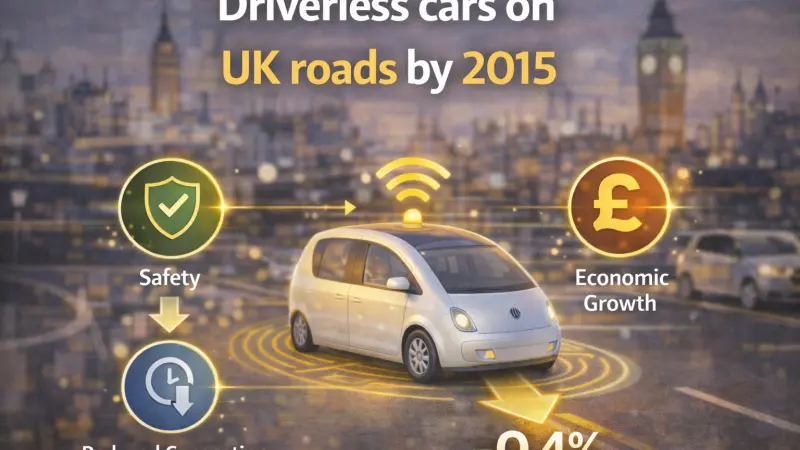
The idea of driverless cars on UK roads by 2015 once captured the imagination of policymakers, technology innovators, and the public. Autonomous vehicles promised safer roads, reduced congestion, and a revolution in personal and commercial transport. Advances in artificial intelligence, sensors, and connectivity created optimism that self driving cars would quickly become part of everyday life.

While fully autonomous vehicles were not widely deployed by 2015, the ambition accelerated research, testing, and regulatory discussions across the UK. The vision helped position the country as a hub for automotive innovation and smart mobility solutions.
In this article, we explore the early predictions around driverless cars in the UK, the technology behind them, the challenges encountered, and how the future of autonomous transport continues to evolve.
The Vision Behind Driverless Cars
Driverless cars were seen as a major breakthrough in transport technology. The concept involved vehicles capable of navigating roads without human input, using advanced sensors and artificial intelligence systems.
The expected benefits included improved road safety, reduced human error, and more efficient traffic management. Supporters believed autonomous vehicles could transform urban mobility and reduce emissions through optimised driving.
The 2015 target reflected growing confidence in technological advancement at the time.
Technology Powering Autonomous Vehicles
Autonomous vehicles rely on a combination of technologies to operate safely. Sensors such as cameras, radar, and lidar help the vehicle detect its surroundings.
Artificial intelligence systems process data in real time, allowing the car to make driving decisions. GPS and mapping technologies provide navigation support.
Connectivity systems enable vehicles to communicate with infrastructure and other vehicles, enhancing safety and coordination.
These technologies form the foundation of driverless mobility.
Government Support and Trials in the UK
The UK government showed early support for autonomous vehicle development by funding pilot projects and research initiatives. Trials were conducted in selected cities to test self driving technology in controlled environments.
These initiatives aimed to position the UK as a leader in transport innovation and attract investment from automotive and technology companies.
Regulatory frameworks began evolving to accommodate testing and development.
Challenges That Slowed Adoption
Despite technological progress, several challenges delayed widespread adoption by 2015. Safety concerns remained a major issue, as ensuring vehicles could handle complex road conditions proved difficult.
Legal and regulatory questions also needed to be addressed, including liability in the event of accidents. Public trust and acceptance were additional hurdles.
Infrastructure readiness and high development costs further limited immediate deployment.
Safety and Ethical Considerations
Autonomous vehicles were expected to reduce accidents caused by human error, but ensuring reliable performance in unpredictable situations required extensive testing.
Ethical considerations around decision making in emergency scenarios also generated debate.
Addressing these concerns required collaboration between technology developers, regulators, and policymakers.
Economic and Industry Impact
The development of driverless cars stimulated growth in the automotive and technology sectors. Investment in research and development created opportunities for engineers, software developers, and manufacturers.
The UK automotive industry saw potential benefits in becoming a global leader in autonomous vehicle technology.
Innovation in mobility supported economic growth.
Public Perception and Adoption
Public perception played a key role in adoption. While many people were excited about the potential benefits, others expressed concerns about safety and reliability.
Building trust required transparent testing and clear communication about safety standards.
Gradual introduction of semi autonomous features helped familiarise drivers with the technology.
Advancements Since 2015
Although fully driverless cars were not widely available by 2015, significant progress has been made since then.
Many vehicles now include advanced driver assistance systems such as adaptive cruise control, lane keeping assistance, and automated parking.
Ongoing research continues to refine artificial intelligence and sensor technologies.
Autonomous vehicle development remains a priority for the transport industry.
The Role of Infrastructure
For driverless cars to operate effectively, infrastructure must support connectivity and smart traffic systems. Investment in digital road networks and 5G connectivity enhances vehicle communication.
Smart infrastructure improves safety and efficiency.
Infrastructure development supports long term adoption.
Environmental Benefits
Autonomous vehicles have the potential to reduce emissions by optimising driving patterns and reducing congestion. Integration with electric vehicle technology could further enhance environmental benefits.
Sustainable transport remains a key goal in the evolution of mobility.
Driverless technology may contribute to greener cities.
Future Outlook for Autonomous Vehicles in the UK
The future of driverless cars in the UK looks promising, with ongoing trials and regulatory developments supporting gradual integration. Full autonomy may take longer than initially predicted, but progress continues steadily.
Collaboration between government, industry, and technology companies will shape the path forward.
Autonomous mobility is likely to become increasingly common in coming years.
The ambition to see driverless cars on UK roads by 2015 reflected strong optimism about technological progress. While full deployment did not occur within that timeframe, the vision accelerated innovation and positioned the UK as a key player in autonomous vehicle development.
Challenges such as safety, regulation, and public trust required careful consideration, but advancements continue to shape the future of transport. Autonomous vehicles hold significant potential for improving safety, efficiency, and sustainability.
As technology evolves and infrastructure improves, driverless cars are expected to become an integral part of the UK’s transport landscape.
FAQs
What are driverless cars Vehicles that use technology to operate without human input.
Were driverless cars fully available in the UK by 2015 No, they were still in testing and development stages.
What technology powers autonomous vehicles Sensors, artificial intelligence, GPS, and connectivity systems.
Why were driverless cars predicted for 2015 Rapid technological advancements created early optimism.
What challenges delayed deployment Safety, regulation, public trust, and infrastructure readiness.
Are driverless cars safer than human drivers They aim to reduce accidents caused by human error, but require extensive testing.
Did the UK support autonomous vehicle trials Yes, through pilot projects and funding initiatives.
What are advanced driver assistance systems Features like lane keeping and adaptive cruise control.
Do driverless cars reduce emissions They can improve efficiency and reduce congestion.
What role does AI play in driverless cars AI processes data and makes real time driving decisions.
Is the UK a leader in autonomous vehicle research The UK has invested significantly in innovation and trials.
What infrastructure is needed Smart roads, digital connectivity, and communication systems.
Will fully autonomous cars become common soon Gradual adoption is expected over time.
How do driverless cars detect obstacles Using cameras, radar, and lidar sensors.
What is the future of autonomous transport Continued innovation and integration into mainstream mobility.

Disclaimer: The information provided in this article is for general informational and research purposes only. Company details, features, services, and market positions may change over time. Readers are advised to visit official company websites and conduct independent research before making any business decisions or purchasing services.
Most Searchable Keywords

Recent Blogs



Related Listings


Categories
- Accountants (295)
- Advertising Agencies (559)
- Architects (149)
- Automobiles (377)
- Beauty (300)
- Carpenters (146)
- Cleaning Services (386)
- Dentists (189)
- Driving (62)
- Electricians (215)
- Energy (8)
- Event Organiser (685)
- Finance (599)
- Guide (3365)
- Health (2207)
- Information technology (206)
- Legal Services (353)
- Logistics (6)
- Maintenance (65)
- Manufacturing (35)

Sponsored Listings in Locksmith Services


Related Blogs

Gen Z Political Reporters and News Creators i...
Read this insightful article "Gen Z Political Reporters and News Creators in the UK" to expand your knowledge!

Famous Female Social Media Influencers Across...
Read this insightful article "Famous Female Social Media Influencers Across the UK" to expand your knowledge!

Your UK Sponsor Licence 2026 Step by Step Gui...
Read this insightful article "Your UK Sponsor Licence 2026 Step by Step Guide" to expand your knowledge!
Questions & Answers – Find What
You Need, Instantly!
How can I update my business listing?
Is it free to manage my business listing?
How long does it take for my updates to reflect?
Why is it important to keep my listing updated?
