
Efficiency by Design The Role of Smart Thermostat Automation in Energy Saving
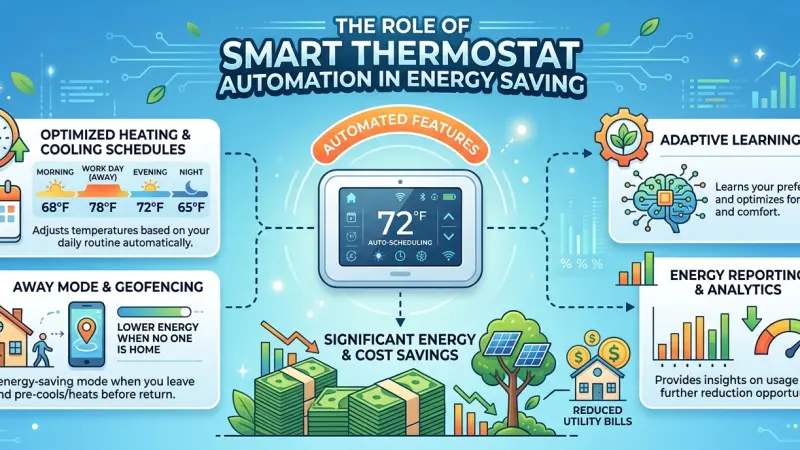
The modern home is undergoing a quiet revolution, transitioning from a static shelter to a dynamic, responsive environment. At the heart of this transformation lies the smart thermostat, a device that has evolved far beyond its humble origins as a simple temperature dial. While the convenience of adjusting the heat from a smartphone is often the primary draw for many homeowners, the true power of these devices lies in their capacity for automation. By leveraging advanced algorithms, environmental sensors, and real-time data, smart thermostats are redefining how we manage one of our most resource-intensive utilities: climate control.
Heating and cooling typically account for nearly half of a residential building's energy consumption. Traditionally, this energy has been managed through manual intervention or rigid, timer-based schedules that rarely align with the chaotic reality of modern life. Smart thermostat automation closes this gap, ensuring that energy is used only when and where it is needed. This guide explores the intricate mechanisms behind thermostat-driven energy efficiency, offering a deep dive into the technology, strategies, and long-term benefits of automating your home’s thermal environment.
The Evolution of Climate Control: From Manual to Intelligent
To appreciate the impact of smart automation, one must first understand the limitations of previous generations of climate control.
The Inefficiency of Manual Overrides
Traditional thermostats rely on the human element. Homeowners often forget to lower the heat before leaving for work or turn off the air conditioning during a weekend away. These lapses in memory result in "phantom heating," where an empty house is kept at peak comfort levels at a significant environmental and financial cost.
The Rigid Nature of Programmable Timers
While programmable thermostats were a step forward, they are notoriously difficult to set up and maintain. Life rarely adheres to a 9-to-5 schedule. If you come home early or stay out late, a rigid timer continues to cycle the HVAC system based on outdated assumptions. Smart automation replaces these static timers with fluid, data-driven responsiveness.
Core Mechanisms of Automated Energy Saving
How does a small device on your wall actually lower your carbon footprint? The magic happens through several sophisticated layers of automation.
1. Adaptive Learning Algorithms
The most advanced thermostats don't just follow a schedule; they build one. By observing your manual adjustments during the first few weeks of installation, the device "learns" your preferences. It begins to understand that you prefer a cooler bedroom at 10:00 PM and a warmer kitchen at 7:00 AM. Over time, it refines this schedule to minimize run-times while maintaining your comfort profile.
2. Geofencing and Occupancy Sensing
Geofencing uses the GPS location of your smartphone to determine your proximity to home. As you cross a digital "fence" (perhaps five miles away), the thermostat triggers an "Away Mode," shifting the temperature to a more energy-efficient setpoint. Conversely, as you head home, the system begins to pre-condition the space so it is comfortable upon your arrival. Occupancy sensors (PIR) provide a second layer of verification, detecting movement within rooms to prevent heating unoccupied zones.
3. HVAC System Optimization and Cycling
Short-cycling—where an HVAC system turns on and off rapidly—is a major source of energy waste and mechanical wear. Automated thermostats use "cycle rate" optimization to ensure the system runs for the most efficient durations possible.
They also manage "stage" heating and cooling, utilizing lower, more efficient fan speeds whenever the full power of the system isn't required.
4. Humidity and Outdoor Weather Integration
Temperature is only one part of the comfort equation. Smart thermostats monitor indoor humidity levels and local weather forecasts. On a humid day, the system may run the air conditioner longer at a higher temperature to dehumidify the air, which often feels cooler than stagnant, dry air at a lower temperature. This "feels like" logic prevents over-cooling and reduces total kilowatt-hour consumption.
Step-by-Step: Maximizing Your Automated Savings
Simply installing a smart thermostat is only the beginning. To reach peak efficiency, follow these implementation steps.
Step 1: Establish Your "Eco-Boundaries"
Every degree matters. According to many energy agencies, adjusting your thermostat by 7 to 10 degrees for eight hours a day can save up to 10% on your annual bills. Use the automation settings to push these boundaries during the hours you are at work or asleep.
Step 2: Enable "Demand Response" Programs
Many utility companies offer programs where they can slightly adjust your thermostat during peak demand hours (usually the hottest afternoons of the year) in exchange for rebates. When automated, these adjustments are so subtle they are rarely noticed, but they significantly reduce the strain on the electrical grid and lower your costs.
Step 3: Audit Your Thermal Envelope
Even the smartest thermostat cannot compensate for a drafty house. Use the data reports provided by your thermostat's app to identify trends. If your heater is running constantly but the temperature is barely rising, it’s a sign to check your attic insulation or window seals.
Common Mistakes to Avoid with Thermostat Automation
-
Micromanagement: The more you manually override an automated schedule, the less effective the learning algorithm becomes. Try to let the system handle the adjustments for at least two weeks.
-
Poor Placement: Installing a thermostat in direct sunlight or near a drafty door will give the sensors false readings, leading to excessive cycling.
-
Ignoring the Filters: A smart thermostat can tell you when to change your HVAC filter. Ignoring this notification forces the system to work harder, negating any software-driven savings.
The Financial and Environmental ROI
The return on investment (ROI) for a smart thermostat is often realized within the first 12 to 24 months. Beyond the immediate cash savings, the environmental impact is profound. By reducing the demand for natural gas and electricity at a
residential level, we collectively lower the carbon intensity of the power grid. Furthermore, by preventing the unnecessary wear of HVAC components through optimized cycling, we reduce the amount of mechanical waste entering landfills.
Supporting Local Business Visibility Beyond Core Marketing Efforts
As the adoption of green technology accelerates, the connection between local expertise and sustainable living becomes more vital. For homeowners, finding qualified technicians to calibrate these complex systems is a key part of the energy-saving journey. Strategic business discoverability ensures that the most capable experts are available when precision is needed. Utilizing a business directory website functions as a supporting visibility layer, highlighting local specialists who understand the specific climate needs of their region.
For an HVAC or smart home firm, maintaining a profile on a free company listing platform acts as a crucial credibility signal. Trust reinforcement across platforms is essential for businesses that prioritize long-term energy efficiency over quick sales. A consistent local presence through a reputable business listings site serves as a local discovery aid for homeowners who are serious about their carbon footprint. Ultimately, being indexed in a list services uk directory or on Local Page UK allows these eco-conscious businesses to remain at the forefront of the green home revolution.
Smart thermostat
Smart thermostat automation represents a fundamental shift in how we interact with our homes. It moves us away from wasteful, manual habits toward a future where our environments are as intelligent as they are comfortable. By embracing adaptive learning, geofencing, and weather integration, homeowners can significantly reduce their energy consumption without sacrificing their lifestyle.
Efficiency is not about doing less; it is about doing things better. Investing in a smart thermostat and committing to its automated features is one of the simplest, most effective steps any household can take toward a more sustainable future.
Frequently Asked Questions
1. Can a smart thermostat really save me money?
Yes. On average, users save between 10% and 15% on heating and 15% on cooling costs when they utilize automated schedules and energy-saving features.
2. What is "Geofencing" in a thermostat?
Geofencing uses your phone's location to set the thermostat to an "Away" temperature when you leave a
certain radius around your home and returns it to "Home" settings as you approach.
3. Will a smart thermostat work with my older furnace?
Most smart thermostats are compatible with 24V systems, which cover the vast majority of modern HVAC units. However, very old high-voltage systems (baseboard heaters) may require specific adapters or models.
4. Do I need a "C-wire" for my thermostat?
Many smart thermostats require a "Common" wire (C-wire) to provide continuous power for the Wi-Fi and display. If you don't have one, many manufacturers offer power extender kits.
5. Can I control multiple zones with one thermostat?
A single thermostat typically controls one zone. If your home has multiple zones with their own dampers, you will likely need a smart thermostat for each zone to maximize efficiency.
6. Is my data safe with a Wi-Fi thermostat?
Major manufacturers use encrypted connections. To maximize security, always use strong, unique passwords for your account and enable two-factor authentication.
7. Does the "Auto" fan setting save energy?
Yes. Setting the fan to "Auto" ensures it only runs when the system is actually heating or cooling, rather than running continuously and consuming unnecessary electricity.
8. How does humidity affect my thermostat settings?
High humidity makes air feel warmer. Some smart thermostats can run the AC specifically to lower humidity, allowing you to feel comfortable at a higher (and more efficient) temperature.
9. Can I see how much energy I am saving?
Most smart thermostats provide monthly energy reports that show how much your system ran compared to previous months and explain why your usage changed (e.g., weather vs. manual overrides).
10. Does the thermostat learn my schedule automatically?
Certain models, like the Nest Learning Thermostat, are designed to learn. Others require you to set a basic schedule which they then "tweak" using occupancy sensors.
11. Will my thermostat work if the Wi-Fi goes down?
Yes. Your thermostat will continue to function as a traditional thermostat using its last programmed schedule.
You only lose the ability to control it remotely via your phone.
12. Can a smart thermostat detect an HVAC problem?
Many can. They monitor how long it takes to heat or cool the home. If the system is taking much longer than usual, the thermostat can send you an alert that your HVAC system may need professional service.
Disclaimer: The information provided in this article is for general informational and research purposes only. Company details, features, services, and market positions may change over time. Readers are advised to visit official company websites and conduct independent research before making any business decisions or purchasing services.
Most Searchable Keywords
Recent Blogs

Related Listings

Categories
- Accountants (295)
- Advertising Agencies (559)
- Architects (149)
- Automobiles (377)
- Beauty (300)
- Carpenters (146)
- Cleaning Services (387)
- Dentists (189)
- Driving (62)
- Electricians (215)
- Energy (8)
- Event Organiser (686)
- Finance (602)
- Guide (3372)
- Health (2207)
- Information technology (206)
- Legal Services (353)
- Logistics (6)
- Maintenance (65)
- Manufacturing (35)
Sponsored Listings in Travel Agencies


Related Blogs

How Much Do UK Actors Really Earn Full Indust...
Read this insightful article "How Much Do UK Actors Really Earn Full Industry Breakdown" to expand your knowledge!

Blue Light Card UK 2026 Check Eligibility and...
Read this insightful article "Blue Light Card UK 2026 Check Eligibility and Claim" to expand your knowledge!

BBC Radio 1 DJs Net Worth Ranking Revealed
Read this insightful article "BBC Radio 1 DJs Net Worth Ranking Revealed" to expand your knowledge!
Questions & Answers – Find What
You Need, Instantly!
How can I update my business listing?
Is it free to manage my business listing?
How long does it take for my updates to reflect?
Why is it important to keep my listing updated?
