
Electrical Installation Regulations UK Guide And Standards
- 👤 Alex
- 👁️ 113 Views
- Last Updated: April 10, 2026
- 🏷️ Electricians
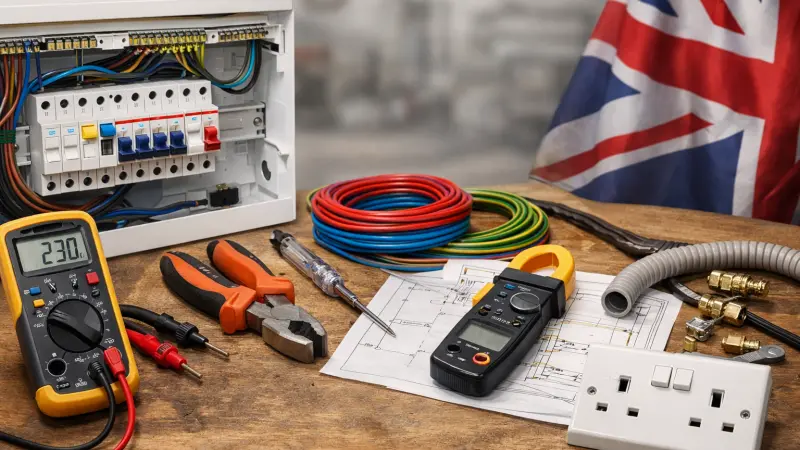
What exactly defines a safe and compliant electrical installation in the United Kingdom? For contractors, electricians, and business owners alike, understanding electrical installation and wiring regulations is not just a legal requirement—it is fundamental to ensuring safety, efficiency, and long-term reliability.

This comprehensive guide explores the principles of electrical installations, the importance of proper design, and the legal and regulatory frameworks that govern electrical systems. Whether you are working on domestic, commercial, or industrial projects, a clear understanding of these concepts is essential for compliance and best practice.
Understanding Electrical Installations
An electrical installation refers to a coordinated assembly of electrical equipment designed to fulfil a specific purpose. This includes all components involved in generating, transmitting, distributing, and utilising electrical energy within a defined system.
Electrical equipment may include:
- Transformers and generators
- Switchgear and protective devices
- Wiring systems and cables
- Lighting fixtures and appliances
- Distribution boards and circuit breakers
The key distinction lies in the term “assembly.” An electrical installation is not a single device but a complete system where all components are interconnected and function together safely and efficiently.
What Does Not Qualify as an Electrical Installation?
Understanding what does not constitute an electrical installation is equally important. For example, a standalone light bulb is simply an electrical device. It becomes part of an installation only when integrated with wiring, switches, and protective systems.
Even a simple circuit consisting of a lamp, switch, and wiring may not qualify as a full installation unless it includes:
- A defined power source
- Protective devices such as fuses or circuit breakers
- Coordinated components designed for a specific function
In most practical scenarios, electrical installations consist of multiple circuits serving different purposes such as lighting, heating, and power distribution.
Why Electrical Installation Design Matters
Designing an electrical installation is a critical step that should never be overlooked. While it may be tempting to rely on experience or replicate existing systems, this approach often leads to inefficiencies and safety risks.
Proper design ensures:
- Optimal use of materials and cost efficiency
- Compliance with legal and safety standards
- Protection against electrical hazards such as fires and shocks
- Future scalability and adaptability
In the UK, poor electrical design has been linked to numerous incidents, including property damage and personal injury. A professionally designed installation considers load requirements, circuit protection, earthing arrangements, and environmental conditions.
Legal Framework for Electrical Installations
Electrical installations are governed by strict legal frameworks to ensure public safety.
In the UK, several laws and regulations apply, including:
- Electricity at Work Regulations 1989
- Building Regulations Part P (for domestic installations)
- Health and Safety at Work Act 1974
These regulations establish the legal responsibilities of employers, contractors, and property owners in maintaining safe electrical systems.
Electricity at Work Regulations 1989
This legislation requires that all electrical systems be constructed and maintained to prevent danger. It applies to all workplaces and imposes duties on employers and employees alike.
Key principles include:
- Ensuring systems are safe to use and properly maintained
- Preventing electrical hazards through design and operation
- Providing adequate training and supervision
Building Regulations Part P
Part P specifically addresses electrical safety in domestic properties. It requires that certain types of work be notified to local authorities and carried out by competent persons.
This regulation ensures that household electrical installations meet minimum safety standards.
Wiring Regulations in the UK
The primary standard governing electrical installations in the UK is the IET Wiring Regulations, also known as BS 7671. These regulations provide detailed guidance on the design, installation, and inspection of electrical systems.
BS 7671 covers:
- Circuit design and load calculations
- Protection against electric shock and overcurrent
- Earthing and bonding requirements
- Inspection, testing, and certification
Compliance with BS 7671 is widely regarded as essential for demonstrating adherence to legal requirements.
Importance of Standards and Codes of Practice
Standards play a vital role in ensuring consistency and safety across electrical installations. In the UK, the British Standards Institution (BSI) publishes relevant standards, including BS 7671.
Codes of practice provide additional guidance and help professionals apply regulations effectively in real-world scenarios. However, it is important to note that compliance with codes alone may not guarantee full legal compliance.
Coordination of Electrical Components
A key concept in electrical installations is the coordination of components. Each part
of the system must be compatible with others to ensure safe operation.
For example:
- Cables must be rated for the expected current load
- Switches must handle the operating current safely
- Protective devices must respond appropriately to faults
Failure to coordinate these elements can lead to overheating, equipment failure, or dangerous conditions.
Safety Considerations in Electrical Installations
Electrical safety is a primary concern in all installations. Hazards such as electric shock, fire, and equipment damage must be mitigated through proper design and maintenance.
Essential safety measures include:
- Use of residual current devices (RCDs)
- Proper earthing and bonding
- Regular inspection and testing
- Compliance with relevant standards
These measures help protect both users and property from potential risks.
Inspection and Testing Requirements
All electrical installations must be inspected and tested to ensure they meet safety standards. This process typically includes:
- Visual inspection of components
- Verification of wiring connections
- Testing of protective devices
- Measurement of insulation resistance
Certificates such as Electrical Installation Certificates (EIC) or Minor Works Certificates are issued upon successful completion.
Role of Competent Persons
In the UK, electrical work must be carried out by competent individuals. This means having the necessary skills, knowledge, and experience to perform the work safely.
Competent persons schemes allow electricians to self-certify their work, ensuring compliance without
the need for external approval in certain cases.
Practical Example of an Electrical Installation
Consider a typical residential property. The electrical installation may include:
- Lighting circuits
- Power socket circuits
- Kitchen appliances
- Heating systems
Each circuit is connected to a consumer unit, which houses protective devices such as circuit breakers and RCDs. The entire system is designed to meet the specific needs of the household while ensuring safety and efficiency.
Common Mistakes in Electrical Installations
Despite regulations, common mistakes still occur, including:
- Overloading circuits
- Using incorrect cable sizes
- Poor earthing practices
- Ignoring inspection requirements
These errors can lead to serious consequences and highlight the importance of proper training and adherence to standards.
Future Trends in Electrical Installations
The field of electrical installations is evolving rapidly with advancements in technology. Key trends include:
- Smart home systems and automation
- Integration of renewable energy sources
- Electric vehicle charging infrastructure
- Energy-efficient design practices
These developments require updated knowledge and continuous learning for professionals in the industry.
Conclusion
Electrical installation and wiring regulations form the backbone of safe and efficient electrical systems in the UK. From understanding the definition of an installation to complying with legal and technical standards, every aspect plays a crucial role in ensuring safety and reliability.
By following established regulations, adopting best practices, and prioritising proper design, professionals can deliver installations that meet both legal requirements and user expectations.
Frequently Asked Questions
What is an electrical installation?
An electrical installation is a coordinated system of electrical equipment designed to perform a specific function, such as lighting or power distribution.
Which regulations apply to electrical installations in the UK?
Key regulations include the Electricity at Work Regulations 1989, Building Regulations Part P, and BS 7671 Wiring Regulations.
Why is electrical installation design important?
Proper design ensures safety, efficiency, compliance, and long-term reliability of electrical systems.
What is BS 7671?
BS 7671 is the UK standard for electrical installations, providing detailed guidance on design, installation, and testing.
Who can carry out electrical installations?
Electrical work should be performed by competent persons with the necessary training and experience.

Disclaimer: The information provided in this article is for general informational and research purposes only. Company details, features, services, and market positions may change over time. Readers are advised to visit official company websites and conduct independent research before making any business decisions or purchasing services.
Most Searchable Keywords

Recent Blogs


Related Listings
-

Welton Renewables and Electrical
-
EV Home Charger UK
-
A1 Gas Force Nuneaton
-
A1 Gas Force Warwick
-
A1 Gas Force Solihull




Categories
- Accountants (295)
- Advertising Agencies (559)
- Architects (149)
- Automobiles (377)
- Beauty (300)
- Carpenters (146)
- Cleaning Services (386)
- Dentists (189)
- Driving (62)
- Electricians (215)
- Energy (8)
- Event Organiser (685)
- Finance (598)
- Guide (3364)
- Health (2207)
- Information technology (206)
- Legal Services (353)
- Logistics (6)
- Maintenance (65)
- Manufacturing (35)

Sponsored Listings in Electricians


Related Blogs

Where to Find the Best Summer Festivals in Br...
Read this insightful article "Where to Find the Best Summer Festivals in Bristol" to expand your knowledge!

Provisional Driving Licence UK Benefits and L...
Read this insightful article "Provisional Driving Licence UK Benefits and Limits Explained" to expand your knowledge!

Ross on Wye Minibus Hire for Group Travel Mad...
Read this insightful article "Ross on Wye Minibus Hire for Group Travel Made Simple" to expand your knowledge!
Questions & Answers – Find What
You Need, Instantly!
How can I update my business listing?
Is it free to manage my business listing?
How long does it take for my updates to reflect?
Why is it important to keep my listing updated?
