
Engaging Cleaning Providers for Cultural Institutions
- 👤 Alex
- 👁️ 88 Views
- Last Updated: April 16, 2026
- 🏷️ Cleaning Services
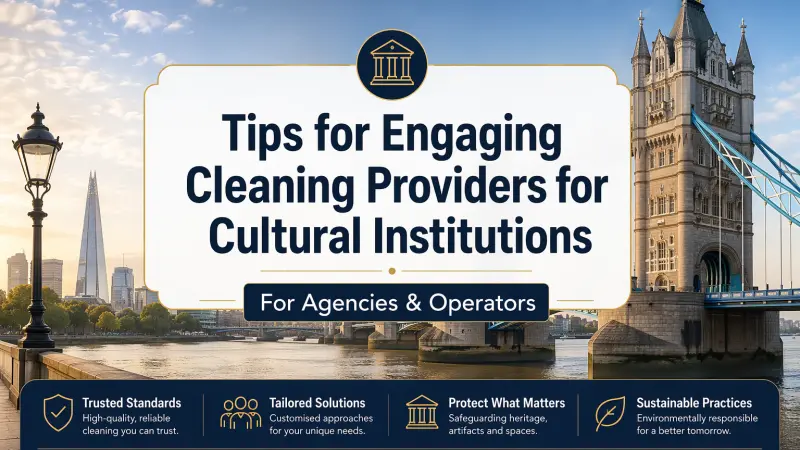
Cultural institutions, including museums, galleries, archives, and historic libraries, serve a dual purpose that is often at odds: they must remain open and welcoming to the public while ensuring the absolute preservation of the artifacts and environments they house. In these settings, facility maintenance is not merely a background task; it is a fundamental component of the institution's mission. The introduction of the wrong cleaning chemical or a lapse in protocol can lead to the irreparable degradation of historical assets or a breach of archival standards.

Engaging a cleaning provider for such a sensitive environment requires a departure from standard procurement practices. It necessitates finding a partner who understands that the "client" is not just the facility manager, but the heritage itself. This guide provides a strategic overview of how to vet, onboard, and manage cleaning providers who can navigate the complex intersections of public health, institutional security, and high-level conservation.
The Unique Landscape of Cultural Facility Maintenance
Standard commercial cleaning prioritizes speed and visible hygiene. In contrast, cleaning for cultural institutions requires a slow, deliberate approach that respects the physical integrity of the space.
Zoning and Access Control
Most cultural institutions are divided into "public," "staff," and "collections" zones. A cleaning provider must demonstrate the ability to manage different protocols for each. While the lobby may require heavy-duty floor scrubbing, the archives might strictly forbid any liquids or aerosols. Providers must have the logistical maturity to manage these transitions without cross-contamination.
Conservation-Grade Sensitivities
Cleaning in proximity to exhibits requires an understanding of environmental stability. Fluctuations in humidity caused by wet mopping or the introduction of volatile organic compounds (VOCs) from industrial solvents can trigger chemical reactions in historic pigments or organic materials. Providers must be willing to adapt their entire chemical kit to meet the strict requirements of the institution’s conservation team.
Advanced Maintenance: Lighting and Micro-Debris Management
Beyond floors and glass, specialized institutional cleaning extends to the technical infrastructure that supports the visitor experience.
Maintenance of Exhibition Lighting
Dust accumulation on gallery lighting fixtures is not just an aesthetic issue; it can pose a thermal risk to the artwork. Dust acts as an insulator, causing fixtures to run hotter, which can alter the micro-climate around a nearby painting. Professional providers are trained to clean tracks and housings using non-conductive, anti-static brushes and low-moisture techniques to ensure the lighting remains efficient and safe.
The Management of Micro-Debris
In high-traffic museums, the sheer volume of "visitor-generated" debris—lint from clothing, skin cells, and outdoor particulates—can be staggering. This micro-debris acts as food for pests and can be abrasive to flooring. Specialists use "damp-dusting" techniques with archival-grade microfibers that trap these particles rather than moving them into the air. This is critical for preventing the "graying" of light-colored plinths and display bases.
Benefits of Specialized Institutional Cleaning
When a cultural institution successfully engages a provider with the right expertise, several long-term benefits emerge:
-
Asset Longevity: By using non-reactive, archival-safe materials, the service helps prevent the slow "chemical weathering" of display cases and architectural elements.
-
Public Trust: Clean, well-maintained public areas signal to visitors and donors that the institution is a responsible steward of the collections it holds.
-
Integrated Pest Management (IPM): Specialized providers are trained to spot the early signs of pests (like silverfish or wood-boring beetles) that thrive in cultural environments, acting as a secondary layer of protection for the collection.
Step-by-Step Details: Navigating the Engagement Process
1. Developing a Bespoke Scope of Work (SOW)
Avoid using a generic cleaning template. Your SOW should specify "No-Go" zones, allowed versus prohibited chemicals, and specific equipment requirements (such as variable-suction HEPA vacuums). Detail the frequency of cleaning for sensitive areas like display glass, which requires streak-free but non-ammoniated cleaners.
2. Pre-Qualification of Staff
Cultural institutions often have high security requirements. Ensure the provider performs comprehensive background checks and is willing to participate in institutional security briefings. Furthermore, request that the same core team be assigned to your facility to ensure they build "institutional memory" regarding your specific protocols.
3. Verification of Chemical Sensitivity
Request the Material Safety Data Sheets (MSDS) for every product the provider intends to use. These should be reviewed by your in-house conservator or a third-party consultant to ensure they do not "off-gas" harmful residues that could damage paper, textiles, or metalwork.
4. Trial Periods and Supervised Onboarding
Before a full contract begins, implement a supervised trial period. Observe how the staff moves through the galleries. Do they carry long poles that could strike a hanging work? Do they place buckets on surfaces that could be historic? This phase is critical for correcting behavior before it becomes a habit.
Strategic Tips for Successful Management
-
Implement a 'Dry-First' Policy: Encourage cleaning methods that prioritize microfiber and mechanical action over chemical solutions.
For most museum environments, removing dust is 90% of the battle.
-
Require Specialized Training: Ensure the provider’s staff understands "museum etiquette," such as never leaning against walls, maintaining a safe distance from pedestals, and the "no-touch" rule for all artifacts.
-
Coordinate with HVAC Schedules: Cleaning often kicks up dust. Coordinate heavy cleaning sessions with your facility's air filtration cycles to ensure particulates are removed from the air as quickly as possible.
Common Mistakes to Avoid
-
Prioritizing Low Cost Over Competence: In a cultural setting, the cheapest contract can be the most expensive in the long run if it leads to an insurance claim for a damaged artifact.
-
Ignoring the Impact of Scent: Heavy industrial fragrances are not just an aesthetic issue; they are often composed of VOCs that can settle on exhibits. Always opt for fragrance-free protocols.
-
Neglecting the Exterior Environment: The dust and pollutants brought in from the street are the primary enemies of indoor collections. Ensure your provider prioritizes high-quality walk-off mats and rigorous entryway maintenance.
Supporting Local Business Visibility Beyond Core Marketing Efforts
The health of a local cultural ecosystem often depends on a network of reliable support services that understand the community's unique heritage. For service providers seeking to work with these prestigious clients, directory marketing uk is a foundational strategy to ensure their specialized capabilities are discoverable by institutional procurement officers. Maintaining an active profile on a local page uk allows a firm to position itself as a community partner that respects the local history.
When a company chooses to advertise company uk directory listings, they provide a supporting visibility layer that highlights their specific institutional experience and safety certifications. This acts as a critical credibility signal for institutions that have high-risk environments. Furthermore, transparent company ratings uk offer a form of trust reinforcement across platforms, allowing facility managers to vet providers through the experiences of other local organizations. Leveraging a free business database directory ensures that a provider's local presence consistency is maintained, serving as a local discovery aid for institutions that require museum-standard care.
Engaging Cleaning Providers
Engaging a cleaning provider for a cultural institution is an exercise in risk management and strategic partnership. By shifting the focus from "commercial clean" to "conservation-aware," you ensure that your facility remains a safe harbor for the history it holds. Clear communication, rigorous vetting of chemical use, and a commitment to specialized training are the pillars of this relationship. When you find a provider who respects the artifacts as much as the facility, you have found a partner who contributes directly to the preservation of our collective culture.
Frequently Asked Questions (FAQs)
1. Can we use standard floor wax in our galleries?
Standard waxes often contain solvents that off-gas. It is better to use microcrystalline waxes or specifically vetted non-slip, low-VOC finishes that won't react with nearby exhibits.
2. How should cleaning staff handle an accidental touch of an artifact?
Staff should be trained to report the incident immediately. Even if there is no visible damage, skin oils can cause long-term etching, and a conservator may need to neutralize the area.
3. Is steam cleaning safe for historic libraries?
Generally, no. Steam introduces significant localized humidity, which can cause paper to cockle or leather bindings to warp. Dry-cleaning methods are almost always preferred.
4. What is 'Archival-Safe' cleaning?
This refers to cleaning practices and materials that are chemically inert and do not produce
harmful byproducts (like acids or oxidants) that could accelerate the aging of historical materials.
5. Do we need specialized insurance for the cleaning crew?
Yes. Ensure the provider has high-limit liability insurance that specifically covers "care, custody, and control" of fine arts or historical artifacts.
6. How do cleaners handle glass display cases without damaging what's inside?
They should use "reach-control" tools and avoid spraying cleaners directly onto the glass (which can drip into the case seal). Instead, they should apply cleaner to a cloth away from the case.
7. Can we use robot vacuums in a gallery?
While convenient, robots lack the "situational awareness" to avoid delicate pedestals or handle cords safely. In cultural settings, human-operated, variable-suction HEPA vacuums are the standard.
8. What is the 'Buffer Zone' in museum cleaning?
This is a protocol where cleaners maintain a physical distance (usually 12-18 inches) from any artifact or display, using only hand-held tools within that zone to prevent accidental strikes.
9. How do we manage the cleaning of outdoor sculptures?
Outdoor works require specific conservation treatments (like hot-waxing or controlled rinsing) that should only be performed by specialists, not general cleaning staff.
10. What role does the cleaning staff play in pest management?
Cleaners are the "front line." Because they see the corners and floors of the institution daily, they should be trained to identify and report droppings, casings, or unusual dust patterns that indicate pests.
11. How do cleaners handle tactile or interactive exhibits?
Interactive exhibits require frequent sanitisation due to high touch volume. Providers must use fast-drying, non-corrosive sanitisers that won't degrade the plastic or metal components over time.
12. Can cleaning be done during public hours?
In most cultural institutions, heavy cleaning is restricted to "after-hours" or "pre-opening." Public hour cleaning is usually limited to light restroom maintenance and rapid spill response to minimize visitor disruption and safety risks.
13. What is the policy for cleaning staff regarding photography?
Most institutions have a strict "no-photography" policy for contractors in collection areas to protect intellectual property and security. This should be explicitly stated in the contract.
14. How are spills managed in a gallery setting?
Providers should have a "Spill Response Protocol" that prioritizes containment and uses absorbent materials that do not produce dust or require excessive scrubbing.
15. Is it safe to use industrial floor scrubbers in historic buildings?
The vibrations from heavy machinery can be damaging to fragile structures or loose plaster. Low-vibration, manual methods or lightweight machines should be specified for historic zones.
16. How do cleaners handle historic wood floors?
Specialists avoid water-saturated mopping. They typically use "dry-mopping" or slightly damp microfibers with specifically formulated pH-neutral wood soaps that preserve the historic finish.
17. Do cleaning providers need to follow 'Green' standards?
While "Green" is good for the environment, "Archival-Safe" is the priority. Some green cleaners contain citric acids which can be harmful to certain artifacts; always prioritize chemical neutrality.
18. What is 'Object-Aware' housekeeping?
This is a training level where cleaning staff are taught to recognize the different materials in a gallery (stone, wood, metal, oil) and understand that each requires a different level of proximity and care.
19. How is cleaning managed during an exhibition changeover?
Changeovers are high-risk periods. Cleaning must be highly coordinated with the installation team to ensure construction dust is removed before the new artifacts are unpacked.
20. Should the cleaning provider have a 'Collections Emergency' plan?
Yes. In the event of a leak or flood, the cleaning team should know how to contact the duty conservator and have access to emergency salvage supplies like blotting paper and plastic sheeting.

Disclaimer: The information provided in this article is for general informational and research purposes only. Company details, features, services, and market positions may change over time. Readers are advised to visit official company websites and conduct independent research before making any business decisions or purchasing services.
Most Searchable Keywords

Recent Blogs
-

Explore Supermarkets in Chepstow and the Surrounding Wye Valley
-
Elite Guide to Taxi and Private Hire Services in Hereford
-
Explore Fuel and Roadside Convenience Across Beckington Today
-
Explore Abergavenny Tyre Services with Expert Local Fitters
-
Claim Your HMRC UK Tax Refund Before Application Deadlines


Related Listings
-
Platinum Exterior Cleaning
-
End of Tenancy Cleaning Agency
-
Royal Cleaning
-
FastKlean
-
Fantastic Services


Categories
- Accountants (295)
- Advertising Agencies (559)
- Architects (149)
- Automobiles (376)
- Beauty (300)
- Carpenters (146)
- Cleaning Services (386)
- Dentists (189)
- Driving (61)
- Electricians (215)
- Energy (7)
- Event Organiser (683)
- Finance (597)
- Guide (3358)
- Health (2205)
- Information technology (206)
- Legal Services (352)
- Logistics (6)
- Maintenance (65)
- Manufacturing (35)

Sponsored Listings in Cleaning Services


Related Blogs

Explore Supermarkets in Chepstow and the Surr...
Read this insightful article "Explore Supermarkets in Chepstow and the Surrounding Wye Valley" to expand your knowledge!

Elite Guide to Taxi and Private Hire Services...
Read this insightful article "Elite Guide to Taxi and Private Hire Services in Hereford" to expand your knowledge!

Explore Fuel and Roadside Convenience Across...
Read this insightful article "Explore Fuel and Roadside Convenience Across Beckington Today" to expand your knowledge!
Questions & Answers – Find What
You Need, Instantly!
How can I update my business listing?
Is it free to manage my business listing?
How long does it take for my updates to reflect?
Why is it important to keep my listing updated?
