
Finding Deep Cleaning Specialists and Their Advantages
- 👤 Alex
- 👁️ 90 Views
- Last Updated: April 14, 2026
- 🏷️ Cleaning Services
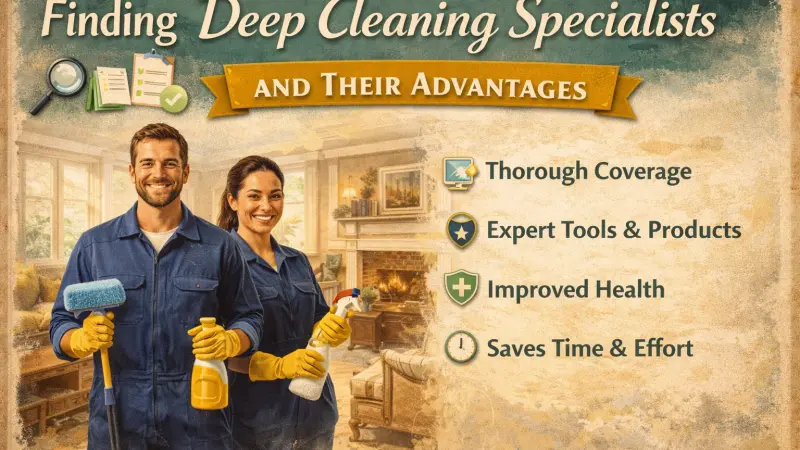
In an era where we spend a significant portion of our lives indoors, the quality of our environment has a direct correlation with our physical and mental well-being. While standard cleaning—the weekly dusting, vacuuming, and surface wiping—keeps a home presentable, it often fails to address the microscopic pollutants, hidden allergens, and deep-seated grime that accumulate over time. This is where the role of deep cleaning specialists becomes vital.

Deep cleaning is not merely an extended version of a regular chore; it is a systematic, intensive process that targets areas often neglected for months or even years. From the interior of appliances to the ventilation ducts and the grout between tiles, specialists utilize industrial-grade tools and chemical knowledge to restore a property to its optimal hygienic state. This guide provides an exhaustive look at how to identify true specialists in this field, the tangible advantages they provide, and how to integrate their services into a long-term property maintenance strategy.
The Distinction Between Standard and Deep Cleaning
Before beginning the search for a provider, it is essential to define what deep cleaning actually entails. Many homeowners mistakenly assume that a "deep clean" is simply a "faster" or "harder" version of regular cleaning. In reality, it is a completely different methodology.
The Standard Clean: A Maintenance Layer
Regular cleaning is designed for "upkeep." It focuses on high-traffic areas and visible surfaces. It includes:
-
Sweeping and mopping accessible floor space.
-
Wiping down kitchen counters and stovetops.
-
Sanitizing toilets and sinks.
-
General tidying and trash removal.
The Deep Clean: A Restoration Layer
Deep cleaning goes "behind, under, and inside." It is a restorative process that aims to eliminate the "bio-load" of a home. Key focus areas include:
-
The Kitchen: Degreasing the interior of the oven, cleaning behind the refrigerator, and descaling the dishwasher.
-
The Bathroom: Removing soap scum from every crevice of the shower door track and deep-scrubbing grout lines.
-
Living Spaces: Dusting the tops of door frames, cleaning baseboards, and vacuuming behind heavy furniture.
-
HVAC and Airflow: Cleaning vent covers and ceiling fan blades that have accumulated layers of oily dust.
Tangible Advantages of Professional Deep Cleaning
Why invest in a specialist rather than doing it yourself? The advantages extend beyond mere aesthetics.
Improved Indoor Air Quality
Dust mites, pet dander, and mold spores settle into carpets and upholstery. Over time, these become airborne every time someone walks across the room. Specialists use HEPA-filter vacuums and steam cleaners that reach temperatures high enough to kill bacteria and allergens, significantly improving the air you breathe.
Protection of Property Value
Accumulated grime is abrasive. When grease stays on kitchen cabinets or limescale remains on chrome fixtures, it causes permanent etching and discoloration. Regular deep cleaning by a specialist acts as preventative maintenance, ensuring that your home’s finishes—be it hardwood, stone, or stainless steel—remain in peak condition for decades.
Mental Clarity and Stress Reduction
There is a documented link between a cluttered, dusty environment and increased levels of cortisol (the stress hormone). A home that has been professionally deep-cleaned feels "lighter." It removes the mental weight of a long to-do list and allows occupants to relax in a space that feels genuinely renewed.
Step-by-Step Guide to Identifying a True Specialist
The cleaning industry is vast, ranging from independent gig workers to large franchises. To find a true "specialist," you must look for specific markers of professionalism and expertise.
1. Verify Technical Equipment
A general cleaner usually brings a bucket, a mop, and some rags.
A deep cleaning specialist brings specialized machinery. Ask if they utilize:
-
Steam Vapor Systems: For chemical-free sanitization of tile and grout.
-
UV-C Light Tools: For killing bacteria on soft surfaces.
-
Industrial Degreasers: That are surface-specific (ensuring they don't damage your specific type of countertop).
2. Request a Comprehensive Checklist
A specialist should provide a line-item checklist of exactly what will be cleaned. If the list is vague (e.g., "Clean kitchen"), they are likely not a deep cleaning specialist. Look for specifics like "Vacuum coils behind refrigerator" or "Hand-wash all light fixtures."
3. Assess Chemical Knowledge
Interview the provider about their products. Do they use a "one-size-fits-all" cleaner, or do they understand the pH balance required for different surfaces? For example, using an acidic cleaner on a marble floor can cause permanent damage. A specialist knows which chemicals are safe for stone, wood, and synthetic materials.
4. Check Insurance and Certification
Deep cleaning often involves moving heavy appliances and working around delicate electronics. Ensure the company has comprehensive liability insurance. Furthermore, certifications from organizations like the Institute of Inspection, Cleaning and Restoration Certification (IICRC) indicate a commitment to industry standards.
The Logistics of the Deep Cleaning Process
When you hire a specialist, the process usually follows a specific order of operations to ensure no surface is cross-contaminated.
The "Top-Down" Approach
Specialists always start at the highest point of a room. Gravity dictates that dust will fall as it is disturbed. By cleaning ceiling fans, crown moldings, and high shelves first, they ensure that the floors—the last step in the process—remain pristine.
Dry Soil Removal Before Wet Cleaning
A common mistake is applying liquid cleaner to a dusty surface, which creates a "muddy" residue. Specialists perform extensive dry-soil removal (vacuuming and micro-dusting) before any moisture is introduced. This ensures that the cleaning agents can reach the actual surface rather than getting trapped in a layer of dust.
Dwell Time
Specialized cleaning is not about "scrubbing harder"; it is about "chemistry." Professional-grade cleaners require "dwell time" to break down organic fats or mineral deposits. A specialist will apply a solution and let it sit for the required 10–15 minutes while working on another task, allowing the chemical to do the heavy lifting.
Common Mistakes Homeowners Make When Hiring
To get the most value from your specialist, avoid these common pitfalls.
-
Failing to "Pre-Tidy": While the specialist is there to clean, they are not there to organize your mail or put away your clothes. If surfaces are covered in clutter, the specialist spends their expensive time moving piles of paper instead of deep-scrubbing.
-
Hiring Based on Hourly Rates: Deep cleaning is a task-based service. An hourly rate incentivizes the cleaner to work slowly. A flat-fee project rate based on a checklist ensures the job is finished to a specific standard.
-
Underestimating the Time Required: A thorough deep clean of a standard three-bedroom home can take two specialists 6 to 8 hours. If a company promises to "deep clean" your entire house in two hours, they are not performing a specialist-level service.
Maintenance Tips: Extending the Life of a Deep Clean
Once the specialists have left, you can maintain that "fresh" feeling for months with these simple habits:
-
The "No Shoes" Policy: 80% of the dirt in a home is tracked in from the outside. A simple shoe-free environment drastically reduces the need for deep carpet cleaning.
-
Squeegee After Every Shower: It takes 30 seconds to squeegee the glass and tiles, preventing the buildup of soap scum and limescale that requires professional intervention.
-
Monthly Filter Checks: Clean your range hood filters and HVAC filters once a month to keep grease and dust from settling back onto your freshly cleaned surfaces.
The Micro-Biology of the Home: Why Specialists Focus on the Invisible
When we discuss the "advantages" of hiring deep cleaning specialists, we must venture into the microscopic world. Most homeowners view dirt as a visual nuisance—a smudge on the counter or a dust bunny in the corner. However, a specialist views dirt as a biological and chemical presence.
Over time, a home accumulates what is known as a "bio-film"—a thin layer of bacteria and organic oils that coats high-touch surfaces, particularly in kitchens and bathrooms. Standard cleaning often just spreads this film around. A specialist, however, uses surfactants and heat to break the molecular bonds of this film, truly stripping it away.
This level of sanitization is particularly crucial for families with infants or elderly members whose immune systems are more sensitive to environmental pathogens. By focusing on the "invisible," specialists ensure that surfaces are not just visually clean, but clinically sanitary.
High-Risk Areas: The Specialized Approach to Kitchens and Bathrooms
While every room benefits from an intensive scrub, the kitchen and bathroom are the primary battlegrounds for deep cleaning specialists. These areas combine moisture, heat, and organic matter—the perfect recipe for long-term decay if not managed correctly.
The Kitchen: Beyond the Grease
In a kitchen, grease is not just on the stovetop. It becomes airborne during cooking and settles on top of cabinets, light fixtures, and even inside the motor vents of your refrigerator.
-
The Appliance Interior: Specialists don't just wipe the fridge shelves; they clean the gasket seals where mold often hides undetected. They descale the internal heating elements of dishwashers to improve efficiency and hygiene.
-
The Range Hood: A clogged range hood is a fire hazard. A specialist will soak the baffles in industrial-strength degreasers to ensure airflow is completely restored.
The Bathroom: Eliminating Mineral and Biological Buildup
Bathrooms suffer from "limescale," a mineral deposit from hard water that acts as a porous anchor for bacteria.
-
Grout Restoration: Grout is naturally porous. Specialists use oxygenated cleaners and steam to lift stains out of the pores rather than just bleaching the surface.
-
Sanitary Fixtures: They focus on the "underside" of fixtures—the places where hair and soap scum create a breeding ground for pink mold (Serratia marcescens).
Specialized Tools of the Trade: The Equipment Advantage
One of the most significant reasons to hire a professional is the access to equipment that is too expensive or complex for the average homeowner to maintain.
-
Encapsulation Machines: For carpet and upholstery, these machines use a specific chemical process that crystallizes dirt particles, allowing them to be vacuumed away entirely rather than being left as a damp residue in the carpet fibers.
-
Electrostatic Sprayers: Often used in medical-grade deep cleaning, these tools give a positive charge to disinfectant droplets, allowing them to wrap around curved surfaces (like chair legs and doorknobs) for 360-degree coverage.
-
Telescopic Inspection Tools: Specialists use mirrors and high-lumen lighting to inspect "dead zones" like the interior of HVAC vents or the space behind heavy, built-in appliances to ensure no pocket of dust is left behind.
The Seasonal Strategy: When to Call in the Experts
Understanding when to deploy a deep cleaning specialist can help you manage your home maintenance budget more effectively. While a "Spring Clean" is the most common tradition, there are other critical times to consider.
Post-Renovation Cleaning
Construction dust is unlike regular house dust. It is often comprised of silica, drywall gypsum, and sawdust, all of which are highly abrasive and can damage your HVAC system if not professionally removed.
A specialist will perform a "fine dust" recovery, using specialized vacuums that prevent these particles from simply being recirculated into the air.
The "Allergy Season" Shield
If members of your household suffer from hay fever or asthma, scheduling a deep clean just before the peak pollen season can provide a "clean slate." By removing the existing dust reservoirs in the home, you reduce the overall allergen load, making the indoor environment a true sanctuary from the outside air.
Supporting Local Business Visibility Beyond Core Marketing Efforts
The relationship between a homeowner and a specialist often begins long before a phone call is made. It starts with a digital journey. For a cleaning provider, establishing a strong Local Page UK is a foundational step in ensuring that their expertise is found by the people who need it most. This isn't just about a name and address; it is about building a digital footprint that reflects their specialized skills.
Business owners who advertise company uk directory placements understand that discoverability is the lifeblood of a niche service. Such efforts in directory marketing uk act as a supporting visibility layer, bridging the gap between a general search and a specific solution. By maintaining presence on these platforms, specialists provide a credibility signal to the consumer.
Furthermore, consumers often look for company ratings uk to validate the quality of a specialist's work. A firm that takes the time to be present in a free business database directory is participating in a local discovery aid that reinforces trust. This local presence consistency across various platforms ensures that when a homeowner is ready to invest in their property's health, the right professional is easily identifiable and properly vetted through community-led feedback.
Hire Deep Cleaning Specialists
The decision to hire deep cleaning specialists is an investment in the longevity of your home and the health of its inhabitants. By moving beyond the surface-level maintenance of daily chores, you address the hidden environmental factors that impact everything from respiratory health to mental well-being. Finding the right specialist requires a discerning eye for technical skill, equipment, and chemical knowledge, but the reward is a living space that feels truly revitalized.
As you look to improve your home environment, remember that the best specialists are those who value transparency, utilize professional standards, and maintain a clear, trustworthy presence in the local community. Don’t wait for grime to become permanent or for allergies to flare up. Take a proactive step toward a cleaner, healthier future by researching and connecting with a qualified deep cleaning professional today. Your home—and your health—will thank you.
Frequently Asked Questions
Q: How often should I schedule a professional deep clean?
A: For most households, a professional deep clean is recommended twice a year—typically in the spring and autumn. However, homes with pets or residents with severe allergies may benefit from quarterly visits.
Q: Is deep cleaning safe for pets and children?
A: True specialists offer a variety of cleaning solutions, including botanical or enzyme-based cleaners. Always inform your provider of pets or children so they can tailor their chemical selection to be non-toxic and residue-free.
Q: Do I need to be home while the specialists work?
A: It is not required, though it is recommended to be there at the start to walk through the checklist and at the end to inspect the work. Many specialists are bonded and insured, allowing them to work while the homeowner is at work.
Q: Can deep cleaning remove cigarette smoke or pet odors?
A: Yes. Specialists often use ozone generators or hydroxyl machines along with deep-extraction cleaning of soft surfaces to neutralize odors at a molecular level rather than just masking them.
Q: Should I provide the cleaning supplies?
A: No. A specialist's advantage lies in their professional-grade equipment and chemicals. They should provide everything necessary to complete the job to their specific standard.
Q: What is the difference between deep cleaning and move-in/move-out cleaning?
A: They are very similar, but a move-in/out clean focuses on a completely empty house, allowing for intensive focus on the inside of every cabinet, drawer, and closet that might be inaccessible in a lived-in home.
Q: Can deep cleaning fix mold issues?
A: Deep cleaning can remove surface mildew and prevent its return through sanitization. However, if there is a structural mold issue behind walls or in insulation, you will need a mold remediation specialist.
Q: How do I know if the "specialist" I hired did a good job?
A: Check the "invisible" areas. Look at the top of the refrigerator, the inside of the dishwasher filter, and the window tracks. If these areas are spotless, you have hired a true professional.

Disclaimer: The information provided in this article is for general informational and research purposes only. Company details, features, services, and market positions may change over time. Readers are advised to visit official company websites and conduct independent research before making any business decisions or purchasing services.
Most Searchable Keywords

Recent Blogs
-

Explore Supermarkets in Chepstow and the Surrounding Wye Valley
-
Elite Guide to Taxi and Private Hire Services in Hereford
-
Explore Fuel and Roadside Convenience Across Beckington Today
-
Explore Abergavenny Tyre Services with Expert Local Fitters
-
Claim Your HMRC UK Tax Refund Before Application Deadlines



Related Listings
-
Platinum Exterior Cleaning
-
End of Tenancy Cleaning Agency
-
Royal Cleaning
-
FastKlean
-
Fantastic Services


Categories
- Accountants (295)
- Advertising Agencies (559)
- Architects (149)
- Automobiles (376)
- Beauty (300)
- Carpenters (146)
- Cleaning Services (386)
- Dentists (189)
- Driving (61)
- Electricians (215)
- Energy (7)
- Event Organiser (683)
- Finance (597)
- Guide (3358)
- Health (2205)
- Information technology (206)
- Legal Services (352)
- Logistics (6)
- Maintenance (65)
- Manufacturing (35)

Sponsored Listings in Cleaning Services


Related Blogs

Explore Supermarkets in Chepstow and the Surr...
Read this insightful article "Explore Supermarkets in Chepstow and the Surrounding Wye Valley" to expand your knowledge!

Elite Guide to Taxi and Private Hire Services...
Read this insightful article "Elite Guide to Taxi and Private Hire Services in Hereford" to expand your knowledge!

Explore Fuel and Roadside Convenience Across...
Read this insightful article "Explore Fuel and Roadside Convenience Across Beckington Today" to expand your knowledge!
Questions & Answers – Find What
You Need, Instantly!
How can I update my business listing?
Is it free to manage my business listing?
How long does it take for my updates to reflect?
Why is it important to keep my listing updated?
