
Geo-Targeted Ad Campaigns for Auto Insurance Marketing
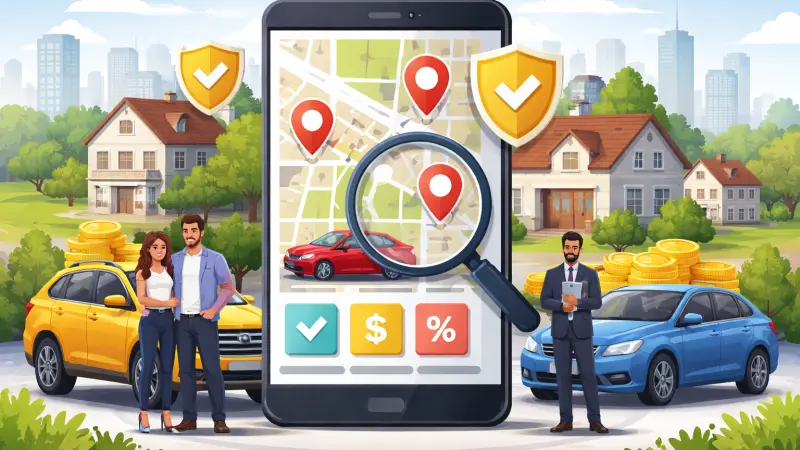
Did you know that a driver in Central London faces significantly different risk profiles and premiums than a motorist in the Scottish Highlands? In the highly competitive world of British motor insurance, the "one size fits all" approach to digital advertising is rapidly becoming obsolete. Geo-targeted ad campaigns for auto insurance marketing have emerged as the most effective method for insurers and brokers to connect with specific demographics while maintaining a sustainable cost-per-acquisition. By leveraging location-based data, marketers can tailor their messaging to reflect local crime rates, traffic density, and even regional weather patterns, ensuring that the advertisements served are not just seen, but are deeply relevant to the recipient's immediate environment and circumstances.

The UK insurance landscape is uniquely fragmented by geography. Postcode-rated risks mean that a few miles can result in hundreds of pounds of difference in premium costs. For a marketing professional, this granular detail is a goldmine. Using geo-fencing, IP targeting, and GPS-based mobile advertising, brands can now bid more aggressively for high-value postcodes while suppressing ads in areas where their underwriting appetite is lower. This level of precision ensures that marketing budgets are allocated toward the most profitable segments, reducing waste and increasing the likelihood of high-intent clicks. Throughout this article, we will explore the strategic implementation of these campaigns, the importance of regional data, and how to navigate the technical complexities of local search intent within the UK market.
Understanding the Mechanics of Local Intent in Insurance
When a consumer searches for "car insurance" in Manchester versus Bristol, their expectations and the competitive landscape they encounter differ. Local intent is not just about the physical location of the user; it is about the socio-economic factors that define that location. For instance, urban areas often see a higher demand for "Short Term" or "Pay-as-you-go" insurance models due to lower annual mileage and higher public transport usage. Conversely, rural areas might respond better to advertisements highlighting multi-car discounts or 4x4 specific cover. Geo-targeted ad campaigns for auto insurance marketing allow providers to pivot their creative assets to match these specific regional requirements without manually creating thousands of individual ads.
To succeed, one must first identify the primary, secondary, and semantic keywords that resonate with local audiences. While "Car Insurance" remains the primary keyword, secondary terms such as "cheap motor cover in Birmingham" or "Leeds car insurance brokers" help capture specific local search volume. Semantic keywords—those related to the context of the search—include terms like "vehicle protection," "underwriting criteria," "no-claims bonus," and "comprehensive cover." By weaving these naturally into geo-specific landing pages, advertisers signal to search engines that their content is highly relevant to the user’s specific location, which significantly boosts Quality Scores on platforms like Google Ads and Bing Ads, ultimately lowering the average CPC.
The Role of Regional Data in Underwriting and Marketing
In the UK, the relationship between underwriting and marketing is symbiotic. Marketing teams must align their geo-targeted ad campaigns for auto insurance marketing with the insurer's current risk appetite. If an insurer identifies an increase in vehicle thefts in a specific London borough, the marketing team may choose to reduce ad spend in that area or adjust the creative to highlight "Enhanced Security" features and theft protection. This data-led approach prevents the business from attracting "bad risks"—customers who are likely to result in claims that exceed their premium value. Instead, the focus shifts to areas where the risk-to-reward ratio is most favourable for the company's long-term stability.
Effective use of regional data also involves understanding local seasonal trends. For example, parts of the UK prone to flooding or heavy snow require different messaging during the winter months. By deploying location-specific ad extensions, such as showing the address of a local branch or a phone number with a local area code, insurers can build a sense of trust and "local presence" that national campaigns often lack.
Consumers are statistically more likely to engage with an ad that feels local to them, as it implies a better understanding of their specific needs and the local conditions they face daily on the road. This trust is the cornerstone of converting a passive browser into a policyholder.
Technical Strategies for High-Performance Geo-Targeting
Implementing successful geo-targeted ad campaigns for auto insurance marketing requires more than just ticking a box in an ad manager. It involves sophisticated "radius targeting" and "location exclusions." Radius targeting allows an advertiser to show ads to anyone within a specific distance from a point of interest—perhaps a high-performing dealership or a local office. Location exclusions are equally vital; they allow marketers to prevent their ads from appearing in regions where they do not offer coverage or where the competition is so fierce that the cost of entry is prohibitive. This ensures that every penny of the budget is spent on high-potential territory.
Furthermore, the use of Dynamic Keyword Insertion (DKI) in conjunction with location parameters can create a powerful user experience. Imagine a user in Glasgow searching for insurance and seeing an ad headline that reads "Best Car Insurance in Glasgow." This is achieved by using scripts that detect the user's location and inject it directly into the ad copy. When the user clicks through, the landing page should ideally reflect the same location-specific messaging. This continuity from search query to ad to landing page is the gold standard of SEO and PPC integration, ensuring that the user feels their specific regional query has been answered directly by the provider.
Leveraging Social Media for Hyper-Local Insurance Marketing
While search engines are excellent for capturing intent, social media platforms like Facebook and Instagram are unrivalled for generating awareness through hyper-local targeting. Geo-targeted ad campaigns for auto insurance marketing on social media can be narrowed down to specific postcodes or even "people who have recently visited" a certain area. For example, an insurer could target people who have recently been to a local motor show or a car auction. The visual nature of these platforms allows for rich media—such as videos explaining local claims processes or testimonials from neighbours—which builds social proof within a community.
The key to social media success is community-centric messaging. Instead of a generic "get a quote" call to action, a geo-targeted ad might say, "Helping Surrey drivers save on their renewal for over 20 years." By referencing specific local landmarks or regional slang (where appropriate), the brand moves from being a faceless corporation to a community partner. This strategy is particularly effective for smaller brokers or regional mutuals that may not have the budget to compete on a national scale but can dominate a specific geographic niche through sheer relevance and localized brand authority.
Optimising Landing Pages for Local Conversions
A click is only half the battle; the conversion happens on the landing page. To fully capitalise on geo-targeted ad campaigns for auto insurance marketing, the destination page must be as localised as the ad itself. This means including local contact details, mentioning local service centres, and perhaps even featuring a map of the area.
If a user has clicked on an ad for "Essex Car Insurance," they should not be greeted with a generic homepage. They should see content tailored to Essex, perhaps highlighting how the insurer handles local commutes on the A12 or A127, showing they understand the local driving environment.
Readability and speed are essential. UK consumers have high expectations for digital experiences; if a page takes more than a few seconds to load on a mobile device, the potential customer will bounce. To optimise for both speed and SEO, use clean HTML structures, compressed images, and avoid heavy scripts. Content should be structured with clear headings (H1, H2, H3) and bullet points to help users find the information they need quickly. Remember, the goal of a local landing page is to provide immediate reassurance that the insurer is the right choice for that specific geographic area, backed by local expertise and efficient service.
Compliance and Privacy in Geo-Targeted Advertising
When conducting geo-targeted ad campaigns for auto insurance marketing in the UK, one must be strictly adherent to the General Data Protection Regulation (GDPR) and the Privacy and Electronic Communications Regulations (PECR). Collecting and using location data is considered sensitive. Advertisers must ensure that they are using "anonymised" or "aggregated" location data unless explicit consent has been granted. Furthermore, the Financial Conduct Authority (FCA) has strict rules regarding "financial promotions." All localised ads must be clear, fair, and not misleading, ensuring that any regional offers or discounts are genuinely available to the residents of that area.
Transparency is the best policy. Users should always be able to see why they are being targeted and have the option to opt-out. In the insurance sector, where trust is paramount, being perceived as "creepy" or overly intrusive can damage a brand's reputation. The most successful geo-targeted campaigns are those that provide genuine value—such as alerting a user to a local risk or offering a relevant local discount—rather than simply following them around the internet. By balancing technical precision with ethical data usage, insurance marketers can build long-term relationships with their policyholders that survive the annual renewal cycle.
Summary of Key Benefits for UK Insurers
- Lower Acquisition Costs: Bidding on local terms often results in lower competition and lower CPCs compared to generic national terms.
- Higher Conversion Rates: Local relevance leads to higher click-through rates (CTR) and better landing page performance.
- Improved Risk Management: Aligning marketing with underwriting data ensures a healthier portfolio of policyholders.
- Brand Authority: Establishing a "local hero" status in specific regions helps build long-term loyalty and word-of-mouth referrals.
- Enhanced User Experience: Providing users with information that is directly relevant to their location makes the buying process smoother.
Frequently Asked Questions
What is geo-targeting in auto insurance marketing?
Geo-targeting is the practice of delivering different ad content to users based on their geographic location.
In insurance, this allows marketers to tailor premiums, messaging, and risk-related advice to specific UK postcodes or regions.
How does geo-fencing differ from geo-targeting?
Geo-targeting reaches users based on their general area (city, county, or postcode), while geo-fencing creates a virtual "fence" around a very specific location (like a car dealership) and triggers an ad when a user enters that perimeter.
Is geo-targeting expensive for small insurance brokers?
On the contrary, geo-targeting is often more cost-effective for small brokers because it allows them to focus their limited budget on their local catchment area rather than trying to compete with national giants across the entire UK.
Does location affect car insurance SEO?
Yes, significantly. Google prioritises local results for many insurance-related queries. Having localised content and a Google Business Profile helps you appear in the "Map Pack," which drives high-intent organic traffic.
Can I target specific car types in certain regions?
Yes, by combining geo-targeting with interest-based targeting, you could, for example, target owners of prestige vehicles in high-affluence areas like Kensington or Cheshire with specialised luxury car cover ads.
Do I need a separate landing page for every city?
While not strictly necessary, having dedicated landing pages for your top-performing regions will significantly improve
your Quality Score and conversion rates for geo-targeted ad campaigns for auto insurance marketing.
Enhancing Visibility for Local Services
In conclusion, the evolution of digital advertising has made precision the new standard. For professionals in the finance and insurance sectors, mastering geo-targeted ad campaigns for auto insurance marketing is no longer optional but a vital component of a successful growth strategy. By understanding the nuances of the UK's regional geography and aligning marketing efforts with underwriting data, businesses can achieve a level of efficiency that was previously impossible. For those looking to list their services and connect with more customers, utilizing a free business search directory is an excellent starting point to build local citations. Whether you are looking for a free company search directory or a company directory online to showcase your expertise, staying present where customers are searching is key. Maintaining an active presence on a verified business directory ensures your brand remains credible and easy to find. For broader digital strategy and improving online visibility, Local Page UK offers the tools necessary to help businesses thrive in an increasingly localised digital economy.

Disclaimer: The information provided in this article is for general informational and research purposes only. Company details, features, services, and market positions may change over time. Readers are advised to visit official company websites and conduct independent research before making any business decisions or purchasing services.
Most Searchable Keywords

Recent Blogs



Related Listings

Categories
- Accountants (295)
- Advertising Agencies (559)
- Architects (149)
- Automobiles (377)
- Beauty (300)
- Carpenters (146)
- Cleaning Services (386)
- Dentists (189)
- Driving (62)
- Electricians (215)
- Energy (8)
- Event Organiser (685)
- Finance (599)
- Guide (3365)
- Health (2207)
- Information technology (206)
- Legal Services (353)
- Logistics (6)
- Maintenance (65)
- Manufacturing (35)

Sponsored Listings in Locksmith Services


Related Blogs

Gen Z Political Reporters and News Creators i...
Read this insightful article "Gen Z Political Reporters and News Creators in the UK" to expand your knowledge!

Famous Female Social Media Influencers Across...
Read this insightful article "Famous Female Social Media Influencers Across the UK" to expand your knowledge!

Your UK Sponsor Licence 2026 Step by Step Gui...
Read this insightful article "Your UK Sponsor Licence 2026 Step by Step Guide" to expand your knowledge!
Questions & Answers – Find What
You Need, Instantly!
How can I update my business listing?
Is it free to manage my business listing?
How long does it take for my updates to reflect?
Why is it important to keep my listing updated?
